The top muscle cars of the 1960s and 1970s are the Pontiac GTO, Chevrolet Chevelle SS, Dodge Super Bee, Plymouth GTX and Plymouth Barracuda/’Cuda—with the Chevrolet Impala SS an important earlier performance antecedent. This is a curated shortlist, not a universal ranking: the cars stand out for their historical influence, performance identity, design recognition and lasting restoration interest.
Here, “muscle car” means American performance cars associated with the classic era. The boundary is debated: Hagerty separates pony cars such as the Mustang, Camaro and Firebird from mid-sized muscle cars, while high-performance Barracuda/’Cuda versions blur that line. The list includes the Barracuda family with that distinction made clear.
| # | Preview | Product | Price | |
|---|---|---|---|---|
| 1 |

|
Muscle & Chrome: Classic American Cars | $12.00 | Buy on Amazon |
| 2 |

|
Muscle Cars: Kings of the Street From the Golden Era | $15.09 | Buy on Amazon |
| 3 |

|
100 Years of American Cars (320 Pages) | $20.00 | Buy on Amazon |
| 4 |

|
Classic Car: The Definitive Visual History | $22.00 | Buy on Amazon |
| 5 |
|
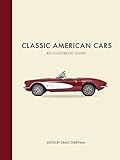
Classic American Cars: An Illustrated Guide | $10.39 | Buy on Amazon |
How to understand this shortlist
There is no single agreed measure for ranking these cars. The selections below weigh each model’s place in the era, documented performance identity, design and cultural recognition, and continuing restoration interest. They are not ranked by a common acceleration test, a complete production-count dataset or a current market valuation.
The top muscle cars of the 1960s and 1970s
Pontiac GTO: the landmark that helped define the era
The 1964 Pontiac Tempest GTO is widely treated as a landmark in the rise of the classic muscle-car era. That makes the GTO an essential entry, but it is more accurate to call it a defining early example than to claim it was the first performance car that could qualify. Audrain Auto Museum places the era’s takeoff at the GTO, and Newport Car Museum likewise identifies it among the defining performance models. Audrain Auto Museum; Newport Car Museum.
Quick wins for a faster PC:
Repair Windows errors before they cause bigger problemsFix Now →Scan for outdated or missing drivers - takes under a minuteDriver Scan →#1 Best Overall
The GTO’s lasting appeal rests on its role in establishing the muscle-car idea, its unmistakable identity and the continued interest in preserving and restoring examples. Museum material, for example, highlights a 1965 tri-power GTO convertible, a specific combination rather than a specification that should be generalized to every GTO. AACA Museum.
Chevrolet Chevelle SS: a peak-era mid-sized muscle car
The Chevelle SS represents the muscle-car formula at its height. General Motors says a policy change for 1970 allowed engines larger than 400 cubic inches in mid-sized cars; the rarest 1970 Chevelle SS examples had 454-cubic-inch big blocks. The engine and year matter: “Chevelle SS” covers a family of configurations, not one universal specification. General Motors Heritage.
Rank #2
Be careful when interpreting GM’s displayed 1970 Chevelle SS LS7. The car was originally built as a 396 and later repowered with an LS7, so it is not evidence that the display vehicle left the factory as an LS7 Chevelle. The AACA Museum separately describes a 1970 Chevelle SS 396 convertible and a 1970 LS6 Chevelle SS, underscoring that distinct configurations should not be conflated. AACA Museum.
Dodge Super Bee: a Mopar standout
The Dodge Super Bee belongs on a shortlist that looks beyond the most frequently discussed GM models. Hagerty names it among the standouts of 1960s muscle cars, making it a useful counterpoint to the GTO and Chevelle. Its place here is based on historical recognition and performance-car identity, not a claim that it was universally faster, rarer or more collectible than its rivals. Hagerty.
Free tools Windows power users keep installed
One-click scans. No signup required.
Rank #3
Plymouth GTX: another defining Mopar choice
Hagerty also identifies the Plymouth GTX among the era’s muscle-car standouts. Including it alongside the Super Bee gives the Mopar side of the story room in a field often narrowed to GM examples. As with the other models, specific performance claims depend on the model year and configuration. Hagerty.
Plymouth Barracuda and ‘Cuda: related names, different emphasis
Barracuda is the model family; ‘Cuda refers to its high-performance versions. That distinction matters because the family’s identity spans more than one type of car, and pony-car definitions complicate where it fits in a muscle-car list. Hagerty notes that the redesigned 1970 E-body Barracuda shared a platform with the Dodge Challenger and could accommodate larger engines, including the 426 Hemi. The 1970–71 cars are especially prominent in its account, and Barracuda production ended after the 1974 model year. Hagerty.
Rank #4
For readers choosing a representative Barracuda, the high-performance ‘Cuda versions are the clearest fit for a muscle-car shortlist. The broader Barracuda family remains relevant to the story, but it should not be treated as though every version had the same performance equipment or status.
Independent reader supportYour contribution helps us test, update, and keep practical guides available for everyone.Where the Chevrolet Impala SS fits
The 1961 full-size Chevrolet Impala SS is best understood as an earlier performance antecedent to the mid-sized muscle-car template, rather than simply another example of the same formula. Newport Car Museum notes its optional 409-cubic-inch engine. Including it adds useful context: American performance cars were developing before the GTO became a conventional landmark for the classic era. Newport Car Museum.
Recommended Free Tools
Best Value
Why the classic era declined
The era did not end at one moment or for one reason. Audrain connects the decline of 1960s muscle cars to the oil crisis and tighter emissions standards. Hagerty’s Barracuda history also points to changing regulations and higher insurance rates; that model’s run ended after the 1974 model year. These pressures help explain the broader shift without implying that every manufacturer or model followed an identical timeline. Audrain Auto Museum; Hagerty.
Which one belongs at the top?
Choose according to what matters most to you: the GTO for its landmark status, the Chevelle SS for a peak-era mid-sized example, the Super Bee or GTX for a Mopar alternative, and the high-performance ‘Cuda for a striking design and a high-performance Barracuda variant. The Impala SS provides a valuable earlier chapter. These are different strengths, not proof of a single objective winner.
Quick Recap
Product prices and availability are accurate as of the date/time indicated and are subject to change. Any price and availability information displayed on Amazon at the time of purchase will apply.




