U.S. automated-vehicle regulation is a work in progress, not a single new federal rule. As of NHTSA’s September 2026 report, crash reporting requirements are in force, the United Nations has adopted an automated-driving regulation that does not automatically become U.S. law, and several proposed federal vehicle-standard changes remain unfinished. NHTSA withdrew its proposed AV STEP program in June 2026.
This scorecard reflects the status described in the National Highway Traffic Safety Administration’s (NHTSA) September 2026 report, covering January 1 through June 30, 2026. It separates binding requirements from adopted international instruments, U.S. proposals, withdrawn proposals, and continuing research. Rulemaking status may have changed since the report’s cutoff.

What counts as an automated vehicle in this scorecard?
The categories matter because not every system marketed as an “AV” performs the same driving task. NHTSA’s reporting framework distinguishes Level 2 driver-assistance systems from automated driving systems (ADS) at SAE Levels 3–5. Level 2 assists a human driver, who remains responsible for driving. An ADS is designed to perform the driving task within its defined operating circumstances.
NHTSA’s crash-reporting requirements can cover both categories. That does not make Level 2 assistance equivalent to a driverless vehicle, or mean every vehicle with driver assistance is an ADS.
What’s actually slowing this PC down?
Pick the symptom - the matching free tool is one click away.
#1 Best Overall
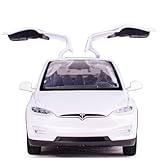
- Made of zinc alloy with ABS plastic parts
- 5.9 inch x 2.2 inch x 1.8 inch(size)
- The two sides of doors could be opened,front and back covercould be opened too
- You can pull back the car,then it can move forwards with Lights and Sound
- Very suitable as children 4 years and up toys for birthday,Christmas gift, new year. Also it can be a gift for your boyfriend
U.S. AV regulation scorecard
| Area | Status in the September 2026 report | What that status means |
|---|---|---|
| Crash oversight and reporting | Existing requirement | The Standing General Order requires covered manufacturers and operators to report certain crashes involving covered Level 2 ADAS or Level 3–5 ADS when the system was engaged during or immediately before the crash. |
| UN Global Technical Regulation for ADS | Adopted international instrument | NHTSA supported the proposed GTR and voted for it on behalf of the United States in June 2026. UNECE WP.29 adopted and formally established it under the 1998 Agreement. This does not, by itself, make the GTR U.S. domestic law. |
| AV STEP | Withdrawn proposal | NHTSA withdrew the proposed ADS-equipped Vehicle Safety, Transparency, and Evaluation Program on June 26, 2026. |
| Changes to selected Federal Motor Vehicle Safety Standards (FMVSS) | Proposed U.S. rules | Proposals addressed how standards for visibility systems, transmission shift interlocks, tire information, and braking would apply to novel ADS vehicles, including vehicles without manual controls. The report described them as proposed or under comment review, not final standards. |
| Standards fit and safety methods | Ongoing research | NHTSA has studied how existing standards and test methods might apply to innovative ADS designs and is developing assessment approaches. Research does not itself amend a rule or establish a validated national safety score. |
| Where and how vehicles operate | Shared government responsibilities | NHTSA describes a federal role in vehicle performance and safety design alongside state vehicle codes and local land-use policies. The report does not provide a current state-by-state deployment ranking. |
What crash-reporting rules apply now?
NHTSA’s Standing General Order is an existing reporting requirement for covered manufacturers and operators. It applies to specified crashes involving a covered Level 2 driver-assistance system or Level 3–5 ADS that was engaged during or immediately before the crash. NHTSA amended the order in 2025.
The agency’s published description calls for expedited reporting in crashes with serious outcomes, including a fatality, an injury treated in a hospital, a vehicle being towed, air-bag deployment, or involvement of a vulnerable road user. Other ADS crashes involving injury or property damage are reported monthly, with later updates. For exact deadlines, coverage determinations, and compliance instructions, consult the current order rather than relying on a summary.
These reports give NHTSA access to incident information; they are not, on their own, a comparative safety measure. Raw crash totals cannot show whether one system is safer than another without suitable exposure data and comparable driving contexts. The official materials reviewed for this scorecard did not establish a current, comparable national AV safety-outcome rate.
Are driverless cars legal in the United States?
There is no single answer that settles where every automated vehicle may operate. Federal vehicle-safety requirements and NHTSA’s oversight coexist with state vehicle codes and local land-use responsibilities. A federal vehicle rule does not, by itself, determine every local operating condition for a driverless service.
Rank #2
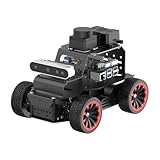
- For Raspberry Pi 5 & ROS2 Robot Car. MentorPi A1 smart AI robot car is powered by Raspberry Pi 5, compatible with ROS2, and programmed in Python, making it an ideal platform for AI robot development.
- High-Performance Hardware. Equipped with Ackerman chassis, closed-loop encoder motors, TOF lidar, depth camera, AI voice interaction box, and other advanced components to ensure optimal performance and efficiency.
- Advanced AI Capabilities. Supports SLAM mapping, path planning, multi-robot coordination, vision recognition, target tracking, and more, covering a wide range of AI applications.
- Autonomous Driving with Deep Learning. Utilizes YOLO model training to enable road sign and traffic light recognition, along with other autonomous driving features, helping users explore and develop autonomous driving technologies.
- Empowered by Large AI Model, Human-Robot Interaction Redefined. MentorPi AI robot car deploys multimodal models with ChatGPT at its core, integrating 3D vision and Al voice interaction box. This synergy enhances its perception, reasoning, and actuation capabilities, enabling advanced embodied AI applications and delivering natural, context-aware human-robot interaction.
The September 2026 report describes this division of responsibilities and federal efforts to convene state, local, commercial-oversight, and emergency-response stakeholders. It does not supply a current fifty-state legal inventory, so it cannot establish a state-by-state answer about deployment or operation. Anyone assessing a particular vehicle or service needs to check the applicable current state and local requirements as well as federal requirements.
What rules are changing for vehicles without steering wheels or other manual controls?
NHTSA’s work targets cases where conventional standards assume a human driver, manually operated controls, or a familiar vehicle layout. The agency completed a research project examining 81 Federal Motor Vehicle Safety Standards in 2025. That figure is the scope of the research—not the number of standards already changed or a blanket exemption for driverless vehicles.
The research gathered evidence to inform possible safety-neutral technical translations and test-procedure adaptations. Separately, NHTSA proposed specific rule changes in 2026:
- Windshield defrosting and wiping: proposals to modernize FMVSS 103 and 104 for novel vehicle designs.
- Transmission shift interlock: a proposal to modernize FMVSS 102.
- Tire selection and placard information: a proposal addressing FMVSS 110, including placard placement.
- Light-vehicle brakes: a June proposal concerning FMVSS 135 for vehicles designed never to be human-driven.
In the report’s January–June 2026 status window, these actions were at proposal or comment-review stages. They should not be treated as final requirements. Removing assumptions that do not fit a driverless design would still require preserving the underlying safety performance that a standard is meant to address.
Recommended Free Tools
Rank #3

- OpenMV Smart Robotic AGV Car Kit: Contains AGV car kit for OpenMV cameras
- Auto Tracking Color Balls: Includes color balls for automatic tracking
- Following Lines: Features pre-programmed lines for simple navigation
- Compatible with OpenMV Cam H7 Plus: Works with OpenMV Cam H7 Plus models
- Compatible with OpenMV Cam H7: Works with OpenMV Cam H7 models
What happened to AV STEP?
NHTSA withdrew its proposed ADS-equipped Vehicle Safety, Transparency, and Evaluation Program (AV STEP) on June 26, 2026. The agency cited reevaluation, review of comments, and progress on other initiatives. Because the proposal was withdrawn, AV STEP should not be described as an active requirement or as the current U.S. ADS rule.
The withdrawal does not mean the other actions in the report disappeared: the agency continued separate FMVSS rulemakings, international engagement, crash reporting, and technical research. Those activities have different legal statuses and should be assessed separately.
Independent reader supportYour contribution helps us test, update, and keep practical guides available for everyone.Is the new federal AV framework law or policy?
NHTSA’s 2025 report described three principles for its federal framework: prioritize safety in ongoing public-road AV operations, remove unnecessary regulatory barriers, and enable commercial deployment to enhance safety and mobility. It also recorded the expansion of the Automated Vehicle Exemption Program to domestic manufacturers in August 2025.
These are agency policy principles and program developments, not a comprehensive new statute. At the National AV Safety Forum, NHTSA Administrator Jonathan Morrison identified FMVSS 102, 103, and 104 as the first tranche of amendments under development and said new developer safety guidance was in progress. Guidance and proposals do not have the same status as a final regulation.
Rank #4
How is NHTSA trying to assess ADS safety?
NHTSA’s research portfolio includes system-level assessment using simulation, closed-course testing, and on-road evaluation. The work also addresses how to select relevant scenarios; failures in components and subsystems; sensor degradation; independent trip recorders; maintenance reliability; and software-defined vehicles.
The September 2026 report describes research on a competency-based framework and robotic surrogate vehicles intended to make test scenarios repeatable while allowing variation. These are research activities, not evidence that the agency has already established a validated nationwide score for comparing ADS safety.
Other work looks at crashworthiness and human factors, including alternative cabin layouts, reclined or rear-facing seats, restraint performance, passenger awareness, warnings, and remote assistance. These questions connect vehicle design to occupant protection: removing the human driver can also change seating and interaction assumptions built into conventional safety requirements.
What the scorecard says—and what it does not
The strongest evidence of an operational federal oversight mechanism in this status window is the existing crash-reporting order. International rulemaking has advanced, but the adopted UN GTR is not automatically U.S. domestic law. Several U.S. standards changes remain proposals, AV STEP has been withdrawn, and assessment methods remain under development.
Quick wins for a faster PC:
Clear out junk files and repair common Windows errorsFree Scan →Scan for outdated or missing drivers - takes under a minuteDriver Scan →Repair Windows errors before they cause bigger problemsFix Now →This status supports a clear account of regulatory activity, not a simple verdict that automated vehicles are safer or less safe. The available official material does not provide the comparable national outcome rate and exposure context needed for that ranking.
Quick Recap
Product prices and availability are accurate as of the date/time indicated and are subject to change. Any price and availability information displayed on Amazon at the time of purchase will apply.