The Tool Desk
Outbyte PC Repair FREERepair Windows errors before they cause bigger problemsFix Now →Outbyte Driver Updater FREEFix the driver behind crashes, sound loss and screen glitchesFind Drivers →There is no single objective ranking of Britain’s most iconic sports cars: the Jaguar E-Type became a design landmark, the MG MGB brought the roadster to huge numbers of buyers, and Lotus made lightness a defining engineering idea. A useful shortlist weighs five things together: design recognition, engineering, motorsport links, cultural reach, and how widely people could own the cars.
What makes a British sports car iconic?
“Iconic” can mean a car is instantly recognizable, changed how a sports car was engineered, carried racing ideas onto the road, became part of popular culture, or made open-top motoring accessible to a broad audience. Those measures do not produce a neutral league table. A luxury grand tourer and a simple two-seat roadster served different buyers, and their production or sales figures are not directly comparable.
This selection spans Jaguar’s postwar sports cars, mass-market MG and Triumph roadsters, Lotus’s lightweight designs, and Aston Martin’s grand touring tradition. The British Motor Museum’s sports-car display reflects that breadth, with cars from Morgan, Lotus, Triumph, McLaren, and Aston Martin, while its Jaguar display brings sports and racing cars together (British Motor Museum exhibitions; Jaguar display).
Jaguar: racing lineage and a design landmark
Jaguar XK120
Launched in 1948, the XK120 announced Jaguar’s postwar sports-car ambitions with a flowing body and a powerful XK engine. Jaguar’s heritage history calls it an instant sensation and gives its top speed as 133 mph; that is a manufacturer-published historical claim, not a modern independent test figure (Jaguar heritage history).
#1 Best Overall

- Pullback Action: Experience realistic racing with the pullback action feature.
- Opening Doors: Explore the intricate interior details with the opening door feature.
- 1:38 Scale: Enjoy a detailed 1:38 scale die-cast model (approx. 5 inches long).
- Authentic Design: Modeled after the iconic 1967 Ford Shelby Mustang GT500.
- Display Piece: A must-have collectible for car enthusiasts and model collectors.
The XK120 matters in part because it began a sequence rather than standing alone. Jaguar’s C-Type and D-Type carried the marque into competition success at Le Mans, and the E-Type that followed drew on the D-Type’s styling and structure. The lineage made racing a visible part of the road-car story (Jaguar heritage history; Jaguar Daimler Heritage Trust E-Type exhibition).
Jaguar E-Type
The E-Type debuted at Geneva on 15 March 1961. Its first production forms were an open two-seater and a fixed-head coupé, both using a 3.8-litre version of Jaguar’s XK engine. A 4.2-litre version arrived in 1964, followed by a longer-wheelbase 2+2 in 1966. This evolution matters: “the E-Type” describes a family of cars, not one unchanging specification.
The shape, racing connections, and performance helped turn it into an international design symbol. Jaguar’s heritage page reports the famous attribution to Enzo Ferrari that it was “the most beautiful car ever made”; the page does not provide the original interview’s date or provenance, so it is best treated as Jaguar’s account of the remark, not an independently verified quotation (Jaguar heritage history).
The Jaguar Daimler Heritage Trust records 72,512 E-Types built from 1961 through 1974. Its account of the Geneva launch also highlights 77 RW, the first production open two-seater, and test driver Norman Dewis’s drive to deliver it to the show (Jaguar Daimler Heritage Trust E-Type exhibition; 77 RW exhibition record).
Outdated Drivers Are Slowing You Down
One free scan finds every outdated or missing driver and matches the right update for your exact hardware.Free scan · exact hardware matchPC Slower Than It Used to Be?
A free scan shows the junk files, broken settings and background clutter dragging Windows down - then fixes them in one click.Free scan · Windows 10 & 11Rank #2
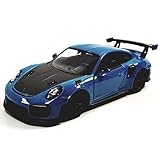
- Doors Open
- Pullback Action
- Die Cast Metal Body
- PULL BACK ACTION WITH FREE ROLLING WHEELS
MG: the sports car for a wide audience
MG MGA
The MGA replaced the upright look of earlier MG sports cars with a streamlined shape when it appeared in 1955. MG’s history gives it a 1,498 cc engine and says more than 100,000 were sold during its seven-year life. That manufacturer figure helps explain the MGA’s reach, though it is not presented as an independently audited total (MG Motor Europe brand history).
MG MGB
Introduced in 1962, the MGB paired accessible roadster character with a more modern monocoque structure, which MG says it introduced to the marque. MG describes it as its best-selling model for decades and reports that over 500,000 units were sold (MG Motor Europe brand history).
The MGA and MGB belong in an account of iconic cars not just because they sold in volume, but because they helped make the two-seat British roadster familiar well beyond the luxury-car market. Their significance is different from the E-Type’s: broad ownership and everyday usability were central to their appeal.
Lotus: lightness over luxury
Lotus Seven
Launched in 1957, the Seven made a deliberately minimalist case for the sports car: low weight, a direct driving experience, and little concern for luxury. Lotus says its own production ended in 1973, while the design continued under Caterham. The Seven’s identity is therefore both a specific Lotus model and a design lineage that outlasted Lotus production (Lotus Seven heritage).
Do these 3 things before closing this tab:
1Fix the driver behind crashes, sound loss and screen glitches2Clear out junk files and repair common Windows errors3Scan for outdated or missing drivers - takes under a minuteRank #3

- Licensed product from Fast & Furious
- ICONIC BRANDING: Attention to detail and expert styling enhances this 2002 Nissan Skyline R-34 vehicle
- Detailed interior, engine compartments and chassis
- Quality heavy diecast metal body with highly detailed wheels and chrome accents
- Suitable for ages 8+
Lotus’s page presents the principle this way: “Adding power makes you faster on the straights, subtracting weight makes you faster everywhere.” The line captures the Seven’s contrast with heavier, more comfort-focused GTs; Lotus does not name a speaker for it on that page (Lotus Elise heritage).
Lotus Elise
The Elise carried that lightweight philosophy into a later era. Lotus records its public debut at Frankfurt on 12 September 1995, notes its bonded and extruded aluminium chassis, and dates the model’s run through 2021. Like the Seven, the Elise is best understood as an engineering idea expressed across different versions, not by one universal power or weight figure (Lotus Elise heritage).
Aston Martin: the grand-touring counterpoint
Aston Martin DB5
The DB5 represents a more polished British sports-car ideal: a grand tourer built for pace and refinement rather than the Seven’s stripped-back simplicity. Aston Martin’s archive says the DB5 looked virtually identical to the Series 5 DB4 and was the first road-going Aston Martin to use the 4-litre version of Tadek Marek’s twin-cam straight-six (Aston Martin DB5 archive).
It earns a place here as a prestige and popular-culture emblem, but the cited archive supports the design and mechanical distinctions above rather than specific claims about film appearances. Its case as an icon does not depend on treating every DB5 detail as universal to the wider DB family.
What’s actually slowing this PC down?
Pick the symptom - the matching free tool is one click away.
Rank #4

- Approximately 7-1/2" Long
- Scaled replicas of cars and trucks
- Die-cast metal body with plastic details
- Opening doors on all- some with opening hoods and trunks
- Detailed chassis
Affordable roadsters: Triumph Spitfire and Austin-Healey Sprite
The shortlist should not be limited to prestigious badges. The Triumph Spitfire and Austin-Healey Sprite represent the lower-priced end of Britain’s postwar sports-car market, where compact dimensions and open-air fun mattered more than luxury. The British Sports Car Hall of Fame’s historical overview places such cars alongside the better-known prestige names, and the British Motor Museum’s display likewise spans marques and approaches (British Sports Car Hall of Fame history; British Motor Museum exhibitions).
These cars broaden the meaning of “iconic”: a sports car could matter because it was within reach of ordinary enthusiasts, not only because it set a design or engineering benchmark.
How the icons differ
| Car | What makes it stand out | Evidence-based detail |
|---|---|---|
| Jaguar XK120 | Postwar performance and the start of Jaguar’s modern sports-car lineage | Jaguar’s heritage history gives a period top-speed claim of 133 mph. |
| Jaguar E-Type | Recognizable design, racing-derived development, and a changing model range | Jaguar Daimler Heritage Trust records 72,512 built from 1961 to 1974. |
| MG MGA | Streamlined styling and broad roadster appeal | MG reports more than 100,000 sold over its seven-year life. |
| MG MGB | Accessible roadster character and monocoque construction | MG reports over 500,000 units sold. |
| Lotus Seven | Minimalism and direct, lightweight driving | Lotus production ran from 1957 through the end of 1973; the design continued under Caterham. |
| Lotus Elise | Modern lightweight engineering | Lotus records a bonded and extruded aluminium chassis and a model run through 2021. |
| Aston Martin DB5 | Grand touring, refinement, and prestige | Aston Martin identifies its 4-litre twin-cam straight-six as a key distinction. |
| Triumph Spitfire and Austin-Healey Sprite | Lower-priced, compact sports-car motoring | The historical overview identifies them as affordable roadster options; comparable production figures are not stated in the source. |
So which British sports cars are the most iconic?
The strongest short answer is the Jaguar E-Type, MG MGB, Lotus Seven, and Aston Martin DB5, with the XK120, MGA, Elise, Spitfire, and Sprite essential to the fuller story. The E-Type concentrates design recognition and racing lineage; the MGB represents broad ownership; the Seven and Elise embody Lotus’s lightweight approach; and the DB5 shows how refinement and prestige can define a sports car as powerfully as simplicity can.
That mix is the point: British sports-car history is not one contest for the fastest or most expensive car. Its lasting icons range from production roadsters to refined GTs, and from competition-influenced Jaguars to Lotus designs built around doing more with less.
Quick wins for a faster PC:
Repair Windows errors before they cause bigger problemsFix Now →Scan for outdated or missing drivers - takes under a minuteDriver Scan →Clear out junk files and repair common Windows errorsFree Scan →Quick Recap
Product prices and availability are accurate as of the date/time indicated and are subject to change. Any price and availability information displayed on Amazon at the time of purchase will apply.




