The Tool Desk
Outbyte PC Repair FREEClear out junk files and repair common Windows errorsFree Scan →Outbyte Driver Updater FREEFix the driver behind crashes, sound loss and screen glitchesFind Drivers →There is no verified, apples-to-apples top 20 in the available 2025 sources. The clearest official findings are that the EPA’s preliminary model-year 2025 analysis names the Lucid Air Pure RWD as its overall estimated real-world fuel-economy leader at 144.8 mpg-equivalent, while the Honda Civic leads gasoline non-hybrids at 36.6 mpg. Those are different measures from the window-label ratings in the 2025 Fuel Economy Guide.
Rather than present an unsupported ranking, this guide explains what the official figures do show and gives useful 2025 examples across gasoline hybrids, battery-electric cars and hydrogen fuel-cell vehicles. MPG measures gasoline consumption; MPGe is an energy-equivalence measure, not gasoline mileage.


As an Amazon Associate I earn from qualifying purchases.
What counts as a fuel-efficient car?
It depends on the powertrain and metric. Gasoline cars and hybrids that use gasoline are rated in miles per gallon (MPG). Battery-electric vehicles and hydrogen fuel-cell vehicles use electricity or hydrogen rather than gasoline, so their efficiency is expressed in miles per gallon equivalent (MPGe). MPGe lets shoppers compare energy use on an equivalent basis; it does not mean an electric or fuel-cell vehicle burns gasoline.
Free tools Windows power users keep installed
One-click scans. No signup required.
- Gasoline MPG: A measure of distance traveled per gallon of gasoline. Hybrid MPG ratings include the combined effect of the gasoline engine and electric motor.
- Electric MPGe: An energy-equivalence rating for battery-electric vehicles. It is not a direct measure of a driver’s electricity bill or charging time.
- Fuel-cell MPGe: An energy-equivalence rating for hydrogen fuel-cell vehicles. Hydrogen availability and refueling practicality are separate considerations.
- Plug-in hybrids: These can use grid electricity and gasoline. A single MPG figure does not capture how much the vehicle is charged or driven on electricity, so compare electric and gasoline operation separately.
The 2025 Fuel Economy Guide’s class-leading combined estimates weight city driving at 55% and highway driving at 45%. The guide also cautions that engine, trim, drivetrain and wheel choices can produce different ratings within one model name.
#1 Best Overall
Official 2025 leaders and useful examples
The figures below come from two different kinds of official source: EPA’s preliminary model-year 2025 trend analysis reports estimated real-world fuel economy, while the 2025 Fuel Economy Guide provides label-oriented estimates. They should not be read as one ranked list.
| Vehicle and configuration | Rating | What the figure represents |
|---|---|---|
| Lucid Air Pure RWD | 144.8 mpg-equivalent | EPA’s estimated real-world overall leader in its 2026 report on preliminary model-year 2025 vehicles. |
| Honda Civic | 36.6 mpg | EPA’s estimated real-world leader among gasoline non-hybrids in the same preliminary model-year 2025 analysis. |
| Toyota Prius hybrid | 57 mpg combined | 2025 Fuel Economy Guide class-leading conventional-hybrid example. |
| Hyundai Elantra Hybrid Blue | 54 mpg combined | 2025 Fuel Economy Guide fuel-economy leader example. |
| Lucid Air Pure RWD with 19-inch wheels | 146 MPGe combined | 2025 Fuel Economy Guide label value; not the same measure as EPA’s 144.8 mpg-equivalent real-world estimate. |
| Hyundai IONIQ 6 Standard Range | 135 MPGe combined | 2025 Fuel Economy Guide leader example. |
| Hyundai IONIQ 6 RWD with 18-inch wheels | 132 MPGe combined; 342 miles of range | Detailed 2025 Fuel Economy Guide configuration. Other wheel, drivetrain and range versions differ. |
| Hyundai IONIQ 6 AWD with 18-inch wheels | 121 MPGe combined; 316 miles of range | ENERGY STAR’s 2025 vehicle listing for this configuration. |
| Hyundai IONIQ 6 SE RWD | 132 MPGe combined | Toyota’s 2025 comparison reports this EPA-estimated figure. |
| Toyota Mirai XLE | 74 MPGe combined | Toyota’s 2025 comparison identifies the Mirai as a hydrogen fuel-cell vehicle and reports this EPA-estimated figure. |
These examples illustrate efficient choices; they do not establish a complete top-20 ranking. The reported IONIQ 6 figures also show why the precise version matters: wheel size and drivetrain can change efficiency and range.
Rank #2

- Improves Gas Mileage***
- Helps increase engine efficiency
- Protects for 15,000 miles – guaranteed*
- Contains additives to help fight sludge
- Suitable for Hybrid vehicles
Why the ratings are not a single ranking
Real-world estimates and label values answer different questions
EPA’s 2026 Automotive Trends Report describes estimated real-world fuel economy for preliminary model-year 2025 vehicles. The 2025 Fuel Economy Guide provides estimates used for fuel-economy labels. EPA says these presentations differ. For example, the Lucid Air Pure RWD is listed at 144.8 mpg-equivalent in the trends report and at 146 MPGe combined in the guide for the 19-inch-wheel configuration. Neither number should be silently substituted for the other.
A cross-powertrain top 20 needs a stated method
A fair ranking would have to decide whether it includes only cars that use gasoline or also battery-electric and fuel-cell vehicles; how it treats plug-in hybrids; what counts as a car rather than an SUV or other vehicle; and whether it ranks label ratings or estimated real-world results. It would also need model-level records and exact configuration checks. The official sources cited here do not establish a complete, consistently ranked cross-market top 20, so a twenty-name list would imply more certainty than they support.
How to choose the right efficiency figure
For gasoline savings
Compare combined MPG among the vehicles you are actually considering, paying attention to whether each is a conventional gasoline car, a hybrid or a plug-in hybrid. A high MPG rating can reduce fuel use, but your result depends on driving conditions and, for plug-in hybrids, how often you charge and how much of your travel is electric.
For an electric car
Use the exact trim’s combined MPGe and estimated range, then consider whether that range and your charging arrangements fit your typical trips. MPGe describes energy efficiency; it does not tell you the vehicle’s purchase cost, your local electricity cost or how convenient charging will be.
Rank #4
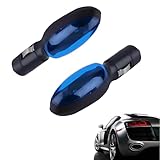
- Significantly reduce fuel consumption and extend driving range English:No need to change your driving habits! This fuel saver intelligently optimizes engine fuel efficiency and accurately controls fuel injection volume. It effectively reduces comprehensive vehicle fuel consumption and greatly extends the driving range per tank of fuel. Perfect for daily commutes and highway road trips, it cuts frequent refueling costs and saves you hundreds of fuel fees in the long run.
- Stabilize the circuit system, ensure complete combustion and save fuel. Adopted upgraded circuit voltage stabilization technology to intelligently balance the voltage fluctuations of the automotive electrical system, achieving precise fuel ignition and full fuel combustion. It effectively solves stalling and throttle lag during stop-and-go city driving, eliminates fuel waste, delivers smoother vehicle start and acceleration, and greatly optimizes your driving experience.
- Plug-and-play, no installation required, portable and without any damage. English:Compatible with 12V car cigarette lighter socket and OBD2 port, it features tool-free, wiring-free and damage-free plug-and-play installation within seconds, no professional mechanic required. The compact and lightweight body can be easily stored in the glove box or armrest without occupying space, suitable for most gasoline, diesel and hybrid vehicles.
- Improve the response of the power system and optimize the driving and riding experience English:Different from traditional low-efficiency fuel-saving accessories, this upgraded fuel saver stabilizes vehicle electrical signals in real time and responds to throttle commands quickly. It effectively solves the problems of insufficient engine power and weak acceleration, provides linear power output and sensitive speed boost, eliminates driving stuttering, and comprehensively improves driving smoothness.
- Universal fitment for the entire vehicle, durable and safe with no worries English:Made of high-quality wear-resistant and high-temperature resistant materials with exquisite craftsmanship, it is high-temperature resistant, anti-aging, durable and safe for long-term vehicle use. Widely compatible with 99% of cars, SUVs, trucks and hybrid vehicles on the market, it will not damage the original car circuit and maintains stable performance for long-term use.
For a hydrogen fuel-cell car
Check the exact vehicle’s MPGe rating alongside hydrogen refueling availability where you live and travel. The rating alone cannot establish whether owning the vehicle is practical in a particular area.
For any model
- Match model year, trim, drivetrain and wheel size to the rating you are using.
- Compare the same type of figure: label estimate with label estimate, or real-world estimate with real-world estimate.
- Use the combined city/highway rating for a general comparison, but expect individual results to vary with speed, weather, traffic, route and driving habits.
- Assess purchase cost, incentives, operating costs and local fueling or charging access separately; the cited efficiency figures do not establish those factors.
The 2025 Fuel Economy Guide explains that its estimates are produced in the same way under the same conditions to support comparisons, while warning that they may not predict an individual driver’s result. EPA says its estimates draw on testing at its National Vehicle and Fuel Emissions Laboratory in Ann Arbor and data submitted by manufacturers.
Best Value
One practical way to improve fuel economy
Keep tires inflated to the pressure on the vehicle’s tire-information placard or certification label, rather than relying on the maximum pressure printed on the tire. The 2025 Fuel Economy Guide says properly inflated tires can typically improve fuel economy by 0.6%. That is a typical improvement, not a guarantee for every car or driver.
What fuel-economy ratings do not tell you
Efficiency is only one part of the ownership decision. The cited figures do not establish current transaction prices, incentives, charging access, hydrogen availability or program eligibility. Nor does an efficiency rating represent full lifecycle emissions: EPA’s 2025 greenhouse-gas score covers tailpipe CO₂ and excludes emissions from fuel production and distribution.
Quick Recap
Product prices and availability are accurate as of the date/time indicated and are subject to change. Any price and availability information displayed on Amazon at the time of purchase will apply.




