Windows Errors? Fix Them Before They Spread
Repair common Windows errors and clear accumulated junk for a smoother, more stable PC - no reinstall needed.Free scan · no reinstallOutdated Drivers Are Slowing You Down
One free scan finds every outdated or missing driver and matches the right update for your exact hardware.Free scan · exact hardware matchThere is no reliable, model-independent evidence that one fault is the most common across every Toyota hybrid. But if your Toyota hybrid will not start or enter Ready mode, a discharged 12-volt auxiliary battery is a practical first possibility to understand—not proof that the high-voltage traction battery has failed.
What “hybrid battery” can mean
Toyota hybrids have two different batteries. The high-voltage traction battery supplies power for propulsion; a separate 12-volt auxiliary battery starts the hybrid system and runs electrical equipment. Toyota says either battery can discharge after a vehicle has been parked for an extended period, and continued use of electrical accessories can also contribute to discharge. Toyota Japan’s hybrid-battery FAQ explains the distinction.
A flat 12-volt battery can keep the vehicle from starting or reaching Ready mode even when the traction battery is not the problem. A no-start alone does not diagnose which component is at fault.
Why a Toyota hybrid’s 12-volt battery may go flat
- Extended inactivity: Toyota says long-term parking can discharge either battery.
- Electrical loads while parked: Leaving equipment or accessories in use while the hybrid system is off can contribute to 12-volt battery discharge.
- A model-specific electrical fault: Toyota bulletin T-SB-0056-22, dated June 23, 2022, describes some 2021 RAV4 Prime vehicles whose 12-volt battery may become depleted while the vehicle is IG-OFF because the Hybrid Vehicle ECU does not go to sleep. This bulletin concerns a bounded set of vehicles, not every RAV4 Prime or Toyota hybrid. Read Toyota bulletin T-SB-0056-22.
Toyota Japan’s advice for its market is to drive for a total of at least 30 minutes over two weeks, and 80 minutes over two weeks in winter. Treat those figures as Japan-specific guidance, not a universal maintenance rule for every Toyota hybrid, climate, or market. Follow the advice in your own vehicle’s manual.
#1 Best Overall

- Reconditioned, balanced, 3 yr Replacement Warranty, pro-rated after one.
- In-Vehicle tested @100 amperes
How to respond to a no-start
- Check the symptom. If the vehicle will not enter Ready mode, a discharged 12-volt battery is one possibility; the symptom does not establish that the traction battery has failed.
- Use the exact owner’s manual. If jump-starting is appropriate, follow the manual for your model and use only its specified connection points and procedure. NHTSA says that in most cases a hybrid’s 12-volt battery can be jump-started like a gasoline vehicle’s. NHTSA’s hybrid and electric vehicle guidance also explains that many hybrids use a DC-DC converter, rather than a conventional alternator, to charge the 12-volt battery.
- Do not push-start it. Toyota’s 2024 Grand Highlander Hybrid manual says a discharged 12-volt battery cannot be overcome by push-starting and directs owners to have the vehicle inspected by a Toyota dealer. Check the manual for your own model. 2024 Grand Highlander Hybrid Owner’s Manual.
- Arrange diagnosis if the problem recurs. A jump-start can help in an emergency, but it does not identify or repair a recurring drain, a failing auxiliary battery, or another fault.
When a warning points to the traction battery or another system
Do not try to judge the high-voltage traction battery’s remaining life by checking its voltage yourself. Toyota says that the need for traction-battery replacement cannot be determined directly that way; a warning indicator or message calls for dealer inspection, and replacement depends on the inspection result. The charge display is computer-controlled, so a low displayed state of charge is not equivalent to a conventional battery reading of “empty.” Toyota Japan’s FAQ on traction-battery life and inspection describes this distinction.
Some serious hybrid-system faults are specific to particular vehicles. In a December 16, 2025 U.S. announcement, Toyota described a recall involving certain 2025–2026 Camry and 2026 Corolla Cross Hybrid vehicles: a bolt inside the hybrid powertrain inverter could loosen, potentially causing loss of motive power or fire. Toyota reported approximately 55,000 vehicles in the United States and advised checking recall status by VIN; the affected population and remedy can change as recall information is updated. This is not a fault established for every vehicle bearing those nameplates or for Toyota hybrids generally. Toyota’s recall announcement.
Rank #2

- Reconditioned, 2 yr Replacement Warranty
- In-Vehicle tested @100 Amperes
- Shipping weight 110 lbs
What reliability figures can—and cannot—tell you
Owner-reported trouble categories for individual models, such as the 2024 Toyota Prius and 2022 Toyota Camry Hybrid, do not establish one most frequent failure across all Toyota hybrid models, years, and problem categories. Likewise, Which? reports that 5.6% of owners of full hybrid cars across brands in its survey reported a battery issue; that is not a Toyota-specific failure rate or a ranking of Toyota hybrid problems. Which?’s hybrid reliability survey.
Without comparable data covering the same Toyota models and years and the same categories of faults, a universal “number one” problem cannot be stated reliably. The useful distinction for an owner is whether the symptom is a no-start that may involve the 12-volt battery, a warning that needs diagnosis, or a model- and VIN-specific recall issue.
Rank #3
- 5H-4002
- A-1 Cardone/Parts Master
Check coverage and recalls for your exact vehicle
Warranty terms depend on market, vehicle, and the applicable booklet. For example, Toyota’s 2025 RAV4 Hybrid U.S. warranty guide lists 8 years/100,000 miles for named hybrid-related components and, for Toyota hybrid vehicles beginning with model year 2020, 10 years/150,000 miles for the HV battery, whichever comes first. Those terms should not be assumed to apply to a different model, market, or contract. Check your own warranty documents and vehicle identification number (VIN) for current coverage and recall eligibility.
Quick Recap
Rank #4
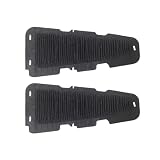
- Made of brand-new high-quality filter material with sturdy structure, effectively blocks dust and impurities for smooth and stable air intake.
- Perfectly compatible with 2025-2026 Toyota Camry HV, replaces OE number G92DH-33080 for direct factory-style fit.
- Designed for hybrid battery intake system, ensures steady cooling airflow to support stable battery performance.
- Easy to install without modification or tools, just align with original slots and fix, convenient for routine maintenance.
- Package included: 1PAIR HV Battery Intake Filter
Product prices and availability are accurate as of the date/time indicated and are subject to change. Any price and availability information displayed on Amazon at the time of purchase will apply.




