Do these 3 things before closing this tab:
1Fix the driver behind crashes, sound loss and screen glitches2Clear out junk files and repair common Windows errors3Scan for outdated or missing drivers - takes under a minuteFord sold the Pinto as a North American subcompact in the early 1970s. In certain rear-impact crashes, the fuel-system design in some 1971–1976 Pintos could allow fuel to leak and increase the risk of fire. A federal investigation, a major lawsuit, and a widely debated Ford cost-benefit document made the Pinto a lasting case study in automotive safety and corporate responsibility.
How the Pinto controversy emerged
The Pinto’s controversy centered on the protection of its fuel tank and filler-neck assembly in rear impacts. The concern was not that every Pinto would catch fire in every crash, but that particular crash conditions and vehicle configurations could lead to fuel leakage and a heightened fire risk.
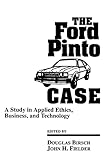


The issue later became part of a broader debate about how manufacturers should assess safety risks, how regulators should respond to evidence of defects, and what internal documents reveal about corporate decision-making.
The Pinto Memo: what it did and did not say
In 1973, Ford’s Environmental and Safety Engineering organization prepared a document titled “Fatalities Associated with Crash-Induced Fuel Leakage and Fires.” It became known as the Pinto Memo. The document considered estimated social costs and benefits of stronger fuel-system protections in the context of proposed federal regulation.
#1 Best Overall
The memo is often summarized as proof that Ford decided it was cheaper to pay claims than fix every Pinto. That is an oversimplification. The document used generalized estimates about vehicle populations, injuries, deaths, and modification costs to inform a regulatory debate; it was not a straightforward authorization to leave a known defect in a specific Pinto production run. It is still significant evidence that Ford’s safety organization quantified the consequences of fuel leakage and considered the costs of design changes.
Figures often repeated in accounts of the controversy—including an approximately $11-per-vehicle modification estimate—should be understood in their original regulatory context, not treated as a universal repair price. Other figures discussed in later litigation referred to different proposed engineering alternatives. The estimates are not interchangeable.
The Grimshaw case and the Pinto’s human cost
The accident behind Grimshaw v. Ford Motor Co. involved a 1972 Ford Pinto hatchback that stalled on a freeway and was struck from behind. Lilly Gray suffered fatal burns, and 13-year-old Richard Grimshaw survived with severe, permanently disfiguring burns.
After a six-month trial, the jury found against Ford and awarded Grimshaw compensatory damages. It initially awarded $125 million in punitive damages; the trial court conditionally reduced that award to $3.5 million. In 1981, the California Court of Appeal affirmed the judgment and the reduced punitive award.
Free tools Windows power users keep installed
One-click scans. No signup required.
The appellate opinion discussed evidence about the tank’s location and protection, rear-structure vulnerability, crash testing, and possible engineering alternatives. Evidence at trial included estimates of approximately $10 per vehicle for moving or shielding the tank and approximately $5 per vehicle for a tank-within-a-tank approach. Those were estimates tied to specific proposals in the litigation, not a single confirmed retrofit price for every Pinto.
The court described Ford management’s conduct, in the context of the punitive-damages judgment, as showing conscious and callous disregard for public safety in pursuit of corporate profits. That judicial characterization should be understood in its legal context rather than generalized to every employee or every Pinto.
Federal investigation and recall
NHTSA formally opened a defect investigation on September 13, 1977, concerning rear-impact damage to the fuel tanks and filler necks. On May 8, 1978, the agency made an initial determination that a safety-related defect existed in the fuel systems of 1971–1976 Ford Pintos and 1975–1976 Mercury Bobcats. Ford agreed to recall and remedy affected vehicles in June 1978, before a scheduled public hearing.
The government record gives different approximate totals at different stages: Ford’s defect report estimated about 1.4 million potentially affected vehicles, while government summaries describe a campaign of about 1.5 million vehicles. These figures reflect different counting stages and methods. NHTSA’s action concerned particular model years and fuel-system risks; it was not a finding that every Pinto was unsafe in every crash.
PC Slower Than It Used to Be?
A free scan shows the junk files, broken settings and background clutter dragging Windows down - then fixes them in one click.Free scan · Windows 10 & 11Outdated Drivers Are Slowing You Down
One free scan finds every outdated or missing driver and matches the right update for your exact hardware.Free scan · exact hardware matchRank #3
What is known about Pinto fire deaths?
Popular accounts have repeated estimates of 500 to 900 deaths in Pinto fires, including an estimate in Mark Dowie’s 1977 Mother Jones article, “Pinto Madness.” Later analysis has challenged the scope and attribution of that figure. It should not be presented as an official final count of deaths caused by the Pinto’s design.
The more defensible summary is that the Pinto was linked to rear-impact fuel fires and that the safety risk prompted investigation, litigation, and a recall. The most dramatic death totals repeated in popular retellings remain disputed.
Independent reader supportYour contribution helps us test, update, and keep practical guides available for everyone.Why the Pinto case still matters
The Pinto case became influential in products-liability discussions because it brought together evidence about design alternatives, corporate knowledge, punitive damages, and the limits of relying on industry custom to settle whether a design was defective. The appellate decision affirmed the judgment and rejected Ford’s effort to treat industry practice as decisive.
The case also illustrates why a regulatory cost-benefit analysis should be read in context. The existence of estimates does not by itself prove a specific decision about a particular vehicle, but the document and trial evidence became part of a consequential public and legal debate about how companies evaluate foreseeable safety risks.
Recommended Free Tools
Rank #4

- Classic Ford Car design. Officially Licensed by The Ford Motor Company
- H40380
- Lightweight, Classic fit, Double-needle sleeve and bottom hem
FAQ
Did every Ford Pinto have a fuel-tank defect?
No. The federal action concerned fuel-system risks in specified model years and crash conditions: 1971–1976 Pintos and 1975–1976 Mercury Bobcats. The record does not support saying that every Pinto was defective in every rear-end collision.
Did Ford’s memo say it was cheaper to pay for deaths than to fix the Pinto?
That is a popular simplification. The 1973 document compared estimated costs and benefits of stronger fuel-system protection in a regulatory context, using generalized assumptions. It was not a straightforward authorization to leave a known defect in a specific production run.
How much was the Grimshaw punitive-damages award?
The jury initially awarded $125 million in punitive damages. The trial court conditionally reduced that amount to $3.5 million, and the California Court of Appeal affirmed the reduced award in 1981.
How many people died in Pinto fires?
There is no established official final Pinto-specific death count in the cited record. The often-repeated 500–900 estimate is disputed and should not be presented as a definitive count.
How many vehicles were recalled?
Contemporary counts differ: Ford estimated approximately 1.4 million potentially affected vehicles, while government summaries describe approximately 1.5 million vehicles in the campaign. The figures reflect different stages and counting methods.
Quick Recap
Product prices and availability are accurate as of the date/time indicated and are subject to change. Any price and availability information displayed on Amazon at the time of purchase will apply.