Free tools Windows power users keep installed
One-click scans. No signup required.
Non-ethanol gas, commonly called E0, is gasoline without ethanol. Whether it is the right choice depends on the fuel limits and octane requirement in your vehicle or equipment manual, as well as local price and availability—not on a general rule that ethanol-free fuel is always better.
In the United States, E10 is typical, and the U.S. Department of Energy (DOE) says more than 98% of U.S. gasoline contains ethanol. Check the pump label and your owner’s manual before filling; do not assume guidance for cars also applies to boats or small engines.
What does non-ethanol gas mean?
“Non-ethanol gas” generally means gasoline with no ethanol, often called E0. E0 is a common shorthand, but labels and product descriptions can vary by retailer. Check the pump information rather than relying on a name alone.
Ethanol is blended with gasoline at different concentrations. The blend affects energy content, but lower energy per gallon does not by itself predict the mileage any particular vehicle will get. DOE says the fuel-economy effect depends on the ethanol concentration and whether the engine is optimized for that fuel.
What’s actually slowing this PC down?
Pick the symptom - the matching free tool is one click away.
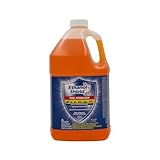
#1 Best Overall

- New Standard of Antioxidants and Anticorrosives
- Proprietary top-tier detergent reduces the need for higher octane as the machine ages
- Phase separation inhibitor
- Helps bond 2 cycle Oil to gasoline/ethanol mix
- Combustion Cool Technology ( CCT)
E0 and common ethanol blends compared
| Fuel | Ethanol content | Key compatibility guidance |
|---|---|---|
| E0 | Generally none | Check the pump label, manual, and required octane; availability varies by location. |
| E10 | 10% | DOE says E10 or lower can be used in conventional gasoline vehicles without special fueling equipment. Do not assume this covers every non-road engine. |
| E15 | 10.5% to 15% | DOE identifies E15 as approved for model-year 2001 and newer light-duty vehicles; check the manufacturer’s fuel specifications before use. |
| E85 | 51% to 83%, depending on geography and season | Intended for flexible-fuel vehicles, not gasoline-only models. |
Blend definitions and vehicle guidance are from the U.S. Department of Energy Alternative Fuels Data Center and its consumer guide. These vehicle approvals should not be treated as approvals for boats, lawn equipment, motorcycles, or other equipment.
Does ethanol-free gas improve mileage or performance?
Ethanol contains less energy per gallon than gasoline, but that fact alone does not establish a specific vehicle’s fuel economy or performance on E0. DOE says the effect depends on the blend and the engine’s optimization. Compare the fuel your manual permits and requires rather than expecting a guaranteed mileage gain from switching.
DOE reports that E85 containing 83% ethanol has about 27% less energy per gallon than gasoline. That figure is about energy content for that E85 blend; it is not a measured mileage change and should not be applied to E10 or E0.
Rank #2
- Stabilizes fuel for up to 3 years
- OEM tested, verified, and used
- Prevents Engine Repair and Prevents Ethanol Fuel Problems
- Works in all 2 and 4-cycle engines
- Prevents water issues, conditions rubber and plastic
Octane is a separate consideration from ethanol content. Use fuel that meets the octane requirement in your manual. Non-ethanol fuel is not automatically the correct octane for your engine.
How to choose fuel for your vehicle or equipment
- Check the owner’s manual. Confirm the permitted ethanol percentage and required octane for the specific vehicle or equipment.
- Read the pump label. Confirm the blend and octane before filling. For E15, DOE’s consumer guide advises checking the vehicle manufacturer’s fuel specifications.
- For E85, confirm the vehicle is flexible-fuel. DOE says E85 is intended for flexible-fuel vehicles and is not approved for gasoline-only models.
- For non-road equipment, follow its own manual. Do not infer boat, motorcycle, or small-engine compatibility from guidance for conventional passenger vehicles.
- Compare local options. E0 availability and price vary. Verify a station’s current offering and labeling directly; online listings may be out of date.
When might E0 make sense?
E0 may be an option when the equipment manual permits it and it meets the required octane. It can also be relevant where a manufacturer specifies a fuel limit that an ethanol blend would exceed. The manual—not a broad claim about an entire class of engines—is the best guide.
For a conventional gasoline vehicle, DOE says E10 or lower can be used without special fueling equipment. For E15, check the manufacturer’s specifications; use E85 only in a flexible-fuel vehicle. This guidance does not settle compatibility for every boat or small engine.
Rank #3

- Product Type: Auto Accessory
- Package Quantity: 1
- Package Weight: 1.0 lbs
- Package Dimensions: 27.94 cms (L) x 5.588 cms (W) x 6.096 cms (H)
There is no universal cost or savings answer: local E0 prices, availability, and a vehicle’s fuel use all matter. The available DOE guidance does not establish a general E0 price premium or guarantee that switching saves money.
Independent reader supportYour contribution helps us test, update, and keep practical guides available for everyone.Frequently asked questions
Is ethanol-free gas better for my car?
Not necessarily. Check the owner’s manual for permitted ethanol content and octane. DOE says conventional gasoline vehicles can use E10 or lower without special fueling equipment, while E15 requires checking manufacturer specifications.
The Tool Desk
Outbyte PC Repair FREEClear out junk files and repair common Windows errorsFree Scan →Outbyte Driver Updater FREEScan for outdated or missing drivers - takes under a minuteDriver Scan →Can I use E15 in my vehicle?
DOE identifies E15 as approved for model-year 2001 and newer light-duty vehicles, but advises consumers to check the manufacturer’s fuel specifications. Follow your vehicle manual and pump labeling.
Rank #4

- Pre-blended for outdoor power equipment - TruFuel provides the perfect fuel for all 4-cycle, air-cooled engines requiring a 50:1 mix
- For use in 4-cycle engines, Value Bundle of 2
- Specifically for portable gas-powered equipment - convenient, saves time and delivers superior performance
- Reduced aromatics and consistent vapor pressure lead to a cleaner burning fuel with the addition of a full synthetic oil and the guaranteed correct mix ratio for your equipment; Extends equipment life and ensures proper break-in for new equipment
- Easier start-up, increased trigger response and smoother idling with no smoke or plug fouling
Can I put E85 in a regular gasoline car?
No. DOE says E85 is intended for flexible-fuel vehicles and is not approved for gasoline-only models.
Should I use E0 in my boat or lawn equipment?
Check the specific equipment manual for permitted ethanol content and octane. Passenger-car guidance does not establish compatibility for every marine or small engine.
How can I find ethanol-free gas near me?
Availability varies locally. Check current station information and confirm the pump’s fuel labeling directly before filling.
Quick Recap
Sources
- U.S. Department of Energy Alternative Fuels Data Center, “Ethanol Fuel Basics”
- U.S. Department of Energy Alternative Fuels Data Center, “Ethanol”
- U.S. Department of Energy Alternative Fuels Data Center, “Ethanol Benefits and Considerations”
- U.S. Department of Energy Alternative Fuels Data Center, “Fuel Properties Comparison”
- U.S. Department of Energy, “Consumer Guide to Ethanol and Flexible-Fuel Vehicles”
Product prices and availability are accurate as of the date/time indicated and are subject to change. Any price and availability information displayed on Amazon at the time of purchase will apply.