Cars have not evolved through a simple succession in which one power source replaced another. Electric and gasoline vehicles developed alongside one another, and today’s cars span several powertrains alongside connected and automated technologies. Electric cars are now a major global market category, but their future role—and the emissions they can avoid—depends on region, policy, infrastructure and how electricity is generated.
Cars began with competing approaches to propulsion
Electric and gasoline cars emerged in overlapping eras. The U.S. Department of Energy describes gasoline cars developing alongside electric vehicles as internal-combustion engines improved during the 1800s. That history is a useful reminder that the automobile did not follow a single, uninterrupted path from one technology to another.

Early gasoline cars had practical drawbacks: some required manual gear changes and hand-crank starting, and they produced noise and exhaust. The Department of Energy’s account is U.S.-oriented; it does not establish a complete worldwide chronology or support crediting one inventor or exact date with creating the modern car.
Battery development and the changing capabilities of different powertrains have continued to shape the choices available to drivers. The result is not one universal type of car, but a mix of systems with different energy sources and operating needs.
Free tools Windows power users keep installed
One-click scans. No signup required.
#1 Best Overall
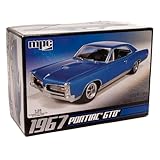
- V8 POWER: The model features a 400 cubic inch V8 engine, reflecting the muscle and power that defined the GTO's reputation.
- DETAILED SUSPENSION & EXHAUST: The kit incorporates separate rear suspension and exhaust detailing, adding to the realism of the model.
- BUCKET SEATS & CONSOLE: The model's interior features bucket seats and a floor shifter with a console, capturing the iconic look and feel of the GTO.
- OPTIONAL SUPERCHARGER: For those seeking more power, the kit offers an optional supercharger, allowing you to customize your model.
- CLEAR & COMPREHENSIVE INSTRUCTIONS: The included instructions are clear and user-friendly, making the kit accessible to modelers of different skill levels, from beginners to experienced hobbyists.
Today’s cars use several powertrains
The key distinction is where a vehicle gets the energy it uses to drive and whether it can take electricity from an external charger. The U.S. Department of Energy defines these common electric-drive categories as follows:
| Vehicle type | Driving energy and charging |
|---|---|
| Hybrid electric vehicle (HEV) | Uses an electric drive system and battery, but cannot be plugged in. Liquid fuel supplies its driving energy. |
| Plug-in hybrid electric vehicle (PHEV) | Can use battery electricity or liquid fuel for driving; the battery can be recharged by plugging in. |
| Battery-electric vehicle (BEV) | Uses a battery as its driving energy source and must be plugged in to recharge. |
| Internal-combustion vehicle | Uses an internal-combustion engine. The National Academies included this powertrain in its 2021 assessment of light-duty vehicle efficiency technologies. |
| Fuel-cell vehicle | Fuel-cell technology was among the powertrain options considered in the National Academies’ 2021 assessment. That assessment is not a current measure of market availability. |
These categories describe propulsion, not every aspect of a car. The National Academies’ 2021 assessment also considered non-powertrain efficiency technologies, connected vehicles and automation in its discussion of light-duty vehicles for 2025–2035. That scope describes technologies considered in an assessment, not proof that every technology is widely deployed or will deliver a particular outcome.
Rank #2

- Versatile 3-in-1 Kit: Build your 1963 Chevy Corvette Sting Ray as factory stock, a street custom, or a drag gasser with this multi-option kit.
- Enhanced Features: Includes pre-lettered drag slicks, clear red taillights, and stock & custom wheels for an authentic and detailed build.
- Multiple Engine Options: Customize your model with various engine intake options, allowing for unique and personalized creations.
- Retro Styling: Comes with a full-color, retro-styled decal sheet and vintage “Street Rods Series” packaging, perfect for nostalgic collectors.
- High-Quality Collectible: AMT's improved reissue offers superior parts and detailing, making it a must-have for model enthusiasts and collectors.
Electric cars have become a major global market category
In its 2026 report on 2025 data, the International Energy Agency (IEA) estimated that more than 20 million electric cars were sold worldwide in 2025, 20% more than in 2024. One in four new cars sold globally that year was electric. In this IEA category, “electric cars” includes battery-electric and plug-in hybrid cars.
Model availability has grown, but sales remain concentrated. The IEA counted nearly 1,000 electric models among about 2,500 car models available worldwide in 2025—around 40% of the total—yet five models accounted for around 20% of global battery-electric sales. Those five were the Tesla Model Y, Tesla Model 3, Geely Geome Xingyuan, Wuling HongGuang Mini and BYD Seagull.
Rank #3

- Revell Model Kit #14531, Skill Level 5, Contains 77-Parts, Recommended for ages 13 and up
- Detailed 440+6 V-8 engine, hood scoop that can be positioned open or closed
- Detailed interior with separate side panels and a front bench seat
- Molded in white and clear with chrome plated parts and black vinyl tires
- Illustrated assembly instructions. Requires paint and glue. (not included)
The IEA’s 2025 data put the average range of battery-electric cars at almost 380 km, with that average having plateaued in recent years. The IEA notes that larger batteries add cost and weight, while more available charging can reduce the value of adding still more battery capacity. Range, price and charging access are therefore connected considerations, rather than independent measures of progress.
Electric-car choices vary by region
Global totals can obscure differences in the models on offer. Among the major markets compared by the IEA—China, Europe, the United States and Japan—China was the only one in 2025 with more electric models than conventional models. This describes model availability, not the share of vehicles sold or driven.
Rank #4

- A PERENNIAL CLASSIC FOR EXPERIENCED MODELERS: AMT’s 1/25 scale 1967 Shelby GT-350 is the perfect project for muscle car builders. Add it to your collection today!
- FEATURE PACKED: The 1967 Shelby GT-350 is a historical muscle car that stands alone! Fully paintable, it features authentically detailed water-slide decals. Build it up right with a Ford 289 V8 engine and all the Shelby touches—custom rear lower pan, chrome wheels, custom taillights and front grille, bucket seats, and more. Wrapped up nicely in retro-styled packaging!
- QUICK SPECS: 1/25 Scale, 123 Parts, 7 inches long once assembled. Parts molded in white, clear and transparent red, with black vinyl tires. Some parts are chrome plated. Plastic model kit paint and cement required (Testors or Tamiya brands recommended). Paint guide included in kit. Skill Level 2. For ages 10+
- THE PERFECT PRESENT: Don't know what to get dad for his birthday? Or maybe you have an avid hobbyist or collector in your life. This model kit makes an ideal gift for any occasion!
Vehicle size also differed in the electric-model mix. More than 85% of U.S. electric models were large cars or SUVs, compared with roughly three-quarters in Europe and China, according to the IEA’s 2025 data. These figures describe available models; they should not be read as a universal account of what consumers prefer.
Independent reader supportYour contribution helps us test, update, and keep practical guides available for everyone.Tailpipe emissions are not the whole emissions picture
A battery-electric vehicle has zero tailpipe emissions while operating. A plug-in hybrid has zero tailpipe emissions only when it is operating in electric mode. Neither statement means that driving is free of emissions across the full energy supply chain: generating electricity can produce emissions.
Best Value
To account for that distinction, the IEA uses a well-to-wheel approach that considers electricity generation as well as the fossil-fuel use displaced by electric driving. Using that approach, it estimated that the global EV stock avoided 190 million tonnes of CO2-equivalent net emissions in 2025. This is an estimate of net emissions avoided, not a claim that electric cars have zero lifecycle emissions.
What the evidence says—and does not say—about the future
There is no source-grounded single forecast for what cars will become. In its 2021 assessment, the National Academies of Sciences, Engineering, and Medicine wrote: “The period from 2025 to 2035 could bring the most fundamental transformation in the 100-plus year history of the automobile.” This was a prospective assessment published in 2021, not a statement that a particular transformation has since occurred.
IEA outlooks also depend on their assumptions. Under its Current Policies Scenario, the IEA projects that EV adoption over the decade to 2035 would result in approximately 7 gigatonnes of cumulative avoided CO2-equivalent emissions globally, with over 1.2 gigatonnes avoided in 2035 alone. These are scenario results, not observed outcomes or unconditional predictions. In that same scenario, road-transport emissions remain above 6 gigatonnes of CO2 through 2035.
How much any technology contributes will depend on conditions that differ across regions, including policy, charging or refuelling infrastructure, vehicle costs, how much vehicles are driven and the emissions associated with their energy supply. The evolution of cars is therefore not only a question of which powertrain a vehicle uses; it also depends on where, how and under what conditions it is used.
Outdated Drivers Are Slowing You Down
One free scan finds every outdated or missing driver and matches the right update for your exact hardware.Free scan · exact hardware matchPC Slower Than It Used to Be?
A free scan shows the junk files, broken settings and background clutter dragging Windows down - then fixes them in one click.Free scan · Windows 10 & 11How to compare cars for a particular need
No powertrain is the best fit for every driver or region. A useful comparison starts with the actual vehicle and driving pattern, then weighs the conditions needed to use it:
Quick Recap
- Propulsion and energy source: identify whether the car relies on liquid fuel, externally charged battery electricity, or both.
- Upfront cost and operating needs: compare the available models and the energy and charging or refuelling arrangements required for regular use.
- Usable range and access: consider the distances typically driven and the availability of charging or refuelling where the car will be used.
- Emissions boundary: distinguish emissions at the tailpipe from well-to-wheel or lifecycle emissions, which include impacts beyond the vehicle while it is being driven.
- Local market and infrastructure: check which vehicle sizes and powertrains are actually available in the relevant region, along with the policies and infrastructure that shape their use.
Product prices and availability are accurate as of the date/time indicated and are subject to change. Any price and availability information displayed on Amazon at the time of purchase will apply.




