The Tool Desk
Outbyte PC Repair FREEClear out junk files and repair common Windows errorsFree Scan →Outbyte Driver Updater FREEScan for outdated or missing drivers - takes under a minuteDriver Scan →There is no single best 2021 off-grid camper. The right choice depends on whether the priority is low weight and maneuverability, hard-side comfort and indoor facilities, or a purpose-built integrated expedition vehicle. The Four Wheel Campers Hawk Flatbed, Lance 855S, and EarthCruiser EXP/FX represent those three approaches.
Start with payload, fit, center of gravity, and loaded axle weights—not with the camper’s marketing category. A published dry or wet figure is only a starting point once water, propane, batteries, options, occupants, food, recovery gear, and personal cargo are added.
As an Amazon Associate I earn from qualifying purchases.
Three different answers to the same question
The phrase “best off-grid camper” hides three very different vehicle designs:
- A lightweight pop-up pickup camper, such as the Four Wheel Campers Hawk Flatbed, keeps mass and roof height down while preserving conventional-truck ownership.
- A heavier hard-side slide-in camper, such as the Lance 855S, provides more indoor facilities and weather protection but demands a much more carefully matched truck.
- An integrated 4×4 expedition vehicle, such as the EarthCruiser EXP or FX, combines the chassis, living module, and off-road systems into one specialized platform.
For most pickup buyers, the Hawk is the sensible starting point when payload margin and trail maneuverability matter most. The Lance is the stronger choice when an indoor bathroom, larger tanks, ducted heat, and a more conventional RV interior justify the additional weight. The EarthCruiser is the most coherent expedition system, but it is not really a pickup camper at all: it is a purpose-built vehicle with a higher purchase, service, and ownership commitment.
#1 Best Overall

- Usage Scenario:The tie down device can provide a connection point and fix your camper on the truck lathe.
- High Quality Materials:Truck bed tie downs are coated with black powder.The attached neoprene pad can protect your paint. The special structure and ultra wide clamp can provide excellent clamping strength.
- Simple Installation:Install the bracket on the side without drilling,just tighten two bolts.
- Installation Requirements:The tie down is suitable for most full-size non double pickup trucks.The height of the outer bed railing cannot exceed 5-1/2".The edge of the bed railing needs at least 2" space.It is not compatible with the embedded bed lining, bed railing,double arm bed or side step bed.
- Package Includes:4 fixtures with cleats,necessary accessories and rubber pads.
The decisive issue comes before the floor plan or the 4×4 badge. A camper is suitable only when its loaded weight, center of gravity, attachment system, dimensions, and axle loads work with the exact truck or chassis. The specifications below are model-year and manufacturer-listing snapshots, not guarantees that any particular truck-and-camper combination is safe.
Comparison at a glance
| Platform | Published weight and dimensions | Water and waste | Living facilities | Vehicle architecture | Best fit |
|---|---|---|---|---|---|
| Four Wheel Campers Hawk Flatbed | Approximately 1,325 lb base dry weight; 80-inch floor length; 81-inch body width | 20-gallon fresh-water capacity; gray and black capacities are not established by the supplied specification snapshot | Pop-up layout; sleeps three to four adults; roof-down profile is lower than a hard-side camper; exact equipment varies by build | Flatbed camper; verify flatbed dimensions, tie-downs, center of gravity, and truck carrying capacity | Lower-mass travel, maneuverability, and buyers who want to retain a conventional pickup |
| Lance 855S | 8 ft 11 in floor length; 18 ft overall length; 2,857 lb dry and 3,191 lb wet as listed by Lance | 30-gallon fresh; 20-gallon gray; 25-gallon black | Hard-side camper with a bathroom, five-cubic-foot refrigerator, ducted heat, and dinette slide-out | Heavy slide-in camper for a suitably capable pickup; exact bed length and center-of-gravity fit must be confirmed | Indoor comfort and RV-style facilities for buyers with substantial verified payload |
| EarthCruiser EXP | No directly comparable pickup-camper weight is established in the supplied materials; it is a complete integrated vehicle | Historical materials describe substantial water capacity; verify the exact build and tank arrangement | Compact cab-over living module with a height-adjustable pop-top; insulated molded construction | Integrated 4×4 commercial chassis with low range, off-road tires, and lockers | Purpose-built expedition travel and a single engineered vehicle rather than a removable camper |
| EarthCruiser FX | No directly comparable pickup-camper weight is established in the supplied materials; it is a complete integrated vehicle | Verify exact water, electrical, and waste capacities for the specific vehicle | Insulated molded living module with a fixed roof | Integrated 4×4 commercial chassis with dedicated off-road systems | Expedition use where a fixed-roof integrated platform is preferable to a pickup camper |
Weight labels are not interchangeable. “Base dry,” “dry,” and “wet” do not necessarily include the same options or equipment, and none should automatically be treated as a road-ready travel weight.
Payload and fit: the non-negotiable first step
Do not begin by asking whether a camper is marketed as “half-ton compatible,” “4×4 ready,” or “lightweight.” Begin with the truck’s actual carrying-capacity information and the camper manufacturer’s fit guidance.
For a pickup, check all of the following before placing a deposit:
- Door-sticker payload rating: use the rating for the exact cab, engine, drivetrain, wheelbase, axle, tire, and option configuration. Do not substitute the highest payload number advertised for the model line.
- Camper-loading information: consult the truck manufacturer’s camper-loading or carrying-capacity guidance. Ford’s 2021 RV and Trailer Towing Guide specifically directs owners to use the vehicle’s carrying-capacity information and consult the camper manufacturer.
- Camper weight definition: identify whether the quoted figure is base dry, dry, wet, or another configuration. Ask what options, batteries, jacks, awnings, propane, and equipment are included.
- Loaded travel weight: add the camper’s options, water, propane, batteries, food, clothing, tools, recovery equipment, and every passenger or pet. A Lance’s listed wet weight, for example, is still not automatically a fully packed travel weight.
- Axle and tire limits: check front and rear axle ratings, wheel and tire load capacity, and the actual weight carried by each axle. A truck can appear to have payload remaining while an axle or tire limit is already exceeded.
- Bed or flatbed compatibility: confirm bed length, wheel-well clearance, tailgate and bumper clearance, and whether the camper is designed for a conventional bed or a flatbed.
- Center of gravity: follow the camper’s loading diagram and center-of-gravity requirement. A correct total weight does not make an incorrectly positioned load acceptable.
- Attachment hardware: verify that the truck has compatible front and rear anchor points and that the camper’s tie-down arrangement matches them.
A useful calculation is:
Remaining payload margin = the exact truck’s posted payload − the camper’s ready-to-travel weight − occupants, pets, and cargo.
The ready-to-travel figure should be measured or built from a detailed equipment list, not inferred by adding a convenient amount to a brochure dry weight. The most defensible final check is a loaded scale measurement, ideally with individual axle readings, performed with the people, water, fuel, propane, batteries, food, and recovery gear normally carried.
Suspension helpers or aftermarket springs may improve ride height or handling, but they do not automatically create a higher manufacturer payload rating. If the numbers do not work before modifications, choose a different truck or camper rather than trying to turn an overloaded combination into a compliant one.
Free tools Windows power users keep installed
One-click scans. No signup required.
1. Four Wheel Campers Hawk Flatbed: the lightweight pop-up benchmark
The 2021 Hawk Flatbed represents the simplest and lightest architecture in this comparison. Four Wheel Campers lists an approximate 1,325-pound base dry weight, an 80-inch floor length, an 81-inch body width, sleeping capacity for three to four adults, and a 20-gallon fresh-water capacity. Its aluminum construction and pop-up roof support a lower-profile, lower-mass design than a fully equipped hard-side camper.
That combination makes the Hawk attractive for forest roads, narrow tracks, lower-clearance routes, and buyers who value a truck that remains relatively easy to maneuver when the camper is installed. The pop-up format also limits the amount of tall structure carried on the road, although the roof-down height and every clearance still need to be checked for the specific build.
Rank #2

- 【Sliding Camper Hold downs】Our truck camper tie downs are provide attachment points for securing your camper to your truck bed. slide in camper tie downs's a full clamp on design, easy to install and to remove, no drilling required. Each camper tie down simply clamps onto the bed rails of your truck with the included hardware and clamping plates, No damage to your truck
- 【Ultra-Rugged Materials】These camper truck tie downs are made of 10mm thick sturdy and durable structural steel, with black powder coated finishing to hold up against the elements, resist rust and corrosion
- 【Supreme Hold】Each slide on camper tie down has a threaded rod down with a large contact area, The wide clamps provide superior holding strength, that would make contact with the inside of your truck bed
- 【Protect Truck】Camper tie downs for pickup truck are come with 16 of those neoprene pads, so you can place those anywhere on the clamps that make contact with the truck to protect the finish or paint on your truck
- 【Installation Notes】Truck camper tie down kit is designed for most full size non dual pickup trucks. Measure your truck before purchasing: your external bed rail width cannot exceed 5-1/2 inches, requires at least 2'' of space beneath lip of bed rail. And slide in truck camper frame tie downs are not compatible with drop in bed liners, plastic bed rails, double walled beds or sidesteps at beds
Why the Hawk is compelling
- Lower published mass: its base figure leaves more potential payload margin than the Lance’s published figures, although the truck still has to be checked individually.
- Lower-profile concept: the pop-up layout is better suited to buyers concerned about overall height, wind exposure, and trail clearance.
- Compact sleeping capacity: three to four adults is useful for a small family or group without moving to a large hard-side camper.
- Flatbed packaging: a flatbed can provide a clean, purpose-built mounting surface, but it introduces its own dimensional and attachment checks.
Where the Hawk gives up ground
A lightweight pop-up is not the same as a fully equipped hard-side RV. The supplied Hawk specification snapshot establishes fresh-water capacity but does not establish comparable gray- and black-water capacities, a bathroom specification, refrigerator size, or a complete electrical inventory. Those details may vary with the build and options, so they should be confirmed on the actual 2021 unit.
The pop-up format also deserves a climate-specific decision. It can be the right answer when weight and maneuverability outrank maximum indoor volume. It is less obviously the right answer for a buyer whose priority is standing-height living, a bathroom, and extended indoor time in severe weather. That is a trade-off inherent in the architecture, not a defect in the Hawk.
Windows Errors? Fix Them Before They Spread
Repair common Windows errors and clear accumulated junk for a smoother, more stable PC - no reinstall needed.Free scan · no reinstallOutdated Drivers Are Slowing You Down
One free scan finds every outdated or missing driver and matches the right update for your exact hardware.Free scan · exact hardware matchMost importantly, do not interpret 1,325 pounds as the amount that will be sitting on the truck during a trip. Add options, batteries, propane, water, personal cargo, and equipment, then verify the flatbed and truck as a complete system.
2. Lance 855S: hard-side comfort at a much higher weight
The Lance 855S takes the opposite approach. Lance lists an 8-foot-11-inch floor length, an 18-foot overall length, a 2,857-pound dry weight, and a 3,191-pound wet weight. Its listed equipment includes a 30-gallon fresh-water tank, 20-gallon gray-water tank, 25-gallon black-water tank, five-cubic-foot refrigerator, bathroom, ducted heat, and dinette slide-out.
Those features make the 855S the comfort-oriented benchmark here. It offers the kind of indoor facilities that can make a longer stay more practical: a dedicated bathroom, larger water and waste systems than the supplied Hawk snapshot identifies, a refrigerator, ducted heat, and a slide-out that expands the dinette area.
Why the Lance is compelling
- More complete indoor living: the bathroom, refrigerator, heat, and slide-out reduce the need to treat the truck as merely a sleeping platform.
- Greater water and waste capacity: 30 gallons fresh, 20 gallons gray, and 25 gallons black support a more conventional RV routine, subject to actual consumption and the specific build.
- Hard-side protection: a fixed hard-side living module is attractive when indoor livability and weather separation are more important than minimum roof height and mass.
The truck requirement is the story
The 855S’s published weight changes the buying process. The manufacturer-listed wet figure is already 334 pounds above the listed dry figure, but it is still not a promise of full travel weight. Options, batteries, propane, food, clothing, recovery equipment, passengers, and other cargo can add substantially more.
That means a buyer should not ask whether the 855S is “safe for” a half-ton, three-quarter-ton, or one-ton truck in the abstract. The answer depends on the exact truck configuration and the loaded scale result. Verify the rear axle, tires, wheel ratings, camper center of gravity, bed length, tie-down system, and payload margin together.
The 2021 Lance brochure is useful for establishing model-year context. Lance’s current 855S specification page provides a detailed manufacturer listing, but a current-page specification may not reproduce every 2021 build, option package, or modification. For a used 2021 camper, inspect the actual unit and obtain its build sheet rather than assuming that every listed feature is present.
3. EarthCruiser EXP and FX: integrated expedition vehicles
The EarthCruiser EXP and FX belong in the comparison because they answer the off-grid question from a different direction. Rather than mounting a living module on a buyer’s existing pickup, EarthCruiser describes an integrated expedition vehicle built on a 4×4 commercial chassis. Historical materials describe insulated molded living-module construction, substantial water capacity, low-range drivetrain equipment, off-road tires, lockers, and a compact cab-over form.
Rank #3

- Vehicle Compatibility - The Camper Tie Down Fits Full-size Pickups. It is not suitable for use on 1988 or newer mid-size Ford Ranger trucks and 2011 and newer pickups. Replace with frame mounted tie downs. And it is not recommended for use with campers over 8 feet in overall length.
- Reliable Performance - Tab lock anchors are designed to secure tie-downs to the truck rail, preventing them from lifting and twisting during transportation. This helps ensure that your camper remains securely fastened in place while on the move, providing added safety and stability.
- Stable Structure - The Camper Tie Down are made of durable high quality steel. It can withstand external pressures and maintain structural stability. And powder coated has high wear resistance, which can effectively resist wear and scratch to extend the lifespan.
- Package Include - You will receive 4 x Camper Tie Downs with mounting hardware as the picture shown.
- Easy Installation - Bolt-on installation. And installation instructions are also included. Professional Installation is Highly Recommended.
EarthCruiser’s current overview distinguishes the EXP’s height-adjustable pop-top from the FX’s fixed roof. Because the historical material and current overview do not necessarily describe an identical 2021 configuration, buyers should verify the exact chassis, body, tank, electrical, and interior specification of the vehicle being considered.
What the integrated design solves
An integrated platform can package the chassis, living module, drivetrain, storage, water system, and off-road equipment as one designed vehicle. There is no need to solve the same bed-length, camper overhang, and pickup tie-down questions that dominate a slide-in installation. The low-range drivetrain, lockers, off-road tires, and molded insulated module also address capabilities that are difficult to reproduce by simply adding a camper to a standard 4×4 pickup.
This is the strongest option for a buyer who wants a dedicated expedition system, expects remote travel to be a primary use, and values self-contained equipment over the flexibility of removing the camper. It is also the clearest choice for someone who would rather buy one complete platform than engineer a truck-and-camper combination.
What the integrated design does not solve
An EarthCruiser is more specialized than either pickup camper. Its service plan must cover the commercial chassis, drivetrain, electrical system, water system, living module, and proprietary or unusual components. Parts access, qualified service, tire availability, and the ability to obtain help in the regions where the vehicle will travel deserve as much attention as the interior.
It is also important not to treat “4×4” as a complete expedition specification. A 4×4 badge alone says little about low range, lockers, tire size and load rating, underbody clearance, recovery points, water capacity, insulation, or serviceability. The EXP and FX are compelling because those systems are packaged as part of an expedition-oriented vehicle, not simply because all four wheels can be driven.
Which platform is best for each buyer?
| Buyer priority | Best starting point | Why | Important compromise |
|---|---|---|---|
| Lowest practical camper mass | Hawk Flatbed | Its approximately 1,325-pound base dry weight and pop-up design support the lower-mass approach | Fewer established amenities in the supplied specification snapshot; actual loaded weight still requires measurement |
| Indoor bathroom and RV-style amenities | Lance 855S | Bathroom, ducted heat, five-cubic-foot refrigerator, slide-out, and larger listed tank capacities | Its 2,857-pound dry and 3,191-pound wet listings require a substantially more capable, carefully matched truck |
| Integrated remote-travel platform | EarthCruiser EXP or FX | Complete 4×4 commercial chassis, molded living module, low range, lockers, off-road tires, and dedicated expedition packaging | Specialized vehicle ownership, service, parts, and configuration verification |
| Keeping a conventional pickup | Hawk first; Lance if payload supports it | Both are pickup-camper architectures, while the EarthCruiser is an integrated complete vehicle | The truck must be matched to the camper rather than selected afterward |
| Longer periods away from facilities | EarthCruiser, or a carefully equipped Lance | Integrated expedition systems or larger RV-style water and waste facilities can support a more self-contained routine | Water, electrical, food, waste, and communications capacity must be verified for the actual trip length |
What “off-grid” should mean in practice
Off-grid life is not defined by a roof tent, a pop-top, or a four-wheel-drive emblem. It is the ability to carry and manage the resources required for a particular trip, climate, and number of people without depending on the next campground or fuel stop.
Water
The Hawk’s listed 20-gallon fresh tank and the Lance’s listed 30-gallon fresh tank provide useful comparison points, but tank size alone does not predict autonomy. Account for drinking, cooking, washing, toilet use, climate, and the number of travelers. On an EarthCruiser, confirm the exact tank capacity and plumbing arrangement for the vehicle rather than relying on the general description of “substantial” water capacity.
Ask where the tank is mounted, how it is protected, whether it can be drained and sanitized easily, and how water is filtered. A large tank that is difficult to access or vulnerable to freezing is less useful than a smaller system that can be maintained and replenished reliably.
Electrical power
The supplied specifications establish that water and electrical systems are central to the decision, but they do not provide a comparable battery, solar, inverter, or charging inventory for all three platforms. Do not assume that a camper’s standard electrical package will support refrigeration, heating controls, lighting, communications, computers, or medical equipment for your intended duration.
Do these 3 things before closing this tab:
1Scan for outdated or missing drivers - takes under a minute2Clear out junk files and repair common Windows errors3Fix the driver behind crashes, sound loss and screen glitchesRank #4

- Compatibility- The camper tie down is designed specifically for full-size pickup trucks. ATTENTION: Not compatible with mid-size Ford Ranger pickups (1988 or later models) or pickup models manufactured in 2011 or later. Also not compatible with campers exceeding 8 feet in length.
- Durability- Crafted from robust steel, it offers exceptional strength and rigidity, ensuring long-lasting durability without bending or breaking
- Great Performance- These tie-downs effectively secure the camper latch anchors to the truck rails, avoid any accidental lifting or twisting during transport to ensure the motorhome remains stable and securely in place
- Powder Coated Surface: Powder coating surface treatment provides superior rust protection by sealing out moisture and air, thereby extending the service life of the tie downs
- Installation&Package: 4 camper tie downs+mounting accessories+installation instruction in the package. Mounting by screws, simple and sturdy
Before buying, document the usable battery capacity, battery chemistry, solar input, alternator or DC charging capability, shore-power requirements, inverter output, battery monitor, and the location of serviceable fuses and disconnects. Portable solar panels, lithium batteries, battery monitors, and water filtration are sensible categories to evaluate, but compatibility and current product specifications need to be checked separately for the chosen build.
Thermal comfort and weather
A hard-side camper generally offers a more enclosed indoor environment, while a pop-up prioritizes lower profile and lower mass. That is why the Hawk and Lance appeal to different kinds of off-grid travelers. For cold or wet trips, ask about insulation, heating fuel, ducting, condensation control, window construction, roof seals, and the ability to service the system in the field. The Lance listing specifically includes ducted heat; the supplied Hawk and EarthCruiser material should not be treated as proof of identical heating or insulation equipment on every build.
Food and waste
The Lance’s five-cubic-foot refrigerator and separate fresh, gray, and black tanks make its RV-style systems easy to understand on paper. The Hawk’s lower-mass design may require a more compact approach, and the supplied specification snapshot does not provide equivalent waste-tank details. For either pickup camper, confirm the refrigerator type, fuel or electrical demands, toilet arrangement, waste-tank access, dump connection, and cold-weather protection.
Recovery and serviceability
Remote travel requires more than traction. Check recovery points, tire size and load rating, spare-tire access, jack points, tire-repair supplies, air-compressor capacity, recovery boards, and the tools needed to reach common service items. On an integrated expedition truck, add chassis and body-module service planning. On a pickup camper, make sure the truck, camper, flatbed or bed, and attachment hardware can be inspected independently.
Quick wins for a faster PC:
Clear out junk files and repair common Windows errorsFree Scan →Fix the driver behind crashes, sound loss and screen glitchesFind Drivers →Repair Windows errors before they cause bigger problemsFix Now →Installation and campsite setup
A correctly specified camper can still become unsafe or frustrating through poor installation. Treat mounting hardware and campsite setup as part of the vehicle system, not as afterthoughts.
1. Secure the camper with compatible hardware
Use the attachment points and loading instructions approved for the exact truck and camper. Buyers shopping for truck camper tie-downs should compare frame-mounted and bed-mounted systems, front and rear anchor arrangements, turnbuckle requirements, and the manufacturer’s fit chart. A universal-looking part is not automatically compatible with a particular frame, bed, flatbed, or camper structure.
After installation, inspect clearances around the cab, bed, tailgate, jacks, exhaust, fuel filler, wiring, and suspension travel. Recheck hardware after the first loaded trips and whenever the camper or truck configuration changes.
2. Level and immobilize the vehicle
Leveling blocks should be selected for the combined load and used on a stable surface. Wheel chocks are still required; leveling blocks are not a substitute for preventing movement. A practical category to compare is camper leveling blocks and chocks. Measure the footprint and height range needed for the truck’s tires and jacks, and confirm the load rating before buying.
Recommended Free Tools
On uneven ground, avoid creating a tall, unstable stack. Choose a safer parking position when the site requires excessive correction, and follow the camper and jack manufacturer’s limits.
Best Value
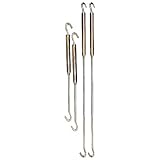
- Replacement standard turnbuckle set
- (4) turnbuckles
- (2) FM-TBS (Spring Loaded)
- (2) FM-TBR (Stress Guard)
- Fully adjustable
3. Plan water and electrical use before the first remote trip
- Carry a drinking-water hose and a filtration method appropriate to the source.
- Know the usable—not merely advertised—battery capacity and monitor consumption.
- Test solar charging, alternator charging, shore-power charging, and low-voltage cutoffs before leaving service coverage.
- Keep electrical disconnects, fuses, pump components, and water shutoffs accessible.
- Carry a plan for freezing conditions, tank drainage, and waste disposal.
4. Carry recovery and tire equipment appropriate to the vehicle
At minimum, evaluate a correctly rated recovery system, recovery boards where they suit the terrain, a tire-repair kit, a compact air compressor, a pressure gauge, and a usable spare. The heavier and more specialized the vehicle, the more important it is to confirm that the recovery points and equipment are rated for its actual mass.
Buying a 2021 unit today
A 2021 camper or expedition vehicle may no longer match its brochure. Options, owner modifications, added batteries, suspension work, replacement appliances, water damage, and repairs can materially change weight and reliability.
For a used Hawk, inspect the pop-up mechanism, fabric, roof seals, lifting hardware, flatbed mounting, floor, and water system. For a Lance 855S, inspect the slide-out, bathroom plumbing, tank and dump systems, ducted heat, refrigerator, roof, wall seams, and evidence of water intrusion. For an EarthCruiser, inspect both the commercial chassis and the living module, then document drivetrain service, lockers, low-range operation, tire condition, electrical components, water systems, and the availability of qualified service.
What’s actually slowing this PC down?
Pick the symptom - the matching free tool is one click away.
Ask the seller for the original build sheet, option list, repair records, and any weight ticket. If possible, weigh the loaded vehicle in the configuration in which it will travel. Do not use a current manufacturer page as proof that a used 2021 example has the same equipment.
This is a model-year comparison rather than a current price, inventory, or lead-time guide. Availability and condition vary by market, especially for specialized integrated expedition vehicles.
Final buyer-verification checklist
Before buying any of these platforms, obtain written answers and retain the documents:
- Exact truck or chassis year, VIN configuration, GVWR, payload, front and rear axle ratings, wheel ratings, and tire load ratings
- Camper base or dry weight definition, wet-weight definition, options, installed equipment, and actual loaded scale weight
- Fresh, gray, and black water capacities, tank locations, waste connections, and cold-weather provisions
- Battery capacity, solar input, charging sources, inverter, monitor, and service access
- Bed length or flatbed dimensions, tailgate and cab clearances, and camper center-of-gravity requirement
- Front and rear tie-down locations, turnbuckles, frame or bed compatibility, and installation instructions
- Roof-down and roof-up height, overall width, approach and departure clearances, and suspension or tire interference
- Sleeping capacity and the exact bathroom, refrigerator, heating, slide-out, and storage configuration
- Recovery points, spare-tire access, jack points, tire-repair plan, and compressor or recovery-board requirements
- Chassis, camper, appliance, electrical, and water-system service access in the places where the vehicle will actually travel
If the seller or manufacturer cannot provide the center-of-gravity information, attachment guidance, or a credible loaded-weight path, pause the purchase. Those omissions are more important than an appealing floor plan.
Do these 3 things before closing this tab:
1Fix the driver behind crashes, sound loss and screen glitches2Repair Windows errors before they cause bigger problems3Scan for outdated or missing drivers - takes under a minuteFrequently Asked Questions
Can a half-ton truck safely carry a Four Wheel Campers Hawk Flatbed?
Not necessarily. The Hawk’s approximately 1,325-pound base dry weight is only a starting point, and the answer depends on the exact truck’s door-sticker payload, axle and tire ratings, flatbed, center-of-gravity requirements, options, water, passengers, and gear. Weigh the completed combination rather than relying on a half-ton or 4×4 label.
Is the Lance 855S wet weight its real travel weight?
No. Lance lists the 855S at 2,857 pounds dry and 3,191 pounds wet, but neither figure necessarily includes every option, battery, propane supply, passenger, food, recovery item, or personal load. Treat the wet figure as a manufacturer-listed snapshot and verify the actual loaded vehicle on a scale.
Are the EarthCruiser EXP and FX pickup campers?
No. The EarthCruiser EXP and FX are integrated expedition vehicles built on 4×4 commercial chassis. They are a different ownership proposition from a camper mounted on a conventional pickup, with dedicated drivetrain and living-module systems and a more specialized service strategy.
Does a 4×4 badge make a truck expedition-ready?
No. Four-wheel drive alone does not establish expedition capability. Evaluate low-range gearing, lockers, tires, recovery points, clearance, water and electrical capacity, insulation, axle limits, and parts or service access. The EarthCruiser’s appeal comes from integrating those systems, not simply from having four driven wheels.
The Bottom Line
Choose the Hawk Flatbed when lower mass, lower profile, and conventional-pickup ownership are the priorities. Choose the Lance 855S when its bathroom, tanks, heat, refrigerator, and slide-out justify the heavier truck and the numbers work after loading. Choose the EarthCruiser EXP or FX when the goal is a specialized, integrated expedition platform rather than a removable pickup camper. In every case, the best 2021 choice is the one that retains a defensible payload, axle, tire, and center-of-gravity margin after people, water, power systems, food, and recovery gear are added.
Quick Recap
Product prices and availability are accurate as of the date/time indicated and are subject to change. Any price and availability information displayed on Amazon at the time of purchase will apply.




