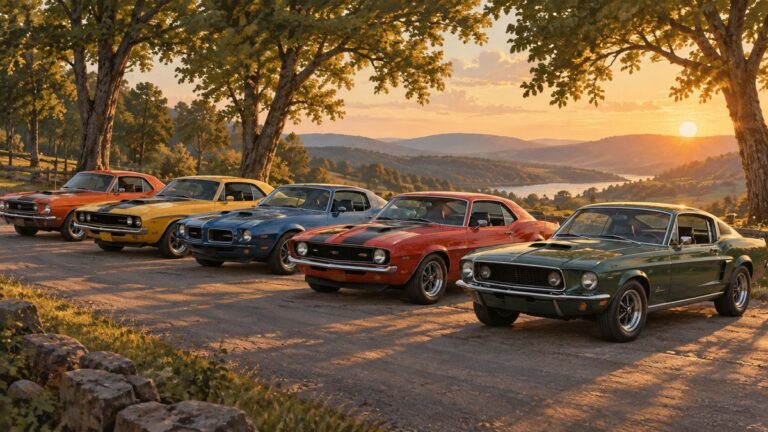
The fourth-generation Mustang ran from 1994 through 2004. It succeeded the 1979–1993 Fox-body generation but retained a substantially revised version of the Fox platform architecture, now designated SN95. In 1999, Ford gave it the sharper New Edge look; in 2001, the GT-based Bullitt added a film-inspired take on the formula. Those were milestones within one generation, not separate generations.
What is the difference between a Fox Body and an SN95 Mustang?
“Fox Body” usually refers to the Mustang generation built from 1979 to 1993. The SN95 is the fourth generation, introduced for 1994 and produced through 2004. It carried forward and revised the Fox understructure, but received new bodywork and a substantially renewed package. The relationship is one of platform continuity: a 1994 Mustang was an SN95, not another Fox-body-generation car.

The fourth generation is often divided into two styling phases. The 1994–1998 cars are commonly called early SN95. For 1999, Ford restyled the Mustang with sharper creases, more angular contours and larger wheel openings. This New Edge design was a refresh of the SN95, not a new generation.
How did the Mustang change mechanically?
Trim matters when describing the SN95’s engineering. In 1999, the SVT Cobra gained factory independent rear suspension (IRS), while V6 and GT versions retained a live rear axle. That distinction is relevant when comparing the Cobra’s handling-oriented hardware with the more common V6 and GT configurations; it does not mean every New Edge Mustang had IRS.
Do these 3 things before closing this tab:
1Repair Windows errors before they cause bigger problems2Scan for outdated or missing drivers - takes under a minute3Clear out junk files and repair common Windows errors#1 Best Overall
The range also broadened beyond the everyday V6 and GT. The Cobra R, Bullitt, Mach 1 and SVT Cobra each put a different emphasis on performance, from track focus to a supercharged V8. The ratings below are historical manufacturer-era figures as reported by SuperMotors Editorial Team in its history, last updated July 2026—not contemporary test results.
| Model and years | Engine and reported output | Character and chassis notes |
|---|---|---|
| 2000 Cobra R | Engine and output not stated in the cited history. | Limited model with a track-focused role; detailed suspension specifications are not stated here. |
| 2001 Bullitt | 4.6-liter SOHC V8; 265 hp. | GT-based coupe with intake, exhaust, suspension, wheel and trim changes; styled as a reference to the 1968 Mustang GT in Bullitt. |
| 2003–2004 Mach 1 | Naturally aspirated DOHC 4.6-liter V8; 305 hp. | Revived Mach 1 performance model; further suspension details are not stated here. |
| 2003–2004 SVT Cobra | Supercharged DOHC 4.6-liter V8; 390 hp. | Supercharged performance model; the Cobra line had factory IRS from 1999. |
The table does not make every trim directly comparable: the cited history does not establish a Cobra R engine rating or detailed suspension specifications for every model. Likewise, the stated horsepower figures identify reported historical ratings, not a shared test method.
Rank #2

- 1:25 scale, skill level 2, paint & glue required 169 parts Molded in white, clear and transparent red, with chrome-plated parts. Black vinyl tires Metal axle Built size: 7.125 inches long Ages 10+
What made the 2001 Mustang Bullitt special?
The Bullitt was a GT-based coupe that drew its identity from the 1968 Mustang GT driven by Steve McQueen in the film Bullitt. It was not a separate generation or a replacement for the GT. Its reported 265-hp, 4.6-liter SOHC V8 was paired with changes to the intake and exhaust, suspension, wheels and trim, giving the car a distinct presentation and package within the New Edge range.
The Bullitt’s appeal lay in combining recognizable film inspiration with GT foundations, rather than in a new platform or a wholly different engine family. Available histories vary on the details of its brakes, so specific caliper or rotor claims are not included here.
Recommended Free Tools
Rank #3

- Pullback Action: Experience realistic racing with the pullback action feature.
- Opening Doors: Explore the intricate interior details with the opening door feature.
- 1:38 Scale: Enjoy a detailed 1:38 scale die-cast model (approx. 5 inches long).
- Authentic Design: Modeled after the iconic 1967 Ford Shelby Mustang GT500.
- Display Piece: A must-have collectible for car enthusiasts and model collectors.
How did the fourth generation lead from Fox to Bullitt?
- 1979–1993: Fox-body generation. This is the period usually meant by “Fox Body.”
- 1994–1998: early SN95. The fourth generation arrived with new bodywork and a substantially revised Fox understructure.
- 1999–2004: New Edge SN95. Ford introduced the sharper restyle for 1999; the SVT Cobra also gained factory IRS, unlike V6 and GT versions.
- 2000–2004: performance variations. The period included the limited Cobra R, the 2001 Bullitt, and the 2003–2004 Mach 1 and supercharged SVT Cobra.
The 2004 model year closed the SN95/New Edge run. The next Mustang generation followed, making 1994–2004 the full span of the fourth generation.
Quick Recap
Best Value

- 1:18 scale diecast collectible model car
- This Ford Mustang is a 10"L x 4"W x 3"H die cast metal car
- Steerable wheels, rubber tires, openable doors, hood & trunk
- Manufactured by Maisto
- Individually packed in a window box. Box size is 13"Lx 6.5"Wx 5"H
Rank #4

- Authentic Ford Design: Each model kit accurately captures the signature style and details of iconic Ford vehicles.
- Precision-Molded Parts: High-quality, finely molded components ensure a realistic and detailed build.
- Customizable Features: Includes decals and optional parts for a personalized, unique build.
- Ideal for Hobbyists: Perfect for model builders of all skill levels, from beginners to experienced collectors.
- Display-Ready Models: Create a stunning Ford model that’s ready to showcase in your collection or as a standout display piece.
Which SN95-era Mustang best fits a buyer’s priorities?
- For the generation distinction: use model year and styling phase—1994–1998 early SN95 versus 1999–2004 New Edge.
- For engine character: distinguish V6 and SOHC GT/Bullitt models from the DOHC Mach 1 and Cobra variants; the 2003–2004 Cobra also used a supercharged V8.
- For rear suspension: check the trim rather than assuming all SN95s are alike. The volume V6 and GT versions retained a live axle, while the SVT Cobra had factory IRS from 1999.
- For intended character: the GT was the everyday performance baseline, the Bullitt added film-inspired styling and component changes, the Cobra R was track-focused, the Mach 1 revived a performance nameplate, and the supercharged Cobra emphasized high output.
Product prices and availability are accurate as of the date/time indicated and are subject to change. Any price and availability information displayed on Amazon at the time of purchase will apply.