Recommended Free Tools
What are the best amphibious cars of all time? The answer depends on more than speed: production history, engineering ambition, land-and-water capability and originality all matter. The Amphicar is the landmark civilian production example, Gibbs’s Aquada pushed high-speed amphibian engineering, and Rinspeed’s sQuba stands apart as a submersible concept.
This is an editorial selection, not an objectively proven top ten: the available research supports notable candidates, but not ten distinct cars or a definitive order. Some entries are concepts or broader amphibious vehicles rather than ordinary road cars, and company-reported performance figures are identified as such.
How this selection compares amphibious vehicles
The comparison considers historical importance, engineering approach, land and water performance, production status and intended use. Headline speed alone does not determine a vehicle’s place. A series-production civilian car, a proof-of-concept and a specialist amphibious platform serve different purposes.
| Vehicle | Type and status | Distinctive capability | Evidence caveat |
|---|---|---|---|
| Amphicar | Civilian production car, 1961–1968 | Road car with twin water propellers | Production and speed figures are reported by the International Amphicar Owners Club |
| Gibbs Aquada | High-speed amphibian proof-of-concept; no longer in production | Three seats, Rover V6 and water jet | Performance figures are from Gibbs |
| WaterCar Panther | Hand-built amphibious vehicle; new production has ended | Hull-focused design, retractable wheels and jet propulsion | Approximate speeds are company-reported and vary among vehicles |
| Rinspeed sQuba | Electric concept unveiled in 2008 | Land, surface and underwater travel | Underwater steering to 10 m is documented by Guinness World Records |
| WaterCar Python | Speed-oriented prototype | Developed as a performance-focused amphibious project | Historical speed claims are from WaterCar, not independently verified here |
| Gibbs Humdinga and Phibian | Amphibious vehicles in Gibbs’s platform history | Extend the company’s high-speed amphibian work beyond passenger cars | Not ordinary road cars; the cited history lists Humdinga in 2005 and Phibian in 2012 |
| Gibbs Quadski | Amphibious vehicle in Gibbs’s platform history | Combines land and water mobility in a different vehicle format | Not an ordinary passenger car; the cited history lists it in 2013 |
Notable amphibious cars and vehicles
Amphicar: the landmark civilian production car
The Amphicar is the strongest historical anchor in this selection because it was a civilian series-production car designed to operate on land and water. The International Amphicar Owners Club reports that 3,878 were built in Germany from 1961 to 1968. The club also lists a top speed of 70 mph on land and 7 mph on water; those figures illustrate its dual-purpose character, not modern high performance.
Free tools Windows power users keep installed
One-click scans. No signup required.
#1 Best Overall

- Innovative
- Our wide range of products offers everything the heart of every model building fan desires
- Ideal quality
Twin propellers provided water propulsion. Its importance is its place in production history and public recognition, rather than speed. The modest water figure is a useful reminder that a car capable of entering the water is not necessarily a fast boat.
Gibbs Aquada: a high-speed amphibian proof-of-concept
Gibbs presents the Aquada as a high-speed amphibian, with three seats, a Rover V6 and water-jet propulsion. The company lists speeds of more than 100 mph on land and more than 30 mph on water, and describes the Aquada as a proof-of-concept that is no longer in production. These are manufacturer-stated figures, not independent test results in this research.
The Aquada’s significance is its focus on high-speed amphibian engineering and transition performance. Its proof-of-concept status matters: it should not be described as a current production car or as a widely available consumer vehicle.
Rank #2

- photo-etch parts (grilles and brackets), plus hinged hatches, bow plane, and rear ramp.
- Color painting guide for a typical US Marine vehicle - decals include gauges; equipment faces, stencils, and placards.
- 1/35 Scale Armor
WaterCar Panther: hull-focused design and jet propulsion
WaterCar describes the Panther as a purpose-built amphibious vehicle with a hull-focused design, retractable wheels, a V6 and dedicated jet propulsion. WaterCar reports approximate speeds of 80 mph on land and 44–45 mph on water, while noting that figures vary among hand-built vehicles. The company also says new Panther production has ended.
Windows Errors? Fix Them Before They Spread
Repair common Windows errors and clear accumulated junk for a smoother, more stable PC - no reinstall needed.Free scan · no reinstallOutdated Drivers Are Slowing You Down
One free scan finds every outdated or missing driver and matches the right update for your exact hardware.Free scan · exact hardware matchThose numbers are company-reported, so they should not be treated as independently verified performance records. The Panther merits attention for its integrated amphibious layout, but its limited production and ended new production distinguish it from an ordinary series-production car.
Rinspeed sQuba: a car concept designed to submerge
Unveiled in 2008, the Rinspeed sQuba was an electric concept intended to travel on land, on the water’s surface and underwater. That last capability sets it apart from vehicles designed only to float or plane. Rinspeed describes it as a zero-emission concept.
Rank #3
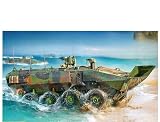
- English Instructions included
- Material:Plastic
- Recommend Age:14+y
- Origin:Mainland China
- High-concerned chemical:None
Guinness World Records identifies the sQuba as the first fully submersible sports car and records underwater steering to 10 m (33 ft), with occupants using breathing apparatus. It is best understood as an engineering and design concept, not a practical production car.
WaterCar Python: a speed-oriented prototype
WaterCar’s founder and history page describes the Python as a record-oriented prototype and recounts historical speed claims. Those claims should be attributed to the company: the research available here does not independently corroborate them as records. Its relevance is as a performance-focused amphibious project, rather than as an established production car.
What’s actually slowing this PC down?
Pick the symptom - the matching free tool is one click away.
Gibbs Humdinga and Phibian: amphibious platforms beyond passenger cars
Gibbs’s platform history lists the Humdinga in 2005 and the Phibian in 2012. They broaden the story of high-speed amphibian development, but should be described as amphibious vehicles rather than conventional passenger cars. Their inclusion reflects engineering ambition and platform history, not a claim that they are ordinary road-going cars.
Rank #4

- This plastic model requires assembly and painting. Adhesives, tools, paints, etc., sold separately
- 1/35 scale unpainted plastic assembly kit
- Reproduces the unique foot circumference of the water jet spout and suspension
- The roof of the bed can be opened or closed
- Number of Total Parts: 211
Gibbs Quadski: an amphibious vehicle in a different format
Gibbs lists the Quadski in its platform history in 2013. It belongs in a broader account of amphibious mobility, but it is not an ordinary passenger car. Its place here helps show how amphibious engineering has extended into different vehicle formats.
Independent reader supportYour contribution helps us test, update, and keep practical guides available for everyone.What makes an amphibious vehicle notable?
Production history and concept status should be kept separate. The Amphicar is a landmark civilian production car; Gibbs describes the Aquada as a proof-of-concept no longer in production; the sQuba is a concept; and the Panther’s new production has ended. Those differences affect how practical and available each vehicle is, as much as its reported performance does.
Water capability also varies. A vehicle that floats, one designed for higher-speed travel on the surface and one that can submerge are not directly equivalent. For a fair comparison, readers should consider the intended use and the source of any speed or depth claim, rather than treating every amphibious vehicle as competing in the same category.
Best Value

- Photo-etch parts (grilles and brackets), plus hinged hatches, bow plane, and rear ramp.
- Color painting guide for 2 typical US Marine vehicles - decals include gauges; equipment faces, stencils, and placards.
- 1/35 Scale Armor
FAQ
What is the best-known amphibious car?
The Amphicar is the landmark civilian series-production example in this selection. The International Amphicar Owners Club reports that 3,878 were built between 1961 and 1968.
Which amphibious vehicle in this selection could travel underwater?
Rinspeed’s sQuba was designed as a submersible concept. Guinness World Records records underwater steering to 10 m (33 ft) with breathing apparatus.
Is the Gibbs Aquada still in production?
No. Gibbs describes the Aquada as a proof-of-concept vehicle and says it is no longer in production.
Are the WaterCar Panther’s speed figures independently verified?
The approximate figures cited here are reported by WaterCar, which notes variation among hand-built vehicles. The research used for this article does not provide independent verification of them.
Do these 3 things before closing this tab:
1Clear out junk files and repair common Windows errors2Fix the driver behind crashes, sound loss and screen glitches3Repair Windows errors before they cause bigger problemsWhy are there fewer than ten entries?
The available research supports a candidate pool, not ten distinct cars with sufficiently checked facts or a definitive all-time ranking. This selection includes broader amphibious vehicles and prototypes where clearly labeled, rather than padding the list with unsupported entries.
Quick Recap
Product prices and availability are accurate as of the date/time indicated and are subject to change. Any price and availability information displayed on Amazon at the time of purchase will apply.




