Free tools Windows power users keep installed
One-click scans. No signup required.
Tetraethyl lead (TEL) was added to gasoline because it reduced engine knock, allowing engines to run at higher compression and deliver more power. But making and burning leaded fuel exposed workers and the public to a highly toxic metal. The United States phased out leaded gasoline for road vehicles, with sales prohibited from January 1, 1996; leaded fuel is still used in some aircraft, keeping the issue alive.
Why was tetraethyl lead added to gasoline?
Engine knock is abnormal combustion in an engine cylinder. It can limit performance and damage an engine, particularly as designers seek higher compression and power. TEL worked as an antiknock additive, helping gasoline resist knock and making higher-compression engines practical.
The U.S. Environmental Protection Agency (EPA) dates a successful General Motors test of TEL by engineers Charles Kettering, Thomas Midgley and Thomas Boyd to December 1921. The additive solved a real fuel-performance problem, and its use helped enable the development of powerful, high-compression engines. EPA’s history of lead describes both the engineering rationale and the early hazards.
How did leaded gasoline harm workers and the public?
Production created an immediate occupational danger
Concentrated TEL is acutely toxic. Early production and handling exposed workers to dangerous amounts: CDC’s National Institute for Occupational Safety and Health recounts 15 fatalities associated with producing TEL gasoline in the 1920s. Midgley himself became ill after handling the substance recklessly, and refinery workers also died or became severely ill in 1924. These events were not evidence that the danger was harmless or universally unknown; scientists including Alice Hamilton and Clair Patterson warned of occupational and broader public-health risks, while industry-sponsored research downplayed them. CDC/NIOSH’s account of lead poisoning summarizes this history.
Combustion spread lead beyond the fuel system
Lead in motor fuel did not stay inside engines: burning the fuel released lead into the air, from where it could settle into soil and water. Exposure to lead harms human health. The World Health Organization (WHO) states that no level of lead exposure is known to be without harmful effects. TEL therefore addressed engine knock while creating a separate chain of occupational and environmental exposure; it was not the sole cause of every problem associated with cars or lead pollution. WHO’s lead-poisoning and health overview explains the health concern.
#1 Best Overall

- Prevents valve seat damage in engines designed for leaded gasoline
- Prolongs the useful life of older engines without updated valve seats
- Also cleans carburetor deposits and injectors, safe for catalytic converters
- For racing, marine or off-road use only; one bottle treats up to 25 gallons
When was leaded gasoline phased out?
United States: the on-road phaseout
The U.S. phaseout of lead in motor gasoline began in the 1970s. The ban on sales of leaded gasoline for on-road vehicles took effect on January 1, 1996, according to the EPA’s lead regulations overview and its archived announcement of the final step. That date concerns road-vehicle fuel sales; it does not mean every use of leaded fuel ended.
Globally: motor-vehicle petrol, not every fuel
WHO reports that lead additives have been phased out of petrol for motor vehicles worldwide, while noting that lead remains in some aviation fuels. Its summary does not establish one global phaseout year, so a single date should not be assigned to the worldwide change. WHO’s lead overview distinguishes the motor-vehicle phaseout from continued aviation use.
Rank #2
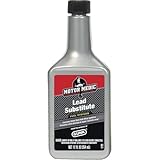
- Made in United States
Why does leaded gasoline remain an aviation issue?
Some piston-engine aircraft still use leaded aviation gasoline. EPA identifies emissions from aircraft using leaded gasoline—primarily small piston-engine aircraft—as the largest single source of airborne lead emissions in the United States. This makes aviation the remaining U.S. policy concern after the on-road phaseout.
Outdated Drivers Are Slowing You Down
One free scan finds every outdated or missing driver and matches the right update for your exact hardware.Free scan · exact hardware matchPC Slower Than It Used to Be?
A free scan shows the junk files, broken settings and background clutter dragging Windows down - then fixes them in one click.Free scan · Windows 10 & 11In 2023, EPA determined that lead emissions from aircraft engines operating on leaded fuel cause or contribute to air pollution that may reasonably be anticipated to endanger public health and welfare. EPA notes that the Federal Aviation Administration (FAA) is responsible for standards addressing aircraft-fuel composition or properties. The FAA’s public overview describes its role and the EAGLE initiative. See EPA’s aviation-gasoline overview, EPA’s 2023 endangerment determination and the FAA’s overview of unleaded aviation fuel.
Rank #3

- Prevents valve seat damage in engines designed for leaded gasoline
- Prolongs the useful life of older engines without updated valve seats
- Also cleans carburetor deposits and injectors, safe for catalytic converters
- For racing, marine or off-road use only; one bottle treats up to 25 gallons
- Pack of 1
| Issue | Road gasoline | Aviation gasoline |
|---|---|---|
| Historical purpose | Reduce knock in motor-vehicle engines, enabling higher-compression performance. | Lead is used in some fuels for piston-engine aircraft; the sources cited here do not provide a full technical account of its role across aircraft engines. |
| Exposure concern | Combustion dispersed lead from vehicles into the environment; the U.S. on-road sales ban took effect in 1996. | Emissions from aircraft using leaded gasoline are the largest single source of U.S. airborne lead emissions, according to EPA. |
| Current status | Lead additives have been phased out of motor-vehicle petrol globally, according to WHO. | Lead remains in some aviation fuels; EPA’s 2023 finding and the FAA’s EAGLE initiative address the continuing issue. |
| Regulatory context | EPA documents the U.S. phaseout and on-road sales ban. | EPA identifies the emissions concern and notes FAA responsibility for aircraft-fuel composition or properties. |
The available agency accounts do not establish a single aviation-fuel replacement deadline, compare alternative fuels’ performance, or show compatibility across the aircraft fleet. The existence of a regulatory finding and transition initiative should not be mistaken for proof that every aircraft already has an approved lead-free substitute.
Quick Recap
Best Value

- Replaces Lead with Added Protection – Provides valve lubrication and combustion support.
- Prevents Valve Recession & Wear – Formulated to help reduce valve recession and wear.
- Stops Power & Compression Loss – Helps support stable power and compression.
- Concentrated & Easy to Use – One gallon treats up to 200 gallons of fuel.
- Made in USA
Rank #4

- Replaces Lead with Added Protection – Provides valve lubrication and combustion support.
- Prevents Valve Recession & Wear – Formulated to help reduce valve recession and wear.
- Stops Power & Compression Loss – Helps support stable power and compression.
- Concentrated & Easy to Use – One 16 oz bottle treats up to 25 gallons of fuel.
- Made in USA
Product prices and availability are accurate as of the date/time indicated and are subject to change. Any price and availability information displayed on Amazon at the time of purchase will apply.




