Free tools Windows power users keep installed
One-click scans. No signup required.
Optimus Gen 2 was a real and substantial redesign, but the “Model S rather than Cybertruck” comparison is about styling—not shared engineering. Tesla said the December 2023 robot was about 10 kg lighter and 30% faster while walking than its predecessor, with redesigned hands, tactile sensing, articulated toes, force-and-torque sensing, integrated electronics and a two-degree-of-freedom neck. The launch footage was impressive, but it was a curated demonstration rather than an independent test of autonomy, reliability or production readiness.
The short answer
Tesla’s Optimus Gen 2 was a genuine hardware redesign, not merely a cosmetic update. Announced in December 2023, it was presented as about 10 kg lighter and 30% faster while walking than the previous version, with redesigned hands, tactile sensing, articulated toes, force-and-torque sensing, more integrated electronics and a two-degree-of-freedom neck. Tesla’s launch video showed the robot walking, squatting, dancing, balancing and handling an egg.
“A lot more Model S than Cybertruck” is a useful description of its appearance, but only its appearance. The smooth white body panels and rounded surfaces looked closer to Tesla’s polished Model S design language than to the exposed, angular metallic prototype shown previously. There is no evidence that Optimus shares Model S body architecture or engineering lineage. The comparison is about styling, not technology.
The more important reality check is that Gen 2’s video was a curated demonstration, not an independently measured autonomy or reliability test. It did not establish walking speed in metres per second, operating time, failure rate, intervention rate, payload, maintenance cost or production readiness. As of August 2026, Gen 2 is a development stage in Tesla’s humanoid-robot program, not a current consumer product. Tesla’s later materials moved the focus to version 2.5 and a production-oriented Gen 3 design.
The Tool Desk
Outbyte Driver Updater FREEFix the driver behind crashes, sound loss and screen glitchesFind Drivers →Outbyte PC Repair FREEClear out junk files and repair common Windows errorsFree Scan →#1 Best Overall

- 【2-in-1 Mopping and Vacuuming】 The ROPVACNIC Robot S1 integrates advanced electronically controlled mopping technology, significantly enhancing both cleaning efficiency and effectiveness, which makes your floors remain free from footprints, dirt, and dust throughout the day. It features an upgraded high-capacity water tank with a four-stage personalized water adjustment system, enabling it to address various stains across different settings according to user requirements.
- 【Comprehensive Intelligent Control】 Multiple Cleaning Modes, combined with personalized settings, allow you to easily accomplish various household cleaning tasks with zero effort from your smartphone. Moreover, by voice commands, you can start your cleaning while kicking back and relaxing (compatible with Alexa or Google Assistant). Enjoy an utterly hands-free cleaning experience.
- 【5200Pa Powerful Suction】A 3-point cleaning system coupled with strong suction ensures your floors are free from all dirt, dust, and crumbs for a thorough, superior clean. The highly passable compact design combined with 3-level suction facilitates cleaning in hard-to-reach areas where you can't, making it suitable for a wide range of surfaces from wood, and hard floors to low pile carpets.
- 【Smarter High Automation & Self-Recharge】 The robot aspiradora is equipped with an advanced high-coverage sensing system and multiple algorithmic data points, enabling autonomous completion of cleaning tasks—from scheduled starting, detecting obstacles, adjusting direction, and switching modes, to automatically returning to recharge. This hassle-free operation ensures a clean home when you return.
- 【Engineered for Pet Owner】 The exclusive no-entanglement design negates the need for your dirty hands to clean up tangled dog or cat hair, unlike traditional roller brushes. Its dual rotating electric side brushes sweep and collect hidden pet hair more efficiently throughout the house, saving you the hassle.
From exposed prototype to polished Tesla product language
Tesla introduced the Tesla Bot concept in 2021, but that presentation used a human dancer in a robot suit rather than a working robot. At AI Day 2 in 2022, Tesla showed working Optimus prototypes with a much more exposed mechanical appearance. The December 2023 Gen 2 video represented a clear visual and mechanical step forward.
Compared with the earlier prototype, Gen 2 had a smoother white exterior, concealed more of its wiring and mechanical structure, and moved with less of the visibly improvised character associated with an early research machine. That visual shift explains the Model S comparison: it looked designed for a Tesla product portfolio, whereas the earlier prototype looked like laboratory hardware.
The Cybertruck comparison works in the opposite direction. Cybertruck’s exterior is deliberately angular, faceted and utilitarian, with exposed-looking geometric surfaces. Gen 2’s shell was smooth and rounded. Calling it “more Model S than Cybertruck” therefore captures a design-language contrast, not a claim that Optimus was derived from a particular car platform. Tesla’s Model S design page and Cybertruck exterior make the visual distinction clear.
What changed in Optimus Gen 2?
The following claims come from Tesla’s presentation and launch coverage. They should be read as Tesla’s stated improvements, not as the results of a published independent test protocol.
Outdated Drivers Are Slowing You Down
One free scan finds every outdated or missing driver and matches the right update for your exact hardware.Free scan · exact hardware matchPC Slower Than It Used to Be?
A free scan shows the junk files, broken settings and background clutter dragging Windows down - then fixes them in one click.Free scan · Windows 10 & 11| Area | Gen 2 claim or feature | What it means—and what remains unknown |
|---|---|---|
| Weight | Approximately 10 kg lighter | A substantial relative reduction if achieved, potentially improving balance, energy use and fall safety. Tesla did not publish a launch-video baseline or test method establishing exactly how the comparison was made. |
| Walking | Approximately 30% faster | A relative improvement only. Tesla did not give an official launch-video speed in metres per second, nor the conditions used to measure the increase. |
| Neck | Two degrees of freedom | Allows more natural head movement and may help the robot orient its cameras and visual systems. It is not, by itself, proof of better autonomy. |
| Feet | Articulated toes plus force-and-torque sensing | These features can improve foot contact awareness and balance control in principle, particularly during weight transfer. They still have to work reliably across floors, slopes, obstacles and disturbances. |
| Hands | 11 degrees of freedom per hand | More joints and actuators create more options for grasping. The number does not establish human-equivalent dexterity, strength, speed, compliance or durability. |
| Touch | Tactile sensing on all fingers | Potentially enables better grip-force control and contact detection, which matters when handling fragile or irregular objects. |
| Electronics | More integrated wiring and electronics | Less exposed mechanical clutter can help packaging and production. It does not, on its own, demonstrate serviceability or long-term reliability. |
| Appearance | Smooth white body panels | The main reason the robot looked more like a Model S than a Cybertruck. |
The combination matters more than any single specification. A lighter robot can require less energy to move; articulated feet can provide more information during a step; tactile fingers can make delicate manipulation more controllable; and integrated electronics can make the machine easier to package. But each feature also adds engineering complexity, calibration requirements and possible failure points.
What Tesla’s Gen 2 video showed
The official footage showed:
- Walking across a floor.
- Squatting and standing.
- Dancing.
- Smoother torso and limb movement than the earlier prototype.
- More human-like hand and finger motion.
- Picking up and handling an egg without visibly breaking it.
Those scenes are meaningful. They suggest that Tesla had made progress in actuator control, balance, whole-body coordination and hand mechanics. The egg scene is also relevant because fragile-object manipulation requires the robot to control contact force rather than simply close a gripper.
But a successful demonstration is not the same as a general capability. The video did not prove:
- General-purpose autonomy across unfamiliar tasks.
- Long-duration operation without human intervention.
- Learning a new task from limited instruction.
- Safe operation around children, pets, visitors or untrained workers.
- Reliable recovery from arbitrary falls, collisions or hardware faults.
- Production-level uptime or repeatability.
- Economic superiority over a fixed industrial robot or automated guided vehicle.
There was no published measurement of cycle time, pick-and-place success rate, mean time between failures, battery runtime under continuous work, or cost per completed task. Those are the figures a factory operator would need before replacing an existing machine.
This distinction is central to reading humanoid-robot videos. A robot can perform a difficult movement once under carefully selected conditions while still being far from dependable at that movement for eight hours a day, across thousands of cycles, with no safety incident.
Was Optimus Gen 2 autonomous?
The precise answer depends on which demonstration is being discussed.
For the December 2023 launch footage, the safest wording is: Tesla’s video showed controlled movement and manipulation, while Tesla presented Optimus as an autonomous, neural-network-driven machine. The footage itself did not provide an independent benchmark that would allow viewers to separate autonomous decision-making from scripting, supervision or carefully prepared conditions.
Tesla’s 2024 factory material said Optimus was autonomously handling battery cells, and Tesla’s Q2 2024 shareholder update described the robot’s first battery-handling task. That was an important step in Tesla’s stated factory strategy, but it remained a Tesla claim rather than an independently audited performance result.
What’s actually slowing this PC down?
Pick the symptom - the matching free tool is one click away.
Other demonstrations made the need for careful language more obvious. A January 2024 laundry-folding video was described by TechCrunch as pre-scripted. At Tesla’s October 2024 “We, Robot” event, TechCrunch reported, citing sources, that humans remotely supervised or controlled many interactions with guests. Tesla Optimus engineer Milan Kovac acknowledged that the robots were human-assisted “to some extent,” according to Axios.
That does not mean every Optimus movement at the event was remotely controlled, or that the entire robot was a fake. Reports indicated that the robots could walk without external control. The accurate conclusion is narrower: a human-assisted public interaction demo is not evidence of unsupervised, general-purpose autonomy.
Why build a humanoid robot at all?
A humanoid shape is a flexibility strategy. Stairs, doors, shelves, workbenches, hand tools, buttons and many warehouse or factory layouts were designed around the human body. A machine with two arms, two legs and a human-scale reach may be able to enter those spaces without the facility being rebuilt around it.
Rank #2

- 5000Pa Strong Suction: Robot Vacuum With 5000Pa suction power, it effortlessly removes pet hair, dust, and debris from all types of floors. It can also easily clean on short-pile & medium-pile carpets
- Vacuum & Mop in One Go: G8000 Max robot vacuum is equipped with 450 ml dustbin and 300 ml water tank combo, it supports simultaneous vacuuming and mopping in one go. The innovative design reduces cleaning time by 50%, enhancing household efficiency
- Long Battery Life, Always Ready: Up to 150 minutes in quiet mode, meeting daily cleaning needs and automatically recharging when the battery is low, always ready for the next cleaning task
- 4 Control Ways & 4 Cleaning Modes: Supports 4 control methods: App, Remote, Voice, and Button, making it ideal for wives, seniors, and parents. Choose from 4 cleaning modes(Spot, Edge, Zig-zag, and Manual cleaning) to meet your daily cleaning needs. The Zig-zag mode ensures maximum coverage and cleaning efficiency
- Ultra-Slim Design, Smart Sensors: The robot cleaner is 2.99 inches in height, it easily reaches under beds, sofas, and cabinets for thorough cleaning. With anti-collision and anti-fall sensor technology, it intelligently navigates around obstacles, walls, and stairs
That could give Tesla a way to move one platform between multiple tasks: carrying parts, loading containers, handling tools or performing inspections. Human-shaped limbs may also make demonstrations and human interaction more intuitive.
Quick wins for a faster PC:
Fix the driver behind crashes, sound loss and screen glitchesFind Drivers →Clear out junk files and repair common Windows errorsFree Scan →The trade-off is that the robot inherits the hardest parts of human movement. It must balance on two feet, coordinate its legs and torso, recover from disturbances, avoid collisions, manage contact forces and remain safe when its predictions are wrong. A fixed arm, wheeled robot or purpose-built machine usually has a simpler mechanical and safety problem.
Humanoid form therefore does not automatically mean lower cost, faster work or better reliability. It means potentially greater flexibility in environments that are difficult or expensive to redesign.
Why the best factory tool may not look human
For a stable, repetitive operation, a conventional industrial arm can be faster, more predictable and easier to certify. An autonomous mobile robot may move materials more efficiently than a biped. A dedicated machine may perform one operation thousands of times with fewer moving parts and less energy.
The relevant comparison is not whether Optimus can dance or pick up an egg. It is whether a humanoid can complete a defined job at an acceptable cost and risk. A serious evaluation would compare:
Do these 3 things before closing this tab:
1Scan for outdated or missing drivers - takes under a minute2Clear out junk files and repair common Windows errors3Fix the driver behind crashes, sound loss and screen glitches- Cycle time and throughput.
- Pick-and-place success rate.
- Human interventions per shift.
- Mean time between failures.
- Battery runtime and charging downtime.
- Maintenance, spare parts and joint or hand replacement cost.
- Safety certification and the size of the restricted operating area.
- Cost per completed task rather than the robot’s headline purchase price.
Gen 2’s tactile hands are most relevant where objects vary in position, where grip force matters, where the robot must use human tools, or where a fragile object cannot be handled by a simple rigid gripper. A fixed automation system remains the more logical baseline when the task and environment can be tightly controlled.
Factory work is easier than household work
Tesla’s factory is the logical proving ground because it offers a controlled environment: repeatable objects, known workstations, restricted access, predictable lighting, defined routes and human technicians nearby. The task can be narrowed to a particular battery-cell or parts-handling workflow.
A home is a much harder deployment environment. It contains children and pets, clutter, changing light, wet or sharp objects, fragile items, stairs, privacy-sensitive rooms and countless variations in what “put this away” means. A home robot also creates difficult questions about camera data, liability, falls, collisions and mistakes around people who have not been trained to work near industrial machinery.
ISO 13482 covers safety requirements for personal-care robots, including mobile servant and physical-assistant robots. The standard does not certify Optimus and does not prove that Tesla has met its requirements. It illustrates the gap between showing a machine perform a task and demonstrating that it can safely operate as a product in an uncontrolled environment.
The failure modes that matter more than the launch video
The commercial question is whether the robot remains useful when conditions are imperfect. Important failure modes include:
- Hidden teleoperation: a remote operator may rescue a robot when its perception or planning fails, making a demonstration look more autonomous than the deployed system is.
- Scripted workspaces: a fixed-height station, known object location and prearranged route can conceal how difficult the same task becomes when the environment changes.
- Slow movement: a robot may complete a task successfully but still lose economically to a faster dedicated machine.
- Balance and falls: a biped must cope with uneven floors, unexpected contact and recovery after a misstep.
- Thermal and transmission durability: motors, gearboxes and joints must tolerate repeated load cycles without overheating or wearing out prematurely.
- Battery endurance: walking and whole-body manipulation consume energy; the useful metric is runtime during real work, including charging and swap time.
- Hand and sensor wear: cable routing, finger actuators and tactile sensors are exposed to repeated contact and may be expensive to service.
- Supervision latency: if remote assistance is part of the safety system, network delay or loss of connection becomes an operational risk.
- Human safety: any moving machine in the roughly 50–60 kg class demands careful consideration of falls, collision energy, emergency stops and the distance required to keep people safe.
- Evidence quality: without public reliability and intervention data, production claims cannot be converted into a business case.
Reports in 2025 about possible redesign problems involving joint overheating, transmission life and battery endurance came from unnamed supply-chain sources. Tom’s Hardware reported those allegations, but they should be treated as unverified reporting rather than established fact.
How Optimus compares with other humanoids
The meaningful comparison is task performance and deployment evidence, not which robot produces the most impressive video.
| Robot or approach | Publicly reported evidence | How to interpret it |
|---|---|---|
| Optimus Gen 2 | Tesla showed movement, balance and delicate egg handling; Tesla later described factory battery-cell handling. | Strong evidence of a rapidly evolving platform, but no public independent benchmark for autonomy, uptime, intervention rate or cost. |
| Figure 02 | Figure reported an 11-month BMW deployment involving more than 1,250 operating hours, over 90,000 parts loaded and contribution to more than 30,000 vehicles. | Useful evidence of an industrial deployment claim, but it is Figure’s own report and is not directly comparable with Tesla’s launch demonstrations. |
| Agility Digit | Agility lists a 35-pound carrying capacity and four-hour battery life. | Vendor specifications, not an independent head-to-head test. They provide concrete operating targets that Tesla has not publicly supplied for Gen 2. |
| Boston Dynamics Atlas | Boston Dynamics announced production of its electric Atlas and said 2026 deployments were committed to Hyundai and Google DeepMind. | An industrial-development comparison, not proof of broad commercial availability or general-purpose capability. |
| Fixed industrial robots and AMRs | Established automation designed around defined tasks and controlled environments. | The baseline alternative: often faster, more predictable and easier to certify when the process can be engineered around the machine. |
These figures describe different tasks, conditions and reporting standards. They should not be combined into a league table. The right question is whether a particular robot improves a particular workflow after labour, supervision, downtime, maintenance and safety costs are included.
From Gen 2 to Gen 2.5 and Gen 3
Gen 2 is no longer Tesla’s stated production target. In its December 2025 investor update, Tesla said it had refined a “production-primed” Optimus design, identified version 2.5 as preceding Gen 3, and described Gen 3 as its first design intended for mass production. Tesla also said preparations were underway for a production line with eventual capacity of 1 million robots per year. Tesla’s Q4 2025 update used that language as a plan, not a report of achieved output.
Tesla’s April 2026 update said its first-generation production line in Fremont was designed for 1 million robots per year and would replace the Model S and Model X lines. It also said a second-generation line at Gigafactory Texas was being designed for long-term annual capacity of 10 million robots. Tesla’s Q1 2026 update is careful to distinguish factory-line generations from robot generations: “first-generation line” does not mean Optimus Gen 1, and “second-generation line” does not mean Optimus Gen 2.
Rank #3
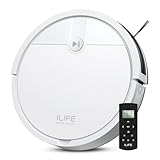
- Fits Pet Owners and Hard Floors: With a tangle-free suction port, V2 robot vacuum focuses on picking up hair without tangle; It also tackles dirt, crumbs and debris effectively on hardwood, tile, laminate, stone and low pile carpet
- Ultra-Slim Design: The 2.99-inch low profile allows the V2 robot vacuum cleaner to easily clean under beds, sofas, and other furniture
- Friendly Remote Control: The V2 vacuum robot equipped a physical remote control, no Wi-Fi connection is required for operation. Start cleaning easily via the remote or one-touch button, simple to operate for all family members
- Multiple Cleaning Modes: The V2 robot vacuum cleaner features multiple cleaning modes including auto clean, spot clean, and edge clean for thorough coverage
- Schedule Cleaning & Automatic Charging: V2 vacuum robot can run routine cleaning automatically based on preset schedule, it cleans up to 120 minutes on a single charge and automatically returns to the charging dock when the battery is low
By July 2026, Tesla had removed earlier language suggesting that Optimus was reaching “volume production” and was still building out the manufacturing lines, according to TechCrunch. Elon Musk described Optimus as Tesla’s hardest manufacturing scale-up yet because nearly every part of the robot was new.
The practical implication is that Gen 2 should be understood as an important engineering milestone, not as the product that Tesla is currently preparing to sell at scale. The design may have informed later versions, but Tesla’s own roadmap has moved on to production-oriented iterations.
Can you buy an Optimus Gen 2?
No. As of August 10, 2026, Tesla has no public Optimus order page, reservation system, retail specification sheet or confirmed Gen 2 price. Tesla’s official vehicle-ordering support page directs customers to its current vehicle lineup, while the Tesla AI and Robotics page presents Optimus as part of the company’s development program.
Elon Musk has discussed a future Optimus price in the $20,000–$30,000 range, but that is an aspiration or estimate for a future product, not a confirmed price for Gen 2. It also says nothing about the total cost of ownership: charging, supervision, maintenance, replacement hands or joints, software support, insurance and safety infrastructure could all matter more than the sticker price.
What Gen 2 means for Tesla
Optimus fits Tesla’s broader strategy unusually closely. Tesla wants to combine its experience in batteries, motors, power electronics, manufacturing and neural-network software into a machine that can operate in the physical world. A factory is a useful starting point because Tesla can control the environment and gather data from a limited set of repeatable tasks.
That strategy has a logical upside: if Tesla can produce the robot cheaply and improve its software through large-scale deployment, the same basic platform could eventually move between more tasks than a dedicated machine. But the strategy also creates a difficult loop. The robot must be reliable enough to deploy, deployed enough to gather useful data, and inexpensive enough that customers will accept it before the economics are proven.
Production capacity is especially easy to misunderstand. A planned line capable of 1 million units per year is not the same as manufacturing 1 million units, and manufacturing units is not the same as selling them profitably or operating them autonomously. For Optimus, the missing evidence remains operational: sustained hours, intervention frequency, task success, safety incidents, service intervals and cost per completed job.
Verdict: a serious redesign, not yet a finished product
Optimus Gen 2 earned the visual comparison: it looked far more like a polished Tesla product than the angular, exposed Cybertruck-like stereotype of an early robot prototype. More importantly, Tesla claimed meaningful mechanical progress—lower weight, faster walking, improved feet, more dexterous hands, tactile sensing and better-integrated electronics.
But the launch video demonstrated selected movement capability, not general-purpose autonomy or commercial reliability. Later factory claims were promising but came from Tesla, while the 2024 public-event demonstrations showed why human assistance and teleoperation must be separated from unsupervised robot performance.
As of August 2026, Gen 2 is best viewed as a development platform that helped Tesla move toward version 2.5 and the mass-production-intended Gen 3. Its ultimate value will not be decided by whether it looks like a Model S. It will be decided by whether it can perform useful work repeatedly, safely and economically enough to beat a conventional robot—or whether its flexibility justifies the complexity of giving it a human body.
Recommended Free Tools
Frequently Asked Questions
Can you buy Tesla Optimus Gen 2?
No. As of August 10, 2026, Tesla has not listed Optimus Gen 2 for public purchase and has published no confirmed retail price, reservation system or consumer specification sheet.
What did the Optimus Gen 2 video actually prove?
Tesla showed walking, squatting, dancing, balancing and egg handling. It demonstrated selected movement and manipulation capabilities, but did not independently establish general-purpose autonomy, uptime, failure rate, payload or economic viability.
Why is Optimus Gen 2 compared with the Model S and Cybertruck?
“More Model S than Cybertruck” refers to the smooth white exterior and rounded design language. It is a visual analogy, not evidence that Optimus uses Model S body architecture or shares a car-platform engineering lineage.
What happened to Optimus Gen 2?
Tesla later described version 2.5 and a Gen 3 design intended for mass production. As of August 2026, Gen 2 is best understood as an earlier development stage rather than Tesla’s current production product.
The Tool Desk
Outbyte Driver Updater FREEScan for outdated or missing drivers - takes under a minuteDriver Scan →Outbyte PC Repair FREERepair Windows errors before they cause bigger problemsFix Now →The Bottom Line
Bottom line: Optimus Gen 2 was a substantial redesign and looked much more Model S than Cybertruck, but its demonstrations did not prove broad autonomy, reliability or production readiness. By August 2026, Tesla had moved its production focus to later versions, with major manufacturing plans still prospective rather than achieved.
Quick Recap
Product prices and availability are accurate as of the date/time indicated and are subject to change. Any price and availability information displayed on Amazon at the time of purchase will apply.