Recommended Free Tools
Elon Musk says Tesla is close to “something really tremendous” with its Optimus humanoid robot. The evidence supports a serious, heavily funded robotics program—but not yet a proven breakthrough. Tesla has demonstrated increasingly capable prototypes, reported simple internal factory tasks, and continued investing in the AI and manufacturing infrastructure Optimus would need. At the same time, the company later removed language promising volume production in 2026, while Musk acknowledged that scaling the robot could be Tesla’s hardest manufacturing challenge.
As of August 11, 2026, the most defensible conclusion is that Optimus remains strategically important and potentially transformative, but its production schedule, capabilities, consumer availability, and economics are still forecasts rather than established facts.
What Musk actually said about Optimus
During Tesla’s October 2025 investor call, Musk said the company was “on the cusp of something really tremendous” with Optimus. The statement was an executive forecast, not an independently verified performance benchmark.
The reported ambition was enormous. Musk discussed beginning production and eventually scaling to as many as one million robots per year by the end of 2026. He also identified two major remaining problems: creating highly dexterous hands and establishing a new supply chain for a product that uses many components Tesla has not previously manufactured at automotive scale.
What’s actually slowing this PC down?
Pick the symptom - the matching free tool is one click away.
#1 Best Overall

- Three models, one lightweight platform R1 Air (20 DOF, monocular camera), R1 (26 DOF, binocular camera, head+waist joints), and R1 Edu (26 DOF + SDK/API for programming). All weigh ~29kg / 123cm – one person can lift, move, and fit into a car trunk.
- Easy setup – no coding required for basic use Unbox, power on, and start. Manual teaching feature: physically pose the robot, and it replays the motion. Graphical drag-and-drop programming also available.
- More DOF = more expressive movement 26‑DOF models (R1 / R1 Edu) add head and waist articulation for smoother dance and running. For safety reasons, only basic actions are currently available; advanced movements are not yet released.
- Voice interaction + two color options Responds to English voice commands (music, conversation, photo). Choose Gold or Blue‑White with automotive‑grade gloss paint.
- R1 Edu adds open development SDK/API access for custom programming, simulation platforms, and future Unistore content downloads. Adult use only – under 18 requires adult supervision.
Those targets should be treated as goals, not results. Tesla has not established that it will produce one million Optimus robots in 2026, and the company’s later public language became more cautious.
What Tesla says Optimus is designed to do
Tesla describes Optimus as a general-purpose, autonomous, bipedal humanoid robot intended to perform work that is unsafe, repetitive, or boring. The basic commercial idea is straightforward: a robot with a human-like body could potentially operate in spaces designed for people without requiring factories, warehouses, or homes to be rebuilt around specialized machines.
That ambition requires much more than walking. Tesla’s own description of the program points to software and hardware for:
- Balance and whole-body control
- Navigation through changing environments
- Perception of objects, people, and obstacles
- Motion planning and manipulation
- Interaction with the physical world
- Reliable control of human-like hands and fingers
Tesla has recruited for work spanning deep learning, computer vision, motion planning, controls, mechanical engineering, and general software engineering. That hiring profile reflects the breadth of the problem: Optimus is not simply an electric vehicle with legs. It is an attempt to combine a mobile machine, a dexterous industrial tool, and an autonomous software system.
The Tool Desk
Outbyte PC Repair FREEClear out junk files and repair common Windows errorsFree Scan →Outbyte Driver Updater FREEFix the driver behind crashes, sound loss and screen glitchesFind Drivers →How far has the program progressed?
Tesla introduced Optimus publicly in 2021. According to the October 2025 report, the company launched a second version in December 2023. Musk expected a third version to debut in the first quarter of 2026 and predicted that the newer robot could eventually look like “a person wearing a robot suit.”
That description is a prediction about the intended form factor, not proof that the robot has achieved human-level movement, dexterity, or autonomy.
Tesla has released demonstrations of Optimus dancing, performing kung-fu-like movements, and preparing food. Such videos can show progress in coordination, balance, or manipulation. They cannot, by themselves, prove that the robot can:
- Complete a useful job without human intervention
- Operate safely around workers and members of the public
- Repeat the same task thousands of times with high uptime
- Recover from unexpected situations
- Be maintained at a reasonable cost
- Deliver better economics than a conventional machine or human worker
This distinction matters because most public Optimus demonstrations have been released or controlled by Tesla. Independent access to production-intent robots remains limited. A carefully staged demonstration is evidence that a capability may be possible; it is not the same as an independently audited record of industrial performance.
Rank #2

- Three models, one lightweight platform R1 Air (20 DOF, monocular camera), R1 (26 DOF, binocular camera, head+waist joints), and R1 Edu (26 DOF + SDK/API for programming). All weigh ~29kg / 123cm – one person can lift, move, and fit into a car trunk.
- Easy setup – no coding required for basic use Unbox, power on, and start. Manual teaching feature: physically pose the robot, and it replays the motion. Graphical drag-and-drop programming also available.
- More DOF = more expressive movement 26‑DOF models (R1 / R1 Edu) add head and waist articulation for smoother dance and running. For safety reasons, only basic actions are currently available; advanced movements are not yet released.
- Voice interaction + two color options Responds to English voice commands (music, conversation, photo). Choose Gold or Blue‑White with automotive‑grade gloss paint.
- R1 Edu adds open development SDK/API access for custom programming, simulation platforms, and future Unistore content downloads. Adult use only – under 18 requires adult supervision.
The biggest change: Tesla softened its production language
Tesla continued to present Optimus and related artificial-intelligence work as part of its broader autonomy and robotics strategy in its April 2026 investor materials. Those materials also connected Optimus with expanded AI inference computing and semiconductor manufacturing, including work on a next-generation AI5 processor and a Tesla-owned research fab at Gigafactory Texas.
That infrastructure investment is meaningful. It suggests Tesla is preparing for substantial robotics and AI workloads rather than treating Optimus as a side project. But investment and preparation do not establish dependable commercial deployment.
The more important reality check came in July 2026. A report on Tesla’s second-quarter shareholder update said the company had removed wording that Optimus would reach “volume production” in 2026. The report also quoted Musk describing Optimus as the hardest Tesla product to scale because nearly everything on the robot is new. Tesla was still building the manufacturing lines needed for Optimus.
That update does not mean the program has failed or been canceled. It does mean that the earlier claim about imminent large-scale production should no longer be presented as a firm schedule. Tesla remained committed, but its public production language was less definitive.
Quick wins for a faster PC:
Scan for outdated or missing drivers - takes under a minuteDriver Scan →Repair Windows errors before they cause bigger problemsFix Now →Fix the driver behind crashes, sound loss and screen glitchesFind Drivers →Why a humanoid robot is so difficult to manufacture
1. Dexterous hands are harder than walking
A robot can look impressive while walking, dancing, or making a large, predictable movement. Useful work often depends on much smaller actions: finding the edge of a part, adjusting grip force, handling flexible material, inserting a component at the correct angle, or recognizing that an object has shifted.
Musk specifically identified advanced hand movement as a remaining challenge. That is significant because hands determine how many jobs a general-purpose robot can perform. A robot limited to carrying boxes or repeating one highly structured motion may be valuable, but it is not yet the broad-purpose machine Tesla describes.
2. Every new part creates a new scaling problem
Musk said early Optimus production would be “agonizingly slow” because the robot contains many new parts and manufacturing steps. In July, he reportedly called it Tesla’s hardest product to scale for the same reason.
Automotive manufacturing gives Tesla experience with batteries, motors, castings, electronics, and high-volume assembly. It does not automatically solve the manufacturing problems of compact actuators, artificial joints, tactile sensors, lightweight structural components, high-density wiring, precision gearboxes, or robot hands.
Rank #3
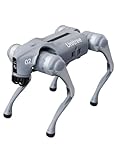
- 【Next-Generation Robotic Companion: Meet the Unitree Go2 Robotic Dog】 The Unitree Go2 Air is an intelligent quadruped robot, perfect for beginners and tech lovers. It measures 27.6"x12.2"x15.7" and weighs just 33 lbs, yet carries up to 15.4 lbs and reaches speeds of 2.5 m/s. Its advanced joint mobility allows it to climb 30° slopes and overcome 5.9" obstacles. An 8000 mAh battery provides 1–2 hours of operation.
- 【Intelligent Navigation with 3D LiDAR & Obstacle Avoidance】 Featuring ultra-wide 3D LiDAR with 360°x96° perception, the Go2 Air detects obstacles as close as 2 inches for reliable all-terrain navigation and real-time avoidance. Note: Obstacle avoidance must be manually enabled.
- 【High-Definition Vision & Seamless App Integration】 A front HD camera streams 1280x720 video to the app. Control the robot, view real-time data, use graphical programming, and update firmware via OTA. Connectivity includes WiFi6 and Bluetooth 5.2. *Note: Voice/GPT features are Pro/X-exclusive; 4G modules are unavailable in North America.*
- 【Advanced Joint & Cooling Design for Enhanced Durability】 Joints provide 45 N·m peak torque for dynamic, precise movement. Internal wiring reduces wear, and an integrated knee heat pipe improves thermal management for stable extended use. Warning: Not waterproof. Avoid rain or water.
- 【Complete Package & Important Guidelines】 Each Go2 Air comes with a handheld remote control and a 33.6V/3.5A standard charger. Please note that this product is non-returnable and non-exchangeable once activated, except for quality-related issues. We strongly recommend reviewing all specifications before purchase. Warranty: Go2 Air – 6 months; Go2 Pro/Go2 X – 12 months. The warranty does not cover damage caused by modifications, disassembly, or misuse. Users are advised to operate the robot responsibly and in compliance with local regulations.
A prototype can be assembled with expensive components, manual adjustment, and engineering attention. A commercial product must be assembled consistently, tested quickly, repaired efficiently, and produced at a cost customers will accept.
3. Tesla needs a new supply chain
The October 2025 reporting identified supply-chain creation as another major challenge. Optimus requires a different collection of components from Tesla’s vehicles, and some of those components may not yet have mature suppliers or established quality standards.
Supply-chain scale also affects reliability. A part that works in a small prototype fleet may become a serious bottleneck when Tesla needs tens of thousands or millions of identical units. Suppliers must be able to deliver consistent parts, while Tesla must develop inspection, replacement, and failure-analysis systems for a product that operates with many moving parts.
4. Reliability and safety must be much higher for consumer sales
In January 2026, Musk said Tesla expected to sell humanoid robots to the public by the end of 2027—but only if the company achieved high reliability, high safety, and broad functionality.
Those conditions are not minor qualifications. A robot working in a controlled factory cell can be surrounded by barriers, sensors, emergency stops, trained staff, and carefully selected tasks. A robot sold to consumers would face pets, children, stairs, clutter, fragile objects, strangers, software updates, network problems, and unpredictable human behavior.
Until Tesla publishes more independent and repeatable data, it is not possible to know whether Optimus can meet those requirements. The end-of-2027 consumer-sales date remains conditional, not guaranteed.
Are Optimus robots already working in Tesla factories?
Musk said in January 2026 that Optimus robots were already performing “simple tasks” in Tesla factories. That is a useful signal that Tesla is testing the machines in real operating environments.
It is not evidence that Optimus is already performing useful work at scale across Tesla’s factories. The difference between a limited internal task and a broadly capable commercial robot includes uptime, supervision, safety validation, maintenance, cycle time, and cost.
Rank #4

- Sleek & Durable Design: Standing at 132cm tall and weighing only approx. 35kg, the G1 is constructed with aerospace-grade aluminum alloy and carbon fiber. It features a full joint hollow internal wiring system, dual encoders, and a localized air-cooling system, ensuring high operational precision, stability, and resistance to impact from falls.
- High Flexibility & Safe Movement: Boasting 23 joint degrees of freedom (6 per leg, 5 per arm), it offers an extensive range of motion. For safety, it currently supports basic movements like walking, rotating, and handshakes, with plans to expand the movement library via future OTA updates.
- Smart Interaction & Connectivity: Powered by an 8-core high-performance CPU and equipped with a depth camera and 3D LiDAR. It supports Wi-Fi 6 and Bluetooth 5.2 for fast data exchange and features voice interaction, making it ideal for demonstrations, entertainment, and companionship.
- Ready to Use & Upgradeable: Comes with a smart quick-release battery (approx. 2h endurance), a handheld remote control, and a charger. It supports intelligent OTA upgrades, allowing the robot's capabilities to grow over time.
- Important Purchase Note: This G1 model does NOT support secondary development or programming. If you require SDK/API access or programmable features, please do not purchase this version. Contact our customer service to inquire about the "G1 Edu" customized version.
A credible assessment would need details such as the specific task, the number of robots involved, the amount of human oversight, the completion rate, the failure rate, the hours operated, and the economic comparison with existing automation. Those figures have not been publicly established in the available evidence.
Tesla’s advantage—and its exposure to competition
Tesla brings several potential advantages to the humanoid-robot race:
- Experience with large-scale manufacturing and factory automation
- A substantial artificial-intelligence and computer-vision effort
- Access to vehicle, battery, motor, and semiconductor expertise
- A large installed base of factories where prototypes can be tested
- The ability to invest in custom computing hardware and manufacturing infrastructure
Those advantages do not guarantee that Tesla will be first to a reliable commercial humanoid. Competitors include Boston Dynamics, Figure, Apptronik, Unitree, LimX Dynamics, and Agility Robotics, among others. Their robots, business models, autonomy claims, and target markets are not identical, so simple winner-versus-loser comparisons are misleading.
Agility Robotics provides an important point of comparison. An Associated Press report in June 2026 described the company’s Digit robot as commercially operating in warehouse and industrial facilities, with customers including Toyota, Schaeffler, and Mercado Libre. The report also discussed backing from Amazon, Nvidia, SoftBank, and Foxconn and a planned transaction valuing Agility at $2.5 billion.
Outdated Drivers Are Slowing You Down
One free scan finds every outdated or missing driver and matches the right update for your exact hardware.Free scan · exact hardware matchWindows Errors? Fix Them Before They Spread
Repair common Windows errors and clear accumulated junk for a smoother, more stable PC - no reinstall needed.Free scan · no reinstallThat does not prove Digit is a general-purpose consumer robot, nor does it make its capabilities equivalent to Optimus. It does show that some competitors have stronger publicly reported evidence of narrow industrial deployment. Tesla may have greater manufacturing and AI ambitions, while rivals may be further along in particular commercial use cases.
Independent reader supportYour contribution helps us test, update, and keep practical guides available for everyone.What would count as proof of a real Optimus breakthrough?
Musk’s “something really tremendous” prediction would become substantially more credible if Tesla released verifiable evidence in several areas:
- Defined tasks: Tesla should identify exactly what Optimus is doing rather than relying mainly on broad demonstrations.
- Independent observation: Outside customers, auditors, or researchers should be able to evaluate the robots under agreed conditions.
- Repeatability: The system should perform the same job reliably over long operating periods, not just during a short demonstration.
- Limited supervision: Tesla should disclose how often humans intervene, teleoperate, reset, or correct the robot.
- Safety data: The company should explain how the robot detects hazards, responds to failure, and protects nearby people.
- Economic data: Customers need information about purchase or rental cost, labor savings, maintenance, energy use, and uptime.
- Production evidence: Tesla should show that its manufacturing lines can produce robots consistently and at a commercially meaningful rate.
Until then, the strongest fair description is that Tesla has demonstrated increasingly capable prototypes and is building the AI and manufacturing infrastructure needed for Optimus, but public evidence still falls short of proving safe, economical, broad real-world operation at scale.
What can people buy now?
There is no established consumer listing for a Tesla Optimus robot, and the available research does not verify an official Optimus toy, replica, accessory, or directly relevant Amazon product that could reasonably substitute for the robot itself. Generic humanoid-robot toys and unrelated robotics products should not be presented as Optimus products.
Free tools Windows power users keep installed
One-click scans. No signup required.
Best Value

- 【Humanoid Robot with ESP32】 Powered by ESP32 and 17 intelligent servos, Tonybot smart humanoid robot delivers smooth, dynamic performance. Use the app to easily control it for walking, dancing, kicking, and more. Tonybot can stand up automatically, which is great for playing football and performing gymnastics.
- 【Multimodal Large AI Models】Powered by an AI model module that combines language, voice, and vision models, Tonybot Ultimate Kit unlocks advanced embodied AI functions such as natural conversation and scene understanding. (Ultimate Kit Only)
- 【AI Vision & Voice Interaction】Equipped with an ESP32-S3 vision module and voice interaction module, Tonybot AI robot enables offline face recognition, target tracking, visual line following, voice control, and more. Customize commands and train it to be your AI assistant.
- 【Expandable AI Development with Sensors】 Tonybot robot kit comes with an ultrasonic sensor, IMU sensor, buzzer, and supports modules like dot matrix display, fan, temp/humidity sensors, and WiFi for endless AI-driven development.
- 【3 Programming Options & Comprehensive Tutorials】Tonybot smart AI robot supports Arduino, Python, and Scratch programming, with open-source low-level code and step-by-step tutorials covering everything from beginner learning to advanced humanoid robot development.
For fans interested in a physical item rather than a functioning robot, Tesla has offered Tesla Optimus merchandise, including an Optimus-inspired Code Tee. The item was reported as out of stock when checked and required Tesla-owner eligibility, so availability and purchasing requirements may change. It is merchandise inspired by the project—not an Optimus robot and not evidence of the robot’s commercial readiness.
The bottom line on Musk’s claim
Musk may ultimately be right that Optimus becomes one of Tesla’s most consequential products. The company is clearly devoting engineering talent, AI infrastructure, semiconductor work, and manufacturing effort to the program. Simple factory tasks and increasingly sophisticated demonstrations suggest real progress.
But the claim that Tesla is close to “something really tremendous” remains a statement of belief about the future. Tesla’s removal of its 2026 volume-production language is the clearest reason to avoid describing mass production as imminent. The robot still has to solve dexterous manipulation, component supply, manufacturing repeatability, safety, reliability, maintenance, and economics.
Optimus is therefore best understood as a high-potential program at a difficult transition point: beyond a public prototype, but not yet proven as a dependable, scalable product.
Do these 3 things before closing this tab:
1Repair Windows errors before they cause bigger problems2Scan for outdated or missing drivers - takes under a minute3Clear out junk files and repair common Windows errorsFrequently Asked Questions
Is Tesla Optimus already available to buy?
No. Based on the available information through August 11, 2026, Tesla had not established general consumer availability for Optimus. Musk said in January 2026 that consumer sales could begin by the end of 2027 if reliability, safety, and broad functionality targets are met, but that date is conditional.
Will Tesla produce one million Optimus robots in 2026?
That was an ambition reported after Musk’s October 2025 investor-call comments, not a verified production result. Tesla later removed wording that Optimus would reach volume production in 2026, and Musk described scaling the robot as exceptionally difficult.
Are Optimus robots working in Tesla factories?
Musk said in January 2026 that Optimus robots were performing simple tasks in Tesla factories. The public evidence does not establish that they are performing useful work broadly, independently, or at large scale across Tesla’s manufacturing operations.
Do Tesla’s Optimus videos prove that the robot is autonomous?
No. Videos of dancing, martial-arts-like movements, or food preparation can demonstrate coordination or dexterity, but they do not establish long-duration reliability, independence from human supervision, safety around people, uptime, maintenance requirements, or commercial economics.
The Bottom Line
Bottom line: Tesla’s Optimus effort is substantial, and Musk’s vision is plausible enough to merit serious attention. But “something really tremendous” is still a forecast. As of August 2026, Tesla’s own softened production language and the unresolved challenges of hands, supply chain, safety, reliability, and manufacturing mean the robot’s breakthrough status remains unproven.
Quick Recap
Product prices and availability are accurate as of the date/time indicated and are subject to change. Any price and availability information displayed on Amazon at the time of purchase will apply.




