Do these 3 things before closing this tab:
1Fix the driver behind crashes, sound loss and screen glitches2Repair Windows errors before they cause bigger problems3Scan for outdated or missing drivers - takes under a minuteShort answer: Choose the Model 3 if you want Tesla’s compact, low-slung sedan and strong range for its size; the Model Y if you need the best all-purpose combination of passenger space, hatchback cargo access, and crossover practicality; the Model S for maximum listed sedan range and flagship acceleration; the Model X only if its three-row format, falcon-wing doors, or available used inventory is especially valuable; and the Cybertruck if you genuinely need a pickup bed, substantial towing capacity, payload, or onboard electrical power.
These are not five versions of the same vehicle. They cover five different jobs: compact sedan, midsize crossover, premium liftback sedan, large premium SUV, and full-size electric pickup. Tesla’s current specifications also vary by trim, wheel and tire package, battery, seating layout, region, and production status. The figures below are based primarily on Tesla’s current official pages and owner documentation; confirm the exact configuration and local availability before ordering.
The five Teslas in one glance
There is no single overall winner because the lineup’s priorities are different. A Model 3 is easier to place in a city and more sedan-like than a Model Y. A Model Y carries bulky items more easily and can be configured for additional seating. A Model S offers the highest official range headline among Tesla’s sedans, while the Model X provides premium SUV space but is no longer in production. The Cybertruck is the utility specialist rather than a conventional family crossover.
| Vehicle | Best understood as | Official range headline | Seats | Cargo headline | Standout capability |
|---|---|---|---|---|---|
| Model 3 | Compact sport sedan | 309–363 miles EPA-estimated, depending on version | 5 | 24 cu. ft. | Small footprint, strong range-per-size, and Performance acceleration |
| Model Y | Midsize crossover/SUV | 306–357 miles EPA-estimated by listed configuration | 5, with up to 7 in some configurations | Up to 74 cu. ft. in the main presentation | Best broad household combination of seating height, cargo access, and everyday versatility |
| Model S | Premium liftback sedan | Up to 410 miles EPA-estimated | 5 | Flexible liftback cargo; Tesla does not expose one current cargo figure in the cited page presentation | Longest listed range and extreme acceleration |
| Model X | Large premium SUV | 335–352 miles EPA-estimated by listed configuration | Up to 6 or 7 | 94.5 cu. ft. | Three-row utility, falcon-wing doors, and 5,000-pound towing |
| Cybertruck | Full-size electric pickup | 320–325 miles estimated or EPA-estimated, depending on configuration | 5 | 117.3–120.7 cu. ft. of total cargo volume | 7,500–11,000-pound towing, pickup-bed utility, and onboard power |
For the underlying configuration details, see Tesla’s current Model 3 specifications, Model Y specifications, Model S page, Model X page, and Cybertruck page.
Windows Errors? Fix Them Before They Spread
Repair common Windows errors and clear accumulated junk for a smoother, more stable PC - no reinstall needed.Free scan · no reinstallOutdated Drivers Are Slowing You Down
One free scan finds every outdated or missing driver and matches the right update for your exact hardware.Free scan · exact hardware match#1 Best Overall

- Flex Level 1 EV Charger - The EVDANCE Level 1 electric car charger is compatible with J1772 electric vehicles and plug-in hybrid vehicles (North American Standard). *Tesla requires a SAE J1772 adapter.
- Convenient to Use - This charger has both NEMA 6-20 plug for 16A 240V charging (3.68kW, 10-12 mi/h) and a NEMA 6-20 to 5-15 plug adapter for 12A 120V charging (1.44kW, 2-5 mi/h). The included bag makes it easier to carry on the go. It also has a 25ft cable length, you can use it flexibly from anywhere in the garage or driveway.
- Check Your Outlet Type -This charger works with standard 120V NEMA 5-15/5-20 outlets (2-5 mph charging speed) and 240V NEMA 6-20 outlets (10-12 mph) . It's not compatible with NEMA 6-15/10-30/14-30/14-50/6-50 outlets – you'll need a NEMA 14-50/14-30/10-30/6-50 to 6-20 adapter (sold separately) to connect.
- Compatible EV Models -This EV charger works with most major electric vehicles, including Ford, Chevrolet, Hyundai, Audi, Nissan Ariya, Rivian R1S, Kia, and others. However, it's not compatible with Mini Cooper Electric Hardtop,Toyota Prus Prime/Z4X/RAV4Prime, Porsche Taycan Base/4S/Turbo/Turbo S or Tesla models (Tesla requires a J1772 to Tesla Adapter, sold separately). For a full list of compatible models, check out the Full Compatibility List on our product page.
- Indication Displays - LED display that can tell you the status as well as indicate errors while charging your electric vehicle.
Choose by use case first
Choose the Model 3 for sedan dimensions, efficiency priorities, and five-seat commuting
The Model 3 is the logical choice for someone who specifically wants a conventional sedan rather than an SUV. Its lower roofline and smaller overall footprint make it the most natural fit for urban driving, tight parking spaces, and buyers who do not need a tall cargo opening or a third row. Tesla lists the main Model 3 specification at 185.8 inches long, 56.7 inches tall, and 76.1 inches wide with the mirrors folded.
The current Model 3 range includes Standard, Premium, and Performance presentations. Tesla lists the rear-wheel-drive Standard at 321 miles of EPA-estimated range, 5.8 seconds from 0 to 60 mph, five seats, 24 cubic feet of cargo, and a maximum Supercharging rate of 225 kW. The Long Range rear-wheel-drive version is listed at 363 miles; Long Range all-wheel drive is listed at 346 miles and 4.2 seconds to 60 mph; and Performance is listed at 309 miles and 2.9 seconds to 60 mph.
| Model 3 version | Range | 0–60 mph | Charging headline |
|---|---|---|---|
| Standard rear-wheel drive | 321 mi EPA-est. | 5.8 sec. | 225 kW maximum Supercharging |
| Long Range rear-wheel drive | 363 mi EPA-est. | Not stated in the cited specification | Verify the selected configuration |
| Long Range all-wheel drive | 346 mi EPA-est. | 4.2 sec. | Up to 250 kW for listed Premium-type configurations |
| Performance | 309 mi EPA-est. | 2.9 sec. | 250 kW maximum Supercharging |
The Model 3 is not the right answer if your routine involves strollers, bicycles, tall boxes, frequent bulky cargo, or a trailer. Its 24-cubic-foot cargo rating is useful for a sedan, but the Model Y’s rear hatch is substantially easier to load. Nor should a buyer choose it expecting the upright seating position or optional extra seating of the SUV models.
Choose the Model Y as the default all-rounder
The Model Y is the lineup’s practical center. It combines a crossover driving position with a rear hatch, foldable seating, and considerably more usable cargo access than the Model 3. Tesla presents the standard Model Y with up to 74 cubic feet of cargo space and lists five-seat configurations, with up to seven seats in a listed Premium configuration.
What’s actually slowing this PC down?
Pick the symptom - the matching free tool is one click away.
Tesla’s current specification presentation lists approximately 321 miles for the base Model Y, 327 miles for Model Y Premium, and 306 miles for Model Y Performance. The broader official page also presents configurations in the 306–357-mile range, so the precise headline depends on which version and presentation is selected. Treat the trim-specific build sheet—not a generic Model Y number—as the relevant figure.
Tesla’s owner manual gives a more detailed measurement for certain five-seat Premium and Performance layouts: approximately 75.5 cubic feet of maximum total cargo volume. That is close to, but not identical with, the 74-cubic-foot headline on the model page because manufacturers can use different measurement conventions and configurations. The practical conclusion is unchanged: Model Y is far more useful than Model 3 for large, tall, or awkward items.
The Model Y is the strongest general recommendation for a household that wants one vehicle for commuting, family trips, road trips, and ordinary cargo. It is less suitable than a Cybertruck for serious towing or job-site power, and less suitable than a Model 3 for a buyer who prioritizes a low seating position, a smaller exterior, and sedan driving manners.
Model Y L is a separate long-wheelbase proposition
Tesla’s current Model Y page also shows the Model Y L Premium, a long-wheelbase derivative. Tesla lists it at 195.6 inches long, up to six adults, 89 cubic feet of cargo, 325 miles of estimated range, and 4.4 seconds from 0 to 60 mph.
Quick wins for a faster PC:
Clear out junk files and repair common Windows errorsFree Scan →Fix the driver behind crashes, sound loss and screen glitchesFind Drivers →That figure should not automatically be treated as a U.S. EPA rating. Tesla labels the range as estimated in that block and notes that the overseas vehicle is shown for illustration. Availability, seating, certification, and specifications can therefore differ by market. It is best considered a separate regional or market-dependent variant rather than assumed to be the seven-seat Model Y available everywhere.
Rank #2
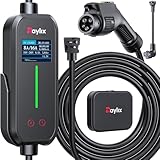
- [2026 INTELLIGENT CHARGING UPGRADE — PRECISION CONTROL MEETS SMART SCHEDULING] After surveying 100K+ U.S. EV owners, the Raylix R&D team found that nearly all drivers recognized the necessity of adjustable current and scheduled charging. Our upgraded J1772 charger features 4-level adjustable current (8A/10A/12A/16A) and a 1–12 hour smart delay timer. Whether you're charging overnight or during off-peak hours, enjoy smarter energy use, lower costs, and total convenience—on your schedule.
- [ONE CHARGER, ALL J1772 EVs/PHEVs READY!] Compatible with all SAE J1772 electric vehicles and plug-in hybrids—whether it’s Ford, GM, Nissan, Audi, BMW, Kia, Hyundai, Honda, Chevy, or more. Perfect for home or on-the-road charging, our 16A Level 1 & 2 charger ensures your EV is always powered and ready for any journey.
- [CHARGE 4× FASTER — NO MORE WAITING] In a rush? Our 16A Level 1 & 2 charger delivers charging speeds up to 4× faster than standard 8A Charger Level 1. Whether it's an early commute, a spontaneous trip, or last-minute errands, your EV will be ready when you are.
- [LEVEL 1 & 2 PORTABLE CHARGER — CHARGE ANYWHERE, ANYTIME] Designed for maximum flexibility, Raylix Level 1 & 2 EV charger features both 5-15 and 6-20 plug compatibility. Whether you're charging in your garage, at a friend's house, or at a roadside motel. NEMA 6-20 plug for Level 2 ev charging (240V, 16A, 3.68kW, 9-12 miles/hr) and a NEMA 5-15 adapter for Level 1 ev charging (120V, 12A, 1.44kW, 3-5 miles/hr) NOTE: In compliance with North American electrical safety standards, the charger automatically limits current to 12A when using a 5-15 outlet—protecting both your vehicle and your home’s electrical system.
- [AT-A-GLANCE CHARGING COMMAND: TOTAL CONTROL, INSTANTLY] While most ev chargers solutions confine vital data to in-car screens, the Raylix tesla charger breaks free with its enhanced TFT color display. This Raylix-exclusive feature delivers crystal-clear, real-time updates—voltage, current, power load, AND critical charging temperature—directly on the unit. Just one glance gives you complete charging insight. It’s not just information; it's the empowering peace of mind and satisfying control that transforms every charge into a masterfully managed experience.
Choose the Model S for maximum listed sedan range and flagship performance
The Model S is Tesla’s premium liftback sedan and the company’s sedan performance flagship. Tesla currently lists up to 410 miles of EPA-estimated range, a 1.99-second 0-to-60-mph time, and 1,020 horsepower for its high-performance configuration. Those are headline figures for specific configurations, not universal specifications for every Model S.
Unlike a conventional sedan trunk, the Model S uses a liftback opening, and Tesla emphasizes fold-flat rear seating. That gives it more flexible cargo loading than the body style might suggest, although the current Tesla page does not expose a single comparable cargo-volume figure in the cited presentation. It remains a five-seat vehicle rather than a three-row family SUV.
The cabin is positioned above the Model 3 and Model Y in equipment and presentation. Tesla lists three displays, a 17.4-inch first-row screen, a 9.4-inch second-row screen, a 22-speaker 960-watt audio system, and tri-zone climate control. The current Tesla page exposes inventory access rather than a straightforward public starting-price figure in the retrieved content, so check a live configuration before comparing purchase prices.
Model S makes sense when the buyer wants a premium sedan, the longest official range headline in the lineup, or exceptional acceleration without moving to an SUV or pickup. It is a poor choice when the central requirement is a vertical cargo opening, a third row, or trailer towing.
Choose the Model X only when its specific SUV advantages justify its availability caveat
The Model X is the largest premium SUV in this comparison and is distinguished by its falcon-wing rear doors. Tesla lists up to 94.5 cubic feet of cargo space, 5,000 pounds of towing capacity, and up to seven seats for the dual-motor version. The Plaid version is listed with up to six seats. Tesla also highlights a 17.4-inch first-row screen, a 9.4-inch second-row screen, tri-zone climate control, and HEPA filtration.
Its most important difference from the other four vehicles is not a specification but production status: Tesla’s current Model X page says the vehicle is no longer in production. The page says pre-owned non-Signature Edition inventory may still be available. That makes Model X a current-inventory or used-vehicle consideration, not a normal new-production alternative to Model 3, Model Y, and Cybertruck. Inventory, pricing, warranty status, and regional availability should be verified directly.
Model X is worth pursuing if you specifically need its three-row format, larger premium-SUV footprint, falcon-wing doors, or a favorable available vehicle. If you simply want a new Tesla with more cargo space than a Model 3, the Model Y is the more straightforward starting point.
Choose the Cybertruck for pickup work, towing, payload, and onboard power
The Cybertruck should not be selected merely because it is the largest or most unusual Tesla. It is a fundamentally different tool: a full-size electric pickup with a six-foot bed, a frunk, cabin storage, and a truck-oriented chassis and control layout.
Tesla lists up to 120 cubic feet of cargo space, up to 2,500 pounds of payload, and up to 11,000 pounds of towing capacity for specified configurations. The owner manual separates the numbers by version: Long Range is listed at 7,500 pounds of maximum towing, while Premium All-Wheel Drive and Cyberbeast are listed at 11,000 pounds. The manual lists 117.3 cubic feet of total cargo volume for the Dual Motor configuration and 120.7 cubic feet for Premium All-Wheel Drive and Cyberbeast.
Rank #3

- ✅【Fast & Adjustable Charging Power – Up to 7.68kWh, 16A–32A Output】This Level 2 portable EV charger delivers up to 32A and 7.68kWh for fast, efficient charging. Easily adjust current based on your home circuit: 32A for 40A, 24A for 30A, or 16A for 20A breakers. Simply long-press the “A” button to change amperage when pluged in,You can easily adjust the current (16A/24A/32A) to match your home circuit — no electrician required.
- ✅【Wide Compatibility – J1772 Connector for All Non-Tesla EVs】Equipped with a standard SAE J1772 plug, this EV charger works with most North American electric vehicles and plug-in hybrids, including models from Ford, GM, Nissan, Kia, Hyundai, BMW, and more. Tesla vehicles require a J1772-to-Tesla adapter (not included).
- ✅【Smart LED Screen】You Can View real-time charging data on the LED screen: amperage, voltage, speed, and delay settings. Stay fully informed with the built-in LED display that shows real-time charging data, including amperage, voltage, charging speed, and delay settings,Easily schedule your charging sessions during off-peak hours to save on electricity bills, set custom delays, It’s all about charging smarter, not just faster
- ✅ 【Smart Charging for Long-Term EV Care】: EVDANCE Level 2 EV charger offers flexible amperage settings ranging from 10A to 32A (10A/16A/20A/24A/32A). With a simple touch of the "A" button, you can easily select the appropriate charging speed to suit your specific needs. Lower amperage charging can reduce heat and extend battery health over time. Choose the current that suits your car and charging scenario — fast when you need it, gentle when you don’t.
- ✅【Built for Safety & Durability 】The EV charger is designed to handle tough environments with NEMA Type 4/IP66-grade protection against dust and water. While it’s not recommended for installation in direct sunlight or heavy rain, it performs reliably in garages, carports, and covered outdoor areas. The 25-foot military-grade charging cable features a drop-resistant plug tested to withstand over 10,000 insertions — built to last, wherever you charge.
Those cargo figures include different combinations of the bed, frunk, and cabin storage. They are not directly equivalent to a passenger-car cargo figure such as the Model 3’s 24 cubic feet or the Model Y’s hatchback volume. For truck shoppers, however, the relevant advantage is clear: the Cybertruck offers an enclosed bed and pickup loading flexibility that none of the car-based models can duplicate.
The Cybertruck also has 120-volt outlets in the cabin and bed, a 240-volt outlet, up to 9.6 kW of total electric power, and Powershare capability. Actual available power, equipment requirements, and use conditions matter, so buyers should confirm the details in the vehicle documentation before planning to run tools, appliances, or another property from the truck.
Recommended Free Tools
Cybertruck is the right recommendation for genuine truck use: towing, carrying dirty or long cargo, hauling equipment, using a bed, or bringing electrical power to a work site or home. It is a poor default for someone who mainly wants easy garage fit, light urban maneuverability, or a familiar sedan-like driving experience.
Range: compare configurations, not just nameplates
On the official figures available for this comparison, Model S has the highest range headline at up to 410 EPA-estimated miles. Model 3 Long Range rear-wheel drive follows with 363 miles, while Model Y, Model X, and Cybertruck occupy different bands depending on trim. That does not mean Model S is automatically the best road-trip vehicle for every driver: purchase cost, cargo needs, charging access, seating, and wheel configuration can matter more than the maximum number.
| Model | Range figures to understand | Important qualification |
|---|---|---|
| Model 3 | 321 mi Standard RWD; 363 mi Long Range RWD; 346 mi Long Range AWD; 309 mi Performance | All cited figures are EPA-estimated and configuration-specific |
| Model Y | 306–357 mi by listed configuration; current block includes 321 mi base, 327 mi Premium, and 306 mi Performance | Page presentations and configurations differ; verify the exact build |
| Model S | Up to 410 mi | EPA-estimated headline for the applicable configuration |
| Model X | 335–352 mi by listed configuration | EPA-estimated; availability is the larger purchasing issue |
| Cybertruck | 320 mi estimated for Cyberbeast; 325 mi EPA-estimated for listed AWD versions | Tesla uses both estimated and EPA-estimated labels depending on configuration |
EPA range is a standardized estimate, not a promise of miles in every trip. Tesla’s published result can change with wheels, tires, speed, temperature, weather, elevation, battery temperature, payload, and driving style. Cybertruck towing in particular can change energy use substantially, so a truck buyer should plan charging stops with a margin rather than treating the unladen range figure as a towing-range guarantee.
Charging speeds and the ownership question that matters more than peak kW
Tesla lists maximum Supercharging rates of 225 kW for Model 3 Standard, 250 kW for Model 3 Premium and Performance, 250 kW for listed Model Y variants, 250 kW for Model X, and 325 kW for Cybertruck. A maximum rate is a peak capability, not the speed maintained through an entire charging session.
| Vehicle or version | Maximum listed Supercharging rate |
|---|---|
| Model 3 Standard | 225 kW |
| Model 3 Premium and Performance | 250 kW |
| Model Y variants | 250 kW |
| Model X | 250 kW |
| Cybertruck | 325 kW |
Tesla says actual charging performance varies with the Supercharger type, vehicle configuration, state of charge, battery temperature, charging speed, weather, and elevation. The car normally charges fastest at a lower state of charge and tapers as the battery fills. Therefore, maximum kW and any advertised miles-added-in-15-minutes figure should be treated as configuration- and test-condition-dependent reference points, not guaranteed road-trip results.
Home charging is a separate decision. If you drive predictable daily distances and can install a suitable circuit, a Tesla home charger or other compatible EV charging setup may matter more to convenience than the difference between two vehicles’ peak DC charging figures. Installation should be evaluated by a qualified electrician, with local electrical rules, panel capacity, cable routing, connector standard, and parking position checked before purchase.
Public charging compatibility also deserves a fitment check. A Tesla J1772 charging adapter can be relevant when a Tesla owner needs access to J1772 public or destination charging, but connector standards, vehicle region, adapter design, and Tesla approval status vary. Do not assume every third-party adapter works with every Tesla or charging station.
Independent reader supportYour contribution helps us test, update, and keep practical guides available for everyone.Cargo, seats, towing, and size: the practical differences
For people and luggage, the lineup divides neatly into three groups:
Rank #4

- 【Efficient Charging】VDLPOWERVP level 2/level 1 EV charger is equipped with NEMA 6-20 Plug(220V/240V), it offers 16A current and up 3.5kW output. Two charging options, low current charging can effectively reduce battery wear and prolong service life. Choosing to connect the conversion line for charging can realize a full day's commute mileage in one night.
- 【Level 1 & Level 2 EV Charger Adapter】This portable ev charger is equipped with NEMA 6-20 plug (Level 2, 240V, 16A) and NEMA 5-15 adapter (Level 1, 110V, 12A), you can connect our electric vehicle chargers to a standard household socket or a dedicated industrial socket, use it flexibly from anywhere in the garage or driveway.
- 【Intelligent Charging-Durable and Safe】The intelligent chip design of its control box can keep monitoring the charging status at any time, provides multiple safety protections such as lightning protection and leakage protection. This electric vehicle charger is made of premuim and sturdy materials and is FCC certified. EV Control box is IP65 waterproof and dustproof.
- 【Easy Charging and Indication Displays】Just connect to the outlet and the car, the ev charger can work properly. LED indicators that can tell you the status as well as indicate errors while charging your electric vehicle. It can help you get the charging station status information quickly.
- 【Portable Design】The ev charger has a 20ft charge cable, which is long enough for you to charge without getting tangled.The appropriate cord length and weight allow you to easily put it in the trunk of an electric car whether you are visiting friends or renting a vacation house.
- Model 3: five seats and 24 cubic feet of cargo, with sedan access and the smallest stated dimensions.
- Model Y: five seats in common configurations, up to seven seats in a listed Premium layout, and roughly 74–75.5 cubic feet in the applicable five-seat cargo measurements.
- Model S: five seats and a flexible liftback, but no single current cargo-volume figure exposed in the cited Tesla page.
- Model X: up to six or seven seats, 94.5 cubic feet of cargo, and a 5,000-pound tow rating, subject to its no-longer-in-production status.
- Cybertruck: five seats, a six-foot bed, 117.3–120.7 cubic feet of total cargo volume, 7,500–11,000 pounds of towing, and up to 2,500 pounds of payload in the relevant manual configuration table.
Do not use cargo volume alone to predict usability. A tall refrigerator, muddy landscaping equipment, a trailer, and a week’s worth of family luggage each require different shapes and access points. The Model Y’s hatch is more useful than the Model 3’s trunk for many household items; the Model X adds passenger capacity; and the Cybertruck’s bed is the only option here designed for open-bed hauling.
Warranty coverage
Tesla’s current warranty page lists a four-year or 50,000-mile basic vehicle warranty for the covered models. Battery and drive-unit coverage varies by model and version:
- Model S, Model X, and Cybertruck: eight years or 150,000 miles.
- Model 3 rear-wheel drive and Model Y rear-wheel-drive/all-wheel-drive categories: eight years or 100,000 miles.
- Specified Model 3 and Model Y Premium or Performance versions: eight years or 120,000 miles.
The warranty page also states a 70% minimum battery-capacity-retention condition for the applicable battery and drive-unit coverage. Exact coverage depends on the vehicle configuration and warranty document, especially for used Model X inventory. Review Tesla’s current vehicle warranty terms rather than relying on a generic model comparison.
Ownership equipment should be model-specific
Accessories are not interchangeable simply because all five vehicles carry the Tesla name. Floor shapes, seat layouts, charging equipment, tire sizes, payload demands, and body dimensions differ. For a Model 3 or Model Y, Tesla Model 3 and Model Y floor mats can be a sensible interior-protection purchase, but the listing should explicitly match the vehicle generation, year, trim, and seating layout. A Model 3 mat set is not automatically correct for a Model Y, and a five-seat Model Y set may not fit a seven-seat configuration.
Free tools Windows power users keep installed
One-click scans. No signup required.
Cybertruck owners should treat bed equipment as a task-specific purchase. A Cybertruck bed mat, cargo divider, crossbars, or tailgate ramp can be useful when the truck is actually being used for hauling, but fitment should be confirmed against the exact Cybertruck version and bed hardware. Tesla itself identifies accessory categories such as crossbars, mud flaps, cargo dividers, tailgate ramps, and truck-bed mats on its Cybertruck materials.
Tires deserve the same caution. Before searching for Tesla replacement tires, check the door-jamb specification, wheel diameter, load rating, speed rating, seasonal requirements, and whether the vehicle is a high-performance Model 3, heavy Model X, or towing-oriented Cybertruck. A generic tire described as fitting a Tesla may still be wrong for the wheel package or load requirement.
Driver assistance is not autonomous driving
Tesla’s driver-assistance naming should not be confused with autonomous operation. Tesla describes Full Self-Driving (Supervised) as requiring an attentive driver and states that it does not make the vehicle autonomous. Features, eligibility, regional rules, software versions, and hardware can vary. Regardless of model, the driver remains responsible for monitoring the road and taking control.
Which Tesla should you buy?
| Your priority | Best starting point | Why | What to reconsider |
|---|---|---|---|
| Compact sedan and daily commuting | Model 3 | Smallest sedan format, five seats, 24 cu. ft. of cargo, and up to 363 EPA-estimated miles in Long Range RWD | Choose Model Y if bulky cargo or a taller seating position matters |
| One Tesla for most households | Model Y | Hatchback utility, crossover height, road-trip flexibility, and available extra seating in listed configurations | Choose Cybertruck for serious towing or bed use |
| Maximum sedan range | Model S | Up to 410 EPA-estimated miles and premium liftback packaging | Its price and equipment must be checked in a live configuration |
| Extreme acceleration in a sedan | Model S | Current headline of 1.99 seconds to 60 mph and 1,020 horsepower for the high-performance configuration | Model 3 Performance is the smaller alternative, listed at 2.9 seconds |
| Three rows and premium SUV space | Model X | Up to seven seats, 94.5 cu. ft. of cargo, falcon-wing doors, and 5,000-pound towing | Tesla says it is no longer in production; verify used inventory and warranty |
| Pickup work, towing, payload, or onboard power | Cybertruck | Six-foot bed, up to 11,000-pound towing, up to 2,500-pound payload in the applicable configuration, and 120/240-volt outlets | Its size and truck compromises make it unnecessary for ordinary sedan or crossover use |
Final buying checklist
- Decide on the body style: sedan, crossover, premium liftback, three-row SUV, or pickup.
- Count the seats you actually use: Model 3 and Model S seat five; Model Y layouts vary; Model X can seat six or seven; Cybertruck seats five.
- Measure your garage and parking space: do not assume a Cybertruck or Model X will fit where a Model 3 does.
- List your cargo shapes: luggage, strollers, tall boxes, dirty equipment, bicycles, and bed cargo favor different vehicles.
- Calculate towing needs: Model X is listed at 5,000 pounds; Cybertruck ranges from 7,500 to 11,000 pounds by configuration.
- Check charging at home and away: confirm electrical capacity and connector compatibility before buying an adapter or arranging installation.
- Verify the exact trim: range, acceleration, charging rate, seats, cargo volume, warranty mileage, and tire requirements can all change by version.
- Check availability immediately before purchase: Model X is no longer in production according to Tesla’s current page, and Model Y L availability is market-dependent.
Frequently Asked Questions
Which Tesla is the best overall choice?
For most households, the Model Y is the strongest starting point because it combines crossover seating, a rear hatch, substantial cargo capacity, and available extra seating. It is not the best choice for everyone: Model 3 is better for a compact sedan format, Model S for maximum listed sedan range, and Cybertruck for genuine pickup work.
Is the Tesla Model X still available as a new vehicle?
Tesla’s current Model X page says the vehicle is no longer in production and that pre-owned non-Signature Edition inventory may still be available. Treat it as a used or current-inventory opportunity and verify regional availability, price, condition, and warranty.
Which Tesla has the most cargo space?
The Cybertruck has the largest stated total cargo figure at 117.3–120.7 cubic feet, but that measurement includes the bed, frunk, and cabin storage. Among the car-based vehicles, Model X is listed at 94.5 cubic feet, while Model Y is listed at up to 74 cubic feet in the main presentation and approximately 75.5 cubic feet for certain five-seat manual measurements.
Does the Cybertruck have more range than the Model S?
No, based on the current official figures used here. Model S is listed at up to 410 EPA-estimated miles, while Cybertruck configurations are listed at approximately 320–325 miles, using estimated or EPA-estimated labels depending on version.
Does Tesla Full Self-Driving make these vehicles autonomous?
No. Tesla describes Full Self-Driving (Supervised) as requiring an attentive driver and states that it does not make the vehicle autonomous. The driver must continue monitoring the road and remain responsible for the vehicle.
The Tool Desk
Outbyte Driver Updater FREEFix the driver behind crashes, sound loss and screen glitchesFind Drivers →Outbyte PC Repair FREEClear out junk files and repair common Windows errorsFree Scan →The Bottom Line
Bottom line: Start with the job, not the badge. Model 3 is the compact sedan choice, Model Y is the most broadly useful household Tesla, Model S is the premium range-and-performance sedan, Model X is a specialized used or remaining-inventory three-row SUV, and Cybertruck is the utility-first pickup. Before committing, verify the exact trim, region, seating layout, range label, charging capability, warranty terms, and current availability.




