What’s actually slowing this PC down?
Pick the symptom - the matching free tool is one click away.
Short answer: Tesla is pursuing both approaches. It designs specialized autonomy processors internally, uses outside manufacturers to fabricate advanced chips, and is beginning an early-stage effort to develop chipmaking capability in Austin. Tesla’s public statements support a strategy of greater control and supply resilience—not a completed replacement for specialist foundries, and not proof that internal fabrication is already cheaper.
Designing a chip is not the same as manufacturing one
The phrase “Tesla chip” can describe a processor designed by Tesla without meaning that Tesla physically made the silicon. Semiconductor production has two distinct stages:
As an Amazon Associate I earn from qualifying purchases.
- Architecture and design: engineers define the computing units, memory system, software interfaces, power targets and physical layout for a particular workload.
- Fabrication: a semiconductor foundry uses lithography, process technology, packaging and testing equipment to turn that design into finished chips.
Tesla describes AI5 and AI6 as in-house, custom-designed inference chips for autonomy. It separately identifies Samsung as a manufacturing collaborator for advanced semiconductors used in AI inference and training. Tesla is therefore controlling more of the design while still relying on outside manufacturing for announced production plans.
Quick wins for a faster PC:
Scan for outdated or missing drivers - takes under a minuteDriver Scan →Repair Windows errors before they cause bigger problemsFix Now →This distinction matters for anyone trying to interpret Tesla’s vehicle-compute roadmap. Owning the design can let Tesla tailor hardware to its neural-network workloads, but it does not automatically provide wafer capacity, high manufacturing yields, advanced process technology or a lower cost per chip.
#1 Best Overall

- CEL Doctor: The ANCEL AD310 is one of the best-selling OBD II scanners on the market and is recommended by Scotty Kilmer, a YouTuber and auto mechanic. It can easily determine the cause of the check engine light coming on. After repairing the vehicle's problems, it can quickly read and clear diagnostic trouble codes of emission system, read live data & hard memory data, view freeze frame, I/M monitor readiness and collect vehicle information
- Sturdy and Compact: Equipped with a 2.5 foot cable made of very thick, flexible insulation. It is important to have a sturdy scanner as it can easily fall to the ground when working in a car. The AD310 OBD2 scanner is a well-constructed mechanic tool with a sleek design. It weighs 12 ounces and measures 8.9 x 6.9 x 1.4 inches. Thanks to its compact design and light weight, transporting the device is not a problem. The buttons are clearly labelled and the screen is large and displays results clearly
- Accurate Fast and Easy to Use: The AD310 scanner can help you or your mechanic understand if your car is in good condition, provides exceptionally accurate and fast results, reads and clears engine trouble emission codes in seconds after you fixed the problem. This device will let you know immediately and fix the problem right away without any car knowledge. No need for batteries or a charger, get power directly from the OBDII Data Link Connector in your vehicle
- OBDII Protocols and Car Compatibility: Many cheap scan tools do not really support all OBD2 protocols. AD310 scanner as it can support all OBDII protocols such as KWP2000, J1850 VPW, ISO9141, J1850 PWM and CAN. This device also has extensive vehicle compatibility with 1996 US-based, 2000 EU-based and Asian cars, light trucks, SUVs, as well as newer OBD2 and CAN vehicles both domestic and foreign. Pls confirm with our customer service whether it is compatible with your vehicle before purchasing
- Home Necessity and Worthy to Own: This is an excellent code reader to travel or home with as it weighs less and it is compact in design. You can easily slide it in your backpack as you head to the garage, or put it on the dashboard, this will be a great fit for you. The AD310 is not only portable, but also accurate and fast in performance. Moreover, it covers various car brands and is suitable for people who just need a code reader to check their car
Where Tesla’s semiconductor strategy stands in 2026
Public announcements describe a staged, forward-looking program rather than a finished vertically integrated semiconductor business.
| Element | What Tesla has disclosed | What that evidence does not establish |
|---|---|---|
| AI5 | In-house inference processor for autonomy; Tesla said the final design was completed in April 2026. Production is planned for 2027. | It does not establish that AI5 is already in volume production, or that Tesla fabricates it internally. |
| AI6 | In-house custom inference processor; production is planned for 2028. | It does not establish a completed design-to-volume manufacturing process or an Austin-made chip. |
| Outside manufacturing | Tesla’s 2025 Form 10-K says it announced a collaboration with Samsung to manufacture advanced semiconductors for AI inference and training in the United States. | The public material does not provide a complete, current description of every supplier, wafer allocation, yield or ramp schedule. |
| Austin fabrication effort | Tesla’s Q2 2026 update calls the semiconductor fab project early-stage and says it is intended to build internal chipmaking capabilities for reliable long-term supply of essential logic and memory. | It does not show that the facility is operational, producing leading-edge AI5 or AI6 chips, or cheaper than foundry production. |
Why Tesla designs its own autonomy processors
Workload-specific hardware
Autonomous-driving systems repeatedly execute neural-network inference: processing camera and other sensor data, running perception models, estimating objects and paths, and supporting vehicle-control decisions. A general-purpose processor can perform those operations, but a custom inference chip can be organized around Tesla’s preferred model types, data movement and numerical formats.
Tesla’s stated AI5 target illustrates the intended trade-off. In its Q4 2025 investor update, Tesla targeted a 50x performance improvement over AI4. It attributed that target to 10x raw compute, 9x memory capacity and 5x hardened block quantization and softmax. These are Tesla’s targets, not independently verified benchmark results. The figures also describe separate contributors to the claimed improvement; they should not be read as a third-party measurement of a finished processor.
Control over the vehicle-compute roadmap
Internal design can align the processor, neural-network compiler, firmware and vehicle software more closely than a one-size-fits-many commercial accelerator. Tesla can choose which operations to harden in silicon, how much memory to place near the compute engines and which features to prioritize for power and thermal limits in a car.
That control can reduce dependence on another company’s product roadmap. It can also create responsibility for every part of the stack: verification, software tools, security updates, manufacturing qualification and long-term service support.
Design control does not remove manufacturing constraints
A custom layout still has to be translated into masks, fabricated on wafers, packaged, tested and qualified for automotive use. A design that is technically superior but difficult to manufacture at acceptable yield can delay vehicles or increase costs. Tesla’s announcements do not disclose AI5 or AI6 yield, unit cost, package capacity or guaranteed wafer volumes.
What buying fabrication capacity from a foundry provides
Access to specialized factories
Advanced semiconductor fabs require extremely expensive process equipment, cleanrooms, process-development teams and years of manufacturing experience. Using a foundry lets a chip designer access that infrastructure without owning every production step. The foundry also supplies process design rules and manufacturing services that a customer’s physical design must meet.
Free tools Windows power users keep installed
One-click scans. No signup required.
Rank #2

- 【Diagnose Check Engine Light in Seconds – No Mechanic Needed】The FOXWELL NT301 OBD2 scanner instantly reads & clears engine fault codes (DTCs) with one click. Simply plug into the 16-pin DLC port, turn ignition on, and get accurate results within seconds—No prior car knowledge required. Save hundreds on dealership fees by knowing exactly what’s wrong before you visit a shop. The #1 choice car scanner for DIYers and car owners who want to take control of their vehicle’s health
- 【Clear & Reset CEL with Confidence】Unlike cheap code readers that just erase codes temporarily, NT301 works like all professional vehicle code readers: It clears the check engine light only after you’ve fixed the underlying issue. If the problem isn’t fully repaired, the fault code will reappear. So you’ll never get a false pass. Use the foxwell scanner to verify your repair work and drive with peace of mind
- 【Sm-og Check Helper – Know Your Pass/Fail Status Before the Test】With dedicated one-click I/M readiness hotkeys and a simple Red-Yellow-Green LED indicator, you’ll instantly know if your vehicle is ready for annual testing. Built-in speaker provides clear audio feedback. No guesswork—just confidence before you head to the test center. One less thing to worry about when inspection day comes
- 【Advanced OBDII Modes – O- 2 Sensor & EVAP Testing】NT301 go beyond basic code reading with enhanced OBD2 modes. Run an EVAP system check to assess fuel tank condition, and use the O- 2 sensor test to optimize air-fuel ratio, boosting fuel economy, cutting em- issions, and saving you money at the pump. The code reader for cars and trucks is like having a mini em-issions lab in your glove box
- 【Live Data Graphing – Spot Engine Issues in Real Time】View and log live sensor data in easy-to-read graphs with this OBD2 scanner diagnostic tool. Monitor ox- ygen sensors, fuel trims, coolant temperature, RPM, and more to spot suspicious values instantly. This obd scanner gives you professional-grade insight without the pro price tag—a feature you won’t find on basic $20 car code readers
Capacity and geographic options
Tesla’s 2025 Form 10-K identifies a United States manufacturing collaboration with Samsung for advanced AI inference and training semiconductors. Domestic or regional production can be strategically useful, but a collaboration is still different from Tesla owning and operating the fabrication line. The public filings do not quantify Tesla’s reserved capacity or disclose whether all future autonomy processors will use that arrangement.
Trade-offs of outsourcing
- Capacity competition: a foundry serves multiple customers, so allocation and scheduling can become constraints when demand spikes.
- Less process control: Tesla can specify its chip, but the foundry controls the underlying manufacturing process and production execution.
- Commercial dependence: prices, minimum commitments, packaging availability and technology transitions are governed by contracts whose full terms are not public.
- Geographic exposure: relying on a limited number of manufacturing locations can leave production vulnerable to logistics, energy, regulatory or geopolitical disruption.
Tesla’s foundry relationship and the $16.5 billion figure
Tesla’s 2025 proxy statement refers to a $16.5 billion Samsung deal in connection with manufacturing efficiency for the next-generation AI6 chip. That figure should be reported exactly as Tesla presents it: a deal referenced in the proxy in that context.
It is not evidence that one AI6 chip costs $16.5 billion, that the amount is solely a fab-construction budget, or that Tesla has achieved a particular unit-cost saving. The proxy wording does not provide enough detail to describe the full commercial scope, payment schedule, capacity commitment or production timetable.
Similarly, the 2025 Form 10-K’s description of a Samsung collaboration confirms an announced manufacturing relationship, but it does not supply a like-for-like comparison with an Austin-made chip. Neither source gives public figures for wafer yield, total ownership cost, output per month or guaranteed supply.
What Tesla says about its Austin fab
Tesla’s Q1 2026 investor update described an expanded manufacturing scope that includes semiconductor fabrication and said the effort was important to securing sufficient and resilient chip supply. Its Q2 2026 investor update was more specific about project maturity:
While still in its early stages, this project is critical to building our own chipmaking capabilities to ensure reliable long-term supply of essential logic and memory chips for our products.
That statement supports a supply-resilience rationale. Tesla wants more internal capability and greater control over access to logic and memory components that its products require. It does not say the Austin fab is producing AI5 or AI6, and it does not claim that internal manufacturing has a lower total cost than buying foundry capacity.
Rank #3
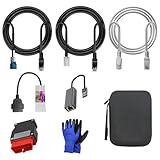
- 🚕【Application scenes】: This adapter cable works together with (USB/WiFi/Bluetooth) OBD2 Scanner and OBDII Code Reader, provides full diagnostics to read those datas like battery pack temperature, motor temperature, cell voltage and so on, which are not available from main screen.
- 💡【OBD2 Diagnostic Tools Adapter】: The USB OBDII adapter is the perfect companion to connect Tesla and Lanuch X431 tablets (including PADIII, PADV, PADVII, EV MAX, PRO 3S+V3.0 Ultra), allowing you to diagnose the condition of your car more conveniently and quicklyfeatures
- 🔎【Included】: High-end cable with OEM connector, 4 PIN 3 Y CABLE, 4 PIN S X CABLE, 5 FOOT CABLES, 1013230-00-A, 1137658-00-C, 1930388-00-A
- ✅【SOFTWARE NOT INCLUDED】: SOFTWARE IS WEB-BASED AND MUST COME DIRECTLY FROM TESLA!!!
- 🌹【Excellent Service】:If you have any pre-sales or after-sales questions, please contact us. We provide 24-hour professional service. We will wholeheartedly assist you and fully protect your consumer rights to ensure your satisfaction
What “early-stage” means for readers
An early-stage fab project may involve facility planning, equipment decisions, process development, hiring, qualification work or other preparation before commercial output. Tesla has not publicly supplied enough information to determine which production milestones have been completed, what process node is intended, how much capacity is planned or when automotive-qualified volume would begin.
Side-by-side comparison: internal capability and foundry sourcing
| Decision factor | Custom design plus foundry manufacturing | More Tesla-owned fabrication |
|---|---|---|
| Architecture control | High: Tesla designs the autonomy processor and software interface. | High: the design remains Tesla-controlled. |
| Manufacturing control | Lower: the foundry owns the production process and runs the wafers under its agreement. | Potentially higher, but Tesla has described Austin capability as early-stage. |
| Access to established process technology | Uses a specialist’s existing equipment, process knowledge and production systems. | Would require Tesla to build, qualify and operate those capabilities itself or with partners. |
| Supply resilience | Can benefit from a U.S. manufacturing relationship, but remains dependent on outside capacity. | Could add a direct source of logic and memory supply if the facility reaches reliable production. |
| Capital intensity | Requires chip-design, tooling, qualification and manufacturing payments. | Adds facility, equipment, staffing, process-development and operating costs. |
| Execution risk | Risk centers on design tape-out, foundry scheduling, yield, packaging and qualification. | Adds fab construction, process ramp, yield learning and ongoing utilization risk. |
| Public evidence today | Announced Samsung collaboration and planned AI5/AI6 production milestones. | Austin project publicly characterized as early-stage. |
| Cost advantage | Not publicly quantified against internal fabrication. | Not established; Tesla has disclosed no comparable cost, yield or capacity data. |
The timeline: announced plans versus demonstrated output
- 2025: Tesla’s Form 10-K reported the Samsung collaboration for advanced AI inference and training semiconductors in the United States. The filing also described Cortex 2, a training cluster at Gigafactory Texas.
- Q4 2025 update: Tesla presented AI5 and AI6 as in-house custom inference chips for autonomy, with planned production in 2027 and 2028 respectively. It stated the AI5 50x performance target relative to AI4.
- April 2026: Tesla’s Q1 2026 update said the final AI5 design had been completed.
- Q1 2026: Tesla described semiconductor fabrication as part of an expanded manufacturing effort intended to improve supply sufficiency and resilience.
- Q2 2026: Tesla called the Austin semiconductor fab early-stage and linked it to long-term supply of essential logic and memory.
A completed design is an important engineering milestone, but it is not the same as volume production. The 2027 and 2028 dates remain Tesla’s published plans, not evidence that those chips were shipping in those years at the time of the statements.
Independent reader supportYour contribution helps us test, update, and keep practical guides available for everyone.What the $20 billion 2026 spending forecast does—and does not—tell us
Tesla’s 2025 Form 10-K said it expected 2026 capital expenditures to exceed $20 billion. Tesla attributed that broad company forecast in part to AI compute infrastructure, data centers, manufacturing expansion and research-and-development production lines.
The figure is not a semiconductor-fab budget. It combines several categories of spending across the company, so it cannot be used to calculate Tesla’s investment in Austin, the cost of AI5 or the expected cost per processor. It does, however, show that Tesla was planning a very large overall capital program while expanding AI and manufacturing infrastructure.
Why an automotive company might accept both strategies
Vehicles need predictable component availability
A vehicle program is planned years in advance and must support production, software updates, service and replacement parts over a long life. A custom chip can be designed around those requirements, while a manufacturing partnership can provide access to established production capacity during the ramp.
Recommended Free Tools
Autonomy workloads change faster than vehicle hardware
Neural-network models, data pipelines and training systems evolve continuously. Tesla’s Cortex 2 training cluster and its inference-chip roadmap address different parts of that cycle: training infrastructure develops models, while inference processors execute them in vehicles and related systems. Tesla’s disclosed Samsung collaboration covers both AI inference and training semiconductors, while AI5 and AI6 are described specifically as autonomy inference chips.
Resilience may be worth more than nominal unit price
A second source of manufacturing capability could reduce the consequences of a supplier interruption, but resilience has its own cost. A fab must be utilized, maintained and qualified; unused capacity can be expensive. Without Tesla’s internal forecasts for utilization, yield, capacity and operating expense, no public comparison can show whether owning fabrication would be economically superior.
Rank #4
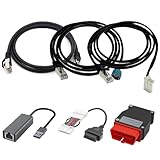
- Diagnostic Service Cable for Tesla, Compatible with Tesla Model X & S, Connects to Tesla port X861/X863
- Designed to work with both standard OBD-II ports and Tesla-specific connectors, ensuring full compatibility with various Tesla models.
- Compatible with Tesla Model 3 & Y, Repair Support Replace 1137658-00-C, DIAGNOSTIC SERVICE CABLE(2022-2024 MODEL S/X/3/Y)
- Diagnostic OBD-II Cable Connector for Model 3 Model Y 12/20/26pin to 16pin Male Female(Dual 26pin to 16pin)
- Crafted from high-quality PVC and PE materials, Facilitates firmware updates, module programming, and in-depth troubleshooting for both technicians and advanced users.
What is still unknown
The public statements reviewed leave several important questions unanswered:
- How much will Tesla pay per wafer, packaged chip or finished module under its foundry agreements?
- What yields will AI5 and AI6 achieve during ramp-up and mature production?
- How many wafers or packaged processors can Tesla obtain annually from outside manufacturers?
- What process technology, packaging method and memory configuration will the Austin project use?
- When, if ever, will Austin produce automotive-qualified chips at commercial volume?
- What share of Tesla’s future logic and memory demand will be made internally versus by suppliers?
- What are the fab’s construction, equipment, staffing and operating costs?
Until Tesla publishes comparable figures, it is not possible to calculate a defensible cost-per-chip, yield or capacity advantage for internal fabrication.
Do these 3 things before closing this tab:
1Repair Windows errors before they cause bigger problems2Fix the driver behind crashes, sound loss and screen glitches3Clear out junk files and repair common Windows errorsHow to evaluate Tesla’s next chip announcement
- Identify the stage: determine whether Tesla is discussing architecture, a completed design, tape-out, first silicon, qualification samples or volume production.
- Separate design from fabrication: check whether “in-house” refers to Tesla’s engineering ownership or to physical wafer production.
- Look for production evidence: seek disclosed output, packaging, qualification and delivery milestones rather than a planned year alone.
- Check the measurement basis: treat performance multipliers as targets unless Tesla or an independent tester reports measured results under defined workloads.
- Ask what the money covers: distinguish a broad capital-expenditure forecast, a supplier contract value and a fab-construction budget.
- Demand comparable economics: a real cost comparison requires the same basis for internal and outsourced chips, including design amortization, equipment, labor, yield loss, packaging, logistics and capacity utilization.
Implications for Tesla vehicles and computing systems
If the roadmap proceeds as announced, Tesla could have tighter coordination between autonomy software and vehicle hardware, plus more options for securing future compute and memory supplies. A successful foundry partnership can provide near-term manufacturing access while Tesla develops additional internal capability.
The risks are equally practical. A delayed design, low early yield, packaging bottleneck or fab ramp problem could affect the timing and cost of compute hardware. Automotive qualification also demands reliability across temperature, vibration and long service lives; a chip’s headline compute target alone does not demonstrate that it has met those requirements.
For owners, the announcements do not establish that a current vehicle can be upgraded to AI5 or AI6, nor do they define which production models would receive each processor. Tesla’s published material identifies a chip roadmap, not a vehicle-by-vehicle retrofit or delivery schedule.
Bottom line
Tesla’s strategy is best understood as selective vertical integration. It owns the design of specialized autonomy processors, uses outside manufacturing for advanced semiconductor production, and is developing an Austin fabrication capability to improve long-term control and supply resilience. AI5 and AI6 remain forward-looking programs—planned for 2027 and 2028—with Tesla’s 50x AI5 figure presented as a target. The Austin fab remains early-stage, and the public record does not prove a lower cost, higher yield or larger capacity than foundry sourcing. The decisive question is therefore not whether Tesla is choosing “in-house” or “foundry” chips; it is how successfully the company can combine proprietary design with dependable, economical manufacturing.
Quick Recap
Product prices and availability are accurate as of the date/time indicated and are subject to change. Any price and availability information displayed on Amazon at the time of purchase will apply.




