What’s actually slowing this PC down?
Pick the symptom - the matching free tool is one click away.
Tesla produced 2,425 Model 3s in Q4 2017, far short of the 5,000-per-week production rate it had forecast for late Q1 2018. In January, the company pushed that milestone to the end of Q2 and set an interim target of about 2,500 per week by the end of Q1. Tesla later reported a sharp Q1 production increase, but the 5,000-per-week goal was still a forecast—not a result.
What goal did Tesla miss?
In its November 1, 2017 Q3 update, Tesla said it expected to reach a Model 3 production rate of 5,000 vehicles per week by late Q1 2018. That was a production-rate target, not a promise to build 5,000 cars over the quarter or a delivery target. Tesla’s Q3 2017 shareholder update described the initial manufacturing phase as challenging and identified battery-module assembly at Gigafactory 1 as its primary constraint.
How far behind was production in Q4?
Tesla reported producing 2,425 Model 3s in Q4 2017 and delivering 1,550. The figures are different because production is not the same as customer delivery; Tesla said 860 Model 3s were in transit at quarter end. The company’s January 3, 2018 release also said it produced 793 Model 3s in the last seven working days of the quarter. It described the line’s rate in the final few days as equivalent to more than 1,000 vehicles per week if extrapolated, but that late-quarter pace was still well below the previously stated 5,000-per-week goal.
What targets replaced the original forecast?
On January 3, 2018, Tesla revised its schedule: about 2,500 Model 3s per week by the end of Q1, then 5,000 per week by the end of Q2. Tesla reiterated those milestones in its February 7 shareholder letter. These were company forecasts, not production results.
#1 Best Overall

- Made In Malaysia
| Statement or result | Timing | What it means |
|---|---|---|
| 5,000 vehicles per week projected | Late Q1 2018, in Tesla’s November 1, 2017 update | Original production-rate target |
| 2,425 Model 3s produced | Q4 2017, reported January 3, 2018 | Quarterly production total, not a weekly rate |
| About 2,500 vehicles per week targeted | End of Q1 2018, announced January 3 | Revised interim production-rate goal |
| 5,000 vehicles per week targeted | End of Q2 2018, announced January 3 and reiterated February 7 | Revised timing for the original weekly-rate milestone |
| 9,766 Model 3s produced | Q1 2018, reported April 3 | Quarterly production total; the 5,000-per-week target remained ahead |
Sources for the commitments and results: Tesla’s Q3 2017 update, Tesla’s Q4 production release, Tesla’s Q4 2017 shareholder letter, and Tesla’s Q1 2018 production release.
Why did Tesla say it fell behind?
Battery-module assembly
Tesla identified the battery-module assembly line at Gigafactory 1 as its primary production constraint in the Q3 update, saying cells were packaged into modules there. Its February shareholder letter again described battery-module capacity as an area where it had faced constraints.
Rank #2

- Theme: Sport
- Toy vehicle form: Car
- Included components: Batteries
- Material: Metal
Automated manufacturing ramp
Tesla also said it had difficulty bringing highly automated manufacturing processes online during the initial production phase. These explanations are the company’s account of the bottlenecks; the cited updates do not provide an independent causal audit.
What happened in Q1 2018?
Tesla reported producing 9,766 Model 3s in Q1 2018—four times its Q4 output. The company said it doubled the weekly production rate during the quarter while working through production and supply-chain bottlenecks. In its April 3 update, Tesla continued to forecast about 5,000 vehicles per week in roughly three months. The quarterly total showed substantial reported progress, but did not establish that the weekly target had already been reached.
Rank #3
![Matchbox Tesla Model 3 [Red] 04/125, 1:64 Scale Diecast Toy Vehicle](https://m.media-amazon.com/images/I/51fZ-6HLYdL._SL160_.jpg)
- Tesla Model 3 in a Deep Red Finish!
- Number 04/125 in the Overall Series!
- 1:64 Scale Diecast Toy Car
Did Tesla’s quality-first approach solve the ramp?
Tesla said it was focusing on quality and efficiency rather than pushing for the highest possible short-term volume, which it said meant a more gradual Q1 ramp. That states management’s rationale; the cited company updates do not establish whether the tradeoff was the best one, or whether the underlying production problems were fully resolved. They document the company’s reported progress through Q1 2018, not a complete assessment of the production system after that point.
Quick Recap
Best Value
![DieCast Hot Wheels Tesla Model 3, 174/250 [White] 2019 Green Speed 1/5](https://m.media-amazon.com/images/I/51qraYtcLuL._SL160_.jpg)
- Hot Wheels Tesla Model 3, 174/250 [White] 2019 Green Speed 1/5
Rank #4
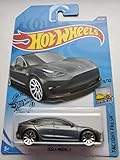
- Hot Wheels 2020 Factory Fresh Tesla Model 3, Gray 112/250
Product prices and availability are accurate as of the date/time indicated and are subject to change. Any price and availability information displayed on Amazon at the time of purchase will apply.




