There was not one officially confirmed federal investigation concluding that a Cybertruck battery or door design caused these deaths. The headline combines three separate incidents: a fatal roadway fire near Beach City, Texas, on August 5, 2024; a Piedmont, California, crash that killed three people on November 27, 2024; and an intentional explosion outside the Trump International Hotel Las Vegas on January 1, 2025, that killed the person inside and injured bystanders.
The federal action most directly associated with Cybertruck safety is NHTSA Preliminary Evaluation PE24031, opened October 17, 2024. It examines whether Tesla’s Full Self-Driving system responds appropriately to reduced roadway visibility. It includes 2023–2024 Cybertruck vehicles equipped with FSD, but it is not a confirmed federal finding that Cybertruck batteries, doors, or emergency releases caused either fatal roadway fire.

As an Amazon Associate I earn from qualifying purchases.
Three incidents are being treated as one story
The incidents differ in location, circumstances, and investigative status. Treating them as a single type of Cybertruck failure obscures important facts.
| Date and location | What happened | What is established or alleged |
|---|---|---|
| August 5, 2024 Near Beach City/Baytown, Texas |
Michael Sheehan died after his Cybertruck left the roadway, ended in a ditch, and burned. | His family later sued Tesla, alleging that vehicle design and emergency-escape issues contributed to the death. Tesla has denied wrongdoing. The public record does not establish that battery thermal runaway caused the fire. |
| November 27, 2024 Piedmont, California |
A Cybertruck carrying four people crashed into a retaining-wall/tree area and caught fire. Three occupants died; one survived. | The California Highway Patrol’s preliminary account cited excessive speed and drug use as factors. Later lawsuits alleged that the electrically operated doors and emergency-release design made escape difficult. Those claims remain unresolved. |
| January 1, 2025 Las Vegas, Nevada |
A Cybertruck exploded and burned outside the Trump International Hotel Las Vegas. The person inside died and bystanders were injured. | Authorities found fireworks, fuel canisters, and other materials in the vehicle. Law enforcement treated it as an intentional-explosion investigation, not as evidence of spontaneous ignition from a manufacturing defect. |
Across the three events, five people died. But only the first two were roadway crashes. The Las Vegas incident involved materials deliberately placed inside the vehicle and should not be used as evidence that a Cybertruck spontaneously caught fire after a collision.
#1 Best Overall
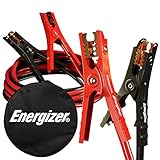
- ENERGIZER 16 FEET JUMPER CABLES - 6 Gauge, 16 FT booster battery jumper cables for jump starting a dead or weak battery. Ideal for trucks, SUVs, full-size cars, mid-size cars and small/compact cars
- THICK VINYL COATING - Includes a strong spring and a comfortable handle for secure placement and easy positioning. Thick vinyl coating for protection against rust and corrosion.
- CARRYING CASE INCLUDED - Our Energizer jumper cables come with a high-grade travel bag for easy transport and compact storage.
- TANGLE FREE CCA BOOSTER CABLES - 16 Foot length makes it easy to reach from one car battery to another. Copper clad aluminum cables remains flexible even at -40°C.
- THE BRAND NAME YOU CAN TRUST - We are here to power your car battery and truck with our booster jumper cables. We keep you going and going!
What NHTSA’s federal probe actually covers
NHTSA opened Preliminary Evaluation PE24031 on October 17, 2024. The evaluation concerns Tesla’s Full Self-Driving system and its response to conditions in which roadway visibility is reduced. The vehicle population includes Tesla Model S, Model X, Model 3, Model Y, and 2023–2024 Cybertruck vehicles equipped with FSD.
That scope matters. PE24031 is about driver-assistance performance before or during a collision in degraded-visibility conditions. It is not, based on the described scope, a determination that:
- the Cybertruck’s high-voltage battery caused one of the fatal fires;
- the vehicle’s doors trapped the occupants;
- the emergency-release mechanism was defective;
- a Cybertruck design defect caused the Texas or Piedmont deaths; or
- the Las Vegas explosion resulted from a manufacturing problem.
NHTSA has also gathered information from Tesla and law enforcement after the Piedmont crash, according to the latest reviewed reporting. That information-gathering activity should not be described as a dedicated federal defect investigation into the fire or the door-release design unless the agency formally announces one.
Regulatory terms are not interchangeable. An agency may gather information, conduct a special crash investigation, open a preliminary evaluation, move to an engineering analysis, order or oversee a recall, or make a formal defect finding. Those are different stages. The existence of one does not prove that the agency reached the next stage.
Broader federal scrutiny of Tesla driver-assistance performance can be relevant to questions about what happened before a crash. It still does not establish that fire behavior, battery design, or emergency egress caused the fatalities in these incidents.
What is known about the Texas crash
On August 5, 2024, Michael Sheehan died in a Cybertruck fire near Beach City/Baytown, Texas. Reporting on the wrongful-death lawsuit says the vehicle left the roadway and ended in a ditch before burning; some descriptions refer to the vehicle overturning or coming to rest there.
Sheehan’s family alleged in civil litigation that Tesla’s safety design, warnings, and emergency-escape arrangements contributed to the fatal outcome. Tesla has denied wrongdoing and disputed liability. A lawsuit is evidence that a claimant has made an allegation and sought discovery; it is not a government conclusion or a court finding.
Quick wins for a faster PC:
Scan for outdated or missing drivers - takes under a minuteDriver Scan →Repair Windows errors before they cause bigger problemsFix Now →Fix the driver behind crashes, sound loss and screen glitchesFind Drivers →The available public material does not establish the precise ignition sequence. It does not support stating as fact that the high-voltage battery entered thermal runaway, that the battery alone caused the fire, or that a door defect prevented Sheehan from escaping. Those questions remain matters for evidence and litigation.
What is known about the Piedmont crash
On November 27, 2024, a Cybertruck carrying four people left the roadway in Piedmont, California, struck an area involving a retaining wall and trees, and caught fire. Three occupants died, while one person survived.
Rank #2
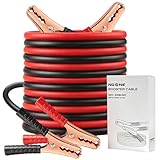
- UNIVERSAL FITMENTS :NOONE 10 FT car jumper cables support 200A peak current for jumping start 12/24V car battery. So NOONE booster cables are suitable for your vehicles with up to 3.0 L Gas Engines
- SUPERB PERFORMANCE :With rubber covered, NOONE battery booster cables can provide you insulated protection to prevent leakage current. Equipped with superb conductivity, our copper-clad aluminum cables conductors work well even in extreme temperatures(-40°F to 140°F)
- HIGH QUALITY CLIPS :Super strong bite, tight crimping and more conductive. Extra thick PVC sheath at the handle, can be fireproof flower, higher safety
- JUMPER CABLES KIT :The package includes a Jumper Cables, and is a quality choice for family cars
- THE BRAND NAME YOU CAN TRUST : Our NOONE automotive battery jumper cables provide a 2-year products service. If you encounter any problems, please do not hesitate to contact us via Email
The California Highway Patrol’s preliminary account cited excessive speed and drug use as factors in the crash. “Preliminary” is important: it describes the agency’s initial account and should not be expanded into a final determination about every cause of the collision or the subsequent fire.
Families of two victims later filed lawsuits alleging that the Cybertruck’s electrically operated doors and the location or usability of its emergency releases made escape difficult. The surviving occupant later made similar allegations in a separate lawsuit. Tesla has argued that the Cybertruck complies with federal safety standards and has denied wrongdoing.
The Tool Desk
Outbyte Driver Updater FREEFix the driver behind crashes, sound loss and screen glitchesFind Drivers →Outbyte PC Repair FREEClear out junk files and repair common Windows errorsFree Scan →The public information reviewed for this article does not establish whether an emergency release failed, whether an occupant was unable to reach it, or whether crash deformation, fire, electrical loss, or another condition made escape impossible. The lawsuits raise those issues; they do not resolve them.
Why the Las Vegas explosion is a different case
On January 1, 2025, a Cybertruck exploded and caught fire outside the Trump International Hotel Las Vegas. The person inside was killed and bystanders were injured.
Authorities found fireworks, fuel canisters, and other materials in the truck. The FBI and local authorities investigated the event as an intentional explosion. Reporting on the investigation did not attribute it to a Cybertruck spontaneously igniting because of a vehicle defect.
That distinction is more than a technicality. A vehicle intentionally loaded with combustible and explosive materials presents a fundamentally different investigative question from an ordinary crash in which responders must determine whether the collision, damaged electrical components, a battery, fuel, or another source started a fire.
What’s actually slowing this PC down?
Pick the symptom - the matching free tool is one click away.
Do Cybertruck doors work if the power is gone?
Tesla’s current North American Cybertruck owner’s manual says the doors are electrically powered. If the vehicle has no low-voltage power, the interior door-open buttons will not operate normally. The manual provides mechanical backup releases, but their existence does not prove that they were usable in either fatal crash.
Front-door manual release
The front-door mechanical release is located near the window switches. It is intended for emergency use when the normal electrically powered control is unavailable.
Rear-door manual release
The rear-door mechanical release cable is accessed by removing the rubber mat at the bottom of the rear door’s map pocket. Occupants and owners should learn its location before an emergency rather than trying to find it for the first time in smoke, darkness, or a damaged vehicle.
Rank #3

- Strong And Safe Clamps: The TOPDC Jumper Cables booster cable has four giant alligator clamps with strong jagged teeth and springs for excellent grip force. The jaws are strong and make connections easy. And the High Peak Jumper Cables has insulating rubber material to prevent electric shock and protect the safety of users. The clamps are engineered with reinforced structure and well-designed jaws that provide a firm, secure grip on both top-post and side-terminal batteries, ensuring long-lasting durability and ease of use.
- 20 Feet Jumper Cables: The TOPDC 20 Feet Jumper Cables has an extremely long usage distance, which is suitable for use with SUVs, full-size cars, mid-size cars, and compact cars. The Jumper Cables adopts insulating material to prevent rust, corrosion so effective insulation. The 20 Feet Jumper Cables are suitable for various car models and are powerful helper in emergency situations. Made from high-quality Copper Clad Aluminum (CCA), the thick-gauge cables offer excellent conductivity and maintain flexibility even in extreme cold, providing reliable performance when you need it most.
- UL-Listed & qualified quality: The TOPDC Jumper Cables surface is made with premium PVC which is resistant to freezing, cracking & folding and won’t tangle. Each jumper clamp has undergone rigorous testing and successfully passed UL certification, which is exhibiting excellent performance under extreme temperature conditions (-40 °F to 140 °F). The thick vinyl coating is built to resist wear, prevent tearing, and protect the internal wire from exposure, enhancing safety and durability over time.
- Convenient storage and carrying: The TOPDC Jumper Cables will give a Carry Bag. When you need to use Jumper Cables, you can always carry it in your bag. When you don't need to use Jumper Cables, you can pack it in a bag and store it in any place. Convenient storage and carrying are truly essential items at home. The included 600D Oxford fabric storage bag is tough, spacious, and features a smooth zipper for easy access—perfect for neatly organizing cables and accessories without the hassle.
- Quality Assurance: TOPDC provides a 5-year quality guarantee and full after-sales support, reflecting our commitment to excellence and customer satisfaction. Every product undergoes strict quality inspection to ensure superior performance, consistent reliability, and long-lasting durability. The included clearly labeled step-by-step guide makes operation simple even for first-time users. With robust design, dependable construction, and a focus on user experience, TOPDC jumper cables are built to deliver confidence in any emergency situation—whether at home, on the road, or in extreme weather conditions.
Tesla labels the mechanical release as an emergency-only mechanism and warns that using it while the vehicle still has power can damage the window or trim. The window also will not automatically lower when the manual release is used. That means an occupant should not assume that pulling the mechanical release will reproduce the normal powered door-opening sequence.
Free tools Windows power users keep installed
One-click scans. No signup required.
Owners should verify the instructions in the manual for their vehicle and configuration, because manuals and vehicle details can change. Every occupant should know that the backup releases exist, where they are located, and that a severe crash may deform a door, disable both electrical and mechanical controls, block access, or create an immediate fire and smoke hazard.
What the battery-fire documentation does—and does not—show
Tesla’s service documentation warns that a damaged high-voltage battery can create several hazards, including electric shock, flammable gas, smoke, heat, delayed ignition, sparks, and arcing. It directs responders to contact emergency services and consult Tesla’s first-responder or lithium-ion battery emergency guidance when a battery shows signs such as smoke, flames, escaping gas, excessive heat, sparks, or arcing.
Those warnings support a cautious conclusion: a seriously damaged EV battery can be hazardous and may require specialized emergency-response procedures. They do not prove that every Cybertruck crash fire involves battery thermal runaway, and they do not establish that the battery caused the initial ignition.
The Piedmont incident illustrates why the cause should not be generalized. The fire chief reportedly believed that the rapid extinguishment made it unlikely that the large battery pack had caught fire. That observation is not a definitive laboratory finding, but it is a reminder that a visible vehicle fire does not automatically prove high-voltage battery involvement.
Until investigators establish the ignition source and battery condition in each event, responsible reporting should use terms such as “caught fire” or “burned” rather than asserting that the battery caused the fire.
What the lawsuits and recalls mean
The Texas and Piedmont lawsuits raise allegations about design, warnings, emergency egress, and whether the vehicle contributed to the severity of the outcomes. They may lead to discovery, expert analysis, settlement, trial, or dismissal. At the stage described in the available reporting, they are not adjudicated findings.
Cybertruck has also been subject to separate recalls involving issues such as exterior trim or panels and lighting-related defects. Those recalls should not be presented as proof that the Texas or Piedmont fires were caused by a recall defect. A recall for one component or condition does not establish causation in an unrelated crash.
Independent reader supportYour contribution helps us test, update, and keep practical guides available for everyone.Practical emergency-escape preparation for Cybertruck occupants
- Learn the normal and manual controls while parked. Have every regular occupant identify the front-door mechanical release and the rear-door release cable location.
- Do not wait for an emergency to read the manual. Tesla warns that the manual release is for emergency use and that operating it while power remains available can damage the window or trim.
- Call emergency services as soon as it is safe. A crash may involve fire, damaged high-voltage components, smoke, leaking fluids, or delayed ignition.
- Leave the vehicle if fire or heavy smoke is present. Move away from the vehicle and do not re-enter it for belongings.
- Expect the backup route to have limitations. A mechanical release cannot overcome a crushed door, blocked opening, inaccessible cable, injury, fire, or hazardous surroundings.
- Tell responders that it is an EV. If a Cybertruck is damaged, firefighters and other professionals need to know that it contains a high-voltage battery and may require EV-specific procedures.
Confirmed, alleged, and unresolved
The cleanest way to report this story is to separate facts from claims:
| Category | Examples |
|---|---|
| Confirmed or officially documented | The dates, locations, deaths, fires, the Piedmont preliminary crash factors reported by CHP, the existence and locations of manual door releases, NHTSA PE24031, and the materials found in the Las Vegas vehicle. |
| Alleged in litigation | That door design, emergency-release placement or usability, warnings, or other vehicle-design choices trapped occupants or worsened the fatal outcomes. |
| Unresolved | The precise ignition source in each roadway fire; whether the high-voltage battery entered thermal runaway; whether an emergency release was reachable or usable in the wreckage; and whether a legally actionable design defect contributed to any death. |
The most accurate summary is therefore narrower than the original headline: fatal Cybertruck incidents prompted lawsuits, law-enforcement investigations, and federal scrutiny of related Tesla safety systems. NHTSA’s identified preliminary evaluation concerns FSD behavior in reduced visibility—not a federal finding that Cybertruck doors or batteries caused the deaths.
Frequently Asked Questions
How many people died in the reported Cybertruck fire incidents?
Five people died across three separate events described in the public reporting reviewed here: one near Beach City, Texas, three in Piedmont, California, and one in the Las Vegas explosion. The Las Vegas event was treated as an intentional explosion rather than an ordinary roadway crash.
Did NHTSA find that the Cybertruck battery caused the fatal fires?
No. NHTSA Preliminary Evaluation PE24031 concerns Tesla Full Self-Driving behavior in reduced-visibility conditions. It is not a confirmed finding that a Cybertruck battery caused either roadway fire. The ignition source and battery condition in those incidents remain unresolved.
Did Cybertruck doors trap the Piedmont occupants?
Lawsuits filed by victims’ families and the survivor allege that electrically operated doors and emergency-release design made escape difficult. Those are legal allegations, not an established finding that a release failed or that the door design caused the deaths.
Can a Cybertruck door be opened if the electrical system loses power?
Tesla’s North American owner’s manual describes mechanical emergency releases. The front release is near the window switches; the rear release cable is accessed by removing the rubber mat at the bottom of the rear door’s map pocket. Tesla warns that the release is for emergencies and that using it while the vehicle has power can damage the window or trim.
Was the Las Vegas Cybertruck fire caused by a vehicle defect?
Authorities found fireworks, fuel canisters, and other materials inside the truck and investigated the event as an intentional explosion. It was not attributed in the reviewed reporting to spontaneous ignition from a manufacturing defect.
Outdated Drivers Are Slowing You Down
One free scan finds every outdated or missing driver and matches the right update for your exact hardware.Free scan · exact hardware matchWindows Errors? Fix Them Before They Spread
Repair common Windows errors and clear accumulated junk for a smoother, more stable PC - no reinstall needed.Free scan · no reinstallThe Bottom Line
Bottom line: The Cybertruck incidents justify careful questions about crash safety, fire response, emergency egress, and Tesla’s driver-assistance systems—but the evidence does not support saying that a federal agency found the Cybertruck’s battery or doors caused the deaths. NHTSA’s identified probe is focused on FSD behavior in reduced visibility, while the fire causes, escape conditions, and lawsuit allegations remain separate and unresolved.
Quick Recap
Product prices and availability are accurate as of the date/time indicated and are subject to change. Any price and availability information displayed on Amazon at the time of purchase will apply.




