The Tool Desk
Outbyte Driver Updater FREEScan for outdated or missing drivers - takes under a minuteDriver Scan →Outbyte PC Repair FREERepair Windows errors before they cause bigger problemsFix Now →SynGas claims to cut fuel consumption by up to 55% with an OBD2 plug-in. But the seller provides no independently verified test results, reproducible test method, vehicle-specific data, emissions measurements, or meaningful technical explanation of how the device changes engine control. For that reason, SynGas should not be purchased as a proven fuel-saving product.
Verdict: Do not buy the SynGas OBD Fuel Saver for its advertised fuel-economy claims. The seller says the plug-in device can reduce fuel consumption by up to 55%, improve performance, optimize the ECU, and adapt to a vehicle after about 150 miles. Those are marketing claims—not results supported by an identified manufacturer, reproducible test protocol, vehicle-specific data, emissions testing, or an independent laboratory report.
As an Amazon Associate I earn from qualifying purchases.
The product may look like a low-risk plug-in accessory, but the evidence gap is substantial. SynGas does not publicly explain what the device changes, identify the vehicles used to test it, show before-and-after fuel-economy measurements, or provide enough technical information to determine whether it merely reads OBD data or transmits commands to the vehicle.
What’s actually slowing this PC down?
Pick the symptom - the matching free tool is one click away.
What does SynGas claim to do?
The SynGas sales page presents the product as a compact module that plugs into an OBD2 port. Its advertised process is essentially:
#1 Best Overall

- DESIGNED TO EXCEED EXPECTATIONS: Red Line complete SI-1 fuel system cleaner is a premium fuel additive, providing an effective fuel treatment solution to clean and prevent corrosion in fuel systems.
- PERFORM AND PROTECT: Fuel additive cleans injectors, carburetors, valve and combustion chamber deposits with a powerful, concentrated blend of high-temp and low-temp detergents
- EFFICIENT FUEL BURN: A gas treatment that enhances gasoline stability, while reducing the build up of gum and varnish formation, leading to smoother operation and increased power output.
- EASY TO USE: Use one bottle of Redline Fuel System Cleaner per tank for most effective treatment, additive cleans nearly 100% efficiency in one treatment
- ENAHNCED ENGINE EFFCIENCY: Experience improved fuel economy and engine performance with Red Line 60103 SI-1 Complete Fuel System Cleaner, as it effectively removes deposits, for enhanced exhaust system function
- Plug the device into the vehicle.
- Allow it to calibrate or learn driving habits.
- Receive improved fuel economy and performance.
The page also advertises:
- Up to 55% lower fuel consumption
- ECU enhancement or optimization
- Improved engine performance
- Lower carbon emissions
- Compatibility with OBD2-equipped vehicles
- A calibration or learning period of approximately 150 miles
- A 30-day money-back guarantee
It also displays claims of more than 8,000 happy customers, a 4.7 average rating, and 8,258 reviews. However, the sales page does not explain how those reviews were collected, identify the reviewers, provide an independent review database, or connect the ratings to controlled testing. A large review count is therefore not a substitute for verifiable fuel-economy evidence.
Marketing claims are not the same as verified fuel savings
A claim of “up to 55%” is especially important to interpret correctly. “Up to” does not mean a typical buyer should expect that result, and the seller does not publish the conditions under which the maximum figure was supposedly achieved. There is no disclosed test vehicle, route, speed, weather, fuel, engine condition, sample size, or comparison method.
A credible fuel-economy claim should answer questions such as:
- Which makes, models, engines, and model years were tested?
- Was fuel use measured at the pump, by a laboratory instrument, or only through the dashboard computer?
- Was there a control vehicle or an alternating test with the device disconnected?
- How many miles or test cycles were completed?
- Were traffic, temperature, tire pressure, payload, fuel, and driving style controlled?
- Were emissions, diagnostic faults, drivability, and long-term reliability checked?
- Who performed the test, and can the complete report be independently reviewed?
SynGas’s public sales material does not provide those details. That does not prove that the device can never affect a particular vehicle, but it does mean the advertised savings cannot responsibly be treated as established performance.
What the OBD2 port actually does
OBD-II is primarily a vehicle diagnostic interface. It can provide access to information such as engine speed, vehicle speed, throttle position, diagnostic trouble codes, and other data depending on the vehicle and communication protocol. The existence of an OBD2 connection does not, by itself, give a plug-in accessory the ability to safely or materially improve fuel economy.
SynGas’s descriptions use phrases such as “fine-tune” and “optimize” the ECU, but do not explain the mechanism. The missing details include:
- Whether the device only reads data or sends commands back to the vehicle
- Which OBD protocols and vehicle control modules it supports
- Which sensor signals, fuel tables, ignition settings, or control parameters are affected
- How closed-loop fuel control and oxygen-sensor feedback are preserved
- How the device handles different engines, transmissions, operating temperatures, and software versions
- How emissions compliance and drivability were validated
- Whether the device records, stores, or transmits vehicle information
Modern engine management is not a single generic setting that can be optimized identically across every OBD2-equipped car. Fuel control depends on the vehicle’s software, sensors, engine condition, emissions equipment, operating temperature, load, and driving conditions. Without technical documentation and repeatable testing, “ECU enhancement” is too vague to establish a meaningful benefit.
Why the name “SynGas” can be misleading
“Syngas” ordinarily refers to synthesis gas, commonly a mixture involving hydrogen and carbon monoxide produced in industrial energy processes. The SynGas sales material describes an electronic OBD plug-in module, not a system that generates or injects synthesis gas into an engine.
Rank #2
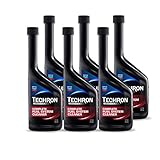
- For best performance, follow the manufacturer's recommendations in your vehicle owner’s manual.
- Cleans, restores, protects the entire fuel system (fuel injectors, carburetors, intake valves and combustion chambers)
- Restores: lost power, acceleration, lost fuel economy, and operation of the fuel gauge sensor
- Reduces: rough idle, engine surge, hesitation, and spark plus fouling
- Improves: cold start performance, and fuel stability for up to one year
A separate SynGas-branded explanatory site acknowledges that most products using the SynGas name do not actually create or inject syngas. Buyers should therefore judge this item as an unverified electronic vehicle accessory—not as a hydrogen, synthesis-gas, or alternative-fuel system.
Is SynGas listed in EPA aftermarket-device testing?
The U.S. Environmental Protection Agency operates a voluntary Aftermarket Retrofit Device Evaluation Program, commonly known as the 511 Program. The program is intended to produce and publish technical data on aftermarket devices and fuel additives that claim to improve fuel economy or reduce emissions.
The EPA material checked for this review did not identify SynGas or SynGas OBD Fuel Saver in the available test-report listings. That wording matters: not locating a listing is not proof that no private test exists anywhere. It does mean the seller has not provided the kind of public, product-specific evidence needed to support an unusually large fuel-saving claim.
Recommended Free Tools
The EPA program also does not approve, certify, or endorse products. An EPA test listing—if one exists for a product—would be evidence about the results of a particular evaluation, not a government guarantee that the product is worthwhile.
What testing of similar fuel-saving devices shows
Historical EPA testing is a useful reality check. In one evaluation of the Vitalizer III, EPA concluded that the tested device made no statistically significant difference in fuel economy or exhaust emissions. EPA also reported that it knew of no sound technical analysis supporting similar fuel-line claims.
The Federal Trade Commission has summarized EPA’s broader experience with more than 100 supposed gas-saving devices: very few produced any benefit, while some caused engine damage or increased emissions. The FTC’s consumer guidance is straightforward—be skeptical of gas-saving gadgets, particularly when the claimed improvement is large and the supporting evidence is vague.
That history does not automatically prove SynGas has the same result as every previously tested gadget. It does, however, put the burden on SynGas to provide credible, product-specific evidence. The available sales material does not meet that standard.
Quick wins for a faster PC:
Scan for outdated or missing drivers - takes under a minuteDriver Scan →Repair Windows errors before they cause bigger problemsFix Now →What customer reviews suggest—and what they cannot prove
Recent Trustpilot reports associated with getsyngas.com include customers alleging little or no fuel-economy improvement, generic-looking hardware, unexpected or disputed charges, and difficulty understanding or completing returns. One reviewer reported no meaningful savings after roughly 700 miles; another said the received units appeared generic and produced no noticeable benefit.
Rank #3

- DESIGNED TO EXCEED EXPECTATIONS: Red Line complete SI-1 fuel system cleaner treatment for cleaning and preventing corrosion in fuel systems
- PERFORM AND PROTECT: Fuel additive cleans injectors, carburetors, valve and combustion chamber deposits with a powerful, concentrated blend of high-temp and low-temp detergents
- EFFICIENT FUEL BURN: Gas treatment that enhances gasoline stability, while reducing the build up of gum and varnish formation
- EASY TO USE: Use one bottle per tank for most effective treatment, additive cleans nearly 100% efficiency in one treatment
- 15 Ounce (2 Pack)
These reports are anecdotal. They are not controlled tests, and they cannot establish the product’s average performance. They are still relevant consumer-risk signals because they raise questions about both the promised result and the purchasing experience.
Trustpilot also displays allegations from customers who said they ordered one unit but saw additional charges or multiple boxes, and another complaint alleging that add-on items appeared despite the customer declining them. Those are customer allegations, not independently adjudicated findings. If you consider ordering, inspect every checkout page carefully and save screenshots of the item count, optional offers, shipping charge, total price, and confirmation page.
Could an OBD plug-in cause problems?
The OBD2 port is connected to vehicle systems and can expose diagnostic and vehicle information. A vehicle owner’s manual reproduced in National Highway Traffic Safety Administration materials warns generally that unauthorized equipment connected to the OBD2 port may impair vehicle systems, potentially affect safety-related systems, or access information stored in the vehicle.
This is a general warning about unauthorized equipment, not a specific finding that SynGas causes those outcomes. Still, it is a reason not to treat an unknown electronic module as harmless simply because installation involves plugging it in.
There may also be warranty, emissions, and drivability implications. EPA enforcement materials treat hardware or software designed to defeat required emissions controls as a serious compliance issue. There is not enough evidence here to accuse SynGas of being an emissions defeat device. The sensible conclusion is narrower: any product claiming to alter ECU behavior should disclose exactly what it does and demonstrate that emissions controls remain compliant before it is used.
SynGas OBD Fuel Saver review: the buying verdict
Do not buy SynGas as a proven fuel-saving device. The product’s headline claim is dramatic, but the seller does not provide the manufacturer identity, engineering documentation, reproducible test protocol, vehicle-specific results, emissions measurements, or independent laboratory report needed to evaluate it.
The lack of evidence is more concerning than any single negative review. Even if some customers experienced a change in fuel consumption, that could result from changes in driving, traffic, weather, tire pressure, fuel, maintenance, or normal variation. A device should not be credited with a large improvement without a controlled comparison.
Windows Errors? Fix Them Before They Spread
Repair common Windows errors and clear accumulated junk for a smoother, more stable PC - no reinstall needed.Free scan · no reinstallOutdated Drivers Are Slowing You Down
One free scan finds every outdated or missing driver and matches the right update for your exact hardware.Free scan · exact hardware matchIf you already purchased SynGas, do not assume that a “calibration” period proves it is working. Record the order confirmation and billing details, check your card or bank statement for unexpected charges, and follow the written return procedure promptly if you decide not to keep it. If the device causes warning lights, unusual drivability, communication faults, or other problems, unplug it when safe to do so and have the vehicle scanned or inspected by a qualified technician.
Rank #4

- Specially formulated to remove carbon deposits from engines with over 75,000 miles
- Cleans fuel injectors, intake valves, and ports to restore performance and fuel economy
- Prevents future carbon build-up and reduces emissions
- Oxygen sensor safe and safe for use in turbocharged and supercharged vehicles
- Will not void OEM/manufacturer's warranty
Better ways to investigate poor fuel economy
Before buying an efficiency gadget, establish your actual baseline. Use the same fuel-grade recommendation in the owner’s manual, fill the tank consistently, record odometer miles and fuel purchased, and compare several tanks rather than relying on a single dashboard estimate. Check for maintenance issues if consumption changed suddenly.
Use an OBD2 scanner for diagnosis—not automatic fuel savings
An OBD2 scanner is a more honest use of the same vehicle interface. A scanner can help read diagnostic trouble codes and view available vehicle data, which may help identify a faulty sensor, misfire, temperature problem, or other issue affecting operation. It does not automatically improve fuel economy, and a generic scanner’s data access varies by vehicle.
Check tire pressure regularly
A digital tire pressure gauge can help you check each tire accurately. Use the vehicle manufacturer’s recommended cold-tire pressure, normally found on the driver-door label or in the owner’s manual—not the maximum pressure molded into the tire sidewall. Correct pressure supports proper handling, tire wear, and efficient operation, but it is not a guarantee of a specific percentage fuel saving.
Do these 3 things before closing this tab:
1Repair Windows errors before they cause bigger problems2Fix the driver behind crashes, sound loss and screen glitches3Clear out junk files and repair common Windows errorsKeep a portable inflator available
A portable tire inflator can be a convenient companion to a gauge when a tire is low. Treat it as a maintenance tool, not a fuel-saving device: measure pressure with a gauge, inflate to the vehicle maker’s specification, and investigate repeated pressure loss for a puncture, valve problem, or wheel issue.
Follow basic maintenance and driving practices
- Use the fuel octane specified in the owner’s manual.
- Keep tires at the recommended cold pressure.
- Address check-engine lights and new drivability symptoms promptly.
- Replace maintenance items according to the vehicle maker’s schedule.
- Avoid unnecessary idling, rapid acceleration, and excessive speed.
- Remove unnecessary weight and roof-mounted equipment when it is not needed.
- Compare fuel economy over multiple tanks and similar driving conditions.
Buyer-protection checklist
If you decide to investigate SynGas despite the evidence concerns, protect yourself before paying:
- Identify the legal seller. Look for a company name, physical address, customer-service contact, and a clear billing descriptor.
- Check the complete checkout total. Review quantity, shipping, taxes, add-ons, subscriptions, and any recurring charges.
- Read the return terms. Confirm the return deadline, return address, condition requirements, shipping responsibility, and whether the guarantee covers the full amount paid.
- Save evidence. Keep screenshots of the product claims, checkout page, guarantee, order confirmation, and correspondence.
- Use a payment method with dispute protections. Monitor the statement after purchase and contact the card issuer promptly if an unauthorized or unexpected charge appears.
- Do not install an unexplained device in a vehicle under warranty without checking first. Ask the manufacturer or a qualified technician about potential warranty, emissions, and diagnostic consequences.
The SynGas order button reportedly leads to a different domain, while contact, terms, returns, and affiliate information are listed on separate domains. That arrangement is not proof of fraud, but it makes it particularly important to verify who is selling the product, where returns must be sent, and what name will appear on the payment statement.
Frequently Asked Questions
Does SynGas really save up to 55% on fuel?
No. The available evidence does not establish that SynGas produces meaningful fuel savings. The advertised “up to 55%” reduction is a seller claim without a disclosed test protocol, vehicle list, fuel-economy data, or independent laboratory report.
What is an OBD2 fuel saver supposed to do?
OBD2 is primarily a diagnostic interface. It can provide diagnostic trouble codes and vehicle data, but simply plugging in a device does not prove that it can safely or materially improve fuel economy.
Has the EPA tested or approved SynGas?
The research checked the EPA aftermarket-device test-report material and did not locate a SynGas listing. That is not proof that no private test exists, but the seller has not supplied public EPA-style evidence supporting its large savings claim.
What should I use instead of SynGas?
Use an OBD2 scanner for diagnosis, check tires with a digital pressure gauge, use a portable inflator when needed, follow the vehicle’s maintenance schedule, and measure fuel economy across several comparable tanks.
The Bottom Line
Bottom line: SynGas has not shown credible, independently verifiable evidence that its OBD2 module delivers the advertised fuel savings. The “up to 55%” figure should be treated as an unverified seller claim. Skip the device and spend the money on diagnosis, correct tire pressure, maintenance, or a properly documented automotive tool instead.
Quick Recap
Product prices and availability are accurate as of the date/time indicated and are subject to change. Any price and availability information displayed on Amazon at the time of purchase will apply.




