Do these 3 things before closing this tab:
1Repair Windows errors before they cause bigger problems2Fix the driver behind crashes, sound loss and screen glitches3Clear out junk files and repair common Windows errorsWireless EV charging has passed a meaningful real-world test in Switzerland. The INLADE pilot reported approximately 90% grid-to-battery efficiency for stationary inductive charging, compared with 94% for conductive charging on the same vehicle. The wireless result is therefore close to cable charging, but not identical.
The trial also exposed the system to snow, rain, temperature changes, ice formation and minor parking deviations without materially changing reported transmission efficiency. That makes the result credible evidence that wireless charging can work outside a laboratory. It does not show that wireless charging is cheaper, universally compatible, as fast as DC rapid charging, or ready for mass-market deployment and vehicle-to-grid operation.
The short version: Switzerland’s INLADE project demonstrated roughly 90% efficiency from the electricity grid to the vehicle battery using an 11 kW stationary wireless charging system. A wired reference on the same converted Volkswagen ID.5 reached 94%. Wireless charging was about four percentage points less efficient, but remained stable in tested winter and wet-weather conditions.
What happened in Switzerland?
INLADE was a Swiss pilot project investigating whether electric vehicles could charge inductively under practical everyday conditions. The project was led by energy supplier Eniwa AG, with Empa responsible for technical investigations and the Zurich University of Applied Sciences (ZHAW) studying user acceptance and experience.
#1 Best Overall

- Flex Level 1 EV Charger - The EVDANCE Level 1 electric car charger is compatible with J1772 electric vehicles and plug-in hybrid vehicles (North American Standard). *Tesla requires a SAE J1772 adapter.
- Convenient to Use - This charger has both NEMA 6-20 plug for 16A 240V charging (3.68kW, 10-12 mi/h) and a NEMA 6-20 to 5-15 plug adapter for 12A 120V charging (1.44kW, 2-5 mi/h). The included bag makes it easier to carry on the go. It also has a 25ft cable length, you can use it flexibly from anywhere in the garage or driveway.
- Check Your Outlet Type -This charger works with standard 120V NEMA 5-15/5-20 outlets (2-5 mph charging speed) and 240V NEMA 6-20 outlets (10-12 mph) . It's not compatible with NEMA 6-15/10-30/14-30/14-50/6-50 outlets – you'll need a NEMA 14-50/14-30/10-30/6-50 to 6-20 adapter (sold separately) to connect.
- Compatible EV Models -This EV charger works with most major electric vehicles, including Ford, Chevrolet, Hyundai, Audi, Nissan Ariya, Rivian R1S, Kia, and others. However, it's not compatible with Mini Cooper Electric Hardtop,Toyota Prus Prime/Z4X/RAV4Prime, Porsche Taycan Base/4S/Turbo/Turbo S or Tesla models (Tesla requires a J1772 to Tesla Adapter, sold separately). For a full list of compatible models, check out the Full Compatibility List on our product page.
- Indication Displays - LED display that can tell you the status as well as indicate errors while charging your electric vehicle.
The project received support from the Swiss Federal Office of Energy and the cantons of Zurich and Aargau. Other contributors included WiTricity, AMAG, Swisspower, BRUGG eConnect and additional project partners. The work examined more than energy transfer: it also considered vehicle and charging-station approval, electromagnetic compatibility, reliability, user behavior and potential fleet and grid applications.
The project was completed on March 2, 2026, according to the project website. Some older Canton of Zurich material still describes INLADE as ongoing, so the newer completion date is the appropriate status for this article.
Demonstration sites were identified in:
- Dübendorf, Canton Zurich, including Empa’s move mobility demonstrator.
- Buchs, Canton Aargau, associated with Eniwa.
The initial deployment involved two sites and two vehicles. The final project summary describes several converted Volkswagen ID.5 vehicles. Early project plans mentioned six or seven stations and up to six converted vehicles, but those figures were planned targets and should not be presented as the confirmed final deployment unless supported by a more detailed final inventory.
The vehicles were not ordinary, unmodified ID.5s. AMAG and other partners installed vehicle-specific receiver coils and integrated them with the cars’ charging-management and high-voltage systems. A normal EV cannot simply park over the pad and begin charging without compatible receiver hardware and control integration.
What’s actually slowing this PC down?
Pick the symptom - the matching free tool is one click away.
How the wireless charging system works
INLADE used stationary wireless charging: the car had to be parked over a charging pad. This is not dynamic charging on an electrified road and is not a wireless alternative to a 150 or 350 kW highway charger.
The energy path is:
- Electricity enters the wall box from the grid.
- Power electronics convert it into high-frequency alternating current.
- A transmitter coil in the ground pad creates a magnetic field.
- A receiver coil mounted under the vehicle captures energy through resonant magnetic coupling.
- Vehicle-side electronics convert the received power into the form needed by the high-voltage battery.
The system operates at approximately 85.5 kHz. Unlike a low-power phone charging pad, an automotive system must transfer several kilowatts across an air gap while managing alignment, heat, electromagnetic compatibility, foreign objects and vehicle communication.
Eniwa’s technology information lists the tested WiTricity system at up to 11 kW AC input and approximately 10.1 kW DC output. The supplier also lists an 88%–92% AC-input-to-DC-output efficiency range at full-power operating points. Those figures are useful technical specifications, but they do not have exactly the same system boundary as INLADE’s headline grid-to-battery result.
| Item | Reported detail |
|---|---|
| Charging type | Stationary resonant inductive charging |
| Maximum rated input | Up to 11 kW AC |
| Nominal DC output | Approximately 10.1 kW |
| Operating frequency | Approximately 85.5 kHz |
| Position tolerance at 11 kW | About ±10 cm laterally and ±7.5 cm longitudinally |
| Recommended vehicle ground clearance | Approximately 14–18 cm |
| Vehicle receiver weight | Approximately 13 kg |
| Ground-pad dimensions | Approximately 840 × 794 × 61 mm |
| Battery-voltage range | Approximately 220–450 V DC, with full stated power available in the specified higher-voltage range |
These specifications come from Eniwa’s technology page and should be understood as supplier specifications rather than independent measurements of every operating condition.
The Tool Desk
Outbyte Driver Updater FREEFix the driver behind crashes, sound loss and screen glitchesFind Drivers →Outbyte PC Repair FREERepair Windows errors before they cause bigger problemsFix Now →What does the 90% efficiency figure actually measure?
This is the most important qualification. INLADE’s final project summary reports approximately 90% efficiency from the grid to the battery. In other words, the measurement covers the charging chain from electricity drawn from the grid through to energy delivered into the vehicle’s battery.
Rank #2
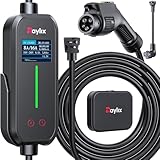
- [2026 INTELLIGENT CHARGING UPGRADE — PRECISION CONTROL MEETS SMART SCHEDULING] After surveying 100K+ U.S. EV owners, the Raylix R&D team found that nearly all drivers recognized the necessity of adjustable current and scheduled charging. Our upgraded J1772 charger features 4-level adjustable current (8A/10A/12A/16A) and a 1–12 hour smart delay timer. Whether you're charging overnight or during off-peak hours, enjoy smarter energy use, lower costs, and total convenience—on your schedule.
- [ONE CHARGER, ALL J1772 EVs/PHEVs READY!] Compatible with all SAE J1772 electric vehicles and plug-in hybrids—whether it’s Ford, GM, Nissan, Audi, BMW, Kia, Hyundai, Honda, Chevy, or more. Perfect for home or on-the-road charging, our 16A Level 1 & 2 charger ensures your EV is always powered and ready for any journey.
- [CHARGE 4× FASTER — NO MORE WAITING] In a rush? Our 16A Level 1 & 2 charger delivers charging speeds up to 4× faster than standard 8A Charger Level 1. Whether it's an early commute, a spontaneous trip, or last-minute errands, your EV will be ready when you are.
- [LEVEL 1 & 2 PORTABLE CHARGER — CHARGE ANYWHERE, ANYTIME] Designed for maximum flexibility, Raylix Level 1 & 2 EV charger features both 5-15 and 6-20 plug compatibility. Whether you're charging in your garage, at a friend's house, or at a roadside motel. NEMA 6-20 plug for Level 2 ev charging (240V, 16A, 3.68kW, 9-12 miles/hr) and a NEMA 5-15 adapter for Level 1 ev charging (120V, 12A, 1.44kW, 3-5 miles/hr) NOTE: In compliance with North American electrical safety standards, the charger automatically limits current to 12A when using a 5-15 outlet—protecting both your vehicle and your home’s electrical system.
- [AT-A-GLANCE CHARGING COMMAND: TOTAL CONTROL, INSTANTLY] While most ev chargers solutions confine vital data to in-car screens, the Raylix tesla charger breaks free with its enhanced TFT color display. This Raylix-exclusive feature delivers crystal-clear, real-time updates—voltage, current, power load, AND critical charging temperature—directly on the unit. Just one glance gives you complete charging insight. It’s not just information; it's the empowering peace of mind and satisfying control that transforms every charge into a masterfully managed experience.
It is not merely the efficiency between the ground coil and the vehicle coil. It includes losses in the wall box, power electronics, wireless transfer system and vehicle-side conversion stages.
| Charging method | Reported grid-to-battery efficiency |
|---|---|
| Wireless charging | Approximately 90% |
| Conductive charging on the same vehicle | 94% |
That makes the wireless system approximately four percentage points less efficient than the wired reference in the project’s reported comparison. Saying it was “comparable” to cable charging is reasonable. Saying it was “just as efficient” would erase a real, measurable difference.
The project summary also reports air-gap transmission losses of less than 2% for the tested system. That should not be confused with total grid-to-battery losses. The wireless gap itself was relatively efficient; the complete charging chain still lost around 10% in the reported operating result.
Quick wins for a faster PC:
Scan for outdated or missing drivers - takes under a minuteDriver Scan →Clear out junk files and repair common Windows errorsFree Scan →An illustrative 50 kWh calculation
Suppose a vehicle receives 50 kWh in its battery. Applying the reported efficiencies:
- At 90% wireless efficiency, the grid would supply approximately 55.6 kWh, with about 5.6 kWh lost.
- At 94% wired efficiency, the grid would supply approximately 53.2 kWh, with about 3.2 kWh lost.
- The difference would be approximately 2.4 kWh per 50 kWh delivered.
This is an illustration calculated from the published percentages, not a separate energy measurement from the INLADE project. Actual consumption will vary with charging power, battery temperature, state of charge and auxiliary loads.
For another perspective, 90% is about 95.7% of the wired reference’s 94% result. That is close enough to make convenience-focused use cases plausible, but not close enough to claim that the two methods have identical energy costs.
Was this really a real-world trial?
Yes, in the meaningful but limited sense that the equipment operated at demonstration sites and faced conditions that a laboratory test would normally control away. The project tested the system during:
- Snow and rain.
- Temperature differences and cold conditions.
- Ice formation.
- Slight deviations from the ideal parking position.
The final project summary says transmission efficiency remained practically unchanged under those tested environmental conditions. It also reports stable operation within the system’s specified positioning-tolerance range. The project found no critical effects on the electrical grid in the form of flicker, problematic harmonics or unacceptable voltage distortion.
That is valuable evidence. However, “real-world” does not mean a large, uncontrolled national fleet trial. The public summaries do not provide a complete statistical breakdown of every charging session, test duration, seasonal exposure period or long-term maintenance result. Nor do they establish how the system would perform after years of road salt, dirt, repeated impacts, flooding or neglected maintenance.
Rank #3
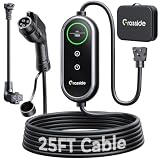
- Universal J1772 Compatibility: Designed with a standard J1772 connector, this J1772 charger works with most J1772 electric vehicles and PHEVs, including BMW, Mercedes-Benz, Hyundai, Kia, Nissan, Rivian, Ford, Chevy, Volkswagen, Toyota and more. Note: Tesla vehicles require a J1772 to Tesla adapter (not included)
- Flexible Outlet Compatibility: This portable EV charger comes with a NEMA 6-20 plug and a NEMA 5-15/5-20 to 6-20 adapter. Supports Level 1 (8–12A) and Level 2 (16A). Max 12A (1.44kW) on 120V NEMA 5-15/5-20 outlets, and full 16A (3.84kW) with a 240V NEMA 6-20 outlet. One charger is designed to cover home, garage, and travel charging needs with reliable performance
- Adjustable Smart Charging Control: Customize charging safely with adjustable current settings (8A/10A/12A/16A) to match different circuits. The 0–12 hour delay timer helps schedule overnight charging during lower electricity rates. Integrated LCD display shows real-time voltage, current, power, and charging status for clear monitoring without apps. Note: Press 'A' or 'T' for 3s to set and confirm.
- Home Charging & Travel Backup: For daily home use while remaining fully portable for travel. This level 1 ev charger includes a durable 25FT ev charging cord, providing flexible reach for garage or driveway charging. Charge overnight to take advantage of lower utility rates—potentially saving up to $500 annually on electricity costs. The included carrying case makes storage easy and keeps a dependable backup charger available in your trunk for road trips or visiting friends
- Engineered For Safety & Durability: Built for dependable daily use, this electric car charger features an IP65 waterproof rating for all weather operation. Equipped with a UL-listed cable, fully rubberized connector, and advanced protection against overcurrent, overheating, and electrical faults. Designed to ensure safe, stable, and long-term charging performance in demanding environments
The most accurate description is therefore a small, practical stationary-charging pilot with environmental testing, not proof that every wireless charger will perform identically in every climate.
How accurately must the driver park?
Wireless does not mean that the vehicle can be parked anywhere over the pad. At the tested 11 kW power level and maximum grid draw, Eniwa specifies a tolerance of approximately:
Free tools Windows power users keep installed
One-click scans. No signup required.
- ±10 cm laterally, across the direction of travel.
- ±7.5 cm longitudinally, along the direction of travel.
At Empa, a display helped the driver find the target position. Once the vehicle was in place, the system recognized its position, checked the area between the coils and then began charging automatically.
The alignment requirement is manageable in a dedicated parking bay, but it is still a requirement. A driver who parks badly may fail to start charging, receive less than the rated power or need to reposition the vehicle. Parking cameras, automated parking and future driver-assistance systems could make this easier, particularly for autonomous fleets, but INLADE did not turn every vehicle into a fully autonomous charging system.
What happens when something goes wrong?
- Misalignment: charging may not start or may operate outside the optimum power range.
- Foreign object on the pad: detection should prevent or interrupt charging.
- Person or animal in the charging area: living-object detection is intended to prevent charging in an unsafe condition.
- Incompatible vehicle clearance: the receiver may not maintain the intended coupling distance.
- No receiver hardware: the vehicle cannot use the pad merely because it is an EV.
- Vehicle charging limits: battery temperature, state of charge and onboard power-management limits can reduce charging power even when the pad is rated for 11 kW.
Was it safe and legally approved?
The converted vehicles underwent electromagnetic-compatibility and electrical-safety testing. The project also investigated whether the magnetic field could interfere with equipment inside or outside the vehicle or expose people to unacceptable risks. The charging system checked for foreign objects and living beings before energizing the transfer field.
The final project summary says the converted vehicles received regular, unrestricted approval for Swiss roads. That is an important achievement, but it must be described precisely:
- The approval applied to the specific converted vehicles tested by the project.
- It does not mean that every wireless charging conversion is automatically road-approved.
- It does not mean that every charging pad can be installed anywhere without further documentation.
INLADE identified a separate infrastructure issue. Swiss approval structures generally treat the vehicle and charging infrastructure as separate products, while an inductive charger is a coupled system whose electromagnetic behavior depends on the vehicle and pad operating together. The project also encountered a missing declaration of conformity from the charging-station supplier.
As a result, the charging stations had to be supported by risk analyses and their use was limited to sites owned by Eniwa and Empa. In practical terms, the vehicles were approved for road use, but the pilot did not create an unrestricted nationwide approval route for wireless charging infrastructure. Switzerland’s Federal Roads Office homologation information provides the broader regulatory context.
Does the result mean wireless EV charging is ready for mass-market deployment?
No—not yet. The result shows that the core technology can be practical and reasonably efficient. It does not settle the commercial, compatibility and regulatory questions that determine mass adoption.
Rank #4

- Road-Trip Ready & Apartment-Friendly: Comes with a 20ft heavy-duty cable that easily spans a standard parking space, plus a NEMA 5-15 adapter for plug and play convenience. Whether you're charging at home or hitting the highway, this portable EV Charger is your ultimate travel companion for weekend getaways and camping trips
- Delay Timer & Adjustable Current: Use the built-in timer to delay your start by 1-12 hours and easily harvest off-peak energy savings. Then pick from 6/8/10/12/16A (Level 2) to match your garage grid. It automatically locks in your favorite setting and never forces you to re-adjust. No complicated apps or Wi-Fi needed, just straightforward, reliable control
- Tactile Buttons & LED Screen: No glitchy smartphone apps or finicky touchscreens that lag, freeze, and misfire in winter. Our EV charger is engineered with a high-definition LED display that tracks critical real-time data, including live voltage and current. Tactile buttons deliver direct, satisfying click feedback that remains highly responsive even when wearing heavy winter gloves or operating in torrential downpours—conditions where standard touchscreens completely fail
- ETL Certified Safety & IP65 All-Weather Shield: ETL certified to meet US safety standards for charging. Engineered with a certified IP65 dust-and-waterproof enclosure and a heavy-duty TPE cable that operates reliably across a wide -22°F to 130°F range. An intelligent multi-protection defense system (GFCI, over-voltage, over-current, surge, short-circuit, and over-temp) keeps a 24/7 watch for 100% safe, unattended overnight charging in any weather
- J1772 Compatible + Dual-Level Charging: Works with all J1772 EVs (Tesla requires a separate J1772 adapter). Level 2: built-in NEMA 6-20 plug. Level 1: included NEMA 5-15 adapter fits any standard outlet. Please confirm your outlet is NEMA 6-20 or 5-15 before purchase
A mass-market system would need to answer all of the following:
- How much does a pad, wall box, vehicle receiver and installation cost compared with a wired charger?
- Can vehicles from different manufacturers use the same infrastructure?
- Will automakers offer factory-installed receivers, or will owners need expensive retrofits?
- How will pads withstand dirt, snowplows, road salt, water, impacts and years of repeated use?
- Who maintains a failed receiver or buried ground assembly?
- Can installations receive standard conformity documentation without site-specific risk analyses?
- How much additional energy will the efficiency gap consume over the vehicle’s life?
- Will vehicles automatically align and charge reliably without driver intervention?
The public INLADE material does not provide a definitive consumer price, retrofit price, total installation cost, lifetime maintenance comparison or carbon-payback calculation. It would therefore be premature to call wireless charging cheaper or greener than a cable-based alternative.
It is also not a fast-charging breakthrough. At up to 11 kW AC input, the system belongs in the home, workplace, destination and fleet-depot charging category. It can add meaningful range during a long parking period, but it is not intended to replace high-power wired DC charging during a motorway stop.
Who benefits most from wireless charging?
The strongest case is where automatic connection is worth more than the extra hardware and modest efficiency penalty.
| Use case | Why wireless charging could help | Main qualification |
|---|---|---|
| Autonomous vehicles | No human is needed to find and connect a cable. | Reliable alignment, communication and automated parking remain essential. |
| Car-sharing fleets | Vehicles can charge whenever they return to a designated space, reducing forgotten or mishandled cables. | Fleet operators must justify pad and retrofit costs. |
| Taxis and shuttle buses | Frequent short charging sessions can happen automatically during predictable layovers. | Higher utilization makes downtime, maintenance and reliability especially important. |
| Dedicated depots | Vehicle types and parking positions can be standardized around matched equipment. | Wired depot charging may still be simpler and cheaper. |
| Hard-to-wire curbside parking | Inductive pads could serve some blue-zone or roadside parking locations where conventional cable infrastructure is difficult. | Permits, civil works and infrastructure approval remain unresolved issues. |
| Private garages | Drivers with mobility limitations or strong convenience preferences can avoid handling a cable. | For many owners, a wired AC charger will remain less complex and more broadly compatible. |
Empa notes that an average vehicle is stationary for approximately 23 hours per day, although that figure is not universal for every driver or vehicle. Wireless charging is attractive precisely because it could use some of that parked time without requiring a deliberate plug-in action.
Recommended Free Tools
Did INLADE demonstrate vehicle-to-grid charging?
No. Bidirectional charging was one of the project’s important future applications, not a completed INLADE demonstration.
The appeal is clear: a vehicle that connects automatically whenever it is parked could potentially absorb electricity when supply is plentiful and return energy to the grid when needed. Automatic connection may be particularly useful for managed fleets, where many vehicles occupy known spaces for predictable periods.
But wireless power transfer in the forward direction does not automatically provide vehicle-to-grid operation. Reverse power flow requires compatible vehicle electronics, grid interconnection equipment, control and communications systems, battery-management rules, market arrangements and regulatory approval. INLADE’s final report says it was not yet possible to determine with certainty whether the achieved efficiency was sufficient for bidirectional operation. Eniwa planned follow-up work to establish the industrial requirements.
The current SAE J2954 standard concerns stationary wireless power transfer for light-duty plug-in electric vehicles in the forward direction; bidirectional requirements are intended for a future revision. Wireless V2G is therefore a credible development path, not a feature that the Swiss pilot proved ready for commercial use.
PC Slower Than It Used to Be?
A free scan shows the junk files, broken settings and background clutter dragging Windows down - then fixes them in one click.Free scan · Windows 10 & 11Crashes, No Sound, or Screen Glitches?
Random freezes, missing sound and display glitches usually trace back to one bad driver. Find and replace yours safely.Free scan · under a minuteBest Value

- 【Delay Timer - Adjustable Current】Ev charger can adjust the current (8A/10A/12A/16A) through the physical button of level 1 ev charger. Charging power can reach up to 3.68KW (240V/16A). One-touch switch for ev charger operation. Built-in 2–8 hour delay timer for off-peak charging to save on electricity bills.
- 【NEMA 6-20 Plug & NEMA 5-15 Adapter】Nema 6-20 plug for 240V outlets and 5-15 adapter for standard 120V realize plug-and-charge (With 5-15 adapter, need to adjust the current to 12A or below, otherwise the charger may be demeged). Overall length of ev charger level 2 is 27FT, providing enough charging distance across garages at home or outdoor. Portable storage bag supports you take portable EV Charger during travel, business trip, electric vehicle charging stations anywhere.
- 【ETL/FCC and IP67 Safety】J1772 charger is equipped with advanced safety functions such as overvoltage, overheating, and short-circuit automatic shutdown. IP67 waterproof and dustproof, extreme temperature protection level for withstanding harsh weather conditions from -40°F to 131°F in sunny, rain, snow and sandstorm. Electric car charger has ETL certified, FCC listed, meets UL safety standards. Industrial-grade construction with high-strength TPU-coated cables and 99.95% oxygen-free copper cores.
- 【J1772 Connector】J1772 charger works for all J1772 standard electric vehicles, Ford, GM, Nissan, Audi, Kia, Honda, BMW, Hyundai, Gmc, Chevy, Mercedes, and all PHEV/BEV. [Not fits Tesla cars/Nacs connector]
- 【One-Touch Charging Operation】16A electric car charger supports plug-and-charge functionality and features one-touch scheduled charging and current adjustment. Its intuitive and user-friendly operation allows flexible customization of personalized charging plans. Level 1 ev charger automatically shuts off when your car is fully charged.
How does it compare with other charging options?
| Option | Best suited to | How it differs from INLADE wireless charging |
|---|---|---|
| Wired AC charging | Homes, workplaces and ordinary destination charging | Usually simpler, more widely compatible and more efficient in the INLADE comparison: 94% versus about 90% grid-to-battery. |
| Wired DC fast charging | Long trips and high-utilization public charging | Much faster and a different use case; it is not directly comparable with an 11 kW stationary pad. |
| Dynamic wireless charging | Vehicles charging while moving over embedded roadway coils | Far more infrastructure-intensive and not demonstrated by INLADE. |
| Battery swapping | Some commercial fleets and high-utilization vehicles | Reduces charging dwell time by exchanging the battery, but requires standardized packs, inventory and specialized stations. |
For a private owner with an accessible parking space, conventional wired AC charging is likely to remain the rational default unless convenience, accessibility or automatic operation has unusually high value. Wireless charging becomes more compelling when many vehicles repeatedly use the same spaces and the operator can spread infrastructure costs across a fleet.
What the Swiss result proves—and what it does not
| Claim | Accurate interpretation |
|---|---|
| Wireless EV charging is 90% efficient. | The INLADE final report found approximately 90% grid-to-battery efficiency for the tested system. |
| It is as efficient as cable charging. | It was close, but the wired reference on the same vehicle reached 94%. |
| It worked in bad weather. | Efficiency reportedly remained practically unchanged under the tested snow, rain, ice and temperature conditions. That is not a universal lifetime durability guarantee. |
| Drivers do not need to align the vehicle. | The system still requires parking within a defined tolerance, although a display and automatic position checks assist the driver. |
| The cars were approved. | The specific converted vehicles received Swiss road approval; that does not automatically approve every charger or installation. |
| Wireless V2G has arrived. | INLADE identified bidirectional charging as a future application but did not demonstrate commercial reverse-power operation. |
| Wireless charging is ready for everyone. | The pilot used specially converted ID.5 vehicles and controlled sites. Compatibility, cost, conformity, durability and deployment scale remain open questions. |
What would demonstrate true mass-market readiness?
The next step is not simply achieving another percentage point of efficiency. A commercially convincing program would need to show:
- Factory compatibility: several vehicle manufacturers offering receivers and a common interoperability path.
- Large-scale reliability: thousands of charging sessions across multiple seasons, climates and maintenance conditions.
- Transparent economics: vehicle hardware, installation, civil works, maintenance and energy-loss costs compared with wired charging.
- Routine approval: a clear conformity and homologation process for both vehicles and charging infrastructure.
- Robust alignment: dependable operation without requiring unusually precise parking.
- Bidirectional validation: measured reverse-power efficiency, grid compliance and real operating demonstrations if V2G is a goal.
- Independent long-term battery data: evidence about battery effects rather than assumptions based only on the charging method.
INLADE made progress on several of these issues, particularly practical efficiency, weather exposure, safety testing and vehicle approval. It did not close all of them.
Bottom line
The Swiss INLADE project is a credible demonstration that wireless EV charging can deliver approximately 90% of grid energy to the battery in a stationary, 11 kW system used under practical conditions. Snow, rain, ice, temperature changes and small parking errors did not materially reduce the reported transmission efficiency.
That is close to the same vehicle’s 94% wired result, not equal to it. The bigger limitations are outside the headline number: the cars were specially converted, alignment is still required, the pilot was small, infrastructure approval was not straightforward, public cost data is incomplete and bidirectional charging was not demonstrated.
For autonomous vehicles, taxis, car-sharing fleets, shuttles and dedicated parking depots, wireless charging could solve a real operational problem. For most private EV owners today, it is best understood as a promising convenience technology—not yet a universal replacement for a cable.
Sources
- Swiss ARAMIS final project summary
- Swiss federal project announcement and results summary
- Empa technical project information
- INLADE technology and supplier specifications
- Canton of Zurich project information
- ZHAW user-acceptance research
- SAE J2954 stationary wireless charging standard
Frequently Asked Questions
Can I use the Swiss wireless charging result with my current EV?
Usually not without compatible hardware. The INLADE vehicles were specially converted Volkswagen ID.5s with an underbody receiver, power electronics and high-voltage integration. A standard EV cannot use the pad simply by parking over it.
Is 90% wireless charging efficiency the same as 90% battery capacity delivered?
No. It means that approximately 90% of the electricity drawn from the grid reached the battery in the reported system-level measurement. The remaining energy was lost in the charging electronics and transfer chain.
Recommended Free Tools
Does wireless EV charging work through snow and ice?
The INLADE project reported practically unchanged transmission efficiency under the tested snow, rain, ice, temperature and minor parking-deviation conditions. That does not prove identical performance for every climate, installation or long-term maintenance scenario.
Can wireless EV charging send power back to the grid?
Not as a demonstrated INLADE capability. The project identified bidirectional charging as a future opportunity, but did not establish commercial V2G operation or whether the measured efficiency was sufficient for it.
Is wireless EV charging faster than plugging in?
The tested system was rated for up to 11 kW AC input, placing it in the home, workplace and destination-charging category. It is not a substitute for high-power wired DC fast charging.
The Bottom Line
Verdict: INLADE shows that stationary wireless EV charging can approach wired efficiency in practical conditions: about 90% grid-to-battery versus 94% for the same vehicle with a cable. It is a technically credible result for fleets and convenience-focused charging, but cost, compatibility, alignment, infrastructure approval, long-term durability and bidirectional operation still prevent it from being called a mass-market breakthrough.
What’s actually slowing this PC down?
Pick the symptom - the matching free tool is one click away.
Quick Recap
Product prices and availability are accurate as of the date/time indicated and are subject to change. Any price and availability information displayed on Amazon at the time of purchase will apply.