Ford’s “Model T moment” is not a claim that its electric-vehicle business is already profitable. It is the company’s name for a manufacturing and product-development reset built around a new Universal EV Platform, a redesigned “assembly tree” production system, lower-cost LFP batteries, and a family of affordable electric vehicles.
Ford initially described the effort as an approximately $5 billion investment: about $2 billion to retool Louisville Assembly Plant and a previously announced $3 billion battery investment at BlueOval Battery Park Michigan. The first vehicle is now called the Ford Fathom, a midsize electric pickup expected to arrive in 2027 with a reported starting price of $28,350.
The financial reality is less settled. Ford Model e, the company’s electric-vehicle and embedded-software segment, reported a $4.806 billion EBIT loss in 2025 and lost another $919 million in the second quarter of 2026. Ford says Model e should improve annually beginning in 2026 and reach profitability in 2029. The “Model T moment,” therefore, is a long-term attempt to create profitable affordable-EV economics—not proof that Ford has completed an EV turnaround.
Current through August 10, 2026: Ford’s Fathom program has not yet reached customer deliveries, and several important specifications and financial results remain undisclosed.
#1 Best Overall

- Flex Level 1 EV Charger - The EVDANCE Level 1 electric car charger is compatible with J1772 electric vehicles and plug-in hybrid vehicles (North American Standard). *Tesla requires a SAE J1772 adapter.
- Convenient to Use - This charger has both NEMA 6-20 plug for 16A 240V charging (3.68kW, 10-12 mi/h) and a NEMA 6-20 to 5-15 plug adapter for 12A 120V charging (1.44kW, 2-5 mi/h). The included bag makes it easier to carry on the go. It also has a 25ft cable length, you can use it flexibly from anywhere in the garage or driveway.
- Check Your Outlet Type -This charger works with standard 120V NEMA 5-15/5-20 outlets (2-5 mph charging speed) and 240V NEMA 6-20 outlets (10-12 mph) . It's not compatible with NEMA 6-15/10-30/14-30/14-50/6-50 outlets – you'll need a NEMA 14-50/14-30/10-30/6-50 to 6-20 adapter (sold separately) to connect.
- Compatible EV Models -This EV charger works with most major electric vehicles, including Ford, Chevrolet, Hyundai, Audi, Nissan Ariya, Rivian R1S, Kia, and others. However, it's not compatible with Mini Cooper Electric Hardtop,Toyota Prus Prime/Z4X/RAV4Prime, Porsche Taycan Base/4S/Turbo/Turbo S or Tesla models (Tesla requires a J1772 to Tesla Adapter, sold separately). For a full list of compatible models, check out the Full Compatibility List on our product page.
- Indication Displays - LED display that can tell you the status as well as indicate errors while charging your electric vehicle.
What Ford’s “Model T moment” actually means
Ford unveiled the strategy on August 11, 2025, presenting it as the company’s most radical change in vehicle design and manufacturing since the original Model T. That comparison comes from Ford CEO Jim Farley and is best understood as Ford’s framing, not as an independently established historical equivalence.
The modern analogy is not that the Fathom resembles a Model T. Instead, Ford is trying to copy what it sees as the Model T’s strategic advantages: affordability, adaptability, serviceability, and a production system designed for scale. Ford’s argument is that it cannot make mainstream EVs profitable simply by converting existing gasoline vehicles to electric power. It needs to redesign the vehicle, factory, battery, software, and supply chain as one system.
That distinction matters. The “Model T moment” refers to four connected pieces:
- Universal EV Platform: The vehicle architecture intended to support multiple affordable EV body styles, potentially ranging from small cars to commercial vans.
- Universal EV Production System: Ford’s new manufacturing process, commonly described as an “assembly tree.”
- Ford Fathom: The first publicly named production vehicle planned for the platform. It was initially described only as a 2027 midsize electric pickup.
- BlueOval Battery Park Michigan: The Michigan battery facility intended to produce prismatic lithium-iron-phosphate, or LFP, cells for the program.
These projects sit inside Ford Model e, Ford’s reportable EV and embedded-software segment. Model e includes more than the future Fathom program, so its losses cannot be attributed solely to this one pickup or used as a direct estimate of the Fathom’s cost per vehicle.
What the approximately $5 billion investment buys
Ford’s original announcement combined two investments that were not the same kind of spending:
| Investment | Approximate amount | Purpose |
|---|---|---|
| Louisville Assembly Plant | Nearly $2 billion | Retooling the Kentucky plant for the Universal EV Platform and the 2027 midsize electric pickup |
| BlueOval Battery Park Michigan | $3 billion | A previously announced battery investment intended to produce LFP cells in Michigan |
| Total described by Ford | Approximately $5 billion | A connected vehicle-and-battery manufacturing program, not one new check for a single pickup |
Ford said the investment would create or secure nearly 4,000 jobs. By June 2026, Ford said more than 500 people were working at BlueOval Battery Park Michigan, with a stated goal of reaching 1,700 jobs at the facility.
The $5 billion figure should therefore not be described as a standalone development budget for the Fathom. It combines a new Louisville commitment with a battery investment Ford had already announced. The economic logic is broader: re-use an existing U.S. manufacturing site, establish domestic battery production, and spread the cost of the platform across several future vehicles rather than asking one model to carry the entire program.
That approach has both advantages and risks. Using an existing plant may reduce the capital required to create a new production ecosystem and preserve U.S. jobs. It can also make the launch dependent on the difficult retooling of an operating facility, while domestic battery and vehicle production may cost more than manufacturing in lower-cost regions.
Recommended Free Tools
How the “assembly tree” is supposed to lower costs
Traditional vehicle assembly generally moves a largely unified vehicle down a line, with workers and equipment adding components in sequence. Ford says the Universal EV Production System changes that flow by building three major sections in parallel:
- Front section
- Rear section
- Structural battery core, assembled with the seats, consoles, and carpeting
Those sections converge near the end of production, creating the shape of a tree when viewed in the factory layout: separate branches are built at the same time and merge into one vehicle.
Ford’s assembly-tree concept
Front module Rear module
/
Structural battery core
↓
Final vehicle convergence
Rank #2
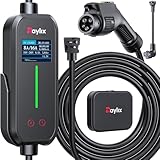
- [2026 INTELLIGENT CHARGING UPGRADE — PRECISION CONTROL MEETS SMART SCHEDULING] After surveying 100K+ U.S. EV owners, the Raylix R&D team found that nearly all drivers recognized the necessity of adjustable current and scheduled charging. Our upgraded J1772 charger features 4-level adjustable current (8A/10A/12A/16A) and a 1–12 hour smart delay timer. Whether you're charging overnight or during off-peak hours, enjoy smarter energy use, lower costs, and total convenience—on your schedule.
- [ONE CHARGER, ALL J1772 EVs/PHEVs READY!] Compatible with all SAE J1772 electric vehicles and plug-in hybrids—whether it’s Ford, GM, Nissan, Audi, BMW, Kia, Hyundai, Honda, Chevy, or more. Perfect for home or on-the-road charging, our 16A Level 1 & 2 charger ensures your EV is always powered and ready for any journey.
- [CHARGE 4× FASTER — NO MORE WAITING] In a rush? Our 16A Level 1 & 2 charger delivers charging speeds up to 4× faster than standard 8A Charger Level 1. Whether it's an early commute, a spontaneous trip, or last-minute errands, your EV will be ready when you are.
- [LEVEL 1 & 2 PORTABLE CHARGER — CHARGE ANYWHERE, ANYTIME] Designed for maximum flexibility, Raylix Level 1 & 2 EV charger features both 5-15 and 6-20 plug compatibility. Whether you're charging in your garage, at a friend's house, or at a roadside motel. NEMA 6-20 plug for Level 2 ev charging (240V, 16A, 3.68kW, 9-12 miles/hr) and a NEMA 5-15 adapter for Level 1 ev charging (120V, 12A, 1.44kW, 3-5 miles/hr) NOTE: In compliance with North American electrical safety standards, the charger automatically limits current to 12A when using a 5-15 outlet—protecting both your vehicle and your home’s electrical system.
- [AT-A-GLANCE CHARGING COMMAND: TOTAL CONTROL, INSTANTLY] While most ev chargers solutions confine vital data to in-car screens, the Raylix tesla charger breaks free with its enhanced TFT color display. This Raylix-exclusive feature delivers crystal-clear, real-time updates—voltage, current, power load, AND critical charging temperature—directly on the unit. Just one glance gives you complete charging insight. It’s not just information; it's the empowering peace of mind and satisfying control that transforms every charge into a masterfully managed experience.
Ford also plans to use large aluminum unicastings in place of numerous smaller parts. Workers are intended to receive kits containing the fasteners, scanners, and tools needed for each task. In theory, that reduces searching, walking, handling, and opportunities to install the wrong component.
Ford’s August 2025 launch materials claimed the platform could deliver:
- 20% fewer parts than a typical vehicle
- 25% fewer fasteners
- 40% fewer workstations from dock to dock
- 15% faster assembly time
- A wiring harness more than 4,000 feet shorter and approximately 10 kilograms lighter than the harness in Ford’s first-generation electric SUV
Ford also said the process could be as much as 40% faster than production of current Louisville vehicles before some of that time is reinvested in automation and insourcing. After those changes, the company projected a net speed improvement of 15%.
Those numbers need careful interpretation. They are Ford’s engineering targets or forecasts, not independently audited production results. Even if Ford reduces parts and assembly time, the effect on profitability will depend on battery cost, factory utilization, labor agreements, warranty expense, vehicle pricing, incentives, and whether enough customers buy the resulting products.
What’s actually slowing this PC down?
Pick the symptom - the matching free tool is one click away.
Four different ways the system could improve economics
- Physical cost reduction: Fewer parts, fasteners, wiring, labor steps, and workstations can reduce material and assembly costs.
- Capital efficiency: Retooling an existing U.S. plant may cost less than building a completely new vehicle ecosystem.
- Operating leverage: A common platform can spread engineering, tooling, software, and factory expenses across multiple models.
- Additional revenue: Ford wants software and connected services, including driver assistance and energy-management features, to add value beyond the vehicle itself.
The first three are necessary for a lower-cost EV. The fourth can help margins, but it also introduces software-support, cybersecurity, warranty, subscription, and customer-acceptance questions.
The battery strategy: LFP, structural packaging, and domestic production
The first Fathom is expected to use a cobalt-free and nickel-free lithium-iron-phosphate (LFP) battery. LFP cells generally offer a cost and materials advantage compared with chemistries that use nickel and cobalt. Ford’s planned battery facility will produce prismatic LFP cells in Michigan, with CATL serving as a technology partner for the production process.
By June 2026, Ford said BlueOval Battery Park Michigan had assembled full pre-production LFP cells and was on track to ship batteries during 2026. That is a meaningful manufacturing milestone, but it is not the same as proving high-volume production, strong yields, or profitable battery economics.
Ford intends for the battery pack to serve as a structural subassembly that also forms the vehicle floor. The company says this approach can lower the center of gravity, improve packaging, remove redundant structure, and reduce cost. Ford also says the pack is serviceable, but individual cells cannot be replaced because of their structural role.
Quick wins for a faster PC:
Repair Windows errors before they cause bigger problemsFix Now →Scan for outdated or missing drivers - takes under a minuteDriver Scan →That design creates an important trade-off. Integrating the battery into the vehicle can improve efficiency and assembly simplicity, yet collision damage may lead to more expensive replacement decisions if a large structural component must be repaired or replaced. Independent long-term data on repair cost, insurance premiums, salvage rates, and warranty performance was not available by August 10, 2026.
LFP’s advantages and compromises
LFP is not automatically the best chemistry for every EV. Its appeal for Fathom is primarily economic and supply-chain related: it avoids nickel and cobalt, uses a chemistry Ford expects to be less expensive, and is well suited to a vehicle designed around efficiency and an attainable price.
The trade-off is that battery energy density and charging performance matter. A smaller or less energy-dense battery may reduce cost and weight, but it can leave less range margin in cold weather, during high-speed driving, while towing, with a heavy payload, or after years of degradation. The Fathom’s final battery capacity and EPA-rated range were not yet disclosed.
Electrical architecture and software
The Universal EV Platform is designed around a consolidated electronic architecture and a 48-volt zonal wiring system. Instead of routing many separate electrical connections throughout the vehicle, a zonal system groups electrical functions by area and uses a shorter, more centralized network.
The Tool Desk
Outbyte Driver Updater FREEScan for outdated or missing drivers - takes under a minuteDriver Scan →Outbyte PC Repair FREEClear out junk files and repair common Windows errorsFree Scan →Rank #3
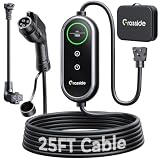
- Universal J1772 Compatibility: Designed with a standard J1772 connector, this J1772 charger works with most J1772 electric vehicles and PHEVs, including BMW, Mercedes-Benz, Hyundai, Kia, Nissan, Rivian, Ford, Chevy, Volkswagen, Toyota and more. Note: Tesla vehicles require a J1772 to Tesla adapter (not included)
- Flexible Outlet Compatibility: This portable EV charger comes with a NEMA 6-20 plug and a NEMA 5-15/5-20 to 6-20 adapter. Supports Level 1 (8–12A) and Level 2 (16A). Max 12A (1.44kW) on 120V NEMA 5-15/5-20 outlets, and full 16A (3.84kW) with a 240V NEMA 6-20 outlet. One charger is designed to cover home, garage, and travel charging needs with reliable performance
- Adjustable Smart Charging Control: Customize charging safely with adjustable current settings (8A/10A/12A/16A) to match different circuits. The 0–12 hour delay timer helps schedule overnight charging during lower electricity rates. Integrated LCD display shows real-time voltage, current, power, and charging status for clear monitoring without apps. Note: Press 'A' or 'T' for 3s to set and confirm.
- Home Charging & Travel Backup: For daily home use while remaining fully portable for travel. This level 1 ev charger includes a durable 25FT ev charging cord, providing flexible reach for garage or driveway charging. Charge overnight to take advantage of lower utility rates—potentially saving up to $500 annually on electricity costs. The included carrying case makes storage easy and keeps a dependable backup charger available in your trunk for road trips or visiting friends
- Engineered For Safety & Durability: Built for dependable daily use, this electric car charger features an IP65 waterproof rating for all weather operation. Equipped with a UL-listed cable, fully rubberized connector, and advanced protection against overcurrent, overheating, and electrical faults. Designed to ensure safe, stable, and long-term charging performance in demanding environments
Ford says the platform will also include:
- In-house software and driver-assistance controls
- Over-the-air software capability
- BlueCruise driver assistance
- Bidirectional charging for home backup and home power management
- A North American Charging Standard (NACS) port, with adapters for CCS and J1772 connections
- A planned 400-volt high-voltage system rather than an 800-volt system
Ford’s argument for 400 volts is that careful efficiency work, including lower weight, better aerodynamics, energy management, and efficient motors, can reduce the need for an 800-volt system. That could help control component cost. The limitation is that voltage alone does not determine charging performance, and Ford had not published final Fathom charge-time figures.
Ford says the platform is designed to achieve roughly 300 miles of expected customer range without relying on an exceptionally large battery. “Expected customer range” is not a substitute for a final EPA figure. Cold-weather performance, towing range, payload effects, charging curve, and highway efficiency will be especially important for a pickup.
Meet the Ford Fathom
Ford’s original 2025 announcement referred to a midsize electric pickup. By August 2026, the vehicle had been named Fathom. The available information falls into three categories:
| Category | Current status |
|---|---|
| Name | Confirmed: Ford Fathom |
| Vehicle type | Confirmed/reported: Five-seat, four-door midsize electric pickup |
| Size | Reported: Approximately comparable in footprint to a Ford Maverick, although Ford says it will not look like a Maverick |
| Starting price | Reported: $28,350 company-reported starting price, according to Axios |
| Launch timing | Target: 2027 |
| Preorders | Expected: Early 2027 |
| Customer deliveries | Reported target: Fall 2027 |
| Range | Not disclosed: Ford has discussed roughly 300 miles of expected customer range, but the final EPA figure was unavailable |
| Battery size | Not disclosed |
| Charging time | Not disclosed |
| Towing, payload, curb weight | Not disclosed |
| Platform | Universal EV Platform |
Ford says the Fathom will offer more passenger space than a 2025 Toyota RAV4. Planned features include a frunk, cargo bed, bidirectional power, a touchscreen, Apple CarPlay, Android Auto, BlueCruise, and digital-key capability.
The $28,350 figure should be treated as a reported starting price or starting MSRP, not the expected price of a typical well-equipped truck. Ford had not clarified whether that figure includes destination charges or other mandatory fees, nor had it published trim-level pricing, options, or final equipment by August 10, 2026.
Why Ford’s existing EV operation remained deeply unprofitable
Ford’s financial results show why the company is attempting a factory and product reset rather than simply adding more EV volume to its existing lineup.
| Period | Model e revenue | Model e EBIT | Context |
|---|---|---|---|
| Full year 2024 | About $3.9 billion | -$5.076 billion | Pricing pressure, low volume, investment, and high structural costs |
| Q2 2025 | $2.4 billion | -$1.329 billion | Revenue doubled year over year, but costs and next-generation investment remained high |
| Full year 2025 | About $6.7 billion | -$4.806 billion | Loss improved modestly but remained very large |
| Q2 2026 | $1.0 billion | -$919 million | Third consecutive quarter of year-over-year EBIT improvement |
| 2026 guidance | Not provided in the cited guidance | Approximately -$4 billion | Includes about $1 billion of incremental UEV and Ford Energy investment |
These figures come from Ford’s 2025 Form 10-K, its second-quarter 2025 release, and its second-quarter 2026 results.
Model e’s EBIT loss is a segment loss, not a simple loss on each vehicle sold. It includes engineering and product-development spending, manufacturing and factory costs, battery investments, launch expenses, capacity costs, software, and other segment expenses. A calculation that divides the segment loss by EV deliveries can be useful only as a rough illustration, and it should not be presented as Ford’s actual per-vehicle accounting loss.
Free tools Windows power users keep installed
One-click scans. No signup required.
The underlying problem is a combination of low or uneven volume, price competition, expensive first-generation products, underused capacity, battery costs, and the fixed costs of developing a new technology. A cheaper vehicle can eventually improve utilization and spread fixed costs, but it can also make losses worse if Ford sells it below cost or has to offer heavy incentives to move inventory.
December 2025 changed the original EV story
Ford’s December 2025 strategy update made the “Model T moment” more conditional than the initial announcement suggested. The company did not abandon EVs, but it narrowed its pure-battery-electric strategy and put greater emphasis on the powertrains customers were choosing and the products Ford believed could earn acceptable returns.
Ford’s revised portfolio includes:
- Gasoline-powered vehicles
- Conventional hybrids
- Extended-range electric vehicles
- Smaller, lower-cost battery-electric vehicles on the Universal EV Platform
- Ford Pro commercial EVs and software
- Battery-energy storage systems using Ford’s battery capabilities
Ford said it would stop pursuing selected larger all-electric vehicles where demand, cost, and regulatory conditions had weakened the business case. The next-generation F-150 Lightning was shifted to an extended-range electric vehicle architecture rather than remaining a conventional full-size battery-electric pickup, and Ford ended production of the current-generation Lightning.
The company also announced approximately $19.5 billion in special items, with approximately $5.5 billion in cash effects, mostly extending into 2026 and 2027. Those charges are central to understanding the reset: Ford was not merely adding an inexpensive EV program to a healthy electric portfolio. It was recognizing costs, changing product plans, and reallocating capital while continuing to develop the lower-cost UEV family.
Do these 3 things before closing this tab:
1Scan for outdated or missing drivers - takes under a minute2Clear out junk files and repair common Windows errors3Fix the driver behind crashes, sound loss and screen glitchesRank #4

- Road-Trip Ready & Apartment-Friendly: Comes with a 20ft heavy-duty cable that easily spans a standard parking space, plus a NEMA 5-15 adapter for plug and play convenience. Whether you're charging at home or hitting the highway, this portable EV Charger is your ultimate travel companion for weekend getaways and camping trips
- Delay Timer & Adjustable Current: Use the built-in timer to delay your start by 1-12 hours and easily harvest off-peak energy savings. Then pick from 6/8/10/12/16A (Level 2) to match your garage grid. It automatically locks in your favorite setting and never forces you to re-adjust. No complicated apps or Wi-Fi needed, just straightforward, reliable control
- Tactile Buttons & LED Screen: No glitchy smartphone apps or finicky touchscreens that lag, freeze, and misfire in winter. Our EV charger is engineered with a high-definition LED display that tracks critical real-time data, including live voltage and current. Tactile buttons deliver direct, satisfying click feedback that remains highly responsive even when wearing heavy winter gloves or operating in torrential downpours—conditions where standard touchscreens completely fail
- ETL Certified Safety & IP65 All-Weather Shield: ETL certified to meet US safety standards for charging. Engineered with a certified IP65 dust-and-waterproof enclosure and a heavy-duty TPE cable that operates reliably across a wide -22°F to 130°F range. An intelligent multi-protection defense system (GFCI, over-voltage, over-current, surge, short-circuit, and over-temp) keeps a 24/7 watch for 100% safe, unattended overnight charging in any weather
- J1772 Compatible + Dual-Level Charging: Works with all J1772 EVs (Tesla requires a separate J1772 adapter). Level 2: built-in NEMA 6-20 plug. Level 1: included NEMA 5-15 adapter fits any standard outlet. Please confirm your outlet is NEMA 6-20 or 5-15 before purchase
Ford says it expects approximately 50% of global volume by 2030 to consist of hybrids, extended-range EVs, and fully electric vehicles, compared with 17% in 2025. That target makes Ford’s strategy a mixed-powertrain transition, not a promise to make every major vehicle battery-electric on the original timetable.
What Ford has accomplished by August 2026
There is evidence of progress, but not yet proof of commercial success.
- Ford created a new organization combining advanced EV, digital, design, and industrial teams.
- The company continued development of the UEV midsize pickup for 2027.
- BlueOval Battery Park Michigan assembled full pre-production LFP prismatic cells.
- Ford said the Michigan battery plant was on track to ship batteries during 2026.
- More than 500 employees were at the battery plant by June 2026, against a stated employment goal of 1,700.
- Ford continued to say the UEV platform could support products from small cars to commercial vans.
- Ford confirmed that the UEV platform will not be used for the Mustang Mach-E.
- Ford intends to apply UEV-derived technologies, including high-efficiency motors, LFP engineering, zonal architecture, and cost-modeling tools, to other products.
- Model e’s second-quarter 2026 loss of $919 million was its third consecutive quarter of year-over-year EBIT improvement.
At the same time, Ford’s own 2026 guidance calls for an approximately $4 billion Model e loss, including roughly $1 billion of incremental investment in the Universal EV Platform and Ford Energy. Ford’s expected 2029 profitability date remains a target, not a reported result.
Independent reader supportYour contribution helps us test, update, and keep practical guides available for everyone.The buyer-facing trade-offs Ford still has to prove
Smaller battery versus usable range
Ford is pursuing efficiency rather than simply installing a very large battery. That can reduce vehicle weight and purchase cost. It may also make the Fathom more sensitive to winter temperatures, high-speed highway driving, towing, payload, and battery aging. A roughly 300-mile target is meaningful only when Ford publishes the EPA rating and real-world charging and range data.
Outdated Drivers Are Slowing You Down
One free scan finds every outdated or missing driver and matches the right update for your exact hardware.Free scan · exact hardware matchWindows Errors? Fix Them Before They Spread
Repair common Windows errors and clear accumulated junk for a smoother, more stable PC - no reinstall needed.Free scan · no reinstallLFP cost versus energy density
LFP can support lower-cost, nickel-free and cobalt-free battery production. But the chemistry’s energy-density and charging characteristics must be evaluated in the actual pack, not in the abstract. The Fathom’s range, pack size, weight, and charge curve will show whether Ford’s efficiency-first approach works for truck buyers.
Structural battery versus repairability
Structural integration can reduce parts and assembly steps, but it can make accident repair more consequential. Ford says the pack is serviceable while also stating that individual cells cannot be replaced because of their structural role. Until independent collision-repair and insurance data exists, it is too early to say whether the design lowers or raises lifecycle ownership costs.
Unicastings versus localized collision damage
Large aluminum castings can reduce assembly complexity and the number of parts. The potential downside is that damage to a large casting may require replacement of a more expensive, less localized structure instead of repair to several smaller components. Ford’s warranty, parts-pricing, repair-procedure, and insurance experience will matter as much as its factory cycle time.
400 volts versus 800 volts
A 400-volt system may help Ford hold down component costs, particularly if the vehicle’s efficiency reduces the amount of energy that must be added during a charging stop. An 800-volt system can offer advantages in high-power charging and thermal management, but the Fathom’s actual charging curve—not its voltage label—will determine the customer experience.
What’s actually slowing this PC down?
Pick the symptom - the matching free tool is one click away.
Software value versus software cost
BlueCruise, digital keys, large displays, bidirectional power, and over-the-air updates could make an affordable truck more useful. They also create continuing costs for software development, customer support, cybersecurity, updates, sensors, and warranty repairs. Ford must make those features reliable without allowing them to undermine the low-cost mission.
How to judge whether the Model T strategy is working
The most useful scorecard is not whether Ford’s launch presentation sounds revolutionary. It is whether the program produces measurable improvements at scale:
- Price: Does the production Fathom remain near the reported $28,350 starting price after destination charges, required fees, and normal launch pricing are included?
- Unit economics: Does Ford disclose positive gross profit or EBIT on UEV vehicles, rather than only reporting improved segment losses?
- Ramp speed: Can Louisville reach its planned production rate without quality problems, labor disruption, or excessive launch expense?
- Battery cost: Can BlueOval Battery Park Michigan achieve competitive yields and costs while producing LFP cells domestically?
- Platform scale: How many vehicles actually use the UEV architecture, and are they produced in enough volume to spread engineering and factory costs?
- Warranty and repair: Do structural battery packs and unicastings reduce total lifecycle cost, or do they produce costly repairs and insurance claims?
- Demand: Can Ford attract mainstream buyers without unusually high incentives?
- Profitability: Does Model e move toward Ford’s 2029 profitability target while continuing to fund UEV investment?
Ford also faces a more difficult benchmark than its own Mach-E or Lightning costs. The real test is whether a U.S.-built EV can be competitive in price and desirability with Chinese manufacturers and low-cost EV startups. That is Ford’s strategic objective, not an achievement that has been demonstrated yet.
What could go wrong?
Several failure modes could derail the plan even if the engineering works:
Quick wins for a faster PC:
Fix the driver behind crashes, sound loss and screen glitchesFind Drivers →Repair Windows errors before they cause bigger problemsFix Now →Scan for outdated or missing drivers - takes under a minuteDriver Scan →Best Value

- 【Delay Timer - Adjustable Current】Ev charger can adjust the current (8A/10A/12A/16A) through the physical button of level 1 ev charger. Charging power can reach up to 3.68KW (240V/16A). One-touch switch for ev charger operation. Built-in 2–8 hour delay timer for off-peak charging to save on electricity bills.
- 【NEMA 6-20 Plug & NEMA 5-15 Adapter】Nema 6-20 plug for 240V outlets and 5-15 adapter for standard 120V realize plug-and-charge. Overall length of ev charger level 2 is 27FT, providing enough charging distance across garages at home or outdoor. Portable storage bag supports you take portable EV Charger during travel, business trip, electric vehicle charging stations anywhere.
- 【ETL/FCC and IP67 Safety】J1772 charger is equipped with advanced safety functions such as overvoltage, overheating, and short-circuit automatic shutdown. IP67 waterproof and dustproof, extreme temperature protection level for withstanding harsh weather conditions from -40°F to 131°F in sunny, rain, snow and sandstorm. Electric car charger has ETL certified, FCC listed, meets UL safety standards. Industrial-grade construction with high-strength TPU-coated cables and 99.95% oxygen-free copper cores.
- 【J1772 Connector】J1772 charger works for all J1772 standard electric vehicles, Ford, GM, Nissan, Audi, Kia, Honda, BMW, Hyundai, Gmc, Chevy, Mercedes, and all PHEV/BEV. [Not fits Tesla cars/Nacs connector]
- 【One-Touch Charging Operation】16A electric car charger supports plug-and-charge functionality and features one-touch scheduled charging and current adjustment. Its intuitive and user-friendly operation allows flexible customization of personalized charging plans. Level 1 ev charger automatically shuts off when your car is fully charged.
- Fathom production could be delayed or launch at a substantially higher price.
- The Michigan battery plant could experience quality, yield, or ramp-up problems.
- Ford might not achieve its projected parts, workstation, or labor reductions at production volume.
- Affordable-EV demand could remain weaker than expected as buyers choose hybrids or range-extender vehicles.
- Competitors could cut prices before Ford reaches sufficient scale.
- Tariffs, incentives, battery rules, or other U.S. policy changes could alter the economics.
- The platform could become too optimized for one pickup to support the broader family of cars, vans, and other body styles Ford has discussed.
- High-tech standard equipment could create more warranty and repair expense than expected.
- Existing Model e losses could consume additional capital before UEV reaches volume production.
- UEV could succeed technically but fail commercially if buyers prefer the flexibility of hybrids or extended-range EVs.
Is Ford abandoning EVs?
No. Ford is narrowing and reorganizing its EV strategy rather than abandoning electrification. The company is directing pure-EV development toward lower-cost vehicles on the Universal EV Platform, while using hybrids and extended-range EVs to cover products where battery-electric economics or customer demand are less favorable.
That is a more pragmatic strategy than the original assumption that every important Ford truck and utility vehicle would quickly become a conventional battery-electric model. It also means the Fathom program carries unusual importance: it is intended to demonstrate that Ford can make an affordable EV profitably in the United States, not merely build another electric vehicle.
Bottom line: a promising manufacturing thesis still waiting for proof
Ford’s $5 billion “Model T moment” is best understood as a bet on system-level cost reduction. The company is combining a new vehicle architecture, parallel assembly, structural battery packaging, LFP cells, shorter wiring, zonal electronics, domestic production, and a platform intended to serve multiple future models.
The strategy addresses real reasons Ford’s first EV operation struggled. But the current financial evidence remains clear: Model e was still losing money in the second quarter of 2026, Ford expects an approximately $4 billion loss for the full year, and profitability is targeted for 2029.
The first decisive test arrives when the Fathom enters production in 2027. Its real price, EPA range, charging performance, quality, repair costs, production rate, demand, and margin will determine whether Ford has created a Model T-style manufacturing advantage—or simply designed an ambitious new way to build an unprofitable EV.
Frequently Asked Questions
What is Ford’s $5 billion “Model T moment”?
It is Ford’s name for a new affordable-EV manufacturing and product strategy. The initial approximately $5 billion figure combined nearly $2 billion to retool Louisville Assembly Plant with a previously announced $3 billion investment in BlueOval Battery Park Michigan. The program centers on the Universal EV Platform, the Universal EV Production System, and a 2027 midsize electric pickup now called Fathom.
Is Ford’s EV operation profitable now?
No. Ford Model e reported a $4.806 billion EBIT loss for 2025 and a $919 million loss in the second quarter of 2026. Ford says the segment should improve annually beginning in 2026 and reach profitability in 2029, but that remains a company target.
What is the Ford Fathom?
Fathom is the first publicly named vehicle planned for Ford’s Universal EV Platform. It is expected to be a five-seat, four-door midsize electric pickup with a reported starting price of $28,350. Preorders are expected in early 2027, with customer deliveries targeted for fall 2027.
What is Ford’s assembly tree?
It is a manufacturing process that builds the front section, rear section, and structural battery core in parallel before bringing them together near the end of production. Ford says the process can reduce parts, fasteners, workstations, wiring, and assembly time, but its claimed efficiency figures have not yet been independently validated at volume.
What battery will the Fathom use?
The first Fathom is expected to use a cobalt-free and nickel-free lithium-iron-phosphate, or LFP, battery. Ford plans to produce prismatic LFP cells at BlueOval Battery Park Michigan with CATL technology support. Final battery capacity and EPA range had not been disclosed by August 10, 2026.
Will the Fathom cost exactly $28,350?
Not necessarily. The $28,350 figure is a reported starting MSRP or company-reported starting price. Ford had not yet disclosed final trims, options, destination charges, mandatory fees, or the price of a typical well-equipped truck.
The Bottom Line
Ford has built a credible cost-reduction thesis, not a proven profitable EV business. The Fathom’s 2027 launch will show whether the Universal EV Platform and assembly-tree system can deliver the promised price and efficiency. Ford’s 2029 profitability target will show whether those manufacturing gains are large enough to overcome battery, software, factory, warranty, and demand costs.
Quick Recap
Product prices and availability are accurate as of the date/time indicated and are subject to change. Any price and availability information displayed on Amazon at the time of purchase will apply.