Free tools Windows power users keep installed
One-click scans. No signup required.
STMicroelectronics and Mobileye are adding ST’s Stellar automotive microcontrollers to next-generation reference designs for Mobileye’s EyeQ6 Lite and EyeQ6 High processors. The combination pairs EyeQ6’s ADAS computing with Stellar’s real-time control, safety and software-isolation functions. It is an expanded chip-design collaboration—not a consumer product launch or a guarantee that every EyeQ6 vehicle will use Stellar.
What the expanded collaboration changes
Mobileye and STMicroelectronics have worked together across the EyeQ processor family. Their expanded arrangement brings ST’s Stellar automotive microcontrollers into next-generation Mobileye EyeQ6 Lite and EyeQ6 High reference designs. Mobileye CEO Amnon Shashua described the goal at ST’s 2024 Capital Markets Day as enabling multiple software applications to coexist with real-time performance, while improving efficiency, accelerating development and maintaining high safety standards.
As an Amazon Associate I earn from qualifying purchases.
A reference design is a technical blueprint for customers such as automakers and automotive suppliers; it is not itself a production vehicle or a promise that a particular model will use the design. The announcement concerns how the chips and software can be integrated, rather than a new consumer-facing safety feature with a specified release date.
Do these 3 things before closing this tab:
1Repair Windows errors before they cause bigger problems2Fix the driver behind crashes, sound loss and screen glitches3Clear out junk files and repair common Windows errorsHow EyeQ6 and Stellar work together
| Component | Role in the design | What the cited company materials establish |
|---|---|---|
| Mobileye EyeQ6 Lite and EyeQ6 High | Automotive system-on-chip processing for Mobileye computer-vision and ADAS workloads. | Mobileye describes EyeQ devices as designed for systems requiring ASIL D, the highest Automotive Safety Integrity Level in ISO 26262. |
| ST Stellar automotive MCU | Real-time microcontroller functions, including safety-focused execution and software partitioning. | ST describes virtualization, resource separation and peripheral firewalls as mechanisms for running independent applications while maintaining isolation. |
| Combined reference design | Integrates high-throughput perception computing with deterministic control and communication functions. | The companies say this can support application coexistence, efficiency and faster development; the announcement does not quantify a specific vehicle-level improvement. |
The chips have different jobs. EyeQ6 supplies substantial processing for vision-based ADAS tasks; Stellar is intended to manage real-time microcontroller work and help separate software functions. That distinction matters because not every task in a vehicle can simply be handed to a powerful processor: safety-related control also needs predictable timing and carefully managed interactions.
#1 Best Overall

- Compact Handling Value: Small board sizing supports storage and carry between workstations while keeping a dedicated programming option ready for shop or studio use
- Single Board Package: Includes a single chip programmer board for repair workflows, giving buyers clear package contents without extra accessory assumptions or unsupported claims
- Read And Write: Built for chip programming tasks, this USB board helps technicians handle reading and writing steps with stable workflow control during tablet repair service
- Compatible Model Coverage: Designed to compatible 6 to 17PM series models, the board gives repair users a clearer fit guide when preparing device maintenance jobs
- Repair Workflow Use: The compact board format fits neatly into service setups, helping technicians keep programming tools close at hand during maintenance, diagnostics, and routine workshop work
ST says Stellar’s virtualization, resource separation and peripheral firewalls can help multiple independent applications run concurrently. Those are architectural mechanisms, not proof that any particular vehicle system has achieved a particular safety certification or freedom-from-interference result. That evidence depends on the finished system and its qualification.
Why the architecture matters to vehicle safety
Modern vehicle electronics must bring together compute-intensive perception and time-sensitive control and communication. Combining functions can reduce integration burdens, but it also makes it important to prevent one application from disrupting another and to meet real-time deadlines. A design pairing EyeQ6 with Stellar addresses that engineering problem by assigning complementary roles to an ADAS processor and a safety-focused MCU.
For automakers and Tier 1 suppliers evaluating such a design, the meaningful questions go beyond processor speed:
- Throughput and efficiency: Can the perception workload run at the required rate within the vehicle’s power and thermal constraints?
- Determinism and latency: Can control and communication tasks meet their timing requirements consistently?
- Safety evidence: What safety goals, development processes and qualification evidence apply to the complete system?
- Isolation: How are software applications partitioned, and how is interference between them detected or prevented?
- Integration: Does the design reduce the need for separate electronic control units, or simplify their interfaces and software coordination?
- Manufacturing and support: Which partners handle physical implementation, packaging, qualification and production at scale?
Mobileye’s EyeQ technology description says ST supports physical implementation, automotive-grade memory, high-speed interfaces, system-in-package design and qualification. ST’s customer-success account describes a wider role spanning co-design, design-for-test and high-volume manufacturing. These activities help explain why the relationship extends beyond supplying a microcontroller: chip design, packaging, testing and qualification all matter to automotive production.
Rank #2
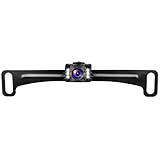
- Front/Rear Camera & Guide Line On/Off: The backup camera default to Rear View with Guide Line. Cut the WHITE cable can be Front Camera; Cut the Green cable, the guide line will disappear. You can choose install in front or Back to your car. IMPORTAT: Please Restart your radio again after you cut wire loops, then the image should be correct
- High Quality Images: Our Backup Camera with upgrade sensor, full glass lens, 6 bright LEDs, will provide you high-definition, high-resolution image in both day and night
- IP68 Waterproof & Fog Resistant: Car Rear View Camera designed with fully sealed glue filling craft, you absolutely no need to worry about water, fog or mist inside
- 170 Degree Angle: The wide 170° viewing angles meet your vision needs when driving or parking, adjustable camera lens allows you to find the best position, makes you drive safely
- Easy installation: Just hook it behind the License Plate without drilling holes for bracket installation. And it will not cover any information of your license plate. Metal material will be more durable then plastic. Important: The product is upgrading now, the installation way pls check the user manual. Upgrade 26ft/8M Video Cable is enough for most of cars. Not include Screen
What Mobileye has said about EyeQ6 deployment
On April 17, 2024, Mobileye announced that it had delivered the first production-candidate EyeQ6 Lite hardware and software to customers. The company said EyeQ6 Lite was set to be installed in 46 million vehicles over the following years. That figure was a planned-installation forecast in the 2024 announcement, not a verified count of vehicles on the road.
In the same announcement, Mobileye said EyeQ6 High was on track for launch in early 2025. Mobileye’s 2025 results release later described the chip as on track for series production. Those statements document company expectations at the time; they do not, on their own, establish EyeQ6 High’s production status or actual vehicle deployments as of October 2026.
Mobileye’s 2025 results release also reported that EyeQ6 High achieved 10 times the frame-per-second processing of EyeQ5 High. The release described a compound-AI software infrastructure with a line of sight to approximately 100 times the camera-only mean-time-between-failure compared with EyeQ5 High. Both are Mobileye-reported engineering claims, not independently validated test results. The latter is a stated line of sight, not a demonstrated fleet outcome.
Recommended Free Tools
What is established about the partnership’s scale
STMicroelectronics’ customer-success account, accessed in 2026, says the collaboration has produced six generations of automotive-grade EyeQ system-on-chips and that hundreds of millions of units have shipped from EyeQ1 through EyeQ6H. Mobileye’s Form 10-K separately says it co-developed six EyeQ generations with ST, including EyeQ5 and EyeQ6, and that EyeQ integrated circuits are manufactured by or outsourced to a partner foundry by ST.
Rank #3

- ✅ POR-15 is an industry standard for high performance protection against corrosion and rust. Our direct-to- metal coating is essential in all applications where there is a need to preserve substrates susceptible to corrosion. POR-15 Top Coat provides excellent adhesion and best when used over POR-15 Rust Preventive Coating, to create a permanent barrier.
- ✅ LONG LASTING PROTECTION - POR-15 Top coat has exceptional long-term sheen and color retention, with a hammer tough finish that won’t crack or peel. It can be applied directly to metal substrates or previously painted surfaces without need for primer or undercoat. Formulated to form a robust barrier that sheds moisture.
- ✅ WHEN DO I NEED THIS? - POR-15 Top Coat is essential for that extra layer of durability and provides optimum protection against UV light that won’t fade over long term exposure.
- ✅ OUR SATISFACTION COMMITMENT – At POR-15 we strive to bring the ultimate in rust prevention. Known for the unbeatable 3-step stop rust system, POR-15 is trusted by DIY & Professionals. We are committed to innovation, quality control, and excellent customer service.
These statements support the conclusion that the relationship is long-running and production-oriented. They do not establish that every unit in the historical shipment total is an EyeQ6 chip, nor do they identify which automakers will use the new Stellar-equipped reference designs.
What the announcements do—and do not—mean for drivers
The expansion is a behind-the-scenes platform development for automakers and suppliers. It may give them a reference architecture for combining ADAS processing with real-time MCU functions, but public announcements do not specify which production models will adopt it, what driver-assistance features those models will offer, or when those vehicles will be available.
Likewise, an ASIL D design target for EyeQ systems should not be read as a blanket claim that every vehicle using an EyeQ chip is certified to ASIL D. Safety assessment applies to the relevant system and implementation. The chip-level architecture, software, vehicle integration and qualification all contribute to the safety case.
Quick wins for a faster PC:
Scan for outdated or missing drivers - takes under a minuteDriver Scan →Repair Windows errors before they cause bigger problemsFix Now →Quick Recap
Product prices and availability are accurate as of the date/time indicated and are subject to change. Any price and availability information displayed on Amazon at the time of purchase will apply.




