No. Don’t splash a driveway with automotive antifreeze mixed with salt. Antifreeze can be dangerous if swallowed, and Poison Control advises against using it around children or pets or pouring it onto the ground or into storm drains. Use a deicer made for ice control according to its label, or use sand or gravel when you need traction rather than melting.
Why antifreeze and salt are a bad driveway mix
Automotive antifreeze is not a driveway deicer. Poison Control warns that antifreeze is dangerous if swallowed and recommends keeping it away from children and pets. It also says not to pour antifreeze onto the ground or into storm drains. A driveway puts liquid where people, animals, soil, and runoff can encounter it. Poison Control’s antifreeze guidance explains that ethylene glycol toxicity can develop as the body breaks it down into substances that affect blood chemistry, the nervous system, and kidneys.
Automotive coolant formulations vary, so check the specific bottle’s label rather than assuming every product has the same ingredients. EPA identifies ethylene glycol as the main hazardous ingredient in antifreeze and warns that animals may be attracted to driveway spills. EPA’s ethylene glycol information describes that risk.
Adding salt does not make antifreeze a demonstrated or safe household ice treatment. The available guidance does not endorse this mixture for driveway use. Salt deicers have their own environmental and surface tradeoffs; combining them with antifreeze does not remove the risks of either substance.
#1 Best Overall
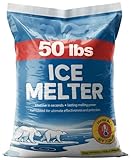
- Professional Grade Performance - This powerful ice melting formula starts working instantly on contact with ice and snow. The melt ensures complete coverage and lasting results, making winter maintenance effortless and effective. In money-saving 50lb bag
- SAFETY-MAX FORMULA Prevents Refreezing: Once your sidewalk, steps, driveway, or parking lot are clear, they will not refreeze; This adds safety for cars and pedestrians in extreme cold weather
- Versatile Usage - Perfect for all outdoor surfaces including driveways, sidewalks, steps, balconies, patios, and walkways. The effective formula works in temperatures below zero down to -15, providing reliable performance throughout winter
What to use instead
For melting ice
Choose a product specifically made for ice control and follow its package directions for the intended surface and application amount. Common homeowner products use sodium chloride or calcium chloride, though formulations differ. Check the active ingredient, temperature range, and surface directions on the label; the reviewed guidance does not establish one product as suitable for every driveway.
Temperature matters. EPA’s 2021 stormwater best-management-practice guidance says sodium chloride has minimal effectiveness below 15°F. That figure applies to sodium chloride, not every deicer formulation. EPA also notes that deicers differ in cost, corrosivity, and environmental impact; alternatives such as calcium magnesium acetate are not free of tradeoffs. EPA’s 2021 deicing guidance provides that context.
Rank #2

- Environmental Consideration - This advanced formula is notably less corrosive to concrete than traditional ice melt. The environmentally conscious choice for responsible winter safety management. Apply 2-4 ounces per sq yrd
- Versatile Usage - Perfect for all outdoor surfaces including driveways, sidewalks, steps, balconies, patios, and walkways. The effective formula works in temperatures below zero down to -15, providing reliable performance throughout winter
- Use It Ahead Of Time - This is easy to apply with a shaker or straight from the bag; It is an affordable way to prevent ice formation and should be spread prior to snowfall to make shoveling easier; Follow instructions on the bag for best results
- SAFETY-MAX FORMULA Prevents Refreezing: Once your sidewalk, steps, driveway, or parking lot are clear, they will not refreeze; This adds safety for cars and pedestrians in extreme cold weather
For traction without melting
Sand or gravel can improve footing, but they do not melt ice. Use them when traction is the priority, and shovel or push away snow and loosened slush when conditions allow. A chemical deicer lowers the freezing point and can help loosen ice for removal; it is not a substitute for clearing the resulting slush.
Use deicer sparingly and protect people, surfaces, and runoff
- Follow the label’s amount and precautions. More is not better. Over-application can increase exposure and damage plants, concrete, cement, soil, and water. Poison Control’s ice-melt guidance advises following package directions.
- Keep children and pets away as directed. Ice-melt chemicals can irritate skin or paws, and no ice melt should be treated as universally harmless. EPA discusses the risks of use and especially overuse in its ice-melt product information.
- Consider where runoff goes. EPA says soluble deicing salts can wash into waterways and drinking-water supplies through stormwater, with potential water-quality and aquatic-life impacts. Salt is not impact-free, even when used as directed.
If antifreeze has already been spilled
Keep children and pets away and clean up the spill promptly. Do not wash it into a storm drain or onto the ground. Poison Control recommends proper disposal according to community-specific rules; contact your local waste authority for instructions on handling the collected material. For exposure or a possible ingestion, contact Poison Control or emergency services promptly.
Free tools Windows power users keep installed
One-click scans. No signup required.
Quick Recap
Rank #3

- PREMIUM ICE MELT: Melts to -15°F The faster an ice melter works, the less chance there is for a mishap to occur. That’s why National Blue Ice Melt contains two patented accelerating agents. National Blue Ice Melt has been shown in Strategic Highway Research Program testing, to exceed the melt value of a theoretical 50% calcium chloride blend.
- SIZE: Optimized particle size for controlled spreading, allowing you to melt more with less cost. National Blue Ice Melt also contains anti-caking agents that ensure easy flow for ice melt spreaders and longer storage life. Contains a water soluble non-staining coverage indicator. Making it easier to see when spreading.
- BETTER INGREDIENTS: Magnesium Chloride Free! Commercial strength, professional ice melter down to -15°F. Contains 10% Calcium Chloride.
- ANTI-CAKING: National Blue ice melt contains an anti-caking agent that helps for easy flow for ice melt spreaders and longer storage life
- PET + CONCRETE FRIENDLY: National Blue Ice Melt will not harm concrete and vegetation when used according to label instructions. Ice Melt contains no added magnesium chloride which has been shown in studies to chemically attack concrete. Incorporating liquid anti-icing practices with dry application rates is essential to reducing chloride and salt impacts on the environment. Safe for pets and their paws
Product prices and availability are accurate as of the date/time indicated and are subject to change. Any price and availability information displayed on Amazon at the time of purchase will apply.




