Smart charging controls when and how a fleet’s vehicles draw electricity so they are ready for dispatch without exceeding depot limits. Vehicle-to-grid (V2G) adds bidirectional operation: a compatible vehicle can send stored energy back through compatible charging equipment. For most commercial fleets, smart charging is the practical starting point for capacity, peak-demand and readiness problems. V2G is an additional project that can create grid, building or resilience value only when the vehicles, chargers, controls, utility rules and a paying program all line up.
The distinction matters because a fleet can obtain useful load management without exporting a single kilowatt. Export capability introduces extra hardware, interconnection, communications, battery-use and market risks; it is not an automatic source of profit.
As an Amazon Associate I earn from qualifying purchases.
Smart charging and V2G are related, but they solve different problems
Smart charging: controlled electricity intake
Smart charging, also called managed charging, coordinates charging time and power across vehicles and chargers. Software can delay a session, lower a charger’s power limit, sequence vehicles, or respond to a facility or utility signal. The objective is to meet each vehicle’s required state of charge by its departure time while fitting charging into the site’s electrical and commercial constraints.
Do these 3 things before closing this tab:
1Clear out junk files and repair common Windows errors2Fix the driver behind crashes, sound loss and screen glitches3Repair Windows errors before they cause bigger problemsEnergy still flows only from the grid to the vehicle. Smart charging does not inherently discharge a battery, provide export to the grid, or require a bidirectional charger. A networked charger and a charge-management system are the usual foundation, but the controls must be matched to the fleet’s vehicles, electrical service, tariff and operating schedule.
#1 Best Overall

- Earn Revenue with Every Charge: Set custom pricing and idle fees. Monthly payouts and usage reports included.
- Fleet and Public Use Ready: Control access with RFID , or app. Great for apartments, hotels, or commercial fleets.
- Fleet and Public Use Ready: Control access with RFID, or app. Great for apartments, hotels, or commercial fleets.
- Commercial EV charging station. Great for Hotels, Retail, Restaurants, Rentals, Workplaces, Apartment Buildings, Resorts, Destinations and more...Commercial EV charging station. Great for Hotels, Retail, Restaurants, Rentals, Workplaces, Apartment Buildings, Resorts, Destinations and more...
- Commercial EV Charging Station – OCPP-Compliant, Revenue-Generating Charger with Driver Pay App – Compatible with Level 2 and DC Fast Charging – Powered by EV Range Software
Vehicle-to-grid: charging plus controlled export
V2G is bidirectional charging. In addition to receiving energy, a compatible electric vehicle can send power through compatible electric-vehicle supply equipment (EVSE) to a building, a managed electrical circuit or the utility grid. Control and communications coordinate the export, and the site must be permitted to operate in reverse-power mode under the applicable utility and electrical rules.
V2G can potentially support grid services, reduce a building’s load during expensive periods, or provide limited resilience during an outage or constrained period. Those benefits are conditional. The fleet must preserve enough energy for its route, the equipment must be certified and interoperable, and a utility, aggregator or market program must offer a usable value stream.
Side-by-side comparison for a fleet decision
| Decision axis | Smart charging | V2G |
|---|---|---|
| Energy flow | Grid to vehicle; timing and charging power are controlled. | Bidirectional; a compatible vehicle can export power through compatible EVSE. |
| Primary fleet value | Meet departure requirements while managing site capacity, tariffs, demand peaks and schedules. | All smart-charging functions, plus potential grid-service, building-load or resilience value. |
| Required equipment | Networked chargers and charging-management controls integrated with the fleet and site. | Bidirectional-capable vehicles, compatible bidirectional EVSE, controls and communications. |
| Commercial dependencies | Electrical capacity, rates, demand charges, duty cycles and control implementation. | All smart-charging dependencies plus export permission and a viable utility or market program. |
| Main risk to test | Poor schedules or control integration could leave vehicles undercharged. | Compatibility, interconnection, program availability, control complexity, battery use and uncertain revenue. |
| Typical deployment logic | Evaluate first when the immediate issue is depot capacity, peak cost or reliable readiness. | Add only where vehicles dwell long enough, export is legal and a specific value stream is available. |
This is a functional comparison, not a guarantee of savings. The U.S. Department of Energy (DOE) describes potential benefits for managed charging, but actual results depend on the depot, tariff, duty cycle and control implementation. DOE and the National Renewable Energy Laboratory do not establish one universal fleet savings or V2G payback figure.
What’s actually slowing this PC down?
Pick the symptom - the matching free tool is one click away.
Start with the fleet’s operating requirement
Charging economics are secondary to dispatch. A vehicle that misses a route because a control system pursued a peak-saving event is an operational failure, regardless of the electricity bill. Before selecting hardware or software, document the inputs that determine how much flexibility actually exists.
Information to gather
- Vehicle schedule: arrival and departure times by vehicle, route start times, minimum state of charge and the consequence of a late departure.
- Energy requirement: expected energy use between charging opportunities, seasonal variation and any reserve policy for weather, traffic or route changes.
- Dwell periods: the hours when each vehicle is physically at the depot and available to charge or, for V2G, potentially discharge.
- Charger inventory: connector types, charger power, simultaneous-use limits, network status and which vehicles are assigned to each unit.
- Facility load: the site’s normal load profile, service and transformer capacity, panel limits and other large electrical loads that coincide with charging.
- Commercial terms: energy prices by time, demand-charge rules, fixed charges and any utility signals or demand-response requirements.
- Control boundaries: which chargers, vehicles, building systems and utility interfaces can accept an automated command, and what happens if communications fail.
DOE’s federal-fleet charge-management guidance identifies these schedule, energy, charger, facility and rate inputs as central to planning. If the data is unavailable, begin with a metering and operations study rather than assuming every connected vehicle is flexible.
How smart charging works at a commercial depot
- Set a readiness policy. Define the departure state of charge or energy target for each vehicle and the latest acceptable completion time. Separate fixed, non-negotiable departures from vehicles with flexible windows.
- Map electrical limits. Confirm the service, transformer, switchgear and charger circuits can support the planned simultaneous load. Identify a site-wide limit that charging controls must not exceed unless an engineer approves a change.
- Load the tariff and operating signals. Configure time-based energy prices, demand-charge periods, facility load limits and any utility demand-response event signal available to the site.
- Build a charging queue. The system should allocate power among vehicles according to departure urgency, required energy, dwell time and charger availability. A vehicle with a near departure and low state of charge should outrank a vehicle that arrived early with a long dwell period.
- Apply power limits and schedules. The controller can stagger starts, cap individual chargers, or shift charging to lower-cost periods while continuously checking whether all targets remain achievable.
- Monitor exceptions. Track unplugged vehicles, failed sessions, communication loss, unexpected route changes and a vehicle that is not gaining energy as expected. Provide a manual override and an escalation path for dispatch staff.
DOE says smart charge management can potentially use existing infrastructure more effectively, reduce charger installation cost or timelines, avoid coincident peaks and lower electricity costs. Those are possible outcomes, not guaranteed percentages. A depot with little schedule flexibility, a flat tariff or inadequate controls may see limited financial benefit.
Rank #2

- AI-POWERED SMART CHARGING & APP CONTROL – This ev charger level 2 uses Autel’s AI-integrated smart app to schedule charging around time-of-use utility rates, helping lower your monthly bill while boosting station utilization. Start or stop sessions remotely, adjust current from low to high amps, view real-time energy data, and get alerts if anything looks off.
- ULTRAFAST 80A PERFORMANCE FOR HOME – Delivering up to 19.2 kW / 80A, this charger adds about 70 miles of range per hour and powers your EV up to 14x faster than a standard Level 1 outlet, so you can fully recharge overnight or between customer visits. This 80 amp ev charger is a high-power level 2 ev charger that future-proofs your setup for larger-battery EVs and busy households.
- BUILT FOR 24/7 RELIABILITY & THEFT PROTECTION – Engineered for a 10-year lifespan with internal temperature monitoring and a flame-retardant enclosure. Dual-network Wi-Fi + Wi-SUN keep your charger online with >99.9% uptime, so drivers always find a live station. Custom tamper-resistant screws plus remote locking provide double theft protection for both residential and commercial installs.
- FAST INSTALL & FLEXIBLE STATION MANAGEMENT – Hardwired design for maximum power and reliability (100A circuit recommended for full 80A output; professional electrician install suggested). One-click configuration lets installers set up a charging station in about 10 minutes, then you can easily manage pricing, access, and usage in the app.
- CSA CERTIFIED, REBATE READY & UNIVERSAL J1772 – UL certified by CSA and eligible for many U.S. rebates, incentives, and tax credits to help reduce your installation cost. The 25 ft SAE J1772 cable works with all EVs and PHEVs in North America and with Tesla vehicles when used with a NACS adapter (not included). Backed by a 5-year warranty, 24/7 expert support, and Autel’s proven EV charger technology for long-term peace of mind.
What a fleet needs before attempting V2G
Vehicles designed for bidirectional operation
Not every electric vehicle can export energy. Confirm bidirectional capability for the exact make, model, model year, battery configuration and software version. The vehicle must also permit the intended operating mode; a connector that supports ordinary charging does not prove that the vehicle supports grid export.
Compatible bidirectional EVSE and controls
The charger must be designed and certified for reverse power, not merely equipped with a network connection. The EVSE, site controller and fleet software must agree on start, stop, power, energy and safety commands. Verify whether the proposed system supports the intended export destination: a utility-facing grid service, a building circuit or a resilience mode may have different technical requirements.
Communications and cybersecurity
V2G requires reliable communications among the vehicle, EVSE, charge-management platform and any utility or aggregator interface. Establish what happens when the network is unavailable, a command is delayed or a device reports conflicting state-of-charge information. Access control, event logging and secure software updates are operational requirements, not optional features.
Electrical and utility permission
Reverse flow can change the site’s protection, metering and interconnection requirements. The utility may require an application, studies, export limits, protection settings, equipment certification or a separate agreement. The facility also needs an electrical design that prevents an export event from violating building-system limits. Requirements vary by territory, so a fleet cannot responsibly assume that a charger approved for importing energy is approved for exporting it.
A specific value stream
V2G revenue is conditional on a program or market that accepts the resource and pays for the service. DOE guidance notes that incentive programs for vehicle applications are not yet widely in place. Check the current commercial program in the fleet’s utility territory, including eligibility, event windows, telemetry, minimum capacity, settlement rules and who is responsible for registration.
Enough dwell time and battery headroom
A vehicle that must leave shortly after arrival may have no useful discharge window. The operating plan must reserve energy for the route, account for charging and discharging losses, and define when export stops so the vehicle remains ready. Battery cycling can also create a cost or warranty question that belongs in the business case.
Rank #3

- Freestanding EV Charger Pedestal – Securely mount your Wallbox Pulsar Plus chargers with this durable, space-saving stand, perfect for home or commercial EV charging setups.
- Built for Stability & Durability – Constructed from high-quality, weather-resistant materials, ensuring a sturdy and reliable charging station in any environment.
- Seamless Compatibility – Designed exclusively for Wallbox Pulsar Plus chargers, providing a perfect fit and clean installation for a professional look.
- Ideal for Indoor & Outdoor Use – The rugged, weatherproof design makes it suitable for garages, driveways, parking lots, workplaces, and commercial charging stations.
- Easy to Install & Maintain – Comes with all necessary mounting hardware for a quick, hassle-free setup, making it easy to install and maintain over time.
Economics: energy, demand and the cost of flexibility
Where smart charging can create value
Managed charging may lower energy costs by moving consumption away from expensive periods. It can also reduce coincident peaks that contribute to demand charges and help a constrained service support more vehicles without an immediate electrical upgrade. The value is highest when charging sessions have genuine flexibility and the tariff distinguishes high-cost periods from lower-cost periods.
Do not treat a lower charger power rating as an automatic saving. If power is reduced too far, the fleet may need extra chargers, longer dwell, emergency charging or an operational change that costs more than the avoided peak. Model the complete duty cycle and include the cost of controls, networking, commissioning, maintenance and staff procedures.
What V2G adds to the calculation
Export compensation, building-load reduction or resilience value can be added to a V2G model only after the program rules are known. Subtract bidirectional equipment, electrical work, interconnection studies, controls integration, communications, metering, software and ongoing operations. Include conversion losses, energy purchased to restore the vehicle, possible battery degradation and the value of any route that must be protected.
The Tool Desk
Outbyte PC Repair FREERepair Windows errors before they cause bigger problemsFix Now →Outbyte Driver Updater FREEFix the driver behind crashes, sound loss and screen glitchesFind Drivers →A gross discharge payment is not net savings. Because no universal net-economics figure has been established across fleets, present a range based on the actual tariff and program rather than a generic payback claim.
Interoperability: standards help, but they do not guarantee a working system
DOE’s implementation guidance identifies several standards and protocols relevant to managed charging and vehicle-grid integration:
| Standard or protocol | Role described by DOE guidance | What a fleet must still verify |
|---|---|---|
| OCPP | Network communication used for functions such as setting charger power limits and schedules. | The exact version, supported commands, vendor implementation and whether the vehicle, EVSE and management platform complete the required workflow. |
| OpenADR | Automated demand-response communication between a utility or service provider and an energy-management system. | Whether the local utility uses it, which events and telemetry are supported, and how the site preserves vehicle readiness during an event. |
| ISO 15118 | Vehicle-to-charger data exchange, including functions relevant to advanced charging and V2G use cases. | Vehicle model support, charger implementation, certificates, software versions and the intended charging or export mode. |
DOE’s vehicle-grid integration assessment also identifies limited smart-communication capability in some current EVs and proprietary communications in parts of the ecosystem. Therefore, “supports OCPP,” “supports ISO 15118” or a similar label is not proof of end-to-end compatibility. Require a written compatibility matrix and a witnessed test using the exact vehicle, EVSE, software, site controller and utility interface before committing to a large deployment.
Rank #4
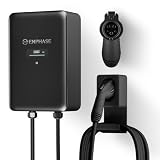
- 15× FASTER CHARGING: Deliver up to 88 miles of range per hour (22.1 kW / 80 A) to keep fleets, workplaces, and commercial sites moving with less downtime.
- BUILT-IN CELLULAR CONNECTIVITY: Built-in 4G LTE cellular connectivity keeps chargers online—no on-site Wi-Fi required. Ideal for sites with limited or unreliable network infrastructure.
- OPEN PLATFORM INTEGRATION: Native OCPP 1.6J and OCPP 2.0.1 support enables seamless integration with any Charging Station Management System (CSMS).
- API + LOCAL EMS READY: Integrate with building EMS, fleet platforms, and custom dashboards. Local EMS control supports load management and demand response during cloud interruptions.
- REVENUE GRADE METER: Accurate utility-grade energy measurement supports billing, cost allocation, and eligibility for applicable rebate programs.
Choosing a deployment path
Choose smart charging first when
- The immediate problem is depot capacity, demand charges, expensive time periods or unreliable charging completion.
- The fleet has predictable dwell windows but no confirmed export program.
- Vehicles or chargers do not support bidirectional operation.
- The organization needs a lower-complexity project that can be measured against readiness and electricity bills.
Evaluate V2G as an added layer when
- Vehicles remain parked long enough to charge and discharge without jeopardizing dispatch.
- The exact vehicle and bidirectional EVSE combination is supported and certified for the intended mode.
- The site can legally and safely export, with utility requirements understood.
- A current utility, aggregator or market program states how the resource is compensated.
- The business case remains positive after equipment, integration, losses, battery use and operating costs.
A staged implementation reduces risk
- Baseline operations. Measure arrival, departure, state-of-charge, charger use, facility load and electricity costs for a representative operating period.
- Deploy managed charging. Configure readiness targets, site limits and exception handling, then verify that dispatch performance is maintained.
- Test interoperability. Use a controlled pilot with the exact vehicle and charger models; test normal charging, power limits, schedules, communications loss and manual override.
- Screen V2G programs. Obtain the utility’s current commercial export, demand-response and interconnection requirements in writing. Confirm eligible vehicles, aggregators, telemetry and settlement.
- Pilot export conservatively. Start with a small number of vehicles, explicit state-of-charge floors and a dispatch override. Compare actual program payments and operating costs with the no-export baseline.
- Scale only on measured performance. Expand when readiness, safety, interoperability and net value meet the fleet’s thresholds.
Common failure modes and how to correct them
Vehicles are not ready at dispatch
Likely causes: unrealistic departure targets, simultaneous arrivals, a charger offline, a vehicle unplugged, or a control rule that protects the site limit without recognizing urgency.
Free tools Windows power users keep installed
One-click scans. No signup required.
Correction: rank vehicles by departure risk, reserve capacity for fixed routes, alert dispatch when a target becomes unreachable, and provide a documented manual charging override.
The site still hits a demand peak
Likely causes: the controller sees only charger load, not the building’s other equipment; a demand interval begins before controls react; or a charger bypasses the network.
Correction: measure whole-facility load, set a conservative site limit, include response time in the schedule and audit every charger for unmanaged operation.
A proposed V2G system cannot export
Likely causes: the vehicle lacks bidirectional support, the EVSE supports charging only, software versions are incompatible, or the utility has not approved reverse flow.
Quick wins for a faster PC:
Scan for outdated or missing drivers - takes under a minuteDriver Scan →Repair Windows errors before they cause bigger problemsFix Now →Correction: obtain model-specific compatibility evidence, confirm certification and interconnection requirements, and test the complete chain before ordering a fleet-wide system.
Best Value
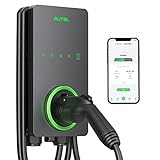
- 【Trusted Brand】Autel has been making automotive intelligent diagnostic, inspection, and analysis products since 2004. The MaxiCharger AC Home was developed over 2 years from a full team of designers and engineers to bring you the safest, smartest, and one of the best looking chargers on the market.
- 【High speed Charging】With 12kW up to 50A charging, speed will never be an issue. Add 37 miles per charging hour. Don't waste time waiting on your EV to fully charge with slower chargers. An updated 25-Foot durable cable is flexible no matter how cold the season is so you can charge with confidence in even the coldest of temperatures(-40℃).
- 【CSA Certified & NEMA Type 4】Eligible for the Federal rebate program. With NEMA Type 4 you are protected in any type of weather including snow, rain, hail, and sleet. Hang it up outside your house or inside a garage and it will operate efficiently. Fire resistant, over current, over voltage, and over temperature protection. Your level 2 charger will run better and last longer, saving you money in the long term.
- 【Smart APP Control】Use Autel Charge APP to control your charger and manage charge times, schedule charging while you're away, and optimize your charging to take advantage of off peak electricity. Bluetooth enabled, Wi-Fi connectivity, and Ethernet access make sure your automatic over the air (OTA) remote firmware updates keep you connected at the times you need.
- 【High Reliability】The MaxiCharger is easy for any electrician to install. A 3-year warranty, APP automatic updates, and around-the-clock support from Autel's service team means you'll never have to worry about quality and service.
V2G revenue is lower than expected
Likely causes: the program has limited event hours, minimum-capacity rules, uncertain dispatch, telemetry penalties or compensation that does not cover losses and battery use.
Correction: model settlement rules and all operating costs, keep a readiness-first dispatch policy, and treat payments as program-dependent rather than guaranteed income.
Communications fail during a managed event
Likely causes: network outage, expired credentials, unsupported commands or conflicting control systems.
Outdated Drivers Are Slowing You Down
One free scan finds every outdated or missing driver and matches the right update for your exact hardware.Free scan · exact hardware matchPC Slower Than It Used to Be?
A free scan shows the junk files, broken settings and background clutter dragging Windows down - then fixes them in one click.Free scan · Windows 10 & 11Correction: define a safe fallback power level, log command status, test offline behavior and make sure local staff can suspend an event without waiting for a vendor.
Questions to ask suppliers, utilities and integrators
- Which exact vehicle models, battery variants and software versions support the proposed operating mode?
- Which bidirectional EVSE models are certified for the site and the intended export destination?
- What OCPP, OpenADR or ISO 15118 versions and commands are implemented end to end?
- Can the system enforce vehicle-specific departure targets and a whole-building power limit simultaneously?
- What happens when a vehicle is unplugged, communications fail or a utility event conflicts with dispatch?
- Which interconnection studies, protection equipment, meters and approvals are required?
- What current program pays for the service, how is it settled, and what costs or penalties apply?
- How are charging and discharging losses, battery-use effects, warranties and maintenance handled?
- Can the fleet export only under an approved event, or can it export on its own schedule?
- What data can the fleet operator access to verify readiness, energy, power, events and payments?
Bottom line for commercial fleets
Smart charging is the broad, near-term tool: it coordinates grid-to-vehicle charging so a fleet can use limited depot capacity, avoid unnecessary peaks and meet departure requirements. V2G is not a replacement for that foundation. It is a bidirectional extension that makes sense only when compatible vehicles and EVSE, communications, safe export capability, utility approval and a real program are all present.
Build the business case around the fleet’s actual schedules, facility load and tariff. Implement readiness-first managed charging, verify interoperability with the exact equipment and investigate local V2G rules before promising revenue. As NREL analyst Matteo Muratori put it in 2022, “Managed charging can be a tremendous resource for the grid but there are trade-offs to solutions at different levels of commercial readiness.” That trade-off is the central decision: control charging now where it solves a defined operational problem, and add export only when the complete system—not just a charger specification—can deliver value safely.
Quick Recap
Product prices and availability are accurate as of the date/time indicated and are subject to change. Any price and availability information displayed on Amazon at the time of purchase will apply.




