What’s actually slowing this PC down?
Pick the symptom - the matching free tool is one click away.
SAE International’s six-level framework runs from Level 0, with no driving automation, to Level 5, designed to drive in all conditions in which a human can drive. The important distinction is not how advanced a car sounds: it is what a particular feature does, what the human must do, and the conditions in which that feature operates.
What are the six levels of autonomy?
SAE International calls these categories levels of driving automation. They describe the division of responsibility between a driving feature and a human—not a safety score, a quality ranking, or a prediction that every vehicle will progress through the levels. SAE’s J3016 framework applies to systems that perform part or all of the driving task on a sustained basis on public roads.


| Level | SAE label | What the feature does | Human role |
|---|---|---|---|
| 0 | No Driving Automation | May warn the driver or briefly intervene in a hazard, but does not continuously perform part of the driving task. | Performs the driving task and stays engaged. |
| 1 | Driver Assistance | Continuously supports either steering or acceleration and braking. | Supervises the feature and handles the rest of the driving task. |
| 2 | Partial Driving Automation | Continuously supports both steering and acceleration and braking. | Monitors the roadway and remains responsible for driving. |
| 3 | Conditional Driving Automation | Performs the driving task under its defined conditions. | Must be ready to take over when requested or when the system cannot continue. |
| 4 | High Driving Automation | Performs the driving task under its defined conditions. | The system can manage fallback without a human driver while operating within those conditions. |
| 5 | Full Driving Automation | Is designed to drive under all conditions in which a human can drive. | Human driving is not needed. |
The categories are easiest to understand as two groups: Levels 0–2 are driver-support features, while Levels 3–5 are automated-driving features that perform the complete driving task within their design conditions. SAE describes a feature’s level in a particular instance; one vehicle can have different features at different levels.
What is the difference between Level 2 and Level 3?
The key difference is who monitors the driving environment. At Level 2, a feature may steer and control speed at the same time, but the human driver must continuously supervise it and remain responsible. At Level 3, the system performs the driving task within defined conditions; a human fallback is expected when it requests a handoff or cannot continue. More automation of steering and speed does not, by itself, make a feature Level 3.
NHTSA’s driver assistance guidance describes Levels 0–2 as requiring driver engagement. In practical terms, a driver should follow the vehicle’s manual and the feature’s instructions rather than infer responsibility from a product name or the number of tasks it can perform.
Can a Level 3 car drive itself?
Only within the conditions for which its automated-driving feature is designed, and with the human fallback role still in the picture. Level 3 is not equivalent to unrestricted autonomous driving: the system may ask the driver to take over, and the driver must be prepared to respond. The specific feature’s operating conditions and handoff instructions matter more than a broad label applied to the vehicle.
What does Level 4 autonomy mean?
At Level 4, the system handles the complete driving task and can manage fallback without a human driver—but only within its operating conditions. Those conditions can restrict where or in what circumstances the feature works. Outside them, the Level 4 capability should not be assumed to apply. Transport Canada’s connected and automated vehicle framework likewise distinguishes Level 4’s bounded operating conditions from Level 5’s broader scope.
Is Level 5 self-driving available?
Level 5 is the framework’s definition for automation designed to drive in all conditions in which a human can drive, without a human needing to drive. That definition does not establish that a consumer vehicle with Level 5 capability is currently available. Availability can change and depends on the market and jurisdiction, so check current, official information before treating a product claim as evidence of Level 5 capability.
Rank #3
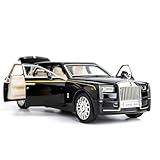
- Product size: 6.69*2.36*1.97 inches Weight: 0.7 pounds Outer packaging: exquisite color translucent packaging box
- Material: Die-cast car model, made of zinc alloy, with plastic parts, rubber tires, detailed interior and exterior decoration.
- Function: Press the two wheels of the front car to trigger the sound of the engine and the lights, with upright car logos,the angel logo is stored in the hood. The details of the body interior are realistic. Place the car on a flat ground, press the body and pull it back, the car will drive forward. (With pull back function)
- This Rolls-Royce Phantom 1/32 car model pull back car is very suitable for children to play with. The paint is exquisite and feels good, and it is heavy to hold. It is also very suitable for car model enthusiasts as a decoration.
- Accessories and collections: This product is very suitable for static accessories and can be used as an accessory next to a computer. For those who are passionate about collecting model car models, this is a great art collection.
Why a vehicle’s “autonomy level” needs context
A level belongs to the driving automation feature in use, not necessarily to a vehicle as a whole. When comparing systems or interpreting a manufacturer’s claim, identify:
- Whether the feature controls steering, speed, or both.
- Who must monitor the road and remain responsible.
- Whether a human fallback is required, and what the handoff process is.
- The conditions—such as location or circumstances—in which the feature operates.
- The exact feature the level describes, rather than assuming it applies to every function in the vehicle.
Marketing terms such as “self-driving” do not settle those questions. NHTSA cautions that the phrase can lead consumers to think they need not interact with vehicles whose features still require driver involvement; its automated vehicle safety guidance advises consumers to consult the owner’s manual for the actual features and responsibilities.
Do warnings or emergency braking count as driving automation?
Not necessarily. SAE’s taxonomy excludes warnings and momentary active-safety interventions—such as automatic emergency braking—from Levels 1 and above because they do not continuously perform a portion of the driving task. A warning or brief intervention can therefore be present in a Level 0 vehicle. Crash-avoidance functions may also be part of a Level 3–5 automated-driving system; the distinction is whether the system performs the driving task on a sustained basis.
Quick Recap
What the six levels do not tell you
- They are not a safety rating. A higher level does not by itself prove that a system is safer than a lower-level feature.
- They are not a measure of overall vehicle quality. The framework classifies responsibilities and operating conditions, not comfort, reliability, or value.
- They do not make every feature in a vehicle equivalent. A vehicle may combine functions with different levels.
Product prices and availability are accurate as of the date/time indicated and are subject to change. Any price and availability information displayed on Amazon at the time of purchase will apply.
The Tool Desk
Outbyte Driver Updater FREEFix the driver behind crashes, sound loss and screen glitchesFind Drivers →Outbyte PC Repair FREEClear out junk files and repair common Windows errorsFree Scan →



