The Tool Desk
Outbyte Driver Updater FREEScan for outdated or missing drivers - takes under a minuteDriver Scan →Outbyte PC Repair FREEClear out junk files and repair common Windows errorsFree Scan →For many beginners, a scooter is easier to operate on short, low-speed trips because its automatic transmission removes clutch and gear work, its step-through frame is easy to mount, and storage is often built in. A motorcycle can be the better first vehicle if you specifically want to learn manual shifting, ride at higher speeds, travel farther, carry a passenger, or use roads where motorcycle-style suspension and wheel size are advantageous.
Neither category is automatically safer. Your route, speed, physical fit, training, protective equipment, local licensing rules, and the exact model matter more than the label on the tank or floorboard.
As an Amazon Associate I earn from qualifying purchases.
Scooter vs. motorcycle at a glance
| Decision point | Many scooters | Many motorcycles |
|---|---|---|
| Transmission | Automatic continuously variable transmission (CVT); no manual clutch or gear changes | Manual clutch and gearbox are typical, although some models use automatic or automated systems |
| Rider position | Step-through frame and feet-forward seating are common | Straddled seating and a fuel tank between the rider’s knees are common |
| Low-speed workload | Fewer control tasks while starting, stopping, and turning | Requires coordinated clutch, throttle, gear, and rear-brake control on a manual model |
| Storage | Under-seat or front-panel storage is common | Usually requires luggage, a tank bag, or a backpack |
| Road emphasis | Often optimized for urban trips and errands; confirm the exact model’s legal and mechanical limits | Many models offer larger-diameter wheels and suspension suited to faster or longer-distance riding |
| Best beginner match | Simple commuting, errands, frequent stops, and riders who do not need manual shifting | Riders committed to learning a clutch, covering varied roads, or planning longer and faster trips |
This table describes common category traits, not guarantees. A large scooter and a small motorcycle can overlap substantially, and an individual model may differ from the usual pattern.
What separates a scooter from a motorcycle?
Controls and learning curve
Honda describes many scooters as using automatic CVT transmissions. Twist the throttle to accelerate and use the hand levers to brake; the transmission manages the ratio without a clutch lever or manual gear changes. That removes two coordination tasks while a new rider is already learning balance, steering, braking, traffic scanning, and smooth throttle control.
#1 Best Overall

- 【DOT Certified & High-Impact Protection】 This full face motorcycle helmet meets or exceeds DOT FMVSS-218 standards, ensuring professional-grade safety. Built with a rugged ABS shell and energy-absorbing EPS, these motorcycle helmets dot approved provide ultimate defense for street bikes, cruisers, and sport bikes
- 【Optimized Airflow for All-Weather Riding】 Experience superior ventilation with 4 strategically placed air intakes and exhaust vents. This full face helmet design minimizes wind resistance and fogging, keeping you cool during summer rides and providing a reliable full face helmet adult option for rainy or cold weather
- 【Quick-Release Dual Visor System】 Adapt to any light condition with ease. Our full face helmet motorcycle features a tool-free quick-release system. Each order includes a pre-installed tinted shield plus a bonus clear visor, making these full face motorcycle helmets for men and women versatile for both bright days and night riding
- 【Washable Lining & Comfort Fit】 Maintain freshness on every journey with our fully removable and machine-washable interior. The moisture-wicking sponge padding makes these motorcycle helmets for adults incredibly comfortable for long-distance trips, ensuring a snug fit for these full face motorcycle helmets dot certified
- 【Complete Bundle & Perfect Sizing】 We include a premium carrying bag for easy storage and scratch protection. Whether you are searching for motorcycle helmets for women or men, TRIANGLE offers 4 sizes (S-XL) to ensure a secure fit. Please measure your head circumference to find the perfect full face motorcycle helmet for women or men
Traditional motorcycles use a manual transmission. The rider selects a gear with a foot lever, operates a clutch lever, and matches engine speed to road speed. This adds a real skill to learn, but it also gives the rider direct control over engine braking and acceleration in different gears. Some motorcycles use automatic or automated systems, so verify the controls on the exact model rather than assuming every motorcycle is manual.
Getting on and sitting
A scooter’s step-through layout lets you swing a leg over the floorboard instead of over a tall seat and rear bodywork. Feet-forward seating can be convenient in everyday clothing and during repeated stops. A motorcycle is generally straddled, with the rider’s legs wrapping around the machine. Neither posture is universally better: seat height, seat width, handlebar reach, foot-peg position, and the vehicle’s weight determine whether you can place a foot down confidently and move the machine at walking pace.
Wheels, suspension, and road behavior
Honda’s category guide characterizes many motorcycles as having larger-diameter wheels and robust suspension for highway and longer-distance riding. Those features can help a motorcycle feel settled over uneven pavement and at higher speeds, but they do not make every motorcycle suitable for every road. Compare the exact wheel size, suspension travel, ground clearance, tire type, wind protection, seat comfort, and legally permitted road use.
Practical carrying capacity
Many scooters include a compartment beneath the seat and sometimes a front glovebox or hook. That can cover a helmet, rain layer, or small grocery load without adding accessories. Motorcycles commonly need a top case, panniers, soft luggage, or a backpack. Storage should be evaluated with your actual routine: a vehicle that is easy to ride but cannot carry your lock, work clothes, or groceries may be less useful than a slightly heavier alternative.
Which is easier to ride for a beginner?
Why a scooter often feels easier at first
- No clutch friction point or gear selection to manage on an automatic model.
- Step-through access makes mounting and dismounting straightforward.
- Built-in storage reduces the need to balance a bag or fit accessories before every trip.
- Frequent stop-and-go riding involves fewer simultaneous hand and foot operations.
These advantages reduce the initial control workload; they do not eliminate the need to learn countersteering, smooth braking, hazard detection, lane positioning, and emergency responses. A scooter can still be heavy, tall, or difficult to balance, especially when pushed backward or parked on a slope.
Rank #2

- 2 Visors Included: Clear + Smoked and 1 Neck Scarf for Winter Use
- Streamlined Aerodynamic Design Reduces Wind Noise and Drag
- Advanced and Lightweight Durable ABS Shell
- Quick Release Clasp and Strap and Removable Inner Lining Pads
- Meets or Exceeds FMVSS-218 and DOT Safety Standards
Why a motorcycle may be the better learning choice
A manual motorcycle makes clutch and gear practice part of your first training rather than a skill you postpone. If your goal is touring, riding varied terrain, or eventually using a broad range of motorcycles, learning those controls early may be worthwhile. A motorcycle can also provide a more natural fit for a rider whose legs, torso, or reach do not work comfortably with a scooter’s floorboard and feet-forward layout.
Ease should be judged on the actual machine. Sit on it with both feet where you would normally stop, turn the bars fully, operate every lever, and walk it using the engine off. If you cannot control its mass at parking-lot speed, an automatic transmission will not solve the fit problem.
Do these 3 things before closing this tab:
1Fix the driver behind crashes, sound loss and screen glitches2Repair Windows errors before they cause bigger problems3Scan for outdated or missing drivers - takes under a minuteIs a scooter safer than a motorcycle?
There is no evidence here for a head-to-head crash-rate ranking between beginner scooter and motorcycle riders. Treating a scooter as inherently safe because it is easy to operate is a mistake. Both expose the rider to traffic, pavement, weather, visibility problems, and a lack of a protective vehicle structure.
The National Highway Traffic Safety Administration (NHTSA) reports that, in 2024, motorcyclists were nearly 27 times more likely per vehicle mile traveled to die in a crash than passenger-car occupants and nearly five times more likely to be injured. That comparison is between motorcyclists overall and passenger-car occupants; it does not compare scooters with motorcycles.
NHTSA also reports that 35% of motorcycle operators involved in fatal crashes in 2024 were riding without valid motorcycle licenses. That is an association observed in fatal crashes, not proof that an unlicensed status alone caused a collision. It does show why completing the required licensing process and training matters.
Rank #3
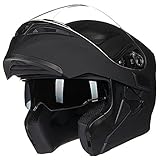
- High Resistance ABS Shell With Micrometrically Adjustable Strap
- Meets or Exceeds FMVSS-218 and DOT Safety Standards
- Helmet Liner / Cheek Pads are Lightweight, Soft and Easily Removable and Washable
- Sleek and Lightweight Design Reduces Wind Noise
- Modular Flip-Up Function Anti-Scratch, Anti-Fog and Wide View Clear Visor
Helmet and protective equipment
NHTSA calls a helmet compliant with Federal Motor Vehicle Safety Standard 218 one of the most effective ways to reduce the chance of serious injury or death in a crash. In its synthesis of cited research, NHTSA reports helmet reductions of 22% to 42% in motorcycle rider fatalities and 41% to 69% in brain injuries. Those are estimates summarized from prior research, not a new single NHTSA experiment.
For either vehicle, select a properly fitting, DOT-compliant motorcycle helmet and check the certification label and your local helmet law. Add eye protection, a jacket or other abrasion-resistant long sleeves, durable long pants, over-the-ankle boots, and full-finger gloves. Ordinary clothing can leave severe exposure even on a short trip.
Visibility and collision exposure
NHTSA identifies size and visibility as challenges for motorcyclists. Drivers may fail to see a two-wheeled vehicle in a blind spot, while a rider has little protection in a collision with a larger vehicle. Use a headlight as required, choose lane positions that preserve escape space, avoid lingering beside cars, and assume another driver may not have seen you. These habits apply to scooters and motorcycles alike.
Match the vehicle to your roads and trips
Urban errands and short commutes
A scooter is often the practical fit when your route consists of city streets, repeated stops, moderate speeds, and limited cargo. Automatic operation and under-seat storage reduce friction in a routine that may involve several starts, parking maneuvers, and brief trips. Confirm that the scooter’s displacement, top-speed capability, braking equipment, and legal classification match the roads you plan to use.
Highways and longer distances
For sustained high-speed travel, highway merging, long days in the saddle, or routes with significant hills, compare motorcycles and scooters by their actual engine performance, wheel size, suspension, wind protection, fuel range, seat comfort, and legal access to the road. A category label cannot guarantee that a particular motorcycle is comfortable for touring or that a particular scooter cannot handle a longer trip.
Recommended Free Tools
Rank #4

- Advanced Safety Design: Combines a lightweight ABS outer shell.
- DOT Approved, Clear Vision: Meets DOT standards, with a scratch-resistant, anti-fog lens for optimal visibility.
- Easy Quick Release: Convenient quick-release chin strap with adjustable features for effortless and speedy helmet adjustments and removal.
- Comfort System: Designed for superior comfort, the helmet’s interior features a moisture-wicking lining that ensures a cool and dry experience during your ride.
- Sun Visor for Added Protection: Built-in pull-down sun visor system provides effective sun protection, ensuring a comfortable and shaded ride.
Mixed routes, weather, and passengers
Rain, cold, crosswinds, poor pavement, and steep grades increase the demands on any two-wheeler. Fairing coverage, tire choice, suspension, lighting, and luggage capacity become more important than whether the vehicle has a step-through frame. If you will carry a passenger, check the model’s rated payload, passenger footrests, seat size, and braking performance; do not assume a convenient solo scooter has adequate two-person capacity.
Licensing and legal classification in the United States
NHTSA says motorcycle licensing rules vary by state and describes an endorsement and testing process in most states. It also states that all U.S. states require a motorcycle endorsement. Before buying or riding, contact your state motor-vehicle agency for the exact license, permit, age, testing, insurance, registration, and equipment requirements.
The word “scooter” does not decide the legal category. NHTSA’s federal importation FAQ defines “motorcycle” for the statutes and regulations it administers and notes that scooter-like vehicles can receive different treatment based on their characteristics. A state may classify a particular scooter as a motorcycle, moped, or another vehicle type. Engine displacement, maximum design speed, power source, and equipment can affect the result.
Use the vehicle identification number and the manufacturer’s specifications when asking the agency. Get the answer for the exact year and model, not a general internet description. Confirm whether a learner permit limits passengers, nighttime riding, or highway use, and arrange insurance before riding on public roads.
Training and a controlled first ride
Take a beginner course
NHTSA recommends rider education and advises becoming accustomed to an unfamiliar motorcycle in a controlled area before entering traffic. The Motorcycle Safety Foundation’s Basic RiderCourse describes 15 hours of instruction: five classroom hours and ten riding hours. Its practice includes shifting, acceleration, braking, cornering, U-turns, and lane changes. The listed attire includes a DOT-compliant helmet, eye protection, long sleeves, durable long pants, over-the-ankle boots, and full-finger gloves.
Best Value
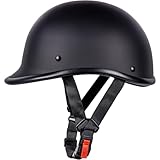
- DOT Approved Motorcycle Helmet:Built with rugged ABS shell and impact-absorbing EPS liner for solid on-road protection. Ready for daily cruising, city commuting, and weekend runs.
- Low Profile Beanie Helmet Design:Sits close without the mushroom look. Gives a clean, compact skull cap silhouette that cruiser and bobber riders want — covers critical areas without adding bulk.
- Vintage-Style Look:With classic biker lines and a fresh finish that feels bold, not dated. Pairs with old-school choppers, café racers, and modern cruisers for a half helmet with real character.
- Quick-Release Buckle: Let you gear up and go instantly. Just click in and ride. A simple convenience that saves time on daily commutes and quick trips around town.
- Lightweight with Removable Inner Padding: Cuts neck fatigue on long rides. The washable, breathable liner keeps things fresh through hot summer days, all-day comfort lasts.
Course prerequisites, schedules, licensing credit, and whether training motorcycles or scooters are supplied vary by provider. Ask what vehicle type you will use and whether the exercises transfer directly to the vehicle you intend to buy. A scooter rider still needs practice with braking, turning, road hazards, and traffic judgment even when no shifting is taught.
Prepare the vehicle before moving
- Read the owner’s manual. Identify the ignition, engine cut-off switch, brake levers, turn signals, horn, fuel or charging system, side stand, center stand, and instrument warnings.
- Perform a pre-ride check. Look at tire condition and pressure, brake operation, lights, mirrors, fluid or battery status, throttle return, and visible leaks or damage.
- Put on complete gear. Fasten the helmet, secure gloves and boots, and remove loose straps that could catch in a wheel or control.
- Choose an empty, legal practice area. Start with walking-speed starts and stops, straight-line braking, gentle turns, and full-lock turns before adding speed.
- Build one skill at a time. Practice smooth acceleration, progressive braking, signaling, shoulder checks, lane changes, and controlled U-turns. On a manual motorcycle, add clutch release and gear changes gradually.
- Repeat until responses are automatic. Move to quiet streets only when you can stop accurately, look through turns, and control the vehicle without staring at the controls.
- Enter traffic conservatively. Choose a familiar route, ride in daylight and good weather, leave generous following distance, and avoid a passenger or heavy load during early practice.
How to compare two specific beginner models
Use the same checklist for every candidate. A dealer demonstration, training provider, or private sale should not replace your own fit and control assessment.
| Check | Questions to answer | Why it matters |
|---|---|---|
| Transmission | Is it CVT, manual, automatic, or automated? Are clutch and gear controls required? | Determines your initial workload and the skills you must learn. |
| Fit and mass | Can you reach the controls, turn the bars, and steady or walk the vehicle comfortably? | Low-speed balance and parking are unavoidable beginner tasks. |
| Brakes | What braking system is fitted, and is ABS available on this exact model and trim? | Equipment varies by model; do not infer it from the category. |
| Road capability | What speeds, grades, pavement, and trip lengths will it handle comfortably and legally? | Prevents buying a vehicle mismatched to your route. |
| Weather protection | How much wind and rain protection do the bodywork, screen, and riding position provide? | Weather changes fatigue and control demands. |
| Storage and payload | What fits under the seat or in luggage, and what are the rider-plus-passenger limits? | Useful carrying capacity is part of everyday usability. |
| Ownership support | What maintenance intervals, parts, dealer access, insurance, registration, and storage costs apply? | Purchase price alone does not describe total ownership. |
Examples without overgeneralizing
Honda’s comparison uses its Activa110 and Activa125 scooters alongside SP125 and Shine125 motorcycles to illustrate step-through versus straddle layouts and automatic CVT versus manual transmissions. Those named examples demonstrate common format differences; they are not universal specifications, a ranking, or a recommendation. Regional availability, equipment, pricing, and legal status must be verified for your location.
A decision framework for a first purchase
Choose a scooter first when most of these statements are true
- Your regular trips are urban, short, and dominated by stop-and-go traffic.
- You want to concentrate on traffic awareness and braking before learning a clutch.
- Step-through access and under-seat storage solve a daily problem.
- You can legally use the scooter on every road in your routine.
- The exact scooter fits your body and can handle your hills, weather, cargo, and passenger needs.
Choose a motorcycle first when most of these statements are true
- You specifically want manual clutch and gear experience.
- Your plans include longer rides, faster roads, steep grades, or a broad range of motorcycle styles.
- The motorcycle’s wheels, suspension, wind protection, and seat suit your route better.
- You are willing to complete the required endorsement and a full beginner course.
- You can manage the machine’s weight and controls at walking speed.
Pause before buying either
Renting or borrowing can reveal whether your body fits a vehicle, but only ride legally, with permission, correct insurance, and proper gear. A short supervised lesson on a similar vehicle is more useful than choosing from photos. If the only available vehicle is too heavy, too tall, or too powerful for your current skills, select training and fit over styling.
Beginner mistakes and practical corrections
- Assuming automatic means effortless: Practice emergency braking, slow turns, and looking through corners; these skills remain essential.
- Buying for appearance or engine size alone: Compare fit, weight, brakes, road capability, storage, and service support against your actual route.
- Skipping the endorsement because the vehicle is called a scooter: Ask the state agency about the exact model’s classification before riding.
- Practicing only in a parking lot: Add observation, signaling, lane position, and escape planning before entering traffic.
- Using casual clothing for a short trip: Wear the same protective gear for a five-minute errand as for a longer ride.
- Carrying a passenger too soon: First master starts, stops, turns, and low-speed balance alone; then follow the model’s passenger and payload limits.
- Ignoring pre-ride checks: A tire, brake, light, or throttle problem can turn a manageable lesson into a preventable emergency.
Bottom line: the better beginner vehicle is route- and rider-specific
Pick the scooter when automatic controls, step-through access, and built-in storage directly match your short-trip routine and the exact vehicle is legal and physically manageable. Pick the motorcycle when manual skills, longer or faster travel, and broader road capability are central to your plans. In either case, verify state requirements, take a recognized beginner course, practice in a controlled area, and wear certified protective equipment. The safest first choice is the machine you can fit, control, maintain, and use legally—not a category that is assumed to be safer.
Quick Recap
Product prices and availability are accurate as of the date/time indicated and are subject to change. Any price and availability information displayed on Amazon at the time of purchase will apply.




