RWD vs. AWD: pros and cons depend on the job: AWD usually gives better acceleration traction on snow, gravel, mud, and steep grades, while RWD often delivers simpler mechanics, lower cost, and a traditional dry-road handling feel. AWD does not inherently improve braking or cornering on ice; tires and driving technique control those limits.
RWD sends engine torque to the rear wheels, whereas AWD can distribute torque to all four wheels through different mechanical, electronically controlled, or electric-motor designs. That makes AWD useful for getting moving, but it does not make every AWD vehicle safer, cheaper, better for towing, or more efficient than every RWD vehicle.
As an Amazon Associate I earn from qualifying purchases.
Key takeaways
- AWD’s main advantage is acceleration traction: driving more than two wheels can help on snow, gravel, mud, wet grades, and steep driveways.
- AWD does not inherently improve braking or cornering on snow and ice; tire grip, speed, road conditions, and driving technique remain decisive.
- RWD often provides a desirable dry-road handling feel, lower drivetrain complexity, and a traditional layout for pickups, performance cars, towing, and hauling.
- AWD can add weight, purchase cost, fuel consumption, maintenance exposure, and tire-matching requirements, although the size of each tradeoff depends on the vehicle.
- Neither drivetrain is universally better for towing: the exact engine, transmission, axle ratio, cooling system, tow package, payload, and manufacturer rating control.
What is the difference between RWD and AWD?
RWD vs. AWD: pros and cons are easiest to understand by separating propulsion from grip. Rear-wheel drive sends engine torque to the rear wheels, while the front wheels primarily steer. All-wheel drive can distribute torque to all four wheels, either continuously or through an on-demand system.
RWD is common in pickups, sports cars, luxury sedans, and other vehicles where rear-axle load carrying or a balanced driving feel matters. AWD is available in many cars, crossovers, SUVs, trucks, performance vehicles, hybrids, and electric vehicles, but AWD is not one standardized mechanical design. A system may use a mechanical center differential, an electronically controlled clutch, or a separate electric motor.
#1 Best Overall
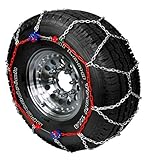
- Worry-Free Self-Tightening Ratchets Provide Automatic Tightening And Centering
- Easy Installation And Removal In Minutes
- Do Not Exceed 30 Mph With These Chains On
- Diamond Pattern Cross Chain Provides A Smoother Ride And Superior Traction
- Meets Class "S" clearance requirements, even in light truck sizes
That distinction matters. A full-time AWD system, an on-demand crossover system, and an electric vehicle with one motor on each axle can respond differently to wheel slip, steering input, throttle, and road conditions. The vehicle’s owner’s manual—not the AWD badge alone—explains how a particular system operates.
| Decision | RWD tendency | AWD tendency |
|---|---|---|
| Dry-road handling | Traditional rear-drive feel and clear separation between steering and propulsion | Can provide strong grip but may add weight and drivetrain complexity |
| Snow acceleration | More dependent on rear-axle load, tires, and throttle control | Usually stronger launch traction because torque can reach more wheels |
| Snow braking and cornering | Primarily determined by tires, speed, and technique | Also primarily determined by tires, speed, and technique |
| Fuel economy | May be favorable in a same-model comparison, but the exact vehicle must be checked | May be lower because of added mass and components; hybrids and EVs vary |
| Purchase cost | Often the lower-cost drivetrain when both are offered | May carry a vehicle-specific premium |
| Maintenance | Fewer driven components in many designs | More components and greater sensitivity to tire differences |
| Towing | Common in traditional towing-oriented vehicles | Can improve traction on slippery ramps and may unlock a higher-rated package |
| Best fit | Dry roads, performance feel, simplicity, and many pickup applications | Frequent snow, loose surfaces, steep grades, and specific capability needs |
Is AWD better than RWD in snow?
AWD is generally better than RWD at accelerating on snow, gravel, mud, or a slippery incline because AWD can send torque to more than two wheels. AWD can make it easier to start moving, climb a snowy driveway, or reduce wheelspin when a route changes between dry pavement, wet leaves, gravel, and snow.
AWD is not automatically safer in winter. AWD can help a vehicle go, but AWD does not give the tires additional braking or cornering grip. Michelin states: AWD and 4WD help the vehicle accelerate on snow by putting power to more wheels, but they have no effect on braking or cornering, which are purely tire functions.
Read Michelin’s winter-driving guidance for the manufacturer’s explanation.
RWD can work well in winter when equipped with suitable tires and driven appropriately. RWD is more likely to struggle when the rear axle is lightly loaded, a situation that can be especially noticeable in an empty pickup bed. Smooth throttle inputs, good tires, reduced speed, and electronic traction and stability systems can substantially improve control.
Do AWD cars stop better in snow?
No. AWD cars do not inherently stop better in snow or ice than RWD cars because AWD primarily changes how torque reaches the driven wheels during acceleration. Braking depends on the tires, the road surface, the brakes, vehicle speed, and the driver’s inputs.
NHTSA explains that Tire tread provides the gripping action and traction that prevents your car or truck from slipping and sliding, especially when the road is icy or wet.
NHTSA’s tire safety guidance also says winter tires are more effective than all-season tires in deep snow.
The practical winter-safety order is straightforward:
- Drive at a speed appropriate for visibility and the available grip.
- Use tires with suitable tread, compound, size, load rating, and speed rating.
- Use four winter tires when the climate and conditions justify them.
- Keep electronic stability and traction systems enabled unless a specific recovery situation requires a different procedure described in the owner’s manual.
- Choose AWD or RWD based on the additional acceleration traction and driving feel you actually need.
Slow before turns, brake in a straight line where possible, leave extra following distance, and do not assume AWD cancels the risk of ice.
Do I still need winter tires with AWD?
Yes, AWD does not replace winter tires when winter conditions justify them. Four winter tires can provide the cold-weather compound and tread characteristics needed for snow and ice, while AWD only helps distribute propulsion torque.
Rank #2
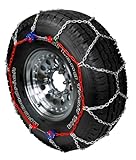
- Worry-Free Self-Tightening Ratchets Provide Automatic Tightening And Centering
- Easy Installation And Removal In Minutes
- Do Not Exceed 30 Mph With These Chains On
- Diamond Pattern Cross Chain Provides A Smoother Ride And Superior Traction
When shopping for winter tires for AWD vehicles, verify the vehicle’s tire size, load rating, speed rating, and compatibility. AWD systems may be sensitive to differences in tire diameter or tread wear. Replacing only one tire, mixing substantially different tires, or driving with uneven pressures can stress the drivetrain or change its behavior. Follow the owner’s manual and the tire manufacturer’s fitment requirements.
What are the main advantages of RWD?
RWD’s main advantages are dry-road handling feel, a useful separation between steering and propulsion, a potentially simpler drivetrain, and strong suitability for many pickup and towing applications.
What’s actually slowing this PC down?
Pick the symptom - the matching free tool is one click away.
Dry-road handling and steering response
RWD often appeals to drivers who want a traditional performance-car feel. Because the front tires primarily steer instead of handling both steering and driving torque, a well-developed RWD vehicle can feel balanced and responsive during acceleration and cornering.
RWD is not automatically better handling than AWD. Suspension geometry, weight distribution, tires, power output, stability-control calibration, and vehicle design matter more than the drivetrain label alone. A high-performance AWD vehicle can offer excellent corner-exit traction, while a poorly balanced RWD vehicle can still feel difficult to control.
Potentially lower weight and complexity
A two-wheel-drive layout generally has fewer driven components than an AWD layout. Fewer components can reduce mechanical complexity and sometimes mass, but vehicle design varies widely. A heavy RWD pickup is not necessarily lighter than a compact AWD crossover, and an electric AWD vehicle may use a different architecture from a gasoline vehicle.
Utility, towing, and rear-axle loading
RWD is common in pickups and other vehicles designed to carry loads or tow trailers. Payload or trailer tongue weight can increase rear-axle loading, which may improve propulsion traction. RWD is therefore a common and useful layout for traditional towing vehicles, but RWD does not make every vehicle a better tow vehicle than every AWD vehicle.
Do these 3 things before closing this tab:
1Scan for outdated or missing drivers - takes under a minute2Clear out junk files and repair common Windows errors3Fix the driver behind crashes, sound loss and screen glitchesOften lower purchase cost
When the same model, engine, transmission, body style, and equipment are available with both drivetrains, RWD may have a lower purchase price and fewer drivetrain components. Compare the actual window stickers and specifications rather than assuming that every RWD vehicle costs less to own.
What are the main disadvantages of RWD?
RWD’s main disadvantages are reduced acceleration traction on slippery surfaces and greater sensitivity to rear-tire slip when the driver applies too much power.
With only the rear wheels driving, a RWD vehicle may struggle to launch on snow, ice, mud, or a wet incline when the tires cannot transmit the available torque. A lightly loaded pickup bed can make launch traction more difficult. Good winter tires, careful throttle control, appropriate weight distribution, and traction-control programming can change the result substantially.
Rank #3
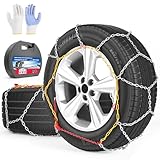
- 【EASY INSTALLATION】- No need to move the vehicle or use tools. The snow chains can be manually and quickly installed within one minute
- 【STRONGER GRIP】- Our tire chains is designed with a diamond-shaped pattern structure, which can provide stronger grip and traction
- 【MORE DURABLE】- The snow chains for car tires is made of high-quality steel and can be used for a long time
- 【APPLICABLE VEHICLE TYPES】- Snow chains are suitable for Commuter Car and SUVs and will not cause damage to the wheel hubs
- 【THE PERFECT GIFT】- Our snow chains are ideal as winter gifts for friends and family
A powerful RWD vehicle can also produce throttle oversteer when the rear tires lose grip during aggressive acceleration. Stability control can reduce the risk, but no electronic system can create traction that the tires and road surface do not provide.
Quick wins for a faster PC:
Repair Windows errors before they cause bigger problemsFix Now →Scan for outdated or missing drivers - takes under a minuteDriver Scan →RWD is not automatically unsafe in winter. A RWD vehicle with four appropriate winter tires and a cautious driver may be more controlled than an AWD vehicle with worn, mismatched, or unsuitable all-season tires.
What are the main advantages of AWD?
AWD’s strongest advantage is acceleration traction. AWD can use more driven wheels to reduce wheelspin when the driver is climbing, launching, or continuing across a loose or changing surface.
More traction on loose or changing surfaces
AWD can be useful on snow, gravel, wet pavement, loose dirt, steep driveways, mountain roads, boat ramps, campsites, and unpaved access roads. Subaru describes one full-time AWD implementation as continuously delivering power and torque to all four wheels while monitoring traction in its AWD explanation.
That description applies to the referenced Subaru implementation, not to every AWD vehicle. Some systems send torque to the second axle only when conditions require it, and some systems use an electric motor rather than a mechanical connection.
The Tool Desk
Outbyte PC Repair FREEClear out junk files and repair common Windows errorsFree Scan →Outbyte Driver Updater FREEScan for outdated or missing drivers - takes under a minuteDriver Scan →Performance acceleration and corner exit
AWD can help a high-output performance vehicle put engine torque down during hard acceleration and corner exit. The benefit is strongest when available power exceeds the traction capacity of two tires. Added drivetrain mass and losses can affect braking, efficiency, steering feel, and overall vehicle balance, so AWD performance is a tradeoff rather than a universal upgrade.
Capability packages can vary by drivetrain
Manufacturers sometimes pair AWD with a particular tow package, upgraded cooling system, suspension, drive mode, or engine. Ford’s 2026 Maverick performance specifications illustrate why buyers must compare configurations: the available 4K Tow Package is associated with AWD configurations, and towing and payload figures vary by engine and trim.
What are the main disadvantages of AWD?
AWD’s main disadvantages are added components, possible fuel-economy and purchase-price tradeoffs, tire-matching requirements, and the risk of overconfidence in winter conditions.
Added cost and mechanical complexity
AWD normally requires additional driven components, controls, and service considerations. Edmunds summarizes the general tradeoff as more maintenance needs and lower fuel economy than comparable two-wheel-drive versions, while noting that the actual difference depends on the vehicle. AWD is not always expensive to maintain, and RWD is not maintenance-free; service schedules and failure exposure vary by design.
Windows Errors? Fix Them Before They Spread
Repair common Windows errors and clear accumulated junk for a smoother, more stable PC - no reinstall needed.Free scan · no reinstallCrashes, No Sound, or Screen Glitches?
Random freezes, missing sound and display glitches usually trace back to one bad driver. Find and replace yours safely.Free scan · under a minuteRank #4
- Worry-free self-tightening ratchets provide automatic tightening and centering
- Easy installation and removal in minutes
- Do not exceed 30 MPH with these chains on
- Diamond pattern cross chain provides a smoother ride and superior traction
- Note-Chains should be fitted to tire before actual use. Fitment can be affected by age of tire, tire manufacturer and/or tread type
Does AWD use more gas?
AWD may use more fuel than a comparable RWD vehicle, but there is no universal AWD fuel-economy penalty. Vehicle mass, engine, transmission, gearing, tires, control strategy, and hybrid or electric architecture all affect the result. An on-demand AWD system may behave differently from a continuously active system.
According to AAA’s 2022 Your Driving Costs category breakdown, fuel cost was listed as 18.89 cents per mile for medium SUVs with 4WD and 14.25 cents per mile for compact SUVs with FWD. Those are different vehicle categories, so the figures are context—not a controlled RWD-versus-AWD test.
A model-specific historical example also shows why broad rules can mislead: Toyota’s 2008-era Highlander hybrid reference listed 31/27 MPG city/highway for an AWD configuration and 32/28 MPG for FWD. That old model-specific comparison should not be treated as a prediction for current vehicles. For a current purchase, compare the exact RWD and AWD trims using the EPA fuel-economy labels, purchase price, tire costs, scheduled maintenance, insurance, and expected resale value. The U.S. Department of Energy vehicle data demonstrates that drivetrain-specific results vary by model.
Why does AWD require closer attention to tires?
AWD systems can be sensitive to differences in tire circumference. Uneven tread wear, mismatched tire models, incorrect tire pressure, or replacing only one tire can cause drivetrain stress or alter how the AWD system responds. The correct replacement procedure differs by vehicle, so the owner’s manual and manufacturer specifications take priority.
Can AWD create overconfidence?
Yes. AWD can make a vehicle accelerate confidently on a slippery road, which may cause a driver to enter a turn too quickly or follow too closely. AWD cannot guarantee braking or cornering grip, and confident acceleration does not mean the road has become safe.
Independent reader supportYour contribution helps us test, update, and keep practical guides available for everyone.Which is better for towing, RWD or AWD?
Neither drivetrain is universally better for towing. RWD is common in traditional tow vehicles and can suit hauling because trailer tongue weight and payload may load the rear axle. AWD can be preferable when the vehicle must launch on a wet boat ramp, snowy road, gravel grade, or other slippery surface.
The exact configuration controls the answer. Check all of the following before towing:
- Maximum trailer weight and maximum tongue weight
- Payload after passengers, luggage, accessories, and hitch weight
- Gross vehicle weight rating and gross combined weight rating
- Front- and rear-axle ratings
- Engine, transmission, axle ratio, cooling equipment, and tow package
- Trailer brakes, hitch class, wiring, and tire load rating
Ford warns that too little tongue load can reduce rear-wheel traction and cause instability, while too much tongue load can reduce front-wheel traction and steering response. Use the vehicle’s door-jamb label, owner’s manual, and the manufacturer towing guide or towing calculator for the exact vehicle.
Recommended Free Tools
| Use case | Likely better starting point | Why the answer can change |
|---|---|---|
| Mostly dry, maintained roads | RWD or AWD, depending on handling priorities | Tires, suspension, weight distribution, and power matter more than the badge alone |
| Frequent snow or steep snowy grades | AWD for acceleration traction | Winter tires remain essential for braking and cornering |
| Performance driving | RWD for traditional balance and steering feel, or AWD for maximum power delivery | Vehicle tuning, power output, mass, and driver preference decide the better fit |
| Pickup towing and hauling | RWD often suits the traditional utility layout | AWD may launch better on slippery ramps, and the tow package may vary by drivetrain |
| Mixed pavement, gravel, and loose access roads | AWD | Ground clearance, tires, drive modes, and recovery equipment also matter |
| Lowest purchase and drivetrain complexity | RWD when available at a lower price | Compare the complete vehicle, not drivetrain alone |
Is AWD worth the extra money?
AWD is worth the extra money when the driver regularly needs additional acceleration traction or when a specific AWD configuration provides capability that the RWD version does not. AWD is usually not worth paying for solely to shorten stops on ice, because AWD does not provide that benefit.
Best Value
- Worry-Free Self-Tightening Ratchets Provide Automatic Tightening And Centering
- Easy Installation And Removal In Minutes
- Do Not Exceed 30 Mph With These Chains On
- Diamond Pattern Cross Chain Provides A Smoother Ride And Superior Traction
- Note-Chains should be fitted to tire before actual use. Fitment can be affected by age of tire, tire manufacturer and/or tread type
Before choosing AWD, compare the actual price premium with expected fuel use, tire replacement requirements, maintenance, insurance, and resale value. Also check whether the chosen vehicle’s AWD version changes cargo space, payload, towing capacity, ground clearance, ride, or available equipment.
Should you buy an AWD SUV or a RWD truck?
Choose an AWD SUV when frequent snow, loose surfaces, steep grades, or all-weather launch traction matter more than a traditional rear-drive utility layout. Choose a RWD truck when towing, hauling, dry-road handling, rear-axle utility, and a straightforward configuration are the primary priorities.
That comparison is not truly SUV versus truck until the exact models are identified. A capable AWD SUV may tow less than a RWD truck, while a particular AWD truck may offer a higher-rated tow package than a smaller RWD model. Compare payload, trailer rating, hitch equipment, tire rating, passenger and cargo needs, and the intended route.
Free tools Windows power users keep installed
One-click scans. No signup required.
RWD vs. AWD: which should you choose?
Choose RWD if you prioritize dry-road handling, steering feel, lower complexity, a traditional pickup or performance-car layout, or a lower purchase price and your normal routes do not demand frequent slippery-surface acceleration.
Choose AWD if you regularly accelerate on snow, gravel, mud, steep grades, or loose surfaces; want additional launch confidence; drive a performance vehicle whose power benefits from four-wheel torque distribution; or need an AWD-specific tow or drive-mode package.
Choose neither based on drivetrain alone if your main concern is stopping or turning on ice, your tires are worn or mismatched, or you have not checked the exact vehicle’s payload and towing limits. Tires, speed, road conditions, vehicle configuration, and driving technique determine whether the drivetrain’s benefits are relevant to your actual use.
Frequently Asked Questions
Is AWD better than RWD in snow?
AWD is generally better than RWD for accelerating on snow, gravel, mud, and steep slippery grades because AWD can send torque to more wheels. AWD does not inherently improve braking or cornering on snow and ice, so appropriate tires and careful driving remain essential.
Do AWD cars stop better in snow?
No. AWD does not inherently make a vehicle stop better on snow or ice. Braking grip depends primarily on the tires, road surface, speed, and driver technique.
Do I still need winter tires with AWD?
Yes, AWD does not replace winter tires. Four suitable winter tires provide cold-weather compound and tread designed for winter grip, while AWD mainly helps with acceleration traction.
Which is better for towing, RWD or AWD?
Neither drivetrain is universally better for towing. RWD is common in traditional towing vehicles, while AWD can improve launch traction on slippery boat ramps, snow, gravel, or wet grades. The exact engine, tow package, payload, axle ratings, cooling equipment, and manufacturer specifications decide the result.
The Bottom Line
Bottom line: AWD is better at helping a vehicle accelerate on slippery or loose surfaces; RWD often remains preferable for dry-road feel, simplicity, and many towing or performance applications. AWD does not improve winter braking or cornering by itself, so appropriate tires and the exact vehicle’s ratings matter more than the drivetrain badge alone.
What’s actually slowing this PC down?
Pick the symptom - the matching free tool is one click away.
Quick Recap
Product prices and availability are accurate as of the date/time indicated and are subject to change. Any price and availability information displayed on Amazon at the time of purchase will apply.




