Quick wins for a faster PC:
Fix the driver behind crashes, sound loss and screen glitchesFind Drivers →Repair Windows errors before they cause bigger problemsFix Now →Scan for outdated or missing drivers - takes under a minuteDriver Scan →There is no single winner because these cars answer different questions. The Renault Clio V6 is a two-seat, mid-rear-engined, rear-wheel-drive special built for drama and rarity. The Peugeot 306 GTI-6 is a practical five-door, front-wheel-drive hatchback whose period reviews praised its balance, involvement and ability to cover ordinary roads comfortably. Choose the Clio if you want an unusual collector car and theatrical power delivery; choose the Peugeot if you want the more conventional, usable hot-hatch experience. The available evidence does not establish which is faster in a controlled back-to-back test, cheaper to own today or more reliable.
What makes this an uneven comparison?
Both cars are French performance hatchbacks from the same broad era, but their engineering briefs could hardly be further apart. The 306 GTI-6 is a tuned version of a family hatchback: front engine, front-wheel drive, five doors, rear seats and a high-revving naturally aspirated four-cylinder. The Clio V6 keeps the Clio’s exterior shape while removing the rear bench, installing a 3.0-litre V6 centrally behind the occupants and sending its power to the rear wheels.
As an Amazon Associate I earn from qualifying purchases.
That difference matters more than the badge or the number of gears. You are comparing a sophisticated front-drive chassis designed to be useful every day with a limited-production, two-seat engineering statement. “Better” therefore means better for a particular job, not objectively superior in every circumstance.
Recommended Free Tools
At-a-glance specifications
| Specification | Renault Clio V6 | Peugeot 306 GTI-6 |
|---|---|---|
| Basic layout | Mid-rear engine, rear-wheel drive, two seats; the engine occupies the space used by a rear bench | Front engine, front-wheel drive, conventional five-door hatchback with rear seats |
| Engine | 3.0-litre V6 | 1,998 cc, 16-valve four-cylinder |
| Published output | 226 hp for the initial version; 255 cv for Phase 2 in Renault’s Portuguese history account; 187 kW/254 PS in Renault Deutschland’s April 2003 material | 167 bhp in the January 2002 Used Car Buyer review and Central Press period-test material |
| Transmission | Six-speed manual; evo reports an Avantime gearbox for Phase 1 and bespoke Phase 2 ratios selected with reference to 306 GTI-6 ratios | Close-ratio six-speed manual |
| Published acceleration | Phase 2: 5.8 seconds from 0–100 km/h in Renault’s Portuguese and German-market material | 0–60 mph is listed as 7.8 seconds by Used Car Buyer and 8.5 seconds by Central Press; the sources do not explain the discrepancy |
| Published maximum speed | 246 km/h in Renault Group Portugal’s page; 250 km/h in Renault Deutschland’s April 2003 press material | 130 mph in Used Car Buyer; 137 mph in Central Press |
| Production information | 2,822 cars overall, including 1,309 Phase 2 examples, according to The Originals Renault Museum | No production total is stated in the consulted sources |
Power figures use different conventions: “hp”, “bhp”, “cv” and “PS” are not interchangeable labels to be silently merged. The Clio’s quoted top speeds also differ by official source and market. Treat every number as a published specification, not as a result from one standardized test.
#1 Best Overall

- Miniature cars ideal for playing or collecting
- Zamac metal
Renault Clio V6: the radical choice
How the concept became a production car
Renault showed the idea at the Paris motor show in October 1998 and began series sales in November 2000, according to Renault’s museum history. The recipe was deliberately extreme: remove the rear seats, mount a 3.0-litre V6 centrally at the rear, widen and rework the body and drive the rear wheels. Development of Phase 1 was entrusted to TWR; Phase 2 production moved to Dieppe.
The result looks related to an ordinary Clio but behaves like a purpose-built sports car. The absence of a rear bench is not a minor trim decision: it defines the car’s packaging, noise environment and usefulness. There is room for two people only, and the mechanical layout is the reason the car exists.
Phase 1 and Phase 2 are materially different
Renault’s own history describes Phase 2 as a substantial chassis development rather than a simple power increase. The Portuguese account lists a wheelbase 33 mm longer, a front track 23 mm wider, firmer suspension and reinforced subframes. Renault says the revisions to rear geometry and suspension improved ease of driving and control.
Renault Group Portugal states 255 cv, 5.8 seconds to 100 km/h and 246 km/h for Phase 2. Renault Deutschland’s April 2003 press material gives 187 kW/254 PS, 300 Nm, the same 5.8-second 0–100 km/h claim and a 250 km/h top speed for its German-market specification. The different top-speed figures should remain attributed to their respective sources rather than presented as one universal number.
Why the Clio feels special before it moves
The Clio V6’s appeal is architectural. A V6 behind the seats, rear-wheel drive and a six-speed manual create a driving position and soundscape that no front-drive family hatch can duplicate. Its visual width and mid-engined proportions communicate that this is an outlier, not merely a faster trim level.
Rank #2
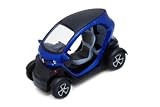
- 5111D Kinsmart - Renault Twizy
- This Renault is 5"Lx 2.5"Wx 3.25"H
- Diecast metal with plastic parts, pullback motor action
- This Renault Twizy is manufactured by Kinsfun/ Kinsmart
Renault’s museum page says the model is particularly highly regarded among collectors of Renault sports cars. That is a statement from the manufacturer, not an independent valuation or a prediction of future prices. The same page records 2,822 cars in total, of which 1,309 are Phase 2 examples, giving the Clio a documented limited-production status.
Peugeot 306 GTI-6: the classic hot-hatch formula refined
Engine, gearbox and model history
The GTI-6 uses a 1,998 cc, 16-valve four-cylinder producing 167 bhp in the period material consulted. It replaced the 155 bhp S16 in August 1996 and was phased out in mid-2000, according to the January 2002 Used Car Buyer model-history review.
A close-ratio six-speed manual is central to the car’s character. The ratios keep the naturally aspirated engine in its useful rev range and make frequent, deliberate gear changes part of the experience. One contemporary article is less enthusiastic about the gearbox than the Used Car Buyer review, so its reputation should not be reduced to a claim that every example shifts perfectly.
What period road testing praised
The Used Car Buyer review’s strongest comments concern chassis balance and driver involvement. It also describes the car as relaxed and well damped on a motorway, a valuable trait in a car that has to work as transport rather than only as a weekend event.
The same review records relatively heavy clutch and steering effort and a poor turning circle. Those observations are useful because they show the trade-off behind the 306’s feel: the controls can be engaging on a winding road while being less convenient in parking manoeuvres or traffic.
Rank #3

- Scale 1:24
- Metal vehicle
- With opening parts
Conflicting performance figures
Period figures do not line up. Used Car Buyer lists 0–60 mph in 7.8 seconds and a 130 mph maximum speed. Central Press material republished by a Peugeot owners’ club lists 8.5 seconds and 137 mph. Neither source explains whether the difference comes from test method, market specification, vehicle condition or transcription.
For that reason, it is safer to use the figures as examples of period reporting than to declare one definitive GTI-6 acceleration or top-speed number. The consistent mechanical description is the more useful comparison: 167 bhp, a 2.0-litre 16-valve engine, front-wheel drive and a six-speed manual.
Driving character: theatre versus balance
Where the Clio V6 leads
The Clio offers an experience built around rarity and layout. Rear-wheel drive changes how power is delivered, while the engine’s position behind the cabin makes the car feel unlike a normal hatchback. Phase 2’s wider front track, longer wheelbase, firmer suspension and revised rear geometry were intended to make the car easier to control, according to Renault.
That wording should be read carefully: it is a manufacturer description of the development objective and result, not a controlled comparison with a 306 GTI-6. It supports the conclusion that Phase 2 was engineered to improve composure, but it does not prove that a Phase 2 is quicker or easier on every modern road.
Where the Peugeot leads
The 306’s strengths are the traditional hot-hatch virtues documented by its period review: a balanced chassis, direct driver involvement and enough damping and refinement to make motorway travel comfortable. Front-wheel drive and a normal hatchback body also make its performance easier to access without committing to a two-seat layout.
What’s actually slowing this PC down?
Pick the symptom - the matching free tool is one click away.
Rank #4

- Miniature cars ideal for playing or collecting
- length 7.5 cm
- Metal Zamac
Its heavier clutch and steering, plus the poor turning circle, are part of the ownership experience rather than footnotes to erase. A buyer who values light urban manoeuvring may find those traits irritating; a driver who enjoys a communicative car may accept them as part of the appeal.
Practicality and everyday use
| Everyday question | Clio V6 | 306 GTI-6 |
|---|---|---|
| People carried | Two; there is no rear bench | Five-door hatchback body with rear seats identified in the period review |
| Role | Specialist sports car and collector object | Performance family hatchback with motorway composure noted by period testing |
| Low-speed convenience | The sources supplied do not establish a turning-circle or urban-usability verdict | Period review specifically criticizes the poor turning circle and notes heavy clutch and steering effort |
| Long-distance behavior | The supplied sources do not provide an independent modern touring assessment | Used Car Buyer describes it as relaxed and well damped on the motorway |
This is the clearest reason not to choose by horsepower alone. A Clio V6 cannot replace a conventional family hatch if you need rear seats. The 306 GTI-6 can serve as one car for commuting, passengers and an enjoyable drive, although its controls and turning circle may demand patience.
Independent reader supportYour contribution helps us test, update, and keep practical guides available for everyone.Rarity, collectability and what the evidence does not prove
The Clio has a stated production count: 2,822 cars in total, including 1,309 Phase 2 examples, from The Originals Renault Museum. Renault also explicitly describes strong regard among collectors of Renault sports cars. Those facts support calling it rare and collector-oriented.
No production total is provided for the 306 GTI-6 in the consulted sources. It would therefore be wrong to claim a numerical rarity advantage for either car or to imply that the Peugeot is common simply because it has five doors.
There is also no current market-price, insurance, parts-supply, servicing or reliability dataset here. Condition, originality, documentation and regional supply can dominate the ownership decision, but assigning present-day values or maintenance costs without specialist evidence would be speculation.
Best Value

- Collectible miniature car
Which one should you choose?
Choose the Renault Clio V6 if you want:
- A two-seat sports car with a mid-rear-mounted V6 and rear-wheel drive.
- An unusual engineering story that begins with a 1998 concept and includes a documented Phase 2 chassis redesign.
- Collector appeal supported by Renault’s stated production total and museum description.
- Visual and mechanical theatre that a conventional front-drive hatch cannot reproduce.
Choose the Peugeot 306 GTI-6 if you want:
- A usable five-door body with rear seats.
- A naturally aspirated 2.0-litre engine, 167 bhp period output and a close-ratio six-speed manual.
- The period-tested combination of chassis balance, driver involvement and motorway composure.
- A hot hatch whose appeal comes from the interaction of engine, gearbox and front-drive chassis rather than from rarity alone.
If you are deciding between two actual cars
- Decide whether two seats are acceptable before considering performance figures. If not, the Clio V6 is eliminated by its layout.
- Separate Phase 1 and Phase 2 Clio examples. Renault documents meaningful differences in wheelbase, track, suspension, subframes and rear geometry.
- Use performance numbers with their source and market attached. Do not combine Renault’s 246 km/h and 250 km/h top-speed figures or treat the conflicting GTI-6 0–60 mph claims as a single test result.
- Prioritize condition, originality and service documentation when inspecting a specific car. The supplied evidence does not establish current reliability or running-cost rankings.
- Choose the car whose compromises you can live with: the Clio sacrifices seats for its layout; the Peugeot accepts heavier controls and a poor turning circle in exchange for broader road usability.
Bottom line
The Renault Clio V6 is the better classic performance special: rarer, more radical and mechanically unlike almost anything else wearing a small hatchback body. The Peugeot 306 GTI-6 is the better classic hot hatch in the traditional sense: its documented strengths are balance, involvement, a useful six-speed manual and a practical body that remains composed on the motorway.
That is a preference-based verdict, not the result of a same-day instrumented test. Pick the Clio for theatre and collector character. Pick the 306 for the wider range of roads and tasks it can cover without abandoning the qualities that make a hot hatch rewarding.
Frequently Asked Questions
Was the Clio V6 built in larger numbers than the 306 GTI-6?
A total of 2,822 Clio V6 cars, including 1,309 Phase 2 examples, is stated by The Originals Renault Museum. The consulted 306 GTI-6 sources do not provide a production total, so a numerical comparison cannot be made.
The Tool Desk
Outbyte PC Repair FREERepair Windows errors before they cause bigger problemsFix Now →Outbyte Driver Updater FREEScan for outdated or missing drivers - takes under a minuteDriver Scan →Why do the published Clio V6 top-speed figures differ?
Renault Group Portugal lists 246 km/h for Phase 2, while Renault Deutschland’s April 2003 material lists 250 km/h and identifies its German-market specification. The figures should remain attributed to those sources rather than merged.
Why do period 306 GTI-6 tests disagree on acceleration?
Used Car Buyer lists 0–60 mph in 7.8 seconds, while Central Press material lists 8.5 seconds. The pages do not identify whether test method, variant, condition or transcription caused the difference.
Does the Clio V6 have rear seats?
No. The rear bench was removed to make room for the centrally mounted rear V6, leaving a two-seat cabin.
Is the 306 GTI-6 easier to live with?
Its five-door body and rear seats give it broader practical use, and a period review describes it as relaxed and well damped on the motorway. That same review notes heavy clutch and steering effort and a poor turning circle.
Quick Recap
Product prices and availability are accurate as of the date/time indicated and are subject to change. Any price and availability information displayed on Amazon at the time of purchase will apply.




