There is no universal winner. For a Pakistani driver with dependable home charging and predictable daily distances, the better choice is the model whose verified electric-only range covers most of those trips. For frequent intercity travel or uncertain charger access, choose the vehicle with the more credible fuel-backed operation, acceptable consumption after the battery is depleted, and service support along your routes. Compare the exact vehicles, not the labels.
Both range-extended electric vehicles (REEVs) and plug-in hybrid electric vehicles (PHEVs) can be charged from the grid. Their mechanical behaviour, running costs, tax treatment and suitability for Pakistan can differ substantially by model.
As an Amazon Associate I earn from qualifying purchases.
What the two powertrains actually mean
Names are not engineering standards. Read the drivetrain description and the model’s specifications before assuming how a vehicle will behave.
Crashes, No Sound, or Screen Glitches?
Random freezes, missing sound and display glitches usually trace back to one bad driver. Find and replace yours safely.Free scan · under a minutePC Slower Than It Used to Be?
A free scan shows the junk files, broken settings and background clutter dragging Windows down - then fixes them in one click.Free scan · Windows 10 & 11Range-extended electric vehicle (REEV)
An REEV is normally propelled by an electric motor. Its battery supplies the motor, while a combustion engine starts when the battery state of charge is low and works primarily as a generator. The engine may maintain battery charge rather than drive the wheels directly, although the exact architecture varies. You still need the manufacturer’s explanation of whether the engine can mechanically connect to the wheels in some conditions.
#1 Best Overall
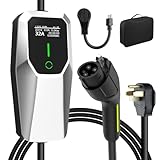
- 【Electric vehicle charging stations】This 7.68Kw 32A portable ev charger cable has a total length of 26ft, and a maximum voltage of 240V.Equipped with NEMA 14-50/5-15P Plug, suitable for charging most electric vehicles and plug-in hybrid vehicles that adhere to the J1772 standard. * Note: When the host displays an "E04" error, it means that the product does not have a grounding wire and cannot be charged normally. At this point you can try selecting "No grouding".
- 【Level 1&2 EV Charge Multi-function display】This product is equipped with a display, you can adjust different (6/8/10/13/16/20/24/32A) currents on the display. *Note: When using a 5-15P Plug, need to be used with current below 16A. It has the function of setting scheduled charging, so that you can charge at the time you want (up to 5 hours can be reserved).
- 【 EV chargers Safety Protection】This product has Leakage Protection, Short Circuit Protection, Over temperature Protection, Over voltage Protection ect multiple circuit protection, and it will automatically power off when fully charged.Please use it with peace of mind.
- 【6X Faster Charging】Level 2 EV Charger with NEMA 14-50 plug fill up your car at an average of 6 times faster than a standard charger, delivering 24 miles in only 1 hour at 240V charge.
- 【IP56 Waterproof & Heat Resistance】This cable has an IP56 waterproof rating and can work in -25 to +55 degrees Celsius. The cable outer layer is high-quality TPU cable thermoplastic and the display housing is made of PC94V-0 thermoplastic for long-term use and exposure to variable weather conditions.
The result is electric-like response for most driving, with fuel used to produce electricity when a long trip exceeds the battery’s usable charge. A generator cannot make fuel use disappear: at sustained motorway speeds, carrying a depleted battery and operating a small engine continuously can produce different fuel consumption from a conventional hybrid.
Plug-in hybrid electric vehicle (PHEV)
A PHEV combines an externally chargeable battery, one or more electric motors and a combustion engine. Control software decides when to use electric power, the engine or both. Some models can drive in a genuinely electric mode until the battery reaches its operating limit; others start the engine for heat, high power, low temperatures or high speeds even when charge remains.
Once the plug-in battery is depleted, a PHEV generally continues as a hybrid vehicle, drawing energy from regenerative braking and the engine. The efficiency of that depleted-battery mode is model-specific, so a large advertised combined range is not enough evidence for a buying decision.
Quick wins for a faster PC:
Scan for outdated or missing drivers - takes under a minuteDriver Scan →Repair Windows errors before they cause bigger problemsFix Now →| Question | REEV | PHEV |
|---|---|---|
| What normally drives the wheels? | Usually an electric motor; the engine mainly generates electricity. | Electric motor, combustion engine, or both, depending on the control strategy. |
| Can it be plugged in? | Yes, if the model is a plug-in REEV. | Yes, by definition. |
| What happens at low battery charge? | The generator supplies electrical energy to maintain propulsion. | The engine generally provides propulsion, with hybrid assistance. |
| Does the label determine Pakistani tax treatment? | No. The Federal Board of Revenue has documented disagreement over classification. | No. Eligibility and classification depend on the actual vehicle and current rules. |
| What specification matters most? | Electric-only range, generator-mode fuel use and charging capability. | Electric-only range, depleted-battery fuel use and how often the engine starts. |
Pakistan’s policy and legal context in 2026
Pakistan’s New Energy Vehicles Policy 2025–30 names battery-electric vehicles, PHEVs, REEVs and fuel-cell electric vehicles as NEV categories. The policy targets NEVs at 30% of new vehicle sales by 2030, but that target does not guarantee a particular model’s availability, price or eligibility.
For four-wheel PHEVs, the policy’s stated NEV criterion requires at least 50 kilometres of pure-electric driving on one charge with zero tailpipe emissions. That is a policy threshold, not a promise that every qualifying vehicle will deliver 50 kilometres on Pakistani roads, in summer heat, with air-conditioning, passengers or high-speed driving. Ask for the test cycle and conditions behind the published range.
REEVs are included in the policy scope, but classification remains a live issue. The FBR Public Notice 02-2026 records stakeholder disagreement about how range-extended vehicles should be classified for customs purposes. It is not a final buyer guarantee that an REEV receives the same concession as a battery-only EV. Confirm the current tariff heading, duties and taxes for the exact model and import configuration with the relevant official channel or a qualified customs professional before paying a deposit.
Rank #2

- CUSTOM: KELCSEECS Floor Mats & Cargo Liner & Backrest Mats are fit for 2026 Kia Sorento Hybrid 2025 Kia Sorento Hybrid 2024 Kia Sorento Hybrid 2023 Kia Sorento Hybrid 2022 Kia Sorento Hybrid 2021 Kia Sorento Hybrid,fit for 2026-2022 Kia Sorento Plug-In Hybrid PHEV. 3D laser technology, the scanning is accurate, which fully conforms to the original car data, and accurately covers your car
- SAFE AND DURABLE: KELCSEECS 2026 Kia Sorento Hybrid floor mats 2025 Kia Sorento Hybrid floor mats 2024 Kia Sorento Hybrid floor mats 2023 Kia Sorento Hybrid floor mats 2022 Kia Sorento Hybrid floor mats 2021 Kia Sorento Hybrid floor mats 2026-2022 Kia Sorento PHEV Plug-In Hybrid floor mats Floor Mats & Cargo Liner & Backrest Mats are made of eco-friendly TPE material.Quality TPE material not only provides a great feel and extreme abrasion resistance but also maintains flexibility even in hot and cold weather, ensuring safety.
- ALL-WEATHER PROTECTION & NON-SLIPPERY: KELCSEECS 2026 Kia Sorento Hybrid floor mats 2025 Kia Sorento Hybrid floor mats 2024 Kia Sorento Hybrid floor mats 2023 Kia Sorento Hybrid floor mats 2022 Kia Sorento Hybrid floor mats 2021 Kia Sorento Hybrid floor mats 2026 Kia Sorento PHEV floor mats 2025 Kia Sorento Plug-In Hybrid floor mats 2024 Kia Sorento Plug-In Hybrid floor mats 2023 Kia Sorento Plug-In Hybrid floor mats 2022 Kia Sorento Plug-In Hybrid Weatherproof Floor Mats & Cargo Liner & Backrest Mats ergonomically designed channels and raised edges effectively trap liquids, snow, sand, etc. and protect the vehicle floor well.
- HASSLE FREE TO CLEAN: KELCSEECS 2026 Kia Sorento Hybrid floor mats 2025 Kia Sorento Hybrid floor mats 2024 Kia Sorento Hybrid floor mats 2023 Kia Sorento Hybrid floor mats 2022 Kia Sorento Hybrid floor mats 2021 Kia Sorento Hybrid floor mats 2026-2022 Kia Sorento PHEV Plug-In Hybrid floor mats Floor Mats & Cargo Liner are waterproof, stain-resistant, durable, and easy to clean. Clean easily with a damp towel, or remove them from the car and rinse with water.
- WHY CHOOSE KELCSEECS:2026 Kia Sorento Hybrid floor mats 2025 Kia Sorento Hybrid floor mats 2024 Kia Sorento Hybrid floor mats 2023 Kia Sorento Hybrid floor mats 2022 Kia Sorento Hybrid floor mats 2021 Kia Sorento Hybrid floor mats 2026 Kia Sorento PHEV floor mats 2025 Kia Sorento Plug-In Hybrid floor mats 2024 Kia Sorento Plug-In Hybrid floor mats 2023 Kia Sorento Plug-In Hybrid floor mats 2022 Kia Sorento Plug-In Hybrid Floor Mats & Cargo Liner provide all-weather protection for your vehicle. If you have any questions, please feel free to contact us. We promise to make every customer satisfied.
Is public charging ready for Pakistani routes?
Policy announcements are not a live charger map. The Ministry’s initial plan describes 40 strategically located Level 3 fast-charging sites, mainly on motorways and the N5 corridor. A separate Press Information Department announcement dated June 19, 2025 referred to 40 planned motorway charging stations at an announced average spacing of 105 kilometres. These are planned or announced installations; they do not prove that every site is open, operational, compatible with your connector or available when you arrive.
Recommended Free Tools
The same announcement projected annual fuel savings of 2.07 billion litres under the policy. That is a government projection, not a measured result for an individual REEV, PHEV or route.
NEECA’s EV Charging and Battery-Swapping Regulations cover charging infrastructure in the territories of K-Electric and NEPRA-licensed distribution companies, with NEECA oversight of registration, inspection and enforcement. The regulations provide a framework; they do not establish charger density or reliability on your particular journey. Check a current operator status, call the site, and verify that the vehicle’s AC or DC connector and charging protocol are supported.
Which choice fits your driving pattern?
Mostly urban driving with reliable home charging
Measure your normal weekday distance for at least two weeks. If it falls comfortably below the model’s independently stated electric-only range, either powertrain can deliver an electric commute. Compare the two vehicles’ usable battery capacity, charging time, thermal management and warranty rather than choosing on a brochure’s combined-range figure.
Regular charging is essential to the economic case. A PHEV that is rarely plugged in carries a heavy battery and engine while operating mostly on fuel. An REEV that is plugged in daily can minimise generator operation, but only if the model’s electric range and charging speed suit your schedule.
Frequent motorway or intercity travel
Prioritise the vehicle’s verified behaviour after the battery is depleted. Ask for fuel consumption in generator mode for an REEV or hybrid mode for a PHEV, measured under a stated test cycle and at realistic speeds. Request usable fuel-tank capacity, expected tank range, maximum sustained speed without derating, and the service interval for the engine and generator system.
Rank #3

- SAE J1772 Standard Charger: Compatible with all North American electric vehicles and plug-in hybrids, including Ford, Chevrolet, Nissan, BMW, Volkswagen, Hyundai, Kia, Audi, Mercedes-Benz, Rivian, Porsche, Toyota, Honda, Jeep, and GMC. Tesla vehicles can be charged with a separate SAE J1772 adapter (sold separately).
- Adjustable Current: Choose from 8A, 10A, 13A, or 16A to match your vehicle’s charging needs.Dual Plug Compatibility,NEMA 6-20 Plug (220/240V): Delivers up to 3.84 kW/h, providing approximately 15.36 MPH charging speed at 16A.NEMA 5-15 Plug (110/120V): Supports 10A charging at 120V, offering 1.2 kW/h (around 4.4 MPH). Customizable Charging: Easily adjust current to suit different charging scenarios, giving you maximum flexibility at home or on the go
- Hassle-Free Installation: Forget complicated setups—just plug in and go. Equipped with NEMA 5-15 and NEMA 6-20 (220V/240V) connectors, it works with any standard 110V–240V outlet. The 25-foot cable gives you the freedom to reach vehicles parked at a distance, making charging convenient anywhere.
- Intelligent Charging: Featuring a 2.8-inch touch display, you can easily select the charging current (8A / 10A / 13A / 16A) and schedule charging with a 1–12 hour delayed start. Perfect for maximizing off-peak hours and cutting electricity costs. (Example: Set a 2-hour delay, and charging begins automatically after 2 hours.)
- Comprehensive Safety: Designed to meet CE and FCC safety standards, this charger offers multiple layers of protection, including overvoltage, overload, short-circuit, grounding, and leakage safeguards. The durable IP65-rated waterproof housing and reinforced cable ensure reliable charging in all weather conditions, keeping your vehicle safe year-round.
A fuel-backed powertrain reduces dependence on public charging, but it does not remove fuel expense or the need for maintenance. Route planning still matters: a depleted battery can leave either vehicle relying on petrol for hundreds of kilometres.
No dependable home charging
Be cautious about paying a plug-in premium if you cannot routinely charge at home, work or a trusted destination. Compare both vehicles as fuel-operated cars in your actual use. If the fuel-mode economy, tank range, warranty and service network are not acceptable without plugging in, the battery’s theoretical electric range will not rescue the purchase.
Buyer focused on incentives or duties
Do not assume that an REEV is treated as a battery-electric vehicle, or that every PHEV receives the same concession. Classification can depend on the drivetrain, engine size, battery specification, import route and the rule in force on the assessment date. Obtain written, model-specific confirmation before using a tax assumption in your budget.
The eight specifications to compare side by side
Ask the dealer or importer to complete this checklist for both candidate vehicles. If a value is not supplied with conditions, treat it as incomplete.
| Item | Why it matters in Pakistan | What to request |
|---|---|---|
| Electric-only range | Determines whether the daily route can be completed without fuel. | Usable range, test cycle, ambient temperature, speed and whether air-conditioning was used. |
| Depleted-battery fuel use | Shows the cost of long trips after plug-in energy is exhausted. | Litres per 100 km or equivalent, with the battery at its minimum operating state and test conditions stated. |
| Charging input | Determines whether a home circuit or public charger can replenish the battery. | Maximum AC power, DC power if supported, connector type, charging curve and time from the specified state of charge. |
| Battery and engine warranty | Repairs can be expensive and specialist support may be limited. | Years, kilometres, capacity-retention promise, exclusions, servicing requirements and who performs warranty work. |
| Fuel-tank capacity and range | Important when chargers are sparse or a route changes unexpectedly. | Tank size, minimum recommended fuel grade and range under a stated test or owner-use condition. |
| Ground clearance and underbody protection | Flooding, broken pavement, ramps and unpaved shoulders can damage low components. | Official clearance, battery protection design and warranty treatment for impact or water ingress. |
| Thermal and climate performance | Heat, dust and heavy air-conditioning loads affect range and charging. | Battery cooling method, operating limits, charge-rate reduction in heat and recommended maintenance. |
| Parts and service coverage | Downtime can outweigh fuel savings if only one workshop supports the car. | Nearest trained workshop, diagnostic capability, parts lead times and roadside assistance. |
Can you charge at home?
Usually, yes, but the installation must match the vehicle and the building. A portable cable on a household socket may be convenient for occasional top-ups, yet continuous high-current charging can overheat an unsuitable outlet or extension lead.
- Confirm the vehicle’s input. Record the connector, maximum AC current and whether the car accepts single-phase or three-phase supply. Do not buy a wall unit before this check.
- Have the electrical installation inspected. A licensed electrician should check service capacity, earthing, cable size, breaker rating, residual-current protection and the distance from the distribution board to the parking space.
- Check building permission. In an apartment or leased property, obtain written approval for cabling, metering and access. Clarify who pays for upgrades and who owns the equipment if you move.
- Install protection and a dedicated circuit. Use equipment specified for EV charging, with appropriate over-current and residual-current protection. Avoid sharing the circuit with pumps, air-conditioners or welding equipment.
- Test at a low current first. Monitor plug, cable and breaker temperature during the first sessions. Stop if there is heat, smell, arcing or repeated tripping.
- Protect the warranty. Use a charger and installation method accepted by the importer or manufacturer, and keep invoices, commissioning records and inspection reports.
A compatible home charger is a physical-product decision, not a universal accessory recommendation. Connector, AC limit, electrical installation and warranty requirements must be verified for the specific car.
Rank #4

- Custom Fit: For Ford Escape Hybrid & Plug-in Hybrid 2020-2026. Binmotor car floor mats are accurately scanned by professional 3D laser scanner to make the auto floor carpets and the original car data accurately match. What's more, details such as throttle and brake were noted during the design process, which will not affect you when you drive.
- TPE Material: Binmotor automotive car mats cargo liners for 2025 Ford Escape Hybrid are made of Thermoplastic Elastomer(TPE) materials, which makes car floor mats both soft and durable. This kind of materials even in hot weather does not melt.
- Non-slip Design: The car carpet mats cargo liners 2026 Ford Escape Hybrid are fixed with buckles on the back, so the mat always stay in place, which gives your foot more traction & comfort. The Binmotor automotive floor mats promise you a safer and perfect driving experience.
- All-weather Protection: Binmotor floor mats for 2024 Ford Escape Hybird are designed with a high outsidewalls that help contain rain, snow, muddy fallen leaves, food debris, liquids or debris, giving your car perfect protection in all weather and keeping your car clean. Binmotor vehicles floorliners are designed to stand up to the most extreme weather conditions. Multiple tests prove that it won't crack, curl or break down.
- Easy to Remove & Clean & Install: Binmotor mats for 2023 Ford Escape Hybrid are waterproof, just wipe smudges off with a damp cloth or wash and dried. They are incredibly easy to install.
What happens when the battery runs low?
REEV behaviour
The control system starts the combustion engine and uses it as a generator. You may notice engine noise at a steady speed or under high load even though the accelerator response remains electric. Ask whether the generator can maintain highway speed on gradients, how much reserve charge the system keeps, and whether power is limited when fuel is low or the battery is very cold.
PHEV behaviour
The engine usually takes a larger role once the battery reaches its minimum state of charge. The car may still recover braking energy and use the motor for launches, hills or short bursts. Ask when the engine starts automatically, whether a selectable battery-hold mode is available, and whether the vehicle’s stated fuel figure assumes a full initial charge. A plug-in test result can look excellent while a driver who never plugs in experiences ordinary hybrid or petrol consumption.
Common mistake: comparing combined range only
Combined range adds electric distance and fuel distance but says little about the cost of a 500-kilometre trip after the first charge is gone. Compare two separate journeys: a charged weekday commute and a long trip that begins with a full battery but ends in depleted-battery operation.
How to calculate your own running cost
Use your actual tariff, fuel price and route rather than an internet average.
- Electric portion: energy used per kilometre × kilometres driven electrically × your electricity tariff. Include charging losses if the quoted consumption is measured at the battery rather than at the wall.
- Fuel portion: litres per kilometre in the vehicle’s depleted-battery mode × kilometres driven on fuel × the petrol price you actually pay.
- Ownership portion: add scheduled servicing, tyres, insurance, charger installation, financing and any expected battery or generator-related maintenance.
Request the unit and test method for every consumption figure. There is no verified, matched independent Pakistani real-world test in the available evidence that establishes a category-wide REEV-versus-PHEV fuel average or rupee saving. A single model’s brochure result cannot be generalised to all vehicles.
Free tools Windows power users keep installed
One-click scans. No signup required.
A practical route-and-charging test before you buy
- Map your real week. List the longest weekday, school runs, traffic delays, motorway sections and destinations where the car sits long enough to charge.
- Measure distance conservatively. Use the longest normal route and leave a reserve for detours, heat, congestion and battery ageing. Do not plan to arrive at zero percent.
- Check every charging stop. Confirm opening hours, payment method, connector, maximum power, parking rules and recent operational status. Treat a planned station as unavailable until verified.
- Ask for a demonstration. Start with a full battery, run the climate control, observe the displayed range and ask the salesperson to demonstrate battery-hold and charge modes.
- Drive the roughest section. Check clearance, suspension impact, turning radius and underbody protection on the roads you actually use.
- Obtain written support terms. Record warranty duration, battery coverage, service location, parts policy and roadside recovery before signing.
Decision matrix for Pakistani buyers
| Your situation | What to prioritise | Likely direction |
|---|---|---|
| Daily urban trips within verified electric range and dependable home charging | Electric range, AC charging time, battery warranty and installation cost. | Either REEV or PHEV can fit; choose the model with the stronger complete specification and support. |
| Long intercity trips and uncertain public charging | Depleted-battery fuel use, tank range, generator or engine durability, route service. | Prefer the vehicle whose fuel-backed operation is documented and acceptable; do not rely on combined range. |
| No regular place to plug in | Fuel-mode economy, purchase premium, service access and warranty. | Only buy a plug-in model if its non-plugged-in economics still work for you. |
| Low-clearance or flood-prone routes | Ground clearance, battery shielding, water-ingress limits and repair policy. | Choose the model that physically suits the route, regardless of powertrain label. |
| Purchase depends on a tax concession | Current customs classification and written assessment for the exact vehicle. | Delay the decision until the applicable duty and tax treatment is confirmed. |
Pitfalls that cause expensive surprises
- Assuming the badge explains the drivetrain: request a technical diagram or written explanation of what drives the wheels.
- Using the policy’s 50-kilometre threshold as a range promise: it is an eligibility condition for four-wheel PHEVs, not a real-world guarantee.
- Treating planned chargers as available chargers: verify live status and compatibility on every important route.
- Ignoring depleted-battery operation: demand a fuel figure and conditions for the state in which you will spend most long-trip time.
- Budgeting a tax benefit before classification is settled: FBR’s 2026 notice shows that REEV treatment is contested.
- Installing a charger without an electrical survey: an overloaded circuit can damage property and jeopardise warranty coverage.
- Overlooking service and parts: a lower energy bill is not a saving if a failed cooling component immobilises the vehicle for weeks.
- Comparing unlike test numbers: electric range, combined fuel consumption and generator-mode consumption answer different questions.
Bottom-line buying method
Start with your home and destination charging reality, then calculate your daily distance against the exact model’s verified electric range. Next, compare the two cars with their batteries depleted: fuel use, tank range, performance, maintenance and service access. Check clearance and route conditions, obtain written warranty terms, and confirm current duties and taxes rather than inferring them from a marketing label.
For a predictable urban commute with reliable charging, either a well-specified REEV or PHEV can provide electric driving. For Pakistan’s longer and less certain routes, the better vehicle is the one that remains economical, supportable and usable when no charger is available—not necessarily the one with the largest advertised combined range.
Quick Recap
Product prices and availability are accurate as of the date/time indicated and are subject to change. Any price and availability information displayed on Amazon at the time of purchase will apply.




