There is no universal winner. A used Macan is usually the smarter fit when compact dimensions, easier parking and lower towing needs matter most. A used Cayenne is the stronger choice when you need substantially more towing capacity or cargo room. The individual vehicle’s service records, inspection results, recall status, equipment, price and remaining warranty can matter more than the badge on the hood.
The figures below use matching, clearly labeled examples—primarily 2019 U.S.-market vehicles—because Porsche specifications change by model year, trim, engine and options. Verify every number against the VIN, window sticker and Porsche’s document for that exact vehicle.
As an Amazon Associate I earn from qualifying purchases.
The short answer: choose based on mission, then buy the better example
The Macan and Cayenne are not simply two sizes of the same SUV. The Macan is the more compact line; the Cayenne provides more usable space and a much higher tow rating. That makes the Macan a natural fit for urban driving and smaller households, while the Cayenne is better suited to frequent hauling, trailers or a larger family load.
Recommended Free Tools
For a used purchase, however, model-level generalizations are only the starting point. A documented, carefully inspected Macan can be a better buy than a neglected Cayenne, and a well-maintained Cayenne with the equipment you need can justify its higher running costs. Compare vehicles from the same model year and similar trim before drawing conclusions.
#1 Best Overall

- 1.Accurate and Efficient: Different colors on the bar represents different scopes, the red range on bar: 0 - 3/ 32; Yellow range on bar: 3/ 32 - 6/ 32; Green range on bar: 6/ 32 - 32/ 32, allowing you easy and fast to read and calibrated
- 2.Reusable:Tire tread gauge is made of sturdy material, reusable and long lasting, which is an efficient tool to moenitor tire tread levels, make driving safer
- 3.Convenient:Tire tread Depth gauge measures approx 3.35 x 1.06 inch, small size, also features a pocket clip for easy carrying, you can clip it on your pocket, ideal for quick and convenient getting and using
- 4.Simple to use :Place the black flat edge of the tire tread gauge on both sides of the tire tread, press down the color bar until it reaches the bottom of the tread groove, and read the depth measurement on the indicator bar.
- 5.Easy to read: There are 3 different color codes of areas on the bar that add simplicity and convenience, which show you a clear result of your tyre condition, really easy to read, giving you a fast and accurate measurement to tread depth, smart, high efficiency
Define “better buy” in practical terms before shopping. It can mean the lowest purchase price, the lowest expected cash outlay over several years, the least risk of an immediate repair bill, or simply the vehicle that performs a required job. Those are different tests. A Cayenne that can tow your trailer safely may be the economical choice if the alternative requires changing trailers, while a larger SUV that spends every day in a cramped garage may be the wrong value even if its listing price is attractive.
Macan and Cayenne at a glance
| Question | Macan | Cayenne |
|---|---|---|
| Best fit | Drivers prioritizing a smaller footprint, easier parking and a sportier compact-SUV format | Drivers who need more cargo capacity, passenger room or towing ability |
| 2019 U.S. folded-seat cargo example | 53.0 cu ft | 60.3 cu ft for base and S; 56.8 cu ft for E-Hybrid; 59.3 cu ft for Turbo |
| 2019 U.S. braked towing example | 4,409 lb | 7,716 lb for the variants listed in Porsche’s technical data |
| Current-model size context (2026 dealer comparison) | 186.1 in long; 53.1 cu ft maximum cargo | 194.1 in long; 60.3 cu ft maximum cargo |
| What can change the result | Trim, engine, options, maintenance, accident history, tires and warranty | Trim, engine, options, maintenance, accident history, tires and warranty |
The 2026 dimensions are included only to show the present size distinction; they are not specifications for older used vehicles. Cargo measurements and tow ratings also vary by generation and equipment.
Use the table as a screening tool, not as a substitute for the build sheet. A heavily optioned base vehicle, an E-Hybrid and a Turbo can differ in weight, cargo packaging, fuel requirements and standard equipment. Even two vehicles carrying the same trim name may have different wheel sizes, suspension systems, seating configurations or factory tow equipment.
Quick wins for a faster PC:
Clear out junk files and repair common Windows errorsFree Scan →Fix the driver behind crashes, sound loss and screen glitchesFind Drivers →Repair Windows errors before they cause bigger problemsFix Now →Size, cargo and towing: where the Cayenne earns its premium
Exterior footprint and daily maneuverability
The Cayenne is physically larger. In the current-model comparison, it measures 194.1 inches long versus 186.1 inches for the Macan. That difference affects garage clearance, parallel parking, turning space and how easy it is to place the vehicle on a narrow street. A used vehicle from another generation may differ, so measure the actual car if your garage or parking space is tight.
The Macan’s smaller footprint does not make it a small car, but it generally involves less bulk in day-to-day urban use. Sit in both models and test the sight lines, door clearance and rear-seat access rather than relying only on exterior length. Check whether a roof box, bike rack or trailer makes the overall length and maneuvering space unacceptable for your parking arrangement.
Cargo volume
Porsche’s 2019 U.S. data lists 53.0 cubic feet behind the front seats for the Macan with the rear seats folded. The same-year Cayenne figures are 60.3 cubic feet for the base and S, 56.8 for the E-Hybrid and 59.3 for the Turbo. The E-Hybrid’s different number shows why a trim-specific check matters: battery packaging and other equipment can change usable space.
Folded-seat capacity does not tell you how well a stroller, dog crate, suitcase set or tall box will fit. Open the hatch, fold the seats and bring the items you routinely carry. Check the load floor, hatch opening height and whether the rear seats split in the configuration you want. Measure the narrowest point between wheel arches and the distance from the hatch to the front seatbacks; published maximum volume is not a guarantee that a particular object will fit.
PC Slower Than It Used to Be?
A free scan shows the junk files, broken settings and background clutter dragging Windows down - then fixes them in one click.Free scan · Windows 10 & 11Crashes, No Sound, or Screen Glitches?
Random freezes, missing sound and display glitches usually trace back to one bad driver. Find and replace yours safely.Free scan · under a minuteTowing
For 2019 U.S. vehicles, Porsche lists 4,409 pounds of braked towing capacity for the Macan and 7,716 pounds for the Cayenne variants in its technical data. That is a major practical difference for a boat, enclosed trailer, horse trailer or heavy utility trailer.
Use the rating only after confirming the exact year, trim, drivetrain, tow equipment and vehicle documentation. Trailer brakes, tongue weight, payload, passengers and cargo all affect a safe combination. Never assume that a hitch installed on a used SUV means the vehicle is approved for the maximum figure. Confirm the trailer’s loaded—not empty—weight, the vehicle’s payload label and the hitch’s own rating. If your use is near any limit, obtain written guidance from Porsche or a qualified towing specialist rather than relying on an online listing.
Rank #2

- Accurate and precise tire tread depth readings in 1/32 inch increments (1/128 inch resolution)
- Durable dial type gauge with easy-to-read 32nds scale (max. tread depth 14/32 inch)
- Color coded scale shows true tire health - safe range (green), showing wear (yellow), or needs replacement (red)
- Calibrated to meet or exceed industry standards for precise accuracy of tire tread depth (+/- 0.25%)
- Rugged, convenient, and compact design for easy storage with included leather pouch
2019 powertrains and economy examples
Macan
Porsche’s 2019 U.S. technical document lists 248 horsepower for the base Macan and 348 horsepower for the Macan S. Both examples use a seven-speed PDK transmission. The document lists premium fuel for the Macan entries.
Those numbers identify the 2019 versions only. A later or earlier Macan can use a different engine, output or transmission, so decode the VIN and confirm the engine code before comparing listings. Ask whether software updates, cooling-system work, oil service and transmission-related maintenance are documented. A test drive should include a cold start, low-speed maneuvering, steady cruising and firm acceleration so the inspector can evaluate starting behavior, shift quality, noises and warning messages.
Cayenne
The 2019 Cayenne document covers four variants: Cayenne, Cayenne E-Hybrid, Cayenne S and Cayenne Turbo. Porsche lists different engines and outputs for them, so “a 2019 Cayenne” is not a single specification. The E-Hybrid also has a different folded-seat cargo figure from the gasoline variants.
For the base Cayenne, Porsche’s listed estimate is 19 mpg city, 23 highway and 21 combined. The Cayenne S is listed at 18 city, 23 highway and 20 combined. Porsche marks these as estimates and notes that actual mileage varies. The cited document does not publish EPA values for the E-Hybrid and Turbo; do not replace those entries with a number from another year or market.
Fuel economy is only one operating-cost input. Confirm the required fuel grade for the exact engine, estimate annual miles and use local fuel prices when building a budget. A plug-in or hybrid vehicle also deserves a battery-condition and warranty review; do not assume that its presence automatically lowers total ownership cost. Compare the equipment and condition of an E-Hybrid with a gasoline Cayenne on their own terms.
Used ownership cost: what can and cannot be concluded
No verified, model-wide used ownership-cost winner is established. Your fuel bill depends on driving, fuel prices and the exact engine; maintenance depends on mileage, wear, prior care, labor rates and location. Insurance can vary with driver, ZIP code, claim history and coverage limits. A lower purchase price can disappear if the vehicle needs tires, brakes, suspension work or overdue service immediately after purchase.
Do these 3 things before closing this tab:
1Scan for outdated or missing drivers - takes under a minute2Clear out junk files and repair common Windows errors3Fix the driver behind crashes, sound loss and screen glitchesBuild a vehicle-specific budget before making an offer:
- Obtain the VIN-specific service history and list every documented repair, not just scheduled maintenance.
- Price tires, brakes, fluids and any deferred service using local labor rates.
- Request an insurance quote for the exact VIN and your coverage.
- Estimate fuel from the engine and your real driving pattern; treat EPA figures as estimates.
- Add registration, taxes, roadside coverage and a reserve for unscheduled repairs.
- Value any remaining factory or Porsche Approved coverage only after reading its dates, mileage limits, exclusions and transfer rules.
Ask the seller for itemized estimates rather than accepting a vague statement that a service is “coming due.” Record tire brand, size, tread depth and production date; four matching tires may be required by the drivetrain, and replacing them can be a significant immediate expense. Do the same for brake pad and rotor measurements, battery age and any fluid service. These facts let you compare a cheaper car needing consumables with a more expensive car that is ready to drive.
A step-by-step process for choosing a used Macan or Cayenne
1. Define the job the SUV must do
Write down the non-negotiables before looking at listings: maximum trailer weight, number of passengers, cargo dimensions, garage limits, winter-tire requirements and annual mileage. If your trailer approaches the Macan’s 4,409-pound 2019 example rating, the Cayenne deserves priority. If you rarely tow and routinely park in a dense city, the Macan’s smaller footprint may be more valuable than extra capacity.
Rank #3

- 1. Accurately measures tire tread depth gauge, Calibrated from 0 to 1 inch in 1/32 inch
- 2. Color coded tire tread depth gauge clearly indicates the tire different phase by colors
- 3. Tire tread depth gauge of Red range on bar: 0-3/32; Yellow Range on bar: 3/32 - 6/32; 5. Green Range on bar: 6/32-32/32
- 4. Comes with a pocket clip, easy to carry a tire tread depth gauge
- 5. Tire tread depth gauge reads in 32nds Suitable for trucks, motorcycles, automobiles and any passenger vehicle
Separate must-haves from preferences. A required third-party hitch, a particular seat configuration or all-weather capability should be verified from the build sheet, not inferred from photographs. Decide whether you can accept an E-Hybrid, a high-output Turbo or a base trim before comparing prices, because those choices change the relevant specification and inspection questions.
Free tools Windows power users keep installed
One-click scans. No signup required.
2. Match the vehicles by year, trim and equipment
Record the model year, trim, engine, drivetrain, transmission and major options from the VIN and window sticker. Porsche publishes year-specific archive documents; use the document for the actual year rather than applying 2019 figures to a 2017, 2021 or newer vehicle. Compare similar trims whenever possible, and label any unavoidable difference in your notes.
Save the original listing and photograph the VIN plate, option labels, tires and dashboard warning messages. This prevents a seller’s later description from replacing the evidence you inspected. When two candidates are from different generations, present their differences explicitly instead of averaging their specifications.
3. Screen the history before traveling to see the car
Ask for maintenance invoices, inspection reports, title history and the VIN. Look for regular servicing, repeated warning-light repairs, accident-related work, long periods without records and evidence that consumables were replaced on schedule. A clean vehicle-history report is not proof that a car has no mechanical problem; it is one piece of the screening process.
Call the servicing shop when possible and ask whether invoices match the VIN and mileage. Check that ownership, title branding and the seller’s identity are consistent. Gaps do not automatically disqualify a vehicle, but they should lower your maximum offer or increase the inspection and repair reserve.
4. Check open recalls by VIN
Porsche USA’s recall process uses the vehicle’s 17-character VIN. Run the VIN through the official lookup and ask the seller or dealer to document completion of every applicable campaign. A recall check is vehicle-specific, so do not infer status from the model year alone.
Ask whether any campaign parts are unavailable or awaiting an appointment. A completed recall does not certify the vehicle’s overall condition, and a vehicle with no open campaign can still need ordinary maintenance or unrelated repairs.
5. Arrange a Porsche-specialist pre-purchase inspection
Use an independent specialist who can inspect the exact vehicle on a lift and scan its control modules. Ask for written findings and repair estimates, not a verbal “looks good.” A useful inspection should include:
- Diagnostic fault-memory scans and warning-light verification
- Engine, transmission, drivetrain and cooling-system checks
- Fluid levels, leaks and signs of contamination
- Tire tread, pressure, age, uneven wear and sidewall damage
- Brake, suspension, steering and underbody condition
- Body-panel alignment, paint inconsistencies and prior collision evidence
- Road-test behavior, including shifting, braking, vibration, noise and tracking
- Operation of climate, infotainment, cameras, sensors, windows, seats and all keys
Ask the technician to note cold-start behavior, oil or coolant seepage, underbody impact, wheel damage and whether all four tires are a compatible size and type. Confirm that the scan was performed with appropriate Porsche-capable equipment; a generic code reader may not reveal every stored fault. Test every electronic feature because replacing a cosmetic or convenience component can still be costly.
What’s actually slowing this PC down?
Pick the symptom - the matching free tool is one click away.
Rank #4
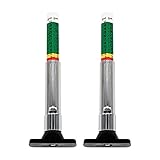
- Accurate measures tire tread depth gauge tool
- Calibrated from 0 to 1 inch in 1/ 32 inch
- Red range on bar: 0-3/32; Yellow Range on bar: 3/32 - 6/32; 5. Green Range on bar: 6/32-32/32
- Pocket-sized gauge, easy handy
- 2 pack
Porsche Japan’s published maintenance checklist is a useful example of these inspection categories, but it is Japan-market material. Do not treat its intervals as a U.S. maintenance schedule. Obtain the maintenance booklet that matches the car’s market and model year.
6. Reconcile the inspection with the price
Separate safety or reliability work from cosmetic preferences. Get written estimates for urgent repairs and subtract that amount, plus a contingency, from your maximum offer. If the seller will not permit an independent inspection, treat that refusal as a material buying risk rather than paying a premium for an unverified claim.
Use the inspection to negotiate facts, not hypothetical failures. A worn tire, measured brake thickness or documented leak can be priced; an inspector’s uncertainty should prompt further diagnosis or a walk-away decision. Do not let a recent detail, rare color or desirable option distract you from unresolved mechanical work.
7. Read the warranty contract, not just the listing headline
Porsche describes its Porsche Approved certified pre-owned vehicles as meeting brand standards, undergoing a multipoint inspection and receiving limited warranty and roadside benefits. Porsche’s public description says, “Rigorous mechanical and cosmetic standards must be met by every Porsche Approved (CPO) Vehicle.” It also says, “A well-maintained warranty and maintenance booklet is an important quality criterion, as it conveys a feeling of security, with maintenance being an important factor in optimally maintaining the value of a vehicle.”
Those statements describe the program; they do not establish identical coverage for every car. Verify the actual contract, in-service date, expiration date, mileage limit, deductible, roadside terms, exclusions, transferability and required service procedures. A high-mileage certified Macan still needs the same VIN-specific contract review and independent mechanical scrutiny as any other used vehicle.
Ask specifically which components are covered, where repairs may be performed, whether diagnostic fees are included and how pre-existing conditions are handled. Confirm that promised coverage transfers to you and that the seller supplies the complete warranty and maintenance booklets. If a dealer says coverage is “the same as new,” request the written clause that supports that statement.
8. Complete a final document check
Before paying, confirm that the VIN on the vehicle, title, contract and warranty paperwork matches. Verify that promised repairs are written into the purchase agreement, that both keys and manuals are present if promised, and that recall and inspection documents are supplied.
Review the out-the-door figure, including taxes, registration, dealer or documentation fees and any financing products. Keep copies of the signed bill of sale, inspection report, warranty contract and recall confirmation. These records matter if a promised repair is missed or a coverage question arises later.
The Tool Desk
Outbyte Driver Updater FREEScan for outdated or missing drivers - takes under a minuteDriver Scan →Outbyte PC Repair FREEClear out junk files and repair common Windows errorsFree Scan →Which SUV fits each buyer?
| Your priority | More sensible starting point | Why |
|---|---|---|
| Frequent city parking and limited garage space | Macan | The line is shorter in the current comparison and generally easier to place in tight spaces. |
| Maximum cargo behind the front seats | Cayenne | The 2019 base and S examples provide 60.3 cu ft versus 53.0 cu ft for the Macan. |
| Heavy braked trailer | Cayenne | The 2019 listed rating is 7,716 lb versus 4,409 lb for the Macan. |
| Lower complexity than an E-Hybrid for a particular budget | Compare gasoline trims directly | Do not assume; inspect condition, battery-related coverage and actual equipment on each candidate. |
| Best value regardless of model | The better-documented, better-inspected vehicle | Condition, deferred maintenance, recalls, price and warranty can outweigh the model choice. |
Families should also compare rear-seat comfort and access in person. Cargo volume does not measure child-seat installation, passenger legroom or the ability to load bulky items without folding a seat. Drivers who carry equipment every week should perform a real loading test rather than relying on the published maximum.
Best Value

- 1. Accurately measures tire tread depth gauge tool, Calibrated from 0 to 1 inch in 1/32 inch
- 2. Color coded tire tread depth gauge tool clearly indicates the tire different phase by colors
- 3. Tire tread depth gauge of Red range on bar: 0-3/32; Yellow Range on bar: 3/32 - 6/32; 5. Green Range on bar: 6/32-32/32
- 4. Comes with a pocket clip, easy to carry a tire tread depth gauge tool
- 5. Tire tread depth gauge tool reads in 32nds Suitable for trucks, motorcycles, automobiles and any passenger vehicle
Common mistakes to avoid
- Mixing generations: A 2019 cargo or towing figure cannot be applied automatically to another year.
- Comparing unequal trims: A base Macan and a Cayenne Turbo differ in engine, equipment, economy and likely running costs; call out the mismatch.
- Using current specifications for a used car: The 2026 dealer figures provide context only, not proof of what an older vehicle has.
- Confusing a hitch with a tow rating: Confirm factory documentation, trailer brakes, payload and equipment.
- Treating CPO as a substitute for due diligence: Certification adds an inspection and contractual benefits, but coverage is governed by the exact agreement.
- Relying on a single tire measurement: A tread-depth gauge can identify one wear item, but it cannot reveal internal damage, tire age, alignment problems or broader vehicle faults.
- Assuming a maintenance webpage is your schedule: The cited checklist is from Porsche Japan; use the correct market and year booklet.
- Calling one model universally cheaper: Fuel, labor, insurance, wear items and condition vary too widely for that conclusion.
- Shopping by badge alone: Desirable options cannot compensate for missing records, unresolved warning lights or a failed inspection.
How to make the final decision
Shortlist at least two vehicles that meet your hard requirements, then score each on documented maintenance, inspection findings, recall completion, tire and brake condition, equipment, warranty coverage and out-the-door price. Reject any candidate that fails a non-negotiable requirement, such as trailer capacity or garage fit, regardless of its apparent bargain.
If both vehicles pass, choose the Macan when its compact size meets your needs and the price reflects its condition. Choose the Cayenne when its additional cargo or towing capability will be used often enough to justify the larger vehicle. In either case, buy the specific example with the strongest records and cleanest inspection—not simply the model with the more attractive specification sheet.
Frequently Asked Questions
Is a high-mileage certified Macan still worth considering?
Yes, but certification is not a substitute for reviewing the exact contract and commissioning an independent inspection. Confirm the VIN-specific warranty dates, mileage limit, exclusions, service records, recall status, tire and brake condition, and any deferred work before comparing its price with a lower-mileage non-CPO vehicle.
Which has more cargo space, the Macan or Cayenne?
In Porsche’s 2019 U.S. examples, the Macan has 53.0 cu ft with the rear seats folded. The Cayenne lists 60.3 cu ft for base and S, 56.8 cu ft for E-Hybrid and 59.3 cu ft for Turbo. Verify the exact year and trim, then test your own cargo.
Which used Porsche SUV can tow more?
For the listed 2019 U.S. examples, the Macan is rated at 4,409 lb braked and the Cayenne at 7,716 lb. Confirm the actual vehicle’s year, trim, drivetrain, factory equipment, payload, tongue weight and trailer-brake requirements before towing.
How do I check recalls on a used Macan or Cayenne?
Use Porsche USA’s recall lookup with the vehicle’s 17-character VIN. Ask the seller or dealer for documentation that every applicable campaign has been completed; recall status is specific to the individual vehicle.
Does Porsche Approved CPO guarantee a fixed warranty length?
No universal duration should be assumed. Porsche describes inspection, limited-warranty and roadside benefits, but the listed vehicle’s contract controls. Read its dates, mileage limits, exclusions, deductible, transfer rules and service requirements.
The Tool Desk
Outbyte PC Repair FREERepair Windows errors before they cause bigger problemsFix Now →Outbyte Driver Updater FREEFix the driver behind crashes, sound loss and screen glitchesFind Drivers →Can a tire-tread gauge replace a Porsche inspection?
No. It measures one aspect of tire wear only. It cannot detect internal damage, tire age, alignment problems or mechanical faults, so use it as a quick check alongside a qualified pre-purchase inspection.
The Bottom Line
Bottom line: Start with the job the SUV must do. The Macan is the more manageable choice for tighter spaces and lighter towing; the Cayenne offers materially more cargo room and towing capacity. After matching year and trim, let VIN-verified recalls, complete service records, a Porsche-specialist inspection, exact CPO terms and the out-the-door budget decide which individual vehicle is the better buy.
Quick Recap
Product prices and availability are accurate as of the date/time indicated and are subject to change. Any price and availability information displayed on Amazon at the time of purchase will apply.




