Recommended Free Tools
There is no single Porsche 911 Carrera or Jaguar E-Type to compare. The names cover multiple generations, engines, body styles and years. A useful historical pairing is an early 3.8-litre E-Type (1961–1964) against a Porsche 993 Carrera (1994–1998), but those cars are separated by more than three decades and their factory figures were not obtained in a common test.
On that basis, the E-Type is the choice for an early-1960s design statement and open two-seat character; the 993 Carrera is the choice for a later, more developed 911 with documented 1990s performance and the significance of being the last air-cooled generation. The right decision depends on which period, driving role and ownership task you actually want.
As an Amazon Associate I earn from qualifying purchases.
First define the cars: these are model families, not fixed specifications
“Porsche 911 Carrera” identifies a name used across many 911 generations. Porsche Classic’s model overview separates the 964 (1989–1994), 993 (1994–1998) and 996 (1998–2005), among other types. A Carrera from one period can differ substantially from another in engine, equipment, chassis, body style and performance.
Free tools Windows power users keep installed
One-click scans. No signup required.
“Jaguar E-Type” is likewise a family. Jaguar describes the car evolving through three series over 13 years, from its Geneva launch in March 1961 to the end of production in 1974. An early 3.8-litre car is a very different proposition from a later Series III car.
#1 Best Overall

- High-Quality Materials:The Porsche 911 Turbo die-cast car is made of zinc alloy,plastic parts and rubber tires,making it safe for children to play with.It features detailed interior and exterior trim, and is very sturdy.
- Function:No batteries are required, but the vehicle has a powerful pull back feature. Simply pull it back, then release your hand, and the car will go for a long distance. The doors may be opened to view the whole inside of the vehicle. So appealing to children and collectors alike.
- Size:1/36 scale vehicle model with beautiful English packaging,ideal for toddlers to play with and carry. Car collectors will appreciate the perfect small size, which allows them to collect a complete set of cars without taking up too much space.
- Grow From Play:Help children learn more about car ,expand their knowledge ,increase the hand-eye coordination and the reaction speed of the children in the play.
- Ideal Christmas Festival Gift:All of TOKAXI die-cast model cars are attractively packaged in English, making them the perfect Christmas, Birthday, Children's Day, New Year gift for kids, party favors, home decorations, or travel toys for boys and girls.gifts for boys girls.
That makes a generic winner misleading. Before comparing a particular car, write down its model year, series or generation, engine, body style, transmission and market. If an advertisement or seller cannot identify those details, the comparison is not yet specific enough to support a buying decision.
The concrete historical pairing used here
| Car | Exact scope | Why it is useful |
|---|---|---|
| Jaguar E-Type | Early 3.8-litre car, launched in 1961 and built before the 1964 engine change; open two-seater or fixed-head coupe | Represents the car’s original design and mechanical specification |
| Porsche 911 Carrera | 993-generation Carrera, introduced in the 1994–1998 period; initial 3.6-litre specification and the 1996-on output change are distinguished | Provides a clearly documented late air-cooled 911 reference point |
This is a historical comparison, not a same-day road test. Porsche quotes metric power and performance for a 1990s 993 Carrera, while Jaguar’s heritage account gives brake horsepower for an early E-Type. The figures should be read in their own context rather than treated as a laboratory contest.
Jaguar E-Type: what the early car represents
1961 launch and original body choices
Jaguar launched the E-Type at the Geneva Motor Show in March 1961. The early range consisted of an open two-seater and a fixed-head coupe, both using the 3.8-litre XK engine. Jaguar’s heritage account rates that engine at 265 bhp.
Do these 3 things before closing this tab:
1Repair Windows errors before they cause bigger problems2Scan for outdated or missing drivers - takes under a minute3Clear out junk files and repair common Windows errorsThe body-style choice changes the character of the car before the first mile. The open two-seater puts the emphasis on an exposed, two-person sports-car experience. The fixed-head coupe gives the same early E-Type identity a closed roof and a different visual and practical brief. Neither should be treated as a minor trim variation when assessing a particular car.
The 3.8-litre specification
The 265 bhp figure belongs to the early 3.8-litre XK-powered E-Type described by Jaguar. It is not a generic output figure for every E-Type, and it should not be compared directly with a 993’s metric PS number as though both came from identical test procedures. The available Jaguar account does not provide a matched 0–100 km/h time or top speed for this car.
What changed in 1964
Jaguar replaced the 3.8-litre engine with a 4.2-litre version in 1964. The change was accompanied by upgraded brakes, improved seating and a Jaguar-built gearbox replacing the Moss box. Those updates matter when inspecting a car: a 1964 4.2-litre is not simply an early 3.8 with a larger engine, because its braking, seating and transmission specification also changed.
When a seller uses “Series 1 E-Type” without a year or engine description, ask which side of the 3.8-to-4.2 transition the car occupies. The correct parts, driving expectations and historical description depend on that answer.
Three series and the end of production
Jaguar’s commemorative heritage material describes the E-Type’s 13-year development across three series and places the end of production in 1974. It also refers to a final group of 50 Series III commemorative cars. The wording around the final production vehicles and the ending-year formulation varies between historical accounts, so use the individual car’s documented build information rather than assuming every late car shares the same specification.
Rank #2
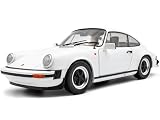
- SOLIDO BRAND QUALITY: Solido is known for producing high-quality diecast model cars with exceptional detail, durable construction, and accurate representations of real vehicles. Each model is crafted with precision and built to last.
- PORSCHE OFFICIALLY LICENSED MODEL: Officially licensed Solido replica of the 1974 Porsche 911 (930) 3.0 SC, finished in White and reproducing the iconic rear-engine German sports car.
- FEATURES & DETAILS: 1:18 scale diecast model featuring opening front doors, directional wheels, White finish and exterior styling faithfully based on the 1974 Porsche 911 (930) 3.0 SC.
- TOP QUALITY MATERIALS: Diecast metal body with molded plastic components, detailed interior, reproduced exterior trim, wheels, bodywork and White finish representing the 1974 Porsche 911 (930) 3.0 SC.
- COLLECTIBLE DISPLAY ITEM: Designed for collectors ages 14 and up. Intended for display by Porsche enthusiasts, classic sports car fans and diecast model collectors, making an excellent gift for any collection.
Porsche 993 Carrera: the late air-cooled reference point
Where the 993 fits in the 911 story
Porsche identifies the 993 as the 911 generation produced from 1994 to 1998. It is historically distinctive because Porsche describes it as the last air-cooled 911 generation. Porsche’s official history records total 993 production through 1998 at 68,881 cars.
That production total applies to the 993 generation as a whole, not to one Carrera body style or one model year. A car advertised simply as a “993 Carrera” still needs a year, body style, transmission and equipment check before its specification can be established.
Initial 3.6-litre Carrera figures
For the initial 993 Carrera specification, Porsche reports a 3.6-litre boxer engine producing 200 kW (272 PS), acceleration from 0 to 100 km/h in 5.6 seconds and a top speed of 270 km/h. These are Porsche’s factory-history figures for the named 993 Carrera specification, not results from a common test against an E-Type.
The Tool Desk
Outbyte Driver Updater FREEScan for outdated or missing drivers - takes under a minuteDriver Scan →Outbyte PC Repair FREERepair Windows errors before they cause bigger problemsFix Now →The 1996 output change
From model year 1996, Porsche records the 3.6-litre Carrera at 209 kW (285 PS). The cited history does not attach a replacement 0–100 km/h or top-speed figure to that output statement, so do not silently reuse the initial car’s performance numbers for every 1996-on Carrera. Confirm the exact model year and variant when quoting specifications.
Side-by-side specifications for the defined cars
| Specification | Early Jaguar E-Type 3.8 | Porsche 993 Carrera |
|---|---|---|
| Historical period | Launched in 1961; early cars before the 1964 change | 993 generation, 1994–1998 |
| Engine description | 3.8-litre XK engine | 3.6-litre boxer engine |
| Factory power figure | 265 bhp, as stated by Jaguar for the early 3.8-litre car | 200 kW (272 PS) for the initial Carrera; 209 kW (285 PS) from model year 1996 |
| 0–100 km/h | Not stated in the cited Jaguar heritage account | 5.6 seconds for the initial Carrera specification in Porsche’s history |
| Top speed | Not stated in the cited Jaguar heritage account | 270 km/h for the initial Carrera specification in Porsche’s history |
| Body information in the defined scope | Open two-seater or fixed-head coupe | Exact body style must be identified for the individual 993; the cited figures do not specify one body style |
| Production context | Part of a three-series, 13-year E-Type run ending in 1974 | 68,881 993s produced through 1998, according to Porsche |
The table is deliberately narrow. It avoids filling gaps with estimates and keeps each number attached to the year and source context that gives it meaning.
Design and engineering: two different answers to the sports-car brief
The E-Type’s early-1960s proposition
The early E-Type presents itself as a purpose-built two-seat sports car in either open or fixed-head form. Its 3.8-litre XK engine and 265 bhp rating belong to a period when the car’s visual identity and mechanical specification were closely tied to the original launch. The 1964 update shows how Jaguar developed the concept: displacement increased, braking was upgraded, seats were improved and the gearbox changed.
That history makes originality especially important. A 3.8-litre car converted to 4.2-litre specification may be enjoyable, but it should not be described as an untouched early car. Ask whether the engine, brakes, seats and gearbox match the claimed series and year.
Quick wins for a faster PC:
Clear out junk files and repair common Windows errorsFree Scan →Scan for outdated or missing drivers - takes under a minuteDriver Scan →The 993’s evolutionary approach
The 993 is a much later expression of the 911 formula. Its 3.6-litre boxer engine, air-cooled status and documented 1990s performance place it in a different engineering era from the E-Type. The initial Carrera’s 5.6-second 0–100 km/h time and 270 km/h top speed provide a clear factory performance reference; the 1996 model-year output increase shows that even within one generation, the specification moved on.
Rank #3

- REMOTE CONTROL PORSHCE 911 :1/24 scaled back on the real Porsche 911 GT3 RS,officially licensed by Porsche,the Porsche car has all the functions of a real car.For Porsche car fans, this is a realistic small scale replica of a Porsche model
- FULLY FUNCTIONAL PORSHCE RC CAR :The Porsche remote control car has functions such as forward, backward, left turn, right turn; and easy to control.The rc car simulates a very powerful engine just like a real Porsche. Let you experience the fun of remote control
- SAFE MATERIALS AND Scratch Resistance :Non-toxic ABS plastic and smooth exterior can withstand many bumps. The unique design of the wheels and the independent suspension system can reduce the friction between the tire and the floor and prolong the use time of the remote control car
- EXCELLENT PERFORMANCE :Operated by 2.4Ghz frequency, provides stability and a wider range of control for the race, provides up to 80 feet of range, lets you have fun at speeds up to 4 mph
- IDEAL REMOTE CONTROL PORSCHE CAR :The remote control porsche car works well on a smooth surface, suitable to play inside and outside. You not only play with it using the remote control but also place it as an exhibit on a display shelf. It is a good choice for you at various festivals
The 993’s historical appeal is therefore twofold: it is a recognizable 911 Carrera and the last air-cooled generation identified by Porsche. That does not make every 993 identical, nor does it make its performance figures a universal description of all Carreras.
How the driving experience differs without pretending to have a matched test
What the documented figures can tell you
The 993 Carrera has a published 5.6-second 0–100 km/h time and 270 km/h top speed for the initial specification. Those numbers establish the level of performance Porsche claimed for that car. They do not establish how an individual 993 feels today, because condition, tires, gearing, maintenance and modifications can change the experience.
The early E-Type data supplied by Jaguar establishes its 265 bhp engine output and its two-seat/open-or-coupe format, but not a directly comparable acceleration or top-speed result. It would be inaccurate to rank the E-Type by inventing a missing test figure or by treating a period horsepower number as a modern road comparison.
Open-air character versus later high-speed capability
If your priority is the visual and sensory identity of an early-1960s sports car, the E-Type’s open two-seater body and launch-era 3.8-litre specification are central to the choice. If your priority is a later classic with a Porsche-documented 1990s performance baseline and the historical distinction of the final air-cooled 911 generation, the 993 Carrera fits that brief.
Neither description is a reliability guarantee, a restoration-cost ranking or a claim that one car is universally faster in real-world use. Those outcomes depend on the exact vehicle and its condition.
Ownership questions that matter more than a badge
Identify the car before estimating any work
- Record the chassis or vehicle identification number and verify the claimed model year.
- For an E-Type, establish the series, engine size and whether the car is an open two-seater or fixed-head coupe.
- For a 993, confirm the generation, model year, Carrera variant, body style and transmission rather than relying on a generic listing title.
- Compare the installed engine, gearbox, brakes and interior with the specification expected for that year.
- Separate factory equipment from later modifications in every inspection report.
This process prevents a common error: comparing a heavily modified or later car with factory figures from an earlier, different variant.
Check originality and documentation
Service invoices, ownership records, restoration photographs and parts numbers can be more useful than a broad claim such as “matching numbers” or “fully restored.” For the E-Type, the 1964 changes make the engine, brakes, seating and gearbox particularly important to document. For the 993, the model-year output change means the year must be tied to the specification being advertised.
Plan maintenance around the actual engine
Porsche Classic says it offers engine oils developed by Porsche engineers for the needs and properties of classic Porsche engines. That is not a universal fluid recommendation for every 911 Carrera. Verify the correct oil specification for the exact engine, climate, service schedule and operating pattern, and follow the vehicle’s documentation.
Rank #4
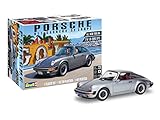
- Revell Plastic Model Car Kit #85-4521 is skill level 4 and contains 109 parts. Recommended for ages 12 and up.
- Assembled Dimensions: 7.00"x3.13"x2.19"
- 3.2-liter flat six engine. Positional front wheels & movable engine cover. Fuchs style wheels & optional front chin spoiler.
- Choice of left or right-hand drive version and either US or Euro spec front turn indicators and rear bumper guards.
- Molded in white and clear with soft black tires. Paint and glue not included.
The same principle applies to Jaguar parts and fluids: a 3.8-litre E-Type, a 4.2-litre car and a later Series III should not be assumed to share every service item. A workshop familiar with the specific series is more useful than one chosen solely by brand familiarity.
Do not use unsupported ownership rankings
No single repair budget, reliability percentage or current value applies to all E-Types or all 911 Carreras. Condition, rust or corrosion history, prior restoration, mechanical originality, modifications, market and geography can alter the ownership equation dramatically. A sound example with complete records can be a different proposition from a cosmetically attractive car with unknown mechanical work, even when both carry the same model name.
Independent reader supportYour contribution helps us test, update, and keep practical guides available for everyone.Which car suits which buyer?
| Your priority | More logical starting point | What to verify before deciding |
|---|---|---|
| 1961 launch-era design and two-seat sports-car identity | Early 3.8-litre E-Type | Whether the car is an open two-seater or fixed-head coupe, and whether its engine, brakes, seats and gearbox match the early specification |
| A later classic with a documented 1990s performance baseline | Initial 993 Carrera | That the claimed 5.6-second and 270 km/h figures belong to the stated Carrera specification, and that the car’s year and body style are confirmed |
| Last air-cooled 911 historical significance | 993 Carrera | That the car is genuinely a 993-generation model and not a different 911 generation described loosely as a 993 |
| The 1964 E-Type development step | 4.2-litre E-Type | Evidence of the 4.2-litre engine, upgraded brakes, improved seats and Jaguar-built gearbox |
| A definitive current price or cheaper ownership outcome | Neither can be selected from the available historical specifications alone | Use a dated market, local inspection and vehicle-specific service records |
A practical inspection checklist for either model
Before viewing
- Ask for the exact year, generation or series, engine displacement, body style and transmission.
- Request photographs of identification plates, engine number, underside, known repairs and the interior.
- Ask which components are original and which were replaced, upgraded or converted.
- Obtain service and restoration records before treating a claimed specification as established.
During the inspection
- Match the visible engine and gearbox to the claimed year and variant.
- Check whether the E-Type’s braking, seating and gearbox specification corresponds to a 3.8-litre or 4.2-litre car.
- Confirm the 993’s model year and Carrera variant before applying any power or performance number.
- Have a specialist inspect structural condition, corrosion, cooling, fuel, braking, suspension, electrical systems and previous accident or restoration work.
- Record modifications separately from faults; an upgrade may be desirable to one buyer and a loss of originality to another.
After the inspection
- Write the verified specification in the purchase file.
- Price deferred maintenance from the inspection findings rather than from internet averages.
- Decide whether originality, usability, documented restoration or driving preparation is your primary objective.
- Only then compare asking prices among cars in the same market and condition band.
Common comparison mistakes
Comparing a 3.8 E-Type with an unspecified “911 Carrera”
A generic Carrera could refer to a 964, 993, 996 or another generation. The result is a category argument, not a specification comparison. Name the generation first.
Mixing the E-Type’s 3.8 and 4.2 cars
The 1964 change altered more than displacement. Brakes, seating and gearbox also changed, so the year and series belong in every description.
Converting units to create a false head-to-head
The E-Type figure is 265 bhp; the 993 figures are stated as kW and PS. Different units and eras do not prove a direct performance result, especially when only the Porsche history supplies acceleration and top speed.
Applying one 993 figure to every model year
The 5.6-second and 270 km/h figures are attached to the initial 993 Carrera specification. Porsche records 209 kW (285 PS) from model year 1996, but the cited history does not provide replacement acceleration and top-speed figures for that output statement.
Treating production totals as rarity rankings
The 68,881 figure covers all 993s through 1998, not a particular Carrera configuration. The E-Type’s three-series, 13-year history likewise contains many variants. Production context is historical information, not a standalone valuation formula.
What’s actually slowing this PC down?
Pick the symptom - the matching free tool is one click away.
Verdict: choose the period and purpose, then the individual car
The early 3.8-litre Jaguar E-Type and the 993 Carrera answer different versions of the classic sports-car idea. The E-Type brings the 1961 launch-era form, a two-seat open or fixed-head body and a 265 bhp XK engine, with the 1964 4.2-litre update marking an important development step. The 993 brings Porsche’s late air-cooled 911 identity, a documented initial 272 PS Carrera specification and a recorded 1996 model-year increase to 285 PS.
Choose the E-Type when the original 1960s design and body-style experience are the reason for buying. Choose the 993 when the later 911 lineage, air-cooled significance and Porsche’s documented 1990s performance figures are the reason. In either case, the exact year, series, body style, engine, originality and condition decide whether the car in front of you actually matches the one you think you are comparing.
Quick Recap
Product prices and availability are accurate as of the date/time indicated and are subject to change. Any price and availability information displayed on Amazon at the time of purchase will apply.




