If you want a Saab with genuine performance credentials rather than merely unusual styling, start with the 9-3 Turbo X, 9-3 Aero 2.8T V6, first-generation 9-5 Aero, 9-3 Viggen, 9000 Aero, 900 Turbo, 9-2X Aero and later 9-5 Aero XWD cars. They cover compact sport sedans, practical wagons, executive cruisers and grand-tourer-style hatchbacks. The right choice depends less on a single horsepower number than on the torque delivery, drivetrain, body style, parts situation and the BMW role you want to replace.
Which Saab is the fastest?
On published output, the 2008 Saab 9-3 Turbo X is the most powerful of this group at 280 hp and 400 Nm. The 9-3 Aero 2.8T V6 followed with 250 hp, while the later high-performance 9-5 Aero specification reached 250 bhp and 350 Nm. Saab’s 2006 press material called the 9-3 Aero 2.8T V6 the fastest-accelerating production Saab at its launch, but that statement is not the same as a standardized comparison test across every model here.
As an Amazon Associate I earn from qualifying purchases.
The only timed result in the supplied period evidence is for a 9-5 Aero wagon: Car and Driver recorded 8.2 seconds from 5 to 60 mph. That is a road-test result for a specific car and test method, not a universal figure for every 9-5 Aero. Factory ratings and independent test times should therefore be read separately.
Quick wins for a faster PC:
Fix the driver behind crashes, sound loss and screen glitchesFind Drivers →Clear out junk files and repair common Windows errorsFree Scan →At a glance: eight performance Saabs
| Model | Period or evidence | Power and torque evidence | Drivetrain and body | Closest BMW role |
|---|---|---|---|---|
| Saab 900 Turbo | Classic-generation 900; period brochures document turbo trims and manuals | Exact output varies by year; not stated in the supplied material | Front-wheel drive, two- or four-door hatchback and convertible forms | Compact sporting coupe or quirky entry-level sedan |
| Saab 9000 Aero | Aero documentation is confirmed in the brochure archive | Strong turbo torque; exact output depends on model year and is not stated here | Front-wheel-drive executive fastback | Fastback alternative to a 3-series or practical 5-series |
| Saab 9-3 Viggen | 1999–2000 halo model; Saab model-year release identifies it as new | B235R four-cylinder; larger turbocharger and Nimonic exhaust valves | Compact front-drive performance hatch, coupe or convertible depending on market | Compact sport sedan or hatchback |
| Saab 9-5 Aero (first generation) | 2000 model-year release and 2004 specification | 230 hp, 258 lb-ft manual or 243 lb-ft automatic for 2000; 250 bhp and 350 Nm in 2004 material | Front-drive sedan and wagon | 5-series-sized executive sedan or estate |
| Saab 9-3 Aero 2.8T V6 | 2006 Saab press material | 250 hp | Turbocharged V6; equipment and drivetrain vary by market | Compact sport sedan with smoother six-cylinder delivery |
| Saab 9-3 Turbo X | 2008 specification table | 280 hp and 400 Nm | XWD-flavored range-topper; confirm market-specific drivetrain and equipment | All-weather compact performance sedan or wagon |
| Saab 9-2X Aero | Existence confirmed in a federal vehicle-code table | Detailed performance figures are not established in the supplied material | Subaru-based, all-wheel-drive hatchback | All-wheel-drive compact oddball with tuning potential |
| Later 9-5 Aero and XWD variants | Later, rarer executive models | Exact output depends on model year; verify the individual car | Executive sedan or wagon; XWD availability is market-specific | 5-series, A6 or E-Class alternative |
1. Saab 900 Turbo: the original front-drive turbo icon
The classic 900 Turbo is the choice when the experience matters as much as the stopwatch. Its long-nose hatchback shape, wraparound windscreen and unusual dashboard make it immediately different from a contemporary BMW. The front-wheel-drive layout and relatively light construction give it a distinct feel, while the turbocharger supplies the characteristic surge that made the 900 famous.
#1 Best Overall

- Car screwed to base and presented in a display box: see photo
- 1/24 car in metal
- A great gift idea!
Period Saab brochures document turbo trim levels and manual-transmission references, but the exact engine output changes with year and market. Treat a badge such as “Turbo 16” as a starting point for identification, not proof of one universal specification. A buyer should match the VIN, engine code, transmission and emissions equipment to the correct year before ordering parts or comparing power.
Why choose it over a BMW?
- It offers classic Saab design and a high seating position rather than a conventional rear-drive sport-sedan layout.
- The hatchback body can carry more varied loads than a small sedan, while the convertible adds an entirely different use case.
- Its appeal is mechanical character and historical presence, not modern refinement or guaranteed straight-line speed.
2. Saab 9000 Aero: executive pace in a fastback shell
The 9000 Aero moved Saab into a larger, faster category. It combines a roomy cabin and long-distance practicality with a turbo engine tuned for strong mid-range torque. The fastback opening is useful for luggage and bulky items, making the car a more versatile alternative to a traditional three-box sedan.
The brochure archive confirms dedicated Aero documentation, but the supplied evidence does not establish one output figure for every model year. That matters because 9000 specifications changed during the production run. Confirm the year-specific engine, turbocharger, intercooler, gearbox and market equipment before treating two cars as equivalent.
Best use case
Choose a 9000 Aero if you want the space and cruising ability associated with a larger BMW but prefer a hatchback and a more unusual front-drive chassis. It suits motorway travel, family duties and long trips better than a tiny two-seat sports car, while still delivering the immediate turbo response that defines the brand.
Rank #2

- SAAB JAS-39C Gripen model kit - Swedish air superiority in miniature format
- This highly detailed model kit of the SAAB JAS-39C Gripen allows you to recreate one of the most modern European fighter aircraft.
- With the extensive selection of armaments and authentic paint finishes, you can create an impressive model for your collection.
- Two attractive decoration variants: Swedish and Czech color scheme
- Comprehensive armament set for different mission configurations
3. Saab 9-3 Viggen: the compact halo car
The 1999–2000 9-3 Viggen was Saab’s compact performance statement. Saab’s model-year release introduced it as a new high-performance model, and Abbott Saab’s historical account describes it as “powered by Saab’s new generation of lighter engines, the B235R” with “a larger turbocharger than you would normally find on a 9-3.” The same account identifies Nimonic exhaust valves, a detail that distinguishes the Viggen’s engine specification from an ordinary 9-3.
Viggens were offered in compact body styles, including hatchback, coupe and convertible forms depending on market. The front-drive chassis, substantial turbo torque and relatively short wheelbase create a more intense experience than the larger 9-5. Steering response, traction and power delivery are central to the car’s character; it is not simply a smaller executive Saab.
Is a 9-3 Viggen a BMW alternative?
Yes, if your reference point is a compact sport sedan or hatchback and you value rarity over rear-wheel-drive balance. It can replace the role of a small performance BMW for a driver who wants a distinctive cabin and strong turbo shove. It is a poor substitute if you specifically need BMW-style rear-seat space, rear-drive handling balance or a quiet luxury-car ride.
Recommended Free Tools
4. First-generation Saab 9-5 Aero: the practical executive substitute
The first-generation 9-5 Aero is the clearest Saab answer to a BMW 5-series. Saab’s own material positioned the 9-5 against the BMW 5-series, Audi A6 and Mercedes E-class. It came as a sedan and a highly useful wagon, giving buyers executive comfort without giving up cargo capacity.
Rank #3
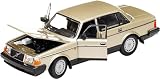
- Brand new box. Real rubber tires. Has steerable wheels. Officially licensed product. Has opening hood and front doors. Made of diecast with some plastic parts. Manufacturer's original unopened packaging. Detailed interior, exterior, engine compartment. Dimensions approximately L-7.5, W-3, H-2.25 inches.
Documented engine outputs
| Specification | Published figure | Qualification |
|---|---|---|
| 2000 9-5 Aero, 2.3-liter turbo four-cylinder | 230 hp | Saab Automobile, 1999 release for the 2000 model year |
| 2000 9-5 Aero with manual transmission | 258 lb-ft | Same Saab release; transmission-specific figure |
| 2000 9-5 Aero with automatic transmission | 243 lb-ft | Same Saab release; transmission-specific figure |
| Later high-performance Aero specification | 250 bhp and 350 Nm | Saab material published in 2004; model-year application must be checked |
| 9-5 Aero wagon road test | 8.2 seconds, 5–60 mph | Car and Driver period test; not a factory acceleration claim |
The four-cylinder engine’s broad torque makes the 9-5 feel effortless in everyday driving, especially when loaded. The manual and automatic figures above show why transmission choice matters: the quoted torque is not interchangeable between versions. A wagon buyer should also distinguish the 8.2-second road-test result from factory ratings and from sedan performance.
Who should buy it?
- Drivers who need sedan comfort or wagon cargo room but still want a turbocharged powertrain.
- Owners who see a BMW 5-series as a daily commuter, family car and long-distance cruiser rather than a track machine.
- Buyers willing to verify service history, transmission type and exact model year instead of assuming every Aero has the same specification.
5. Saab 9-3 Aero 2.8T V6: smoother six-cylinder power
The 9-3 Aero 2.8T V6 is the refinement-oriented choice among the compact cars. Saab press material from 2006 lists 250 hp and described this Aero as the fastest-accelerating production Saab at launch. Compared with the four-cylinder Viggen and other turbo fours, the V6 is intended to deliver a broader, smoother flow of torque rather than an abrupt, highly concentrated surge.
Because Saab sold the 9-3 in different markets with different equipment, verify the transmission, body style, steering specification and safety equipment on the individual car. The 250-hp figure belongs to the cited 2006 press material; it should not be applied automatically to every later or earlier Aero badge.
BMW replacement profile
This model fits a buyer who wants the compact dimensions of a 3-series but prefers six-cylinder smoothness and Saab’s driver-focused cabin. It is less of a lightweight, old-school hot hatch than the Viggen and more of a fast daily sedan, convertible or wagon, depending on configuration.
Rank #4

- Adult Collectible Display Model (For Ages 14+)
- Fully Assembled w/ Realistic Scale Landing Gear
6. Saab 9-3 Turbo X: the range-topping all-weather option
The 9-3 Turbo X is the headline modern performance Saab in this list. A 2008 Saab specification table records 280 hp and 400 Nm, the highest published output here. The Turbo X badge identifies a range-topping model with an XWD-flavored drivetrain concept, but drivetrain and equipment can differ by market, so confirm the car’s actual system before purchase.
Its attraction is not just peak power. The extra torque suits rapid overtaking, while all-wheel-drive hardware, where fitted, changes the way the car deploys that torque in wet or cold conditions. That makes it the closest Saab in this group to an all-weather performance BMW rather than a purely front-drive hot hatch.
What to verify
- Whether the specific market version has XWD and which transmission it uses.
- That the 280-hp, 400-Nm figures correspond to the 2008 specification rather than a different model year.
- That the car’s service records cover the turbocharged engine, transmission and all-wheel-drive components where applicable.
7. Saab 9-2X Aero: the Subaru-based wildcard
The 9-2X Aero is the outlier: a Saab-badged, Subaru-based hatchback built around all-wheel drive and a tuning-friendly compact format. The current evidence confirms the model’s existence in a federal vehicle-code table, but it does not establish a complete manufacturer specification or a verified period acceleration figure.
Free tools Windows power users keep installed
One-click scans. No signup required.
That limitation should shape a purchase decision. Treat the 9-2X Aero as an interesting platform rather than assuming that every advertised power number, drivetrain detail or equipment list is correct. Check the VIN, original market, engine and transmission, and use a dedicated manufacturer or period-test source to validate performance claims for the individual car.
Best Value

- 【V8 Model Engine Kit】This classic 8-cylinder internal combustion engine is a replica of a car engine. It accurately restores every detail of the real engine, including piston movement, valve train, turbocharger and exhaust system, showing the complex operating principles inside the engine, It is a fine product tailored for mechanical enthusiasts and model collectors, The compact design cleverly simulates the working process of a real V8 engine and is an excellent miniature engine kit
- 【Transparent Cylinder Head Design】This visible V8 engine model kit comes with an L-type motor and a battery box (requires 6 AA batteries, not included). The model features a transparent cylinder cover, allowing you to clearly observe the entire piston movement process and witness the intricate mechanical coordination and startup sequence inside the engine. It offers an in-depth exploration of the V8 engine’s structural complexity and engineering charm during the assembly process
- 【Educational and Family Fun】This small V8 engine kit that runs is not only a beautiful mechanical model, but also a high-quality STEM educational tool designed for teenagers aged 8 and above. In the process of assembly and debugging, it can cultivate children's creativity, hands-on ability and problem-solving ability. Whether in the school's STEM classroom, after-school technology club, or home technology laboratory, it is an ideal choice to stimulate interest and inspire thinking
- 【Great Gift for Adults & Kids】This V8 engine assembly kit is packaged in an exquisite gift box and is designed for mechanical enthusiasts, model collectors, and teenagers who love hands-on creation. Whether it is birthdays, holidays, Children's Day, summer camp activities, back-to-school surprises, Christmas, Thanksgiving, Easter, or Valentine's Day, this DIY engine model sets is a special gift full of creativity and technology, and is deeply loved by children, teens and even adults
- 【Premium Quality Material】This mini engine build kit is meticulously crafted from high-quality,eco-friendly ABS material that is non-toxic, odorless,highly durable.It has passed ASTM and CPSIA testing to ensure a safe and reliable building experience. we provide professional and attentive after-sales service for every customer.If you have any questions or need assistance during use - such as assembly instructions, part issues or product suggestions,please feel free to contact us at any time
Why it can replace a BMW
For a driver who wants all-weather traction, a compact hatchback and broad aftermarket familiarity, the 9-2X Aero can fill a role that a small all-wheel-drive BMW would otherwise occupy. Its Saab identity is unusual, but its underlying layout makes it fundamentally different from the front-drive 900 and 9-3 cars.
Independent reader supportYour contribution helps us test, update, and keep practical guides available for everyone.8. Later Saab 9-5 Aero and XWD variants: rare executive performance
Later 9-5 Aero and XWD variants extend Saab’s executive formula into a newer, rarer generation. They combine turbo power with a more contemporary cabin, long-distance comfort and, on applicable versions, all-wheel-drive traction. The body styles remain relevant to BMW shoppers because a sedan can serve as a 5-series substitute while a wagon handles family and equipment duties.
Exact horsepower, torque and XWD availability depend on model year and market. Do not transfer the 250-bhp-and-350-Nm figure quoted for the 2004 Aero specification to a later car without checking its documentation. Scarcity also means condition and provenance can matter more than a badge: two cars carrying the same Aero name may have different engines, transmissions and equipment.
What’s actually slowing this PC down?
Pick the symptom - the matching free tool is one click away.
How the eight cars differ in real-world use
| If your priority is… | Start with… | Reason |
|---|---|---|
| Classic Saab character and light, distinctive feel | 900 Turbo | Original front-drive turbo icon with documented period manual and trim variants |
| Fastback practicality with executive space | 9000 Aero | Large hatch opening and strong turbo torque |
| Maximum compact-car attitude | 9-3 Viggen | Halo model with B235R engine, larger turbo and Nimonic valves |
| Family wagon and long-distance comfort | First-generation 9-5 Aero | Executive dimensions, wagon body and clearly documented outputs |
| Smooth six-cylinder delivery | 9-3 Aero 2.8T V6 | 250-hp V6 and Saab’s launch claim for fastest acceleration |
| Highest stated power and torque | 9-3 Turbo X | 280 hp and 400 Nm in the 2008 specification |
| All-wheel-drive compact hatchback | 9-2X Aero | Subaru-based layout, subject to VIN and market verification |
| Newer executive Saab with available XWD | Later 9-5 Aero/XWD | More modern cabin and chassis, but greater rarity and specification variation |
Buying and ownership checks that matter
Saab performance cars span several decades, so the badge alone is not enough to identify the parts, calibration or drivetrain in front of you. Before committing to any example, document the exact model year and market, decode the VIN, confirm engine and transmission codes, and compare the equipment with period Saab documentation.
Inspection checklist
- Review invoices and service records rather than relying on an Aero, Viggen or Turbo X badge.
- Inspect the turbocharger system, cooling system, engine oil condition and exhaust for signs of neglected maintenance.
- Test the manual or automatic transmission when cold and hot, noting clutch engagement, shift quality and warning lights.
- Check suspension, steering, brakes, tires and body corrosion; a powerful engine cannot compensate for a neglected chassis.
- For XWD or other all-wheel-drive versions, verify that the system engages correctly and that all four tires match in size and wear.
- Confirm that replacement parts and a model-specific workshop manual are available for the exact year and regional specification before beginning a restoration.
Current purchase prices, surviving-car counts, reliability rankings, parts availability and BMW running-cost comparisons vary by market and are not fixed characteristics of a model. Evaluate the actual car, its documentation and local specialist support rather than assuming that rarity automatically means collectability or that a lower purchase price means lower ownership cost.
Which Saab should you choose?
Choose the 900 Turbo for classic style, the 9000 Aero for fastback practicality, the Viggen for compact-halo intensity, the first-generation 9-5 Aero for a genuine 5-series-sized alternative, the 9-3 Aero V6 for smooth six-cylinder power, the Turbo X for the highest stated output and all-weather potential, the 9-2X Aero for an all-wheel-drive hatchback experiment, and a later 9-5 Aero/XWD when you want a newer executive Saab and accept greater scarcity.
Quick Recap
Product prices and availability are accurate as of the date/time indicated and are subject to change. Any price and availability information displayed on Amazon at the time of purchase will apply.
The Tool Desk
Outbyte Driver Updater FREEScan for outdated or missing drivers - takes under a minuteDriver Scan →Outbyte PC Repair FREERepair Windows errors before they cause bigger problemsFix Now →



