NVIDIA replaced the planned DRIVE Atlan automotive SoC with DRIVE Thor on September 20, 2022. The company targeted Thor at automakers’ 2025 models and claimed up to 2,000 teraflops—roughly 2 petaflops—but the change was an architectural roadmap shift, not the disappearance of a consumer chip.
NVIDIA did not cancel a consumer product called Atlan. On September 20, 2022, it replaced the planned DRIVE Atlan generation in its automotive roadmap with DRIVE Thor, a centralized vehicle computer NVIDIA said could deliver up to 2,000 teraflops—about 2 petaflops—for automakers’ 2025 models.
As an Amazon Associate I earn from qualifying purchases.
The change was more significant than a clock-speed increase. Atlan was a planned automotive system-on-chip; Thor represented NVIDIA’s move toward consolidating automated driving, parking, driver and occupant monitoring, digital cockpit, infotainment, and rear-seat entertainment on one high-performance computing platform. Later NVIDIA materials describe a newer, Blackwell-based DRIVE AGX Thor implementation, so the 2022 launch figure should not be compared directly with later FP4 or INT8 figures.
What’s actually slowing this PC down?
Pick the symptom - the matching free tool is one click away.
What happened to DRIVE Atlan?
NVIDIA introduced DRIVE Atlan on April 12, 2021. The company described it as a “data center on wheels”: a future automotive SoC intended to combine high-performance computing, artificial intelligence, and automotive safety capabilities in one package. NVIDIA’s original roadmap called for Atlan samples in 2023 and production vehicles in 2025. NVIDIA’s Atlan announcement describes that earlier plan.
#1 Best Overall
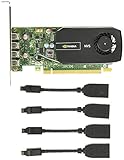
- Quad display support1
- Display Port 1.2 features.H.264 Encoder
- Versatile connectivity options using Mini Display Port (mDP) connector.NVIDIA FXAA and TXAA.Intelligent Power Management
- Multi-display experience with NVIDIA Mosaic technology.NVidia High-Definition Video Technology
- Maximum Power Consumption:35Watts
Atlan was therefore not a widely sold retail chip that was recalled or removed from consumer stores. It was a future automotive platform that never became the production generation NVIDIA publicly centered in that roadmap. Thor was its successor, announced before Atlan’s planned vehicle-production window.
What NVIDIA announced with DRIVE Thor
The September 2022 announcement presented Thor as a centralized automotive computer capable of handling several vehicle domains at once:
- Automated and assisted driving
- Automated parking
- Driver and occupant monitoring
- The digital instrument cluster
- In-vehicle infotainment
- Rear-seat entertainment
Historically, these functions have often been distributed across multiple electronic control units, domain computers, or dedicated vehicle systems. NVIDIA’s argument was that a sufficiently powerful central computer could replace some of that duplicated hardware. Fewer separate computers could potentially reduce system complexity, wiring, power consumption, and overall cost, although the actual result depends on an automaker’s vehicle architecture, safety requirements, and software design.
Thor was not intended to make every other control module in a vehicle disappear. Braking, steering, body electronics, networking, redundancy, and other safety-related functions can still require separate systems. The centralization pitch concerned the consolidation of major compute workloads, not a guarantee that one physical chip would control every vehicle function.
Thor’s original architecture and workload isolation
In the 2022 launch material, NVIDIA associated the original Thor design with its Grace CPU technology, an Ada Lovelace GPU, and AI capabilities introduced through the Hopper generation’s multi-instance GPU architecture. NVIDIA also highlighted virtualization and domain isolation.
That isolation is essential when infotainment and safety-relevant driving software share a computer. A cockpit application should not be able to interrupt or destabilize an automated-driving process. Virtualization allows different software environments to run concurrently, while isolation is intended to keep less-critical workloads separated from safety-critical ones.
In practical terms, the appeal of centralization is not simply “more GPU power.” It is the possibility of running a common software and hardware foundation across driving, parking, monitoring, and cockpit features while preserving boundaries between them. This is one reason Thor fits the broader software-defined vehicle strategy: automakers can build more functions around a common computing platform and potentially deliver new capabilities through software updates.
The Tool Desk
Outbyte Driver Updater FREEFix the driver behind crashes, sound loss and screen glitchesFind Drivers →Outbyte PC Repair FREEClear out junk files and repair common Windows errorsFree Scan →How fast is DRIVE Thor?
NVIDIA’s 2022 launch claim was up to 2,000 teraflops. In rounded terminology, that is approximately 2 petaflops, because 1 petaflop equals 1,000 teraflops.
Rank #2

- Chipset: NVIDIA GeForce GT 1030
- Video Memory: 4GB DDR4
- Boost Clock: 1430 MHz
- Memory Interface: 64-bit
- Output: DisplayPort x 1 (v1.4a) / HDMI 2.0b x 1
That number needs context:
- It was an NVIDIA headline specification, not an independent benchmark of a production vehicle.
- “Teraflops” alone does not identify the numerical precision, workload, software, or accelerator configuration used to produce the figure.
- It should not be treated as a direct measure of real-world autonomous-driving performance.
- It is not interchangeable with later figures reported for newer DRIVE AGX Thor platforms.
In January 2025, NVIDIA described the DRIVE AGX Thor used in its latest DRIVE Hyperion platform as being based on the Blackwell architecture and as the successor to production DRIVE Orin. In October 2025, NVIDIA’s Hyperion 10 material reported more than 2,000 FP4 teraflops, or 1,000 INT8 TOPS, per platform. Those are different metrics and precision contexts from the general “2,000 teraflops” description used at Thor’s 2022 introduction. NVIDIA’s DRIVE Hyperion update provides the later platform context, while NVIDIA’s developer forum discusses the later performance terminology.
The apparent change is best understood as product and roadmap evolution rather than as a simple contradiction. The 2022 announcement introduced one Thor design; later documentation describes a newer production-oriented implementation and uses more specific AI-performance measurements.
Why automakers wanted centralized vehicle computing
A modern vehicle can contain many computing systems, each with its own processor, software stack, sensors, update process, and safety constraints. That distributed approach can work, but it may also create duplicated hardware and make software integration more difficult.
Do these 3 things before closing this tab:
1Clear out junk files and repair common Windows errors2Scan for outdated or missing drivers - takes under a minute3Repair Windows errors before they cause bigger problemsA centralized platform such as Thor is intended to offer several potential advantages:
| Potential advantage | Why it matters | Important limitation |
|---|---|---|
| Consolidated hardware | One powerful computer may handle workloads that previously required several domain systems. | The vehicle may still need independent modules for redundancy, actuation, networking, or other safety functions. |
| Shared compute resources | Driving, parking, monitoring, and cockpit applications can use a common hardware foundation. | Workload scheduling and safety isolation become more demanding. |
| Software reuse | A common platform can simplify development across vehicle models and feature levels. | Each vehicle still requires integration, validation, calibration, and regulatory work. |
| Over-the-air feature potential | Centralized computing can support software updates and new AI-enabled features. | Updates must be securely managed and validated, particularly when they affect driving functions. |
| Lower system cost potential | Reducing duplicated computers and associated hardware may lower the total bill of materials. | A high-performance central computer, redundancy, cooling, and validation also carry substantial costs. |
This architecture is also intended to support increasingly capable perception and planning models, digital cockpit services, and in-vehicle AI. But raw compute is only one part of an automated-driving system. Sensors, software, training data, safety engineering, redundancy, maps, validation, and the vehicle’s actual operating design domain remain just as important.
Thor was a platform, not a consumer upgrade
For car enthusiasts, the most important buying clarification is that DRIVE Thor is not a graphics card or processor intended for installation in a personal vehicle. It is a professional automotive compute platform supplied through automaker, developer, and technology-partner programs. The relevant ecosystem includes hardware, DriveOS, sensor integration, safety engineering, development tools, and vehicle-level validation.
That is why a consumer cannot meaningfully “upgrade” a current car from DRIVE Orin to Thor by purchasing a board online. Even a compatible-looking computer would not provide the vehicle wiring, sensors, software, thermal design, redundant systems, safety case, or manufacturer integration required for operation.
Recommended Free Tools
For professional organizations, the relevant reference is the DRIVE AGX Thor development platform and the wider NVIDIA DRIVE ecosystem—not a retail NVIDIA GPU marketed as a replacement for Atlan or Thor.
Rank #3

- The new NVIDIA Quadro P1000 combines the latest GPU architecture and display technologies, delivering up to 60% better performance than the previous generation.
- Powered by NVIDIA Quadro Pascal GPU technology, the NVIDIA Quadro P1000 is the most powerful low-profile professional graphics solution available, providing professional users with the most memory and best performance available in a small form factor workstation graphics card.
- The NVIDIA Quadro P1000’s advanced and power efficient NVIDIA Quadro Pascal architecture GPU, 4K and 5K display support, and extensive ISV certification provide the most powerful low profile graphics solution available, delivering the performance and capabilities required by demanding professional applications in a compact and powerful professional graphics card.
- An expansive visual workspace of up to four 4K displays lets professionals view their designs, scenes or projects in stunning detail.
Automaker plans: the 2025 target and what it did—and did not—mean
NVIDIA said Thor would be available for automakers’ 2025 models. It identified Geely-owned ZEEKR as the first customer and said initial production vehicles were planned for early 2025. This was an announced development and production plan, not proof that every 2025 vehicle—or even every vehicle from a named automaker—used Thor.
The distinction matters because automotive announcements usually cover a platform program that still has to pass vehicle integration, manufacturing, software, safety, and market-specific regulatory milestones. A supplier’s statement that a vehicle is planned, developing, or “ready” for a capability is not the same as an independently confirmed vehicle-level launch or certification.
By 2025 and 2026, NVIDIA was presenting Thor as part of the broader DRIVE Hyperion ecosystem rather than as an isolated SoC. NVIDIA’s October 2025 Hyperion 10 announcement described a production-oriented platform containing DRIVE AGX Thor, DriveOS, a qualified sensor suite, and a qualified board design. The listed reference sensor architecture included:
Quick wins for a faster PC:
Repair Windows errors before they cause bigger problemsFix Now →Scan for outdated or missing drivers - takes under a minuteDriver Scan →Clear out junk files and repair common Windows errorsFree Scan →- 14 high-definition cameras
- 9 radars
- 1 lidar
- 12 ultrasonic sensors
A reference architecture does not mean every Thor-equipped vehicle will use that exact sensor count. Automakers can select different sensors and vehicle configurations subject to the platform’s qualification and integration requirements.
NVIDIA also reported that BYD, Geely, Isuzu, and Nissan were developing Level 4-ready vehicles on DRIVE Hyperion. It specifically said Isuzu and TIER IV were collaborating on Level 4 autonomous buses using DRIVE AGX Thor. Separately, NVIDIA announced a 2025 collaboration with Hyundai Motor Group in which DRIVE AGX Thor and safety-certified DriveOS were to support advanced driver assistance, next-generation safety features, and in-vehicle intelligence. These are NVIDIA-reported partnerships and development plans; they should not be rewritten as proof that all named companies had already shipped Thor-equipped production vehicles.
Independent reader supportYour contribution helps us test, update, and keep practical guides available for everyone.Safety, cybersecurity, and the limits of the claims
NVIDIA said the Thor SoC and AGX board were developed toward ISO 26262 compliance. It also said the software stack was designed for ISO 26262 and ASPICE compliance, and connected the platform’s development and production process with ISO 21434 automotive cybersecurity requirements and pathways related to UNECE Regulation 155.
Those statements describe engineering goals, processes, and platform positioning. They do not establish that every vehicle using Thor has achieved every applicable certification or regulatory approval. Vehicle-level approval depends on the complete vehicle, its software, its intended driving functions, its operating conditions, and the relevant jurisdiction.
In January 2025, NVIDIA announced that DRIVE Hyperion had passed safety assessments by TÜV SÜD and TÜV Rheinland. Those assessments concerned the broader autonomous-driving platform and its safety and cybersecurity work. They should be distinguished from homologation or regulatory approval of a particular production vehicle.
Rank #4

- Chipset Manufacturer NVIDIA
- Chipset Line Quadro
- Chipset Series P
- Chipset Model P1000
- Standard Memory 4 GB
The same principle applies to Level 4 language. “Level 4-ready” describes a platform or development objective; it does not by itself mean that a consumer can use an autonomous vehicle without supervision everywhere, or that a particular vehicle has received permission for unrestricted operation.
Atlan versus Thor: the short version
| DRIVE Atlan | DRIVE Thor | |
|---|---|---|
| Announcement | April 2021 | September 2022 |
| Roadmap position | Planned automotive SoC generation | Successor centralized automotive compute platform |
| Original timing | Sampling planned for 2023; production vehicles targeted for 2025 | Automakers’ 2025 models; ZEEKR named for planned early-2025 production vehicles |
| Primary concept | “Data center on wheels” for autonomous vehicles | One centralized computer for driving, parking, monitoring, cockpit, and entertainment workloads |
| Performance language | Roadmap-era platform description | Up to 2,000 teraflops in the 2022 launch announcement |
| Later evolution | Replaced in the public roadmap | Later DRIVE AGX Thor materials describe a Blackwell-based production-oriented implementation |
Bottom line
NVIDIA’s 2022 move from Atlan to Thor was a roadmap replacement and architectural shift, not the cancellation of a retail automotive chip. Atlan was a planned generation aimed at 2025 vehicles. Thor was introduced as a more ambitious centralized computer, with NVIDIA claiming up to 2,000 teraflops and targeting automaker programs for 2025.
The most accurate way to read the story today is to separate three things: the original 2022 Thor announcement, the later Blackwell-based DRIVE AGX Thor implementation, and the broader DRIVE Hyperion vehicle platform. Thor’s importance lies less in the headline petaflop number than in NVIDIA’s attempt to make one safety-conscious computing foundation handle much of a software-defined vehicle’s driving and cockpit workload.
Frequently Asked Questions
Was NVIDIA DRIVE Atlan canceled?
No. DRIVE Atlan was a planned automotive system-on-chip announced in 2021, not a consumer product that was recalled from stores. NVIDIA replaced that roadmap generation with DRIVE Thor before Atlan reached broad production use.
When was DRIVE Thor supposed to arrive in cars?
NVIDIA announced Thor on September 20, 2022, for automakers’ 2025 models and said Geely-owned ZEEKR planned initial production vehicles for early 2025. Those were announced plans, not proof that every 2025 vehicle or named automaker had already shipped a Thor-equipped car.
Does DRIVE Thor really deliver 2 petaflops?
The 2,000-teraflop figure was NVIDIA’s launch-era, up-to performance claim. Later materials describe a newer Blackwell-based DRIVE AGX Thor and report more than 2,000 FP4 teraflops or 1,000 INT8 TOPS per platform. Those metrics use different precision and measurement contexts.
Can a consumer buy and install DRIVE Thor in a car?
No. DRIVE Thor is a professional automotive development and production platform. It requires vehicle integration, sensors, DriveOS, thermal and electrical systems, safety validation, and automaker support; it is not a retail computer upgrade for an existing car.
PC Slower Than It Used to Be?
A free scan shows the junk files, broken settings and background clutter dragging Windows down - then fixes them in one click.Free scan · Windows 10 & 11Outdated Drivers Are Slowing You Down
One free scan finds every outdated or missing driver and matches the right update for your exact hardware.Free scan · exact hardware matchThe Bottom Line
Bottom line: DRIVE Thor replaced the planned DRIVE Atlan generation in NVIDIA’s automotive roadmap. It was announced for automakers’ 2025 models as a centralized vehicle computer—not a consumer product—with a launch-era claim of up to 2,000 teraflops. Later Blackwell-based Thor and DRIVE Hyperion figures use different precision and platform contexts, so they should not be treated as one unchanged benchmark.
Quick Recap
Product prices and availability are accurate as of the date/time indicated and are subject to change. Any price and availability information displayed on Amazon at the time of purchase will apply.




