Windows Errors? Fix Them Before They Spread
Repair common Windows errors and clear accumulated junk for a smoother, more stable PC - no reinstall needed.Free scan · no reinstallOutdated Drivers Are Slowing You Down
One free scan finds every outdated or missing driver and matches the right update for your exact hardware.Free scan · exact hardware matchThe headline refers to NASCAR’s ABB NASCAR EV Prototype, unveiled in July 2024. NASCAR reported its tunable electric powertrain at 1,000 kW peak—about 1,341 mechanical horsepower by unit conversion. NASCAR published the kilowatt figure, not an exact 1,340-hp rating. The car is an all-wheel-drive demonstrator built to explore electrification, not evidence that NASCAR is replacing its combustion-powered race cars.
Why the power figure is written as 1,340 horsepower
NASCAR’s July 6, 2024 announcement gives the prototype’s peak power as 1,000 kW. Converting kilowatts to mechanical horsepower yields approximately 1,341 hp, which is commonly rounded to 1,340. The horsepower number is a conversion, not a separate rating quoted by NASCAR. NASCAR’s announcement is the source for the published power specification.
What the ABB NASCAR EV Prototype is
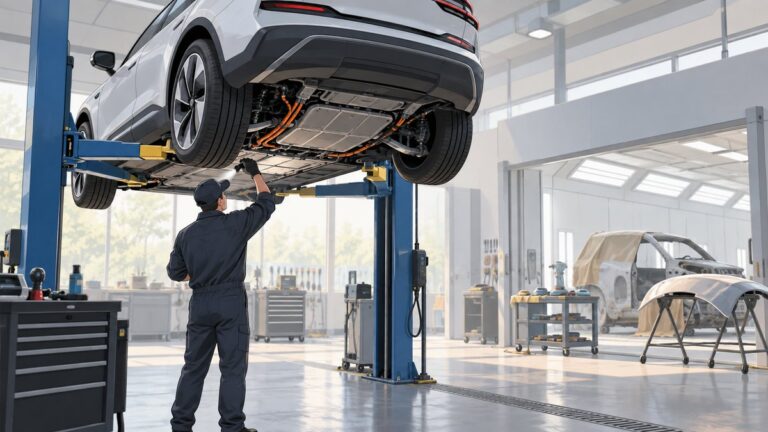
NASCAR developed the fully electric CUV-bodied prototype through its Research & Development Center with Chevrolet, Ford and Toyota. It is an engineering demonstrator, rather than a production vehicle or a model announced for a regular racing series.
Powertrain and battery
- Motors: three STARD UHP six-phase electric motors, with one at the front and two at the rear.
- Drive: all-wheel drive.
- Battery: a 78-kWh liquid-cooled pack.
- Peak power: 1,000 kW, or about 1,341 mechanical hp by conversion.
- Braking: regenerative braking.
Chassis, body and tires
The prototype uses a modified NASCAR Next Gen chassis, sharing steering, suspension, brakes and wheels with the Cup Series car. Its body uses a flax-based composite, and it runs specially designed Goodyear Racing Eagle tires. NASCAR said the combination of regenerative braking and the electric powertrain made the car suited to road courses and short oval tracks; that description does not establish a race schedule or a lap-time comparison.
#1 Best Overall
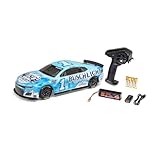
- Fully assembled with no additional items needed
- Reaches speeds of 20+ mph
- Recharge in an hour — race nonstop for 20 minutes
- Designed tough to survive the big wreck
- Can be tuned and upgraded like a real Cup car
Is NASCAR going electric?
The prototype shows NASCAR and its manufacturer partners exploring a different powertrain, not announcing a wholesale switch. In a July 2024 interview, NASCAR said an electric series was not on the horizon and that there was no concrete plan then for what electrified racing might look like. NASCAR’s 2025 impact report later described three electric prototypes reaching full speed in an EV Showcase race at the Chicago Street Race. That was a demonstration, not evidence of a recurring series.
ABB is NASCAR’s named electrification partner. ABB describes the partnership as exploring high-performance electric racing and electrification in race vehicles, infrastructure and energy education. NASCAR’s stated goal of zero carbon emissions across its core operations by 2035 applies to operations; it is not a deadline to replace combustion race cars.
Rank #2
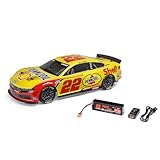
- Fully assembled with no additional items needed
- Reaches speeds of 20+ mph
- Recharge in an hour — race nonstop for 20 minutes
- Designed tough to survive the big wreck
- Can be tuned and upgraded like a real Cup car
How it differs from later NASCAR electric prototypes
The 2024 ABB/NASCAR prototype is distinct from manufacturer-specific demonstrators introduced in 2025. Similar battery and motor details do not make them the same car, and the cited announcements do not establish either as part of a recurring EV competition series.
| Prototype | Power as reported | Battery and motors | Chassis relationship | What is established |
|---|---|---|---|---|
| ABB NASCAR EV Prototype, unveiled July 2024 | 1,000 kW peak (about 1,341 mechanical hp by conversion), per NASCAR | 78-kWh liquid-cooled battery; three STARD UHP six-phase motors | Modified Next Gen chassis, with shared steering, suspension, brakes and wheels | NASCAR-developed demonstrator; no recurring series established |
| Chevrolet Blazer EV.R, introduced February 2025 | Over 1,300 hp, per General Motors | 78-kWh battery; three six-phase motors | Built on NASCAR Next Gen chassis and suspension components; programmable AWD | Separate Chevrolet prototype; GM said it was tested at race pace at Carolina Motorsports Park |
| Ford Mustang Mach-E demonstrator, announced January 2025 | Not stated in Ford Racing’s announcement | Not stated in that announcement | Not stated in that announcement | Ford Racing announced an all-electric NASCAR demonstrator; no recurring series established |
Chevrolet’s Blazer EV.R is a later, separate program, not the car behind the 1,000-kW figure. Its manufacturer’s “over 1,300 horsepower” claim is reported in Chevrolet’s own announcement and should not be substituted for NASCAR’s specification of the 2024 prototype.
Rank #3
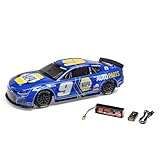
- Fully assembled with no additional items needed
- Reaches speeds of 20+ mph
- Recharge in an hour — race nonstop for 20 minutes
- Designed tough to survive the big wreck
- Can be tuned and upgraded like a real Cup car
Why NASCAR built the demonstrator
NASCAR described the development effort as a way to explore electrification and inform possible future technology while keeping its core racing identity centered on combustion engines. The effort gives NASCAR and its OEM partners a vehicle in which to investigate electric racing hardware; it does not, on its own, establish a timetable for adopting it in competition. John Probst, NASCAR senior vice president and chief racing development officer, said: “We, from a NASCAR perspective, want to be in the driver’s seat when it comes to where our future is going.”
ABB characterizes its partnership with NASCAR as extending beyond the vehicle to electrification in infrastructure and energy education. The partnership announcement does not turn the prototype into a production car or a commitment to an electric NASCAR series. More detail on the partnership is available from ABB, and NASCAR’s interview on the project is at Inside NASCAR’s first foray into electrification.
Quick Recap
Best Value

- CLASSIC AMERICAN STOCK CAR LEGEND – Recreate the 1971 Mercury Cyclone, a brutal-era stock car built for speed, power, and domination on the oval track.
- RACE-READY DETAILS INCLUDED – Features wide Goodyear racing tires, full roll cage, fire extinguisher, racing seat, and detailed suspension for authentic stock car realism.
- DETAILED 429 C.I.D. V8 ENGINE – Build the legendary big-block engine that powered Mercury’s stock car efforts during the golden age of racing.
- ALL-NEW RACING DECALS & VINTAGE PACKAGING – Includes fresh water-slide decals with authentic racing livery, wrapped in classic MPC-style packaging collectors love.
- FOR EXPERIENCED MODELERS & COLLECTORS – Skill Level 2 kit with 135 parts, 8-inch finished length, and detailed instructions. Recommended for ages 10+.
Rank #4

- This plastic model requires assembly and painting. Adhesives, tools, paints, etc., sold separately
- 1/24 scale unpainted plastic assembly kit
- Precision reproduction of V8 engines, suspension, roll bar, net, etc
- Includes chrome plated parts, soft resin tires and decals
- Salvinos J R Model Salvinos Jr Models (USA) Imported Plastic Model
Product prices and availability are accurate as of the date/time indicated and are subject to change. Any price and availability information displayed on Amazon at the time of purchase will apply.