The biggest difference is the job you are doing. On a closed track, you repeat the same corners in a managed environment so you can refine braking, lines, body position and throttle control. On a public road, traffic, intersections, debris, weather, poor surfaces and unseen hazards make continuous risk management more important than carrying speed. Track practice can improve emergency skills, but it does not make public-road riding risk-free or turn racing techniques into appropriate street habits.
Track riding and street riding solve different problems
A motorcycle track is a closed circuit with a known direction, predictable corner sequence, no public intersections or opposing traffic, organized flags and event procedures. Many events inspect motorcycles, group riders by ability and provide medical support. Those controls remove variables; they do not remove the possibility of a crash.
As an Amazon Associate I earn from qualifying purchases.
A public road is an open system. A driver can turn across your path, an animal can enter the lane, rain can expose oil, a painted line can reduce grip, and a blind bend can hide stopped traffic. Lane boundaries, legal speed, sight distance and an escape route therefore matter as much as steering or braking technique.
| Riding factor | Closed-course track | Public street |
|---|---|---|
| Primary objective | Repeatable performance practice with feedback | Arrive with a safety margin while managing changing hazards |
| Environment | Known circuit, managed flags, no ordinary traffic, controlled passing and often motorcycle inspection | Traffic, intersections, lane conflicts, debris, weather, wildlife, variable pavement and drivers who may not see you |
| Braking | Use repeatable reference points and coaching to refine braking, downshifts and corner entry | Brake early enough to preserve options, account for surface and sight-distance changes, and keep an escape path |
| Cornering line | Refine a line over repeated laps on consistent geometry | Choose lane position and path for visibility, grip and escape space; never commit to a blind or dirty apex |
| Body position | Instructors may teach deliberate inside movement to manage lean at track pace | Remain compact and lane-centred; lean with the motorcycle and use only modest changes when clearance requires it |
| Throttle and traction | Repeat controlled acceleration and traction management toward corner exit | Use smooth inputs and retain grip for rain, paint, metal, gravel or an unexpected hazard |
| Risk controls | Flags, passing rules, inspections, skill groups and event discipline | Search-Evaluate-Execute decisions, visibility, space, legal speed and conservative choices |
How braking changes between a track and a street
Track braking is repeatable and coached
On a track, you can identify a braking board, marshal post, pavement seam or other reference and approach it on successive laps. An instructor can watch your posture, brake release, downshifts and turn-in. The aim is not simply to brake later. It is to make the motorcycle stable, use the available grip smoothly and arrive at the corner with a controllable speed.
#1 Best Overall

- Premium leather main chassis constructed from 1.3mm genuine cowhide leather for enhanced durability and abrasion resistance.
- High-density perforation zones throughout suit plus perforated leather panels on torso and arms for maximum levels of ventilation and airflow.
- Extended, reinforced High Resistant Stretch Fiber (HRSF) panels on arms, crotch and legs for additional strength and comfort.
- Pre-curved sleeve and leg construction for reduced rider fatigue.
- CE Level 1 shoulder, elbow and knee protectors. Back Protector Included.
Track sessions let you isolate one variable at a time. You might first establish a consistent braking point, then work on progressive lever pressure, then coordinate the final downshift and release as you turn. Because the corner repeats, you can compare each attempt without also solving a new intersection or an approaching vehicle.
Street braking preserves choices
On the street, a reference point can disappear behind a vehicle, move because of road work or prove irrelevant when a car enters the bend. Brake before the surface becomes uncertain and leave room to continue braking, steer around a hazard or stop. Your sight distance, not a memorized marker, determines whether the entry speed is appropriate.
The Motorcycle Safety Foundation (MSF) advises developing techniques before entering traffic, especially emergency braking and swerving. Practice those maneuvers in a controlled area first, then apply them on the road with a reserve for imperfect surfaces and human error. Do not use a track braking marker as a street target.
Do these 3 things before closing this tab:
1Repair Windows errors before they cause bigger problems2Scan for outdated or missing drivers - takes under a minute3Clear out junk files and repair common Windows errorsEmergency braking has no fixed street number
There is no universal correct street speed, braking distance or lever-pressure percentage. Motorcycle type, tires, load, weather, pavement and rider reaction all change the result. Use both brakes as the motorcycle and conditions require, keep the motorcycle as upright as possible while stopping in a straight line, and release or reduce braking as needed to steer around a developing hazard. A qualified course can help you learn the feel without testing it in traffic.
Cornering lines: speed is secondary to sight distance
What a track line is designed to do
On a circuit, the line is normally selected to make the next part of the lap efficient and repeatable. Instructors may explain a turn’s entry, geometric or late apex, and exit, then help you connect those points while keeping the motorcycle stable. You can adjust the line over several laps because the track surface, direction and corner geometry are known.
That line is conditional. It assumes the track is clear, the corner is correctly identified and the surface has predictable grip. A line that is quick on a closed course can place you in the wrong part of a public lane when a car, pothole or patch of gravel appears.
Street cornering protects visibility and escape space
For a road bend, choose a lane position and path that maximize what you can see while keeping the entire rider and motorcycle inside the lane. Enter at a speed that allows you to stop or change direction within the visible, usable road. Avoid crossing the centre line, cutting across a blind apex or moving toward debris simply because that is where a track line would run.
The Tool Desk
Outbyte Driver Updater FREEScan for outdated or missing drivers - takes under a minuteDriver Scan →Outbyte PC Repair FREEClear out junk files and repair common Windows errorsFree Scan →Rank #2
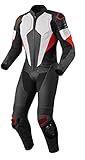
- 1.2-1.3mm thick drum dyed top-grain cowhide leather for excellent abrasion resistance
- Dual stitched main seams for excellent tear resistance
- Schoeller Keprotec with Dupont Kevlar(R) at crotch, on inner arms, and behind the knees for perfect fit and ease of movement
- YKK zippers throughout
- Removable Hard CE approved armor at knees, shoulders, and elbows. Exterior TPU Armors at shoulders, elbows and knees
MSF states, “Corner within your skill limits. Aggressive cornering is a major cause of crashes.” On an unfamiliar road, a conservative entry gives you time to identify tightening radius, oncoming traffic, gravel, standing water or a stopped vehicle. If the surface or sight line is uncertain, slow before the bend rather than trying to correct after you have committed.
Lane position is a living decision
There is no permanently safest strip of pavement. Move within your lane to improve sight distance, increase separation from a vehicle, avoid a damaged surface or create an escape route, then return to a position that keeps you visible and gives you room. Check mirrors and blind spots before changing lane position, and account for the possibility that an oncoming vehicle may cross its line.
Body position: transfer the principle, not the racing pose
Why instructors move the rider inside on a track
Track coaching may ask you to shift your torso and head toward the inside of a turn, support your weight with the outside leg and keep your arms relaxed. Moving the rider can reduce the lean angle required for a given speed and radius, leaving more cornering-clearance margin at track pace. It also helps you look through the turn and prepare for the exit.
This is a deliberate skill that should be learned progressively. An instructor can correct premature movement, a locked elbow, a foot position that reduces control or a head position that limits vision. Knee-down contact is not a requirement, a safety measure or evidence that a rider is ready for faster street riding.
Street posture prioritizes compact control
Ordinary road guidance is to lean with the motorcycle, keep your body and machine within the lane, and remain ready to change direction. Large movements can consume lane space, distract you from traffic or make a mid-corner correction harder. A modest inside shift may be useful on a tight turn or when clearance is limited, but it should not be used to justify a higher entry speed.
The practical transfer is to keep your eyes up, relax your upper body, support yourself with your legs and make smooth steering inputs. Do not reproduce race pace, deep trail braking or an exaggerated hanging-off position on a public road merely because it felt effective during a coached session.
Throttle, downshifts and traction management
Track exits provide a controlled place to learn
After turn-in, track coaching can help you coordinate a stable throttle, progressive acceleration and upshifts as the motorcycle stands up. Repeating the same exit teaches how throttle changes load the rear tire and how abrupt inputs can disturb the chassis. Some schools also discuss traction-control settings and how electronic intervention feels.
Rank #3
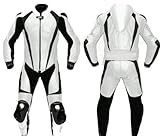
- 1.2-1.3mm thick drum dyed top-grain cowhide leather for excellent abrasion resistance
- Dual stitched main seams for excellent tear resistance
- Schoeller Keprotec with Dupont Kevlar(R) at crotch, on inner arms, and behind the knees for perfect fit and ease of movement
- YKK zippers throughout
- Removable Hard CE approved armor at knees, shoulders, and elbows. Exterior TPU Armors at shoulders, elbows and knees
Use the throttle to maintain balance first and accelerate second. A smooth roll-on that begins when the motorcycle is pointed toward the exit is more valuable than an aggressive opening that overwhelms the tire or forces a wider line.
Street grip is uncertain by definition
Road contamination may be invisible until the tire is on it. Paint, metal covers, wet leaves, diesel, sand and rain can reduce grip; a bump can unload a tire just as you apply power. Keep a reserve of traction, make throttle and brake changes progressively, and avoid abrupt downshifts that can lock or unsettle the rear wheel.
Electronic aids can help, but they cannot create grip or guarantee a straight path. Select a mode appropriate to the conditions, keep the motorcycle maintained and treat a warning light or unexpected intervention as a reason to inspect the machine rather than as permission to ride faster.
Risk management on a track and on the street
Track rules are part of the technique
Before a session, learn every flag, pit-lane procedure, passing rule and track limit. Follow the event’s novice-group instructions even if you have road experience. Hold your line when required, signal only in the manner the organizer specifies and never stop on the racing surface unless directed. A track’s medical response and inspection process reduce exposure to some hazards, but another rider’s mistake, mechanical failure or your own error can still cause a serious injury.
Street riding uses Search-Evaluate-Execute
MSF’s Search-Evaluate-Execute approach is a useful mental model: search actively for vehicles, surface changes and escape routes; evaluate the threat, your available space and your visibility; then execute a smooth, lawful response. Keep a following gap, avoid lingering beside vehicles, use headlights and high-visibility equipment appropriately, and assume a driver may not see you.
Free tools Windows power users keep installed
One-click scans. No signup required.
Legal speed is a ceiling, not a target. Reduce speed for darkness, rain, congestion, unfamiliar roads, limited sight distance and fatigue. The correct street decision may be to abandon a cornering line, straighten briefly while braking, or stop and reassess.
Can track riding make you safer on the road?
It can improve specific skills when instruction and conditions are appropriate. Repeated braking, cornering, throttle and body-control exercises give you a chance to recognize traction limits and correct habits away from traffic. Better vision and smoother controls can support an emergency response on the street.
Rank #4
- Premium leather main chassis constructed from 1.3mm genuine cowhide leather for enhanced durability and abrasion resistance.
- High-density perforation zones throughout suit plus perforated leather panels on torso and arms for maximum levels of ventilation and airflow.
- Extended, reinforced High Resistant Stretch Fiber (HRSF) panels on arms, crotch and legs for additional strength and comfort.
- Pre-curved sleeve and leg construction for reduced rider fatigue.
- CE Level 1 shoulder, elbow and knee protectors. Back Protector Included.
Transfer the underlying skills rather than the track objectives. A track rewards consistency and efficient lap time; a road rewards visibility, options and margin. Track practice does not train you for every public-road hazard, and it does not remove crash risk. A rider who leaves a track believing every blind bend should be attacked at race pace has learned the wrong lesson.
A formal bridge before your first track day
MSF describes its Advanced RiderCourse as a set of braking and cornering drills that can improve street skills or help prepare a rider for a track day. It is a useful option for riders who want structured practice before entering a circuit. A motorcycle track school can then teach flags, lines, braking, throttle control and group etiquette at a pace matched to your ability. The U.S. Air Force motorcycle safety module recommends completing a track school before treating ordinary track days as practice.
Street techniques that should remain non-negotiable
- Build skills before traffic. Practice emergency braking and swerving in a controlled area and continue refining them through qualified instruction.
- Protect the sight line. Enter a bend slowly enough to stop or steer within the visible road, and never cross lane boundaries to improve a line.
- Keep a lane-sized margin. Leave room from the centre line, edge, parked vehicles and surface defects so a correction remains possible.
- Use smooth controls. Abrupt brake, clutch, gear or throttle changes can reduce stability when grip is already limited.
- Plan an escape. Identify where you could go if a vehicle turns across you or the road surface fails to provide grip.
- Respect conditions. Rain, darkness, wind, cold tires, passengers and luggage all require a more conservative pace and larger gap.
- Corner within your ability. If you are unsure whether the turn tightens, slow before entry and be prepared to stop.
Protective equipment: the shared baseline and track additions
MSF identifies a full-face helmet, protective jacket and pants, gloves and over-ankle boots as core motorcycle gear. Its street-riding safety system also includes eye protection and high-visibility options. A helmet should be certified for the jurisdiction, fit snugly without pressure points, be undamaged and fasten correctly. Replace it after a significant impact or when the manufacturer’s service guidance says its materials have aged out.
Track organizers can impose stricter rules than a normal street ride. Requirements vary by event, so read the participant information before paying or traveling.
| Equipment or rule | What to verify with the organizer | Why it matters |
|---|---|---|
| Helmet | Accepted certification, date or condition limits, and whether a full-face design is mandatory | Track speeds and repeated sessions increase the consequence of head impact |
| Suit | One-piece requirement or approved two-piece suit that joins securely | Prevents jacket separation and provides abrasion and impact protection |
| Back protection | Integrated protector or a separate certified insert | Some events require it even when street equipment does not include one |
| Gloves and boots | Gauntlet gloves, ankle coverage, sliders or fastening rules | Protects hands and feet during a slide and keeps gear secured |
| Motorcycle condition | Tire age and condition, fluid leaks, brake pads, controls, lights, mirrors and required tape or removal | A technical failure can endanger you and other riders |
| Noise and passing | Sound limit, quiet hours, passing zones and novice-group restrictions | Non-compliance can stop your participation or create a collision risk |
Use a properly fitted full-face motorcycle helmet and confirm its certification separately from any purchase decision. Gear protects you after a fall; it does not make an unsafe line or excessive speed safe.
Independent reader supportYour contribution helps us test, update, and keep practical guides available for everyone.How to prepare for a first motorcycle track day
- Choose instruction first. Select a motorcycle track school or an event with a genuine novice group, classroom briefing and on-track coaching. If your braking and swerving practice is limited, consider the MSF Advanced RiderCourse before the event.
- Read the event rules. Confirm helmet certification, one-piece or two-piece suit policy, back protector, tire requirements, noise limit, passing rules, rider-group structure, flags, rain policy and medical arrangements.
- Inspect the motorcycle. Check tire condition and pressures according to the event and tire-maker guidance, brake-pad thickness, fluid levels, chain or belt, throttle return, steering bearings and fasteners. Repair leaks and faults before arrival.
- Prepare the controls. Remove or secure mirrors and loose accessories as required, tape lights if instructed, set lever positions you can operate while relaxed and bring basic tools, fluids and a way to record setup notes.
- Arrive rested and hydrated. Fatigue, heat and dehydration degrade vision and judgment. Eat normally, bring water and plan breaks rather than using every session.
- Attend the riders’ briefing. Learn the circuit direction, pit entry, pit exit, flags, passing protocol, where to re-enter after an off-line moment and what to do after a mechanical problem.
- Use the first session to learn. Ride at a pace that leaves substantial margin, identify corner sequence and surface changes, and follow the instructor’s line without chasing another rider.
- Change one thing at a time. Work on vision, braking release, body position or throttle—not all four at once. If a change makes you tense, return to the previous setting and ask the coach.
- Stop before control deteriorates. Come in if tires, brakes, concentration or weather are no longer within your plan. A session is not a test of endurance.
Common mistakes when street riders move to the track
Chasing lap time immediately
Trying to match a faster rider encourages late braking, rushed turn-in and fixation on the rear wheel ahead. Start in the correct ability group, keep a visible gap and build consistency before increasing pace.
PC Slower Than It Used to Be?
A free scan shows the junk files, broken settings and background clutter dragging Windows down - then fixes them in one click.Free scan · Windows 10 & 11Outdated Drivers Are Slowing You Down
One free scan finds every outdated or missing driver and matches the right update for your exact hardware.Free scan · exact hardware matchAssuming a familiar road is a circuit
A road you have ridden many times can still contain a new hazard. There are no guaranteed flags, clear run-off areas or medical staff at the next bend. Keep street margins even when the pavement feels familiar.
Best Value

- 1.4-1.5mm thick drum dyed top-grain cowhide leather for excellent abrasion resistance
- Dual stitched main seams for excellent tear resistance
- Zippers throughout
- Full circumferential zipper at waist allows the jacket to be removed from pants and makes the suit legal on all racing tracks
- Patches for attaching knee pucks are sewn on
Using a track apex on a blind road corner
A late or geometric apex is selected for a known corner. On the street, a blind apex may hide an oncoming vehicle, gravel or a stopped car. Move your priority from clipping a point to preserving sight distance.
Overworking body position
Exaggerated hanging-off can consume lane space and make you stiff. Keep the movement small enough that you can steer, brake and look through the turn without delay.
Treating electronics as permission
ABS and traction control can help manage an error, but they cannot overcome a contaminated surface, a blind obstacle or a speed that exceeds the available distance. Know what your motorcycle’s systems do and leave margin for conditions outside their design.
What’s actually slowing this PC down?
Pick the symptom - the matching free tool is one click away.
Why ABS matters especially on unpredictable roads
Antilock braking is particularly valuable when a street emergency demands maximum braking and the surface or rider input is imperfect. The Insurance Institute for Highway Safety reported a 22% lower fatal-crash rate for motorcycles equipped with optional ABS compared with the same models without it. The Highway Loss Data Institute reported 25% fewer collision insurance claims for motorcycles with ABS, or 28% fewer when ABS motorcycles also had combined brake controls. Those figures describe observed crash and claim differences, not a guarantee for any individual rider.
IIHS reported in an August 2026 update that 71% of 2025 motorcycle models had standard ABS and another 11% offered it as an option. When choosing or replacing a motorcycle for road use, identify whether ABS is standard, optional or unavailable for the exact model and market. Continue practicing smooth braking; ABS is a backup, not a substitute for looking ahead and preserving space.
What cannot be reduced to one “correct” number
Official guidance does not establish a universal street speed, track speed, lean angle, tire-temperature target or braking marker. These values depend on the motorcycle, tires, pavement, weather, rider, circuit and session format. A coach may provide a reference for a particular corner and machine, but it should not be presented as a public-road rule.
The durable distinction is simple: use the track to learn repeatable control under supervision, and use the street to manage uncertainty with visibility, space and legal, conservative decisions. Carry the smoothness and awareness across; leave the race pace and circuit-specific line at the circuit.
Recommended Free Tools
Quick Recap
Product prices and availability are accurate as of the date/time indicated and are subject to change. Any price and availability information displayed on Amazon at the time of purchase will apply.




