The Tool Desk
Outbyte Driver Updater FREEScan for outdated or missing drivers - takes under a minuteDriver Scan →Outbyte PC Repair FREEClear out junk files and repair common Windows errorsFree Scan →The safest motorcycle helmet is one that fits your head closely, carries the road-use certification required where you ride, and suits your riding conditions. Start with head circumference and shape, then try several helmets in person. A size chart can narrow the choices, but it cannot show whether a helmet creates hot spots, shifts during movement, or matches your head shape. Confirm the helmet’s own safety label before buying; marketing language, a marketplace listing, or a familiar brand name is not a substitute for certification.
Make these three checks before comparing features
- Fit: The helmet should feel snug with even pressure, remain stable when you shake your head, and have no painful pressure points.
- Legal mark: Check the standard required in the country or state where the helmet will be used. U.S. DOT/FM VSS No. 218, UN ECE Regulation 22.05 or 22.06, and SHARP ratings are not the same thing.
- Use: Choose coverage, ventilation, visor or goggle compatibility, and weather protection for your actual street, touring, dual-sport, or off-road riding.
Only after those checks should shell material, ventilation systems, graphics, communication compatibility, or visibility features decide between otherwise suitable helmets.
As an Amazon Associate I earn from qualifying purchases.
How do I know if a motorcycle helmet fits?
Measure your head correctly
Use a flexible cloth tape. Hold it just above your eyebrows, take it around the widest part of your head, and include the thickest point at the back. Record the circumference and compare it with the manufacturer’s size chart. This gives you a starting size; it does not guarantee that the helmet’s internal shape matches your head.
Quick wins for a faster PC:
Fix the driver behind crashes, sound loss and screen glitchesFind Drivers →Clear out junk files and repair common Windows errorsFree Scan →Manufacturers may use different sizing ranges, so do not assume that a medium in one model will fit like a medium in another. Measure again if the result falls between sizes, and follow that manufacturer’s instructions for choosing between the adjacent sizes.
#1 Best Overall

- 【DOT Certified & High-Impact Protection】 This full face motorcycle helmet meets or exceeds DOT FMVSS-218 standards, ensuring professional-grade safety. Built with a rugged ABS shell and energy-absorbing EPS, these motorcycle helmets dot approved provide ultimate defense for street bikes, cruisers, and sport bikes
- 【Optimized Airflow for All-Weather Riding】 Experience superior ventilation with 4 strategically placed air intakes and exhaust vents. This full face helmet design minimizes wind resistance and fogging, keeping you cool during summer rides and providing a reliable full face helmet adult option for rainy or cold weather
- 【Quick-Release Dual Visor System】 Adapt to any light condition with ease. Our full face helmet motorcycle features a tool-free quick-release system. Each order includes a pre-installed tinted shield plus a bonus clear visor, making these full face motorcycle helmets for men and women versatile for both bright days and night riding
- 【Washable Lining & Comfort Fit】 Maintain freshness on every journey with our fully removable and machine-washable interior. The moisture-wicking sponge padding makes these motorcycle helmets for adults incredibly comfortable for long-distance trips, ensuring a snug fit for these full face motorcycle helmets dot certified
- 【Complete Bundle & Perfect Sizing】 We include a premium carrying bag for easy storage and scratch protection. Whether you are searching for motorcycle helmets for women or men, TRIANGLE offers 4 sizes (S-XL) to ensure a secure fit. Please measure your head circumference to find the perfect full face motorcycle helmet for women or men
Match the helmet to your head shape
Look at your head from above, or ask someone to take a photograph from overhead. NHTSA describes three useful shape categories:
- Round oval: The length from forehead to the back is close to the width from side to side.
- Intermediate oval: The head is slightly longer front-to-back than side-to-side; NHTSA describes this as the most common shape.
- Long oval: The head is noticeably longer front-to-back and narrower at the sides.
These labels describe the shape of your head, not the shape of your face. A helmet can fit your cheeks comfortably while still pressing too hard at the forehead or sides if the crown shape is wrong.
Use the correct pressure test
A properly sized helmet is intentionally snug. NHTSA’s consumer guidance puts it this way: “A correctly sized helmet will be a little tight, providing even pressure around your head without uncomfortable pressure points.” The crown liner should contact your head all around rather than leaving loose areas.
Free tools Windows power users keep installed
One-click scans. No signup required.
Fasten the retention system as the manufacturer directs, then move the helmet firmly with both hands. Your skin should move with the helmet instead of the shell sliding independently over your head. Shake your head from side to side and up and down. The helmet should stay seated and should not rock, lift, or rotate.
Some initial cheek pressure is normal, especially with a new helmet, but sharp, concentrated pain is not. Forehead pressure can indicate that the helmet is too round for your head. Pressure at both sides can indicate the opposite mismatch. Increasing the size to escape one hot spot can create dangerous movement elsewhere, so try a different internal shape before simply sizing up.
Rank #2

- 2 Visors Included: Clear + Smoked and 1 Neck Scarf for Winter Use
- Streamlined Aerodynamic Design Reduces Wind Noise and Drag
- Advanced and Lightweight Durable ABS Shell
- Quick Release Clasp and Strap and Removable Inner Lining Pads
- Meets or Exceeds FMVSS-218 and DOT Safety Standards
Wear a new helmet for 30 to 45 minutes
NHTSA recommends wearing a newly purchased helmet at home for 30 to 45 minutes before riding. Sit, stand, and move your head normally while it is fastened. Pressure that appears after 10 or 20 minutes is still a fit problem, even if the helmet felt acceptable in a shop.
During the sustained try-on, check for numbness, throbbing, a burning spot, or a persistent ridge pressing against your forehead, temples, or crown. Return or exchange the helmet according to the seller’s policy if the discomfort does not resolve; do not plan to “break in” a painful pressure point.
Adjust only with approved parts
Some manufacturers offer replacement cheek pads or liners for a particular helmet model. Those parts can fine-tune a fit when the underlying shell shape is already right. Use only parts the manufacturer identifies as compatible. NHTSA warns that changes beyond manufacturer-provided options can void the warranty and compromise helmet integrity. Do not stuff the liner, cut impact material, glue padding in place, or otherwise modify the protective structure.
What does the DOT sticker on a motorcycle helmet mean?
United States: DOT is the manufacturer’s FMVSS No. 218 certification
For a helmet intended for U.S. road use, look for the DOT symbol on the outside back and label information identifying the manufacturer or brand, model designation, FMVSS No. 218, and the word “CERTIFIED.” The DOT mark means the manufacturer has certified that the helmet complies with the Federal Motor Vehicle Safety Standard.
The distinction matters: NHTSA does not pre-approve individual helmets. Manufacturers self-certify, and NHTSA can purchase helmets and conduct compliance testing. A DOT mark is therefore not an advance approval stamp from NHTSA, and a seller’s description is not proof that the physical helmet carries the required label.
Rank #3
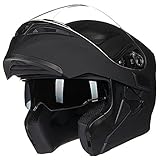
- High Resistance ABS Shell With Micrometrically Adjustable Strap
- Meets or Exceeds FMVSS-218 and DOT Safety Standards
- Helmet Liner / Cheek Pads are Lightweight, Soft and Easily Removable and Washable
- Sleek and Lightweight Design Reduces Wind Noise
- Modular Flip-Up Function Anti-Scratch, Anti-Fog and Wide View Clear Visor
Inspect the helmet itself before paying. Be cautious of a loose sticker, a label that lacks the required identifying information, or a novelty helmet that provides little coverage. NHTSA has warned about counterfeit DOT labels. If the mark is absent or appears inconsistent with the helmet’s labeling, choose a different product made for the relevant road use.
United Kingdom and European context: UN ECE and SHARP
UK government guidance says road riders must use a helmet meeting an accepted safety standard and lists UN ECE Regulation 22.05 and 22.06 among accepted standards. Which mark is legally accepted depends on the market and the current rules there, so verify the requirement for the country where you will ride.
SHARP is separate from the legal approval mark. It is a UK consumer-information scheme that assigns helmets from one to five stars after comparative testing. SHARP advises riders to find helmets that fit correctly and comfortably first, then choose the higher star rating among those suitable helmets.
For each tested model, SHARP describes 30 linear impact tests and two oblique impact tests. Its published protocol includes a higher linear impact-test velocity of 8.5 m/s than the cited ECE 22.05 and 22.06 speeds. Those numbers describe SHARP’s test method; they are not population injury statistics and cannot guarantee the outcome of a crash.
Is ECE 22.06 the same as DOT?
No. DOT/FM VSS No. 218 is the U.S. manufacturer-certification system, while ECE 22.05 and 22.06 are UN ECE regulations used in markets that accept those approvals. They are different regulatory frameworks with different labeling and compliance processes. Do not assume that an ECE mark satisfies a U.S. DOT requirement, or that a DOT label satisfies a country requiring UN ECE approval. Follow the rule for the place where the helmet will be used.
What’s actually slowing this PC down?
Pick the symptom - the matching free tool is one click away.
Rank #4

- Advanced Safety Design: Combines a lightweight ABS outer shell.
- DOT Approved, Clear Vision: Meets DOT standards, with a scratch-resistant, anti-fog lens for optimal visibility.
- Easy Quick Release: Convenient quick-release chin strap with adjustable features for effortless and speedy helmet adjustments and removal.
- Comfort System: Designed for superior comfort, the helmet’s interior features a moisture-wicking lining that ensures a cool and dry experience during your ride.
- Sun Visor for Added Protection: Built-in pull-down sun visor system provides effective sun protection, ensuring a comfortable and shaded ride.
Where does the Snell M2025 standard fit?
The Snell Memorial Foundation identifies its 2025 motorcycle helmet standard as M2025. Snell is an independent standards organization. A reference to M2025 does not establish that a particular helmet carries that certification, and an additional Snell certification does not replace the road-use approval required by local law. Check the actual helmet’s markings and documentation.
Does helmet shell material matter?
Material names are not a reliable shortcut to safety. NHTSA’s interpretation of FMVSS No. 218 explains that the standard sets performance requirements rather than prescribing one shell material or a specific amount of material. Penetration, impact attenuation, and retention tests evaluate the completed helmet as a whole.
That means shell, liner, visor system, retention system, geometry, and manufacturing quality work together. A fiberglass, composite, polycarbonate, or other material label does not by itself prove that one helmet will protect better than another. Compare the applicable certification and any credible comparative test result instead of treating a material name as a safety ranking.
SHARP’s impact-test counts and velocities are protocol details, not material-performance statistics. There is no established population statistic that lets a buyer convert a shell material into a precise individual injury-risk estimate. Buy the helmet that fits, carries the required mark, and is appropriate for your use rather than paying for an unsupported material promise.
Do these 3 things before closing this tab:
1Scan for outdated or missing drivers - takes under a minute2Repair Windows errors before they cause bigger problems3Fix the driver behind crashes, sound loss and screen glitchesWhat helmet type is best for street or off-road riding?
Helmet style changes coverage, airflow, weather protection, and the equipment you can use with it. The style label alone does not demonstrate compliance with any safety standard; verify the label on the specific helmet.
Best Value
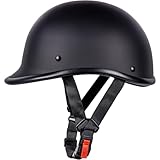
- DOT Approved Motorcycle Helmet:Built with rugged ABS shell and impact-absorbing EPS liner for solid on-road protection. Ready for daily cruising, city commuting, and weekend runs.
- Low Profile Beanie Helmet Design:Sits close without the mushroom look. Gives a clean, compact skull cap silhouette that cruiser and bobber riders want — covers critical areas without adding bulk.
- Vintage-Style Look:With classic biker lines and a fresh finish that feels bold, not dated. Pairs with old-school choppers, café racers, and modern cruisers for a half helmet with real character.
- Quick-Release Buckle: Let you gear up and go instantly. Just click in and ride. A simple convenience that saves time on daily commutes and quick trips around town.
- Lightweight with Removable Inner Padding: Cuts neck fatigue on long rides. The washable, breathable liner keeps things fresh through hot summer days, all-day comfort lasts.
| Style | Coverage and typical use | Advantages | Trade-offs to check |
|---|---|---|---|
| Full-face | Chin bar, face coverage, and a face shield; common for street and touring use | Most complete coverage of the styles listed; shield helps with wind, weather, and debris | Can feel warmer or heavier; check ventilation, shield operation, and fit |
| Modular | Hinged chin-bar design for riders who want changing access or convenience | Versatility for stops and touring; can provide full-face coverage when closed | Confirm the configuration in which it is certified and legal; inspect hinge operation and seal |
| Dual-sport | Road and light off-road use, often with a peak or visor arrangement | Balances weather coverage, airflow, and visor or goggle flexibility | Check wind noise, peak stability, shield range, and whether the shape fits with goggles |
| Off-road | Designed around dirt riding, airflow, and goggle use | Ventilation and dust-management features suit off-road conditions | Often requires separate goggles; verify that its certification is accepted for your intended road use |
| Open-face | Protects the top and sides of the head but leaves the face more exposed | Airflow and open visibility | No chin guard; less face coverage and potentially more wind noise |
| Half | Minimal coverage compared with other styles | Light, open feel and maximum airflow | No chin guard and substantially less coverage; wind noise can be significant |
NHTSA specifically notes that half and open-face helmets lack a chin guard, increasing safety risk compared with designs that cover the chin and face. If your riding includes sustained highway speed, cold weather, rain, or frequent debris, weigh that missing coverage against the convenience of an open design.
Independent reader supportYour contribution helps us test, update, and keep practical guides available for everyone.Features worth comparing after fit and certification
Ventilation
Look for vents you can operate with gloves and check whether the openings align with your head and riding position. More openings do not automatically mean more comfort: a helmet that fits poorly can remain uncomfortable despite excellent airflow.
Face shields, peaks, and goggles
Decide whether you need a clear shield for road and weather protection, a peak for dual-sport riding, or goggles for off-road use. Test the interface with your eyewear. Make sure the shield closes evenly, does not interfere with the retention strap, and stays stable when you turn your head.
Wind noise and communication equipment
Open-face and half helmets can have significant wind noise. For any helmet, check whether speakers, microphones, or glasses create pressure points. Install only accessories the helmet maker permits, and repeat the movement and sustained-wear tests after installation.
Visibility features
High-visibility colors and reflective elements can make a rider easier to see, but they are visibility features, not replacements for fit or certification. Treat them as a secondary choice after the helmet meets the required standard and remains stable on your head.
Replacement liners and cheek pads
Confirm that the maker sells approved replacement pads for the exact model and size if you expect to adjust the fit or replace worn comfort parts. Compatibility is model-specific; a pad that physically fits another helmet is not automatically an approved substitute.
Quick Recap
A practical motorcycle helmet buying process
- Identify the governing market. Decide where you will ride most often and verify whether that jurisdiction requires DOT/FM VSS No. 218, UN ECE 22.05 or 22.06, or another accepted mark.
- Set the coverage requirement. Choose full-face, modular, dual-sport, off-road, open-face, or half coverage based on road, touring, or dirt use and the face protection you want.
- Measure your circumference. Use the tape path above and write down the result before visiting a retailer.
- Estimate your head shape. Use an overhead view to identify round, intermediate, or long oval proportions.
- Try multiple helmets. Start with the chart size, then test different models and internal shapes. Do not limit yourself to one brand or one shell material.
- Fasten and test movement. Follow the retention-system instructions, move the helmet by hand, and shake your head. Reject any helmet that shifts or rocks.
- Wear the finalist for 30 to 45 minutes. Look for hot spots, numbness, and pressure that develops with time.
- Inspect the physical label. Confirm the required certification information is on the helmet, not just in an online listing or product description.
- Test your real equipment. Wear your riding glasses, goggles, balaclava, or communication system and repeat the fit and movement checks.
- Keep adjustments within the maker’s system. Use only approved replacement cheek pads or liners; never cut, stuff, or reshape the protective liner.
Common buying mistakes and how to avoid them
- Choosing by circumference alone: A correct number can still have the wrong crown shape. Test the internal pressure pattern and movement.
- Sizing up to escape one pressure point: A larger helmet may shift dangerously. Try a different shape before changing size.
- Removing the helmet too quickly: A five-minute shop try-on can miss hot spots. Use the full 30-to-45-minute home test recommended by NHTSA.
- Trusting a listing instead of the helmet: Inspect the actual certification label and identifying information.
- Assuming DOT means NHTSA approval: DOT is the manufacturer’s certification under FMVSS No. 218; NHTSA can test for compliance but does not pre-approve each helmet.
- Treating SHARP stars as a legal mark: SHARP is a comparative UK information scheme, not a replacement for the approval required in your jurisdiction.
- Buying a material claim: No shell material automatically proves superior protection. Evaluate whole-helmet certification and credible comparative testing.
- Modifying the liner: Cutting or stuffing protective material can compromise integrity and may void the warranty. Use only manufacturer-approved fit parts.
- Ignoring missing chin coverage: Open-face and half helmets leave the chin unguarded. Choose them only with a clear understanding of that trade-off and the applicable road-use rules.
Quick inspection checklist before purchase
- My measured circumference matches the maker’s chart.
- The helmet’s internal shape matches my head without a concentrated hot spot.
- It stays seated when I shake and turn my head.
- I can wear it for 30 to 45 minutes without developing painful pressure.
- The retention system can be fastened correctly and remains comfortable.
- The physical helmet carries the certification mark required where I will ride.
- The coverage matches my street, touring, dual-sport, or off-road use.
- Ventilation, shield, peak, goggle, and eyewear arrangements work with my gear.
- Any replacement pads or liners I may need are approved for this exact model.
- I am not relying on a shell-material name, a loose sticker, or a seller’s unsupported claim.
Product prices and availability are accurate as of the date/time indicated and are subject to change. Any price and availability information displayed on Amazon at the time of purchase will apply.
Recommended Free Tools




