What’s actually slowing this PC down?
Pick the symptom - the matching free tool is one click away.
Neither a minivan nor a three-row SUV is automatically safer. Family safety depends on the specific model year, trim, crash-test results, standard driver-assistance equipment, rear-seat belt performance and how well your children’s restraints fit. Compare named vehicles rather than relying on body style or a single star score.
For a useful comparison, check the exact vehicle in the Insurance Institute for Highway Safety (IIHS) and National Highway Traffic Safety Administration (NHTSA) databases, then inspect the second-row seating positions with your own car seats or boosters. The evidence available does not establish a category-wide safety winner.
As an Amazon Associate I earn from qualifying purchases.
Why the body style does not decide family safety
“Minivan versus SUV” is too broad a question for a defensible safety verdict. A 2026 minivan can have different structural performance, lighting, automatic braking and belt-reminder equipment from another 2026 minivan. The same is true of three-row SUVs, and equipment can change between trims of the same model.
Safety ratings also answer different questions. A crashworthiness test measures protection in a defined impact. A crash-avoidance test measures whether a system can warn or brake before a collision. A belt-reminder or LATCH rating evaluates restraint use or installation hardware. None of these scores is a complete measure of family safety by itself.
#1 Best Overall

- This Graco booster seat helps safely transport your big kid from ages 4 -10, from 40 - 100 pounds and up to 57 inches tall
- Backless booster is top-rated by leading consumer magazines and publications
- Graco ProtectPlus Engineered: a combination of the most rigorous crash tests that helps to protect your child in frontal, rear, and rollover crashes; additional testing based on the New Car Assessment Program and for extreme car interior temperatures
- The boost your child will love
- Height-adjustable armrests for your child's comfort
There is no current category-level study in the available evidence showing that minivans have a universal safety advantage over three-row SUVs, or vice versa. The practical answer is to compare the exact candidates using the following order:
- Model year, trim and standard safety equipment.
- IIHS crashworthiness and crash-avoidance results.
- NHTSA frontal, side and rollover ratings, applying NHTSA’s class and weight rules.
- Second-row belt fit, belt reminders and injury measures.
- Installation of the child seats and boosters your family actually uses.
Weight and seating geometry also affect what a test means in real life. A heavier vehicle may have different crash-energy behavior from a lighter one, while a tall seating position does not guarantee better protection in every impact. Treat the ratings as decision inputs, not as a promise that one body style will prevent every injury.
How to compare two vehicles without misreading a rating
Start with the exact model year and trim
Use the year and trim shown in the test record, not a current brochure that may describe a different configuration. Check whether a rating applies to every trim or only vehicles with a particular optional safety package. A pedestrian-braking result is useful only if the tested system is standard on the vehicle you are considering or is included in its exact package.
The Tool Desk
Outbyte PC Repair FREEClear out junk files and repair common Windows errorsFree Scan →Outbyte Driver Updater FREEFix the driver behind crashes, sound loss and screen glitchesFind Drivers →Model-year changes can affect a restraint, headlight, bumper, camera or software calibration. If a listing says “not tested” or “not rated,” record that as missing evidence—not as a poor result. A missing test should prompt you to look for another authoritative record, not to assign a failing grade.
Confirm that the powertrain and body configuration match, too. An all-wheel-drive version, a long-wheelbase derivative or a fleet-only trim can carry different curb weight, tires or equipment. Ask the dealer to identify the safety-package code on the window sticker, and compare that equipment with the vehicle named in the IIHS or NHTSA record.
Read all relevant IIHS crashworthiness tests
IIHS’s small-overlap test sends a vehicle into a barrier at 40 mph with 25 percent of the vehicle’s front width engaged on one side. It is intended to reveal how the occupant compartment and restraints perform when the main longitudinal structure is partly bypassed.
The moderate-overlap test also uses a 40-mph impact, but 40 percent of the vehicle’s front width strikes the barrier. The current procedure includes a rear-seat dummy, so the result includes information about a second-row occupant as well as a front occupant.
Recommended Free Tools
IIHS’s side test uses an SUV-like barrier at 37 mph. Side and front results should be read separately: a vehicle can perform well in one direction and less well in another. Side protection is especially relevant when children ride next to a door or when the family regularly travels through intersections and parking lots where side impacts are possible.
For front crash tests, IIHS cautions that comparisons should be made among vehicles of similar weight. A result from a much heavier or lighter vehicle is not a clean head-to-head comparison, even when the letter grade looks identical.
Check crash avoidance, not just crashworthiness
Forward-collision prevention and pedestrian braking can reduce the chance of a crash, but the rating does not tell you whether the feature is standard on every trim. Verify the equipment list and understand what the system can detect, at what speeds it operates and whether the test record belongs to your vehicle’s package.
Headlight ratings matter because visibility affects the time a driver has to recognize a hazard. The IIHS minivan table below shows that lighting results vary substantially among otherwise similar family vehicles. A poor headlight grade is a reason to compare the actual lamp configuration and aim, not a reason to assume the entire vehicle is unsafe.
Rank #2

- 2-in-1 Convertible Seat: From highback to backless booster to accommodate your growing child
- Safety First: Graco ProtectPlus Engineered with rigorous crash tests to ensure maximum safety
- Comfortable Ride: Height-adjustable armrests and head support for your child’s comfort
- Convenient Features: Hide-away cup holders keep your child content on the road
- Secure Positioning: Open-loop belt guides for proper seat belt positioning and independent self-buckling
Use NHTSA’s stars within its limits
NHTSA’s 5-Star Safety Ratings cover frontal, side and rollover performance. NHTSA permits side and rollover results to be compared across vehicle classes. Frontal and overall ratings, however, are intended for comparisons within the same class and among vehicles within 250 pounds of curb weight.
That rule prevents a simplistic statement such as “the SUV has five stars, so it is safer than the minivan with four.” First determine whether the vehicles are in the same NHTSA class and within the 250-pound weight window. If they are not, use the scores as information about each vehicle rather than as a universal ranking. Rollover stars describe resistance in a government test; they do not predict that a driver can safely take a curve at any speed or that electronic stability control eliminates rollover risk.
Current IIHS minivan results to use as a starting point
The IIHS minivan summary displayed the following model years and ratings when checked on October 13, 2026. These are summary results, and you should verify the individual vehicle record and trim before buying. “Not tested” and “not rated” mean that no result is shown; they do not mean poor performance.
| Minivan (model year shown) | Small overlap | Moderate overlap | Side | Headlights | Pedestrian front crash prevention | Seat-belt reminders | LATCH ease of use |
|---|---|---|---|---|---|---|---|
| 2026 Toyota Sienna | Good | Marginal | Good | Good | Acceptable | Good | Good+ |
| 2027 Honda Odyssey | Good | Poor | Good | Acceptable | Not tested | Good | Good+ |
| 2026 Chrysler Voyager | Good | Not tested | Acceptable | Poor | Not tested | Good | Not tested |
| 2027 Chrysler Pacifica | Good | Marginal | Acceptable | Poor | Not tested | Good | Not rated |
| 2026 Kia Carnival | Good | Marginal | Acceptable | Not tested | Not tested | Acceptable | Acceptable |
LATCH ease is not a crash score. It evaluates how easy the lower anchors and tether hardware are to use for the specific trim and seat type tested. A Good+ result can make correct installation easier, while an Acceptable result does not prove that a particular child seat will fit your vehicle.
Outdated Drivers Are Slowing You Down
One free scan finds every outdated or missing driver and matches the right update for your exact hardware.Free scan · exact hardware matchWindows Errors? Fix Them Before They Spread
Repair common Windows errors and clear accumulated junk for a smoother, more stable PC - no reinstall needed.Free scan · no reinstallDo not read this table as a ranking of minivans against all three-row SUVs. No matching, current SUV table is presented here, and the model years shown can change as IIHS adds tests or revises its database. Use the table to identify questions for each SUV finalist: Does it have a current moderate-overlap rear result? Are pedestrian braking and reminders standard? Which seating positions have accessible tether anchors?
What the rear-seat findings mean—and what they do not mean
Rear-seat performance deserves special attention in a family vehicle. In a 2023 IIHS report, four minivans tested under the then-current moderate-overlap method earned no acceptable or good ratings for the rear occupant: the Pacifica, Carnival and Sienna were rated Marginal, and the Odyssey Poor. The report said the second-row restraint systems left occupants vulnerable to chest injuries because of excessive belt forces or poor belt positioning.
IIHS Vice President of Vehicle Research Jessica Jermakian said, “The restraint systems in all four vehicles leave the second-row occupant vulnerable to chest injuries, either because of excessive belt forces or poor belt positioning.” That statement describes the tested vehicles and methodology at that time; it is not a universal finding about every minivan or every current model year.
IIHS adjusted the criteria in 2024, including the chest-injury component for the Sienna, and directs shoppers to its current rating database. Use the current record for a purchase decision instead of carrying the 2023 grades forward unchanged.
The rear dummy in that test represents a small woman or a 12-year-old child. It is not a child seated in a properly installed child safety seat. IIHS explicitly says the updated moderate-overlap rating does not evaluate children who are correctly secured in child restraints.
IIHS President David Harkey summarized the reason to examine this area: “Back seat safety is important for all vehicles, but it’s especially vital for those, like minivans, that customers are choosing specifically to transport their families.”
Child restraints can change the practical result
Put children in the rear seat
The back seat remains the safest location for children because a front passenger airbag can injure a child. Follow the vehicle owner’s manual and the child-restraint instructions for the permitted seating positions, anchor points and belt paths. Never assume every third-row position accepts a tether or lower anchors simply because the row has three seats.
Rank #3

- HEAD AND TORSO PROTECTION – Superior DuoGuard for head and body support and 10-position height adjustment from the waist instead of the neck offer reassuring protection and child comfort.
- GRAB & GO CONVENIENCE – Equipped with premium LATCH connectors and a SuperCinch one-pull tightener to stabilize the seat and the quick-release LATCH provides one-hand removal for easy transfer creating an ideal portable booster seat.
- FLAME RETARDANT-FREE – ClearTex materials feature no flame retardant chemicals and meet federal flammability standards. All fabrics, including armrests, are removable and machine washable.
- COMFORT AND CONVENIENCE – A contoured ErgoBoost seat with double foam padding provides comfort and support in all the right places. Two dishwasher-safe CupFolders fold out of the way when empty for a narrow booster seat.
- BUILT TO GROW – As a high back booster seat, the 2-position recline backrest adjusts to mimic the vehicle seat position. For older children, the backrest is removeable to create a backless booster seat.
Test the actual seats before purchase
Bring the rear-facing seats, forward-facing seats and boosters your family uses to every finalist. Check whether the seat can sit flat without touching the front seat, whether the buckle is accessible, whether the top tether reaches its anchor without twisting and whether adjacent positions remain usable.
Do these 3 things before closing this tab:
1Scan for outdated or missing drivers - takes under a minute2Clear out junk files and repair common Windows errors3Fix the driver behind crashes, sound loss and screen glitchesTry the arrangement with the driver and front passenger in their normal positions. In a three-row SUV, check the route to the third row with a child seat installed: a narrow aisle, one-touch seat or folding mechanism may be difficult for a child to operate and can create daily loading risks. In a minivan, test whether the second-row seat can slide or be removed only when the restraints are unoccupied, and verify that the family can reach every buckle without leaning around another seat.
A vehicle’s LATCH rating concerns hardware usability, not the overall safety of a child seat. A high rating does not guarantee that three restraints will fit across one row, and a lower rating does not mean a correctly installed seat is unsafe.
Move to a belt-positioning booster at the right stage
IIHS recommends a belt-positioning booster for children who have outgrown a forward-facing restraint but are not yet large enough for the vehicle belt to fit correctly. The lap belt should lie flat across the upper thighs, not the abdomen. The shoulder belt should cross the middle of the chest and shoulder, not the neck or the arm. Keep using the booster until the adult belt fits this way in the seating position the child uses.
Consistent belt use matters for adults as well as children. IIHS reports that lap-and-shoulder belt use reduces fatal-injury risk by 60 percent for front-seat occupants in SUVs, vans and pickups. That figure is a general belt-use result, not a minivan-versus-SUV comparison. A belt reminder that covers the seating positions your family uses can help, but it cannot replace an adult checking that each child is buckled correctly.
A repeatable buying process for a minivan or three-row SUV
- List the real seating requirement. Write down the number of children, restraint types, adults and cargo you carry. Note whether a child must reach a third-row position independently or whether an adult needs to buckle a harness there.
- Choose exact candidates. Record the model year, trim, drivetrain and safety package for each minivan and SUV. Do not compare a base trim with an optional-package test vehicle without checking the equipment difference.
- Pull the IIHS record. Read small-overlap, moderate-overlap and side results, then check headlights, pedestrian front crash prevention, seat-belt reminders and LATCH ease. Mark every “not tested” or “not rated” entry as unknown rather than poor.
- Pull the NHTSA record. Review frontal, side and rollover stars. Apply the same-class and 250-pound curb-weight limits before making a frontal or overall comparison across vehicle types.
- Inspect second-row protection. Look for the current moderate-overlap result, rear-dummy injury measures, belt positioning and reminder coverage for every seating position you will use. Treat historical results as context when the test criteria have changed.
- Install every restraint. Use the seat belt and LATCH methods allowed by both manuals. Confirm that the seat does not move more than the child-seat manufacturer permits and that the tether is attached where required.
- Check access and daily use. Have each child enter, buckle and exit under supervision. A restraint that is difficult to reach or buckle may be used inconsistently, undermining its tested performance.
- Recheck before signing. Verify the VIN-specific equipment, software updates, tire condition and the latest IIHS and NHTSA records. Ratings and model-year listings can change.
Common mistakes that produce a false “safer” answer
Comparing one star number across classes
A five-star overall result is not a universal cross-class ranking. Use NHTSA’s class and weight guidance, and rely on the separate side and rollover comparisons that NHTSA permits across classes.
Treating an untested result as a failure
“Not tested” means the agency has not published that test for the vehicle in question. It is an evidence gap, not a Poor grade. Record the uncertainty and seek another current, comparable test.
Using an old rear-seat grade as a current ranking
The 2023 minivan report was important because it exposed rear-occupant issues, but IIHS changed criteria in 2024. A current model decision requires the current database entry and its methodology.
Assuming the dummy represents a child in a car seat
The rear dummy is an adult-sized or child-sized test device used to measure restraint performance. It does not reproduce a correctly installed rear-facing or forward-facing child seat. Evaluate your own restraints separately.
Choosing the highest LATCH score without installing the seat
LATCH ease describes hardware usability for the tested trim and seat type. It does not predict whether your three seats will fit, whether a buckle will be reachable or whether a booster will position the belt correctly.
Ignoring belt reminders and everyday behavior
A family vehicle is safer when occupants are actually restrained. Check whether reminders cover the seating positions you use and whether children can be buckled correctly every trip.
Rank #4
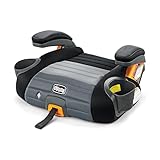
- BOOSTER CAR SEAT FOR 40 LBS AND UP — GoFit ClearTex Plus is designed for children who are at least 4 years old, between 40-110 pounds and 44-57 inches tall and who can sit relatively still in the same seated position throughout the car ride.
- GRAB & GO CONVENIENCE – The GoFit ClearTex Plus backless booster is equipped with LATCH to help stabilize the seat while the child gets in and out. An innovative quick-release design means one-hand removal with a simple pull of the release handle. Built-in carry handle.
- BELT-POSITIONING BOOSTER — Integrated lap belt guides and a shoulder belt clip ensure a proper fit with the vehicle seat belt. The ErgoBoost contoured seat with double foam padding provides support in all the right places for big kid comfort.
- FLAME RETARDANT-FREE– ClearTex products have no flame retardant chemicals and are GREENGUARD Gold Certified for low chemical emissions, contributing to healthier air quality around child.
- EASY CARE — The GoFit ClearTex Plus portable booster seat features 2 dishwasher-safe, fold-away cup holders, a machine-washable seat pad and pop-out armrest covers for easy cleaning. The foam insert may be hand rinsed and hung to dry.
Assuming more seats always means more protection
A third row is useful only if passengers can reach it, sit correctly and use the available belts and tethers. Count the usable seating positions after installing your restraints, not the number printed in the brochure. Cargo, strollers and loose objects should also be secured so they do not become projectiles in a crash.
So, which is safer for a family?
The safest choice is the specific minivan or three-row SUV that combines strong, current crashworthiness results with effective crash avoidance, usable belt reminders and a second row that fits your children’s restraints correctly. The category label alone cannot supply that answer.
Quick wins for a faster PC:
Fix the driver behind crashes, sound loss and screen glitchesFind Drivers →Repair Windows errors before they cause bigger problemsFix Now →Use the same test-and-fit process for both body styles. Eliminate candidates with a poor result in a safety area that matters to your family, investigate every untested item, and confirm the final trim’s equipment. That approach gives you a defensible family-safety decision without pretending that minivans or three-row SUVs win by definition.
Frequently Asked Questions
Are minivans safer than three-row SUVs?
Neither category wins automatically. Compare the exact model year, trim and equipment using IIHS crashworthiness and crash-avoidance results, NHTSA ratings within its class and weight rules, rear-seat protection and child-seat fit.
Can I compare a minivan’s NHTSA stars directly with an SUV’s stars?
Only with care. NHTSA allows side and rollover comparisons across classes. Frontal and overall ratings are intended for vehicles in the same class and within 250 pounds of curb weight.
What does “not tested” mean on an IIHS table?
It means no result is published for that test or configuration. It is an evidence gap, not a Poor rating. Check the individual record and confirm whether another comparable test exists.
Free tools Windows power users keep installed
One-click scans. No signup required.
Does an IIHS rear-dummy result show how my child will fare in a car seat?
No. The rear dummy represents a small woman or a 12-year-old child, and the updated moderate-overlap rating does not evaluate children properly secured in child safety seats. Install and evaluate your own restraints separately.
Is a Good+ LATCH rating proof that three car seats will fit?
No. LATCH ease measures the usability of installation hardware for the tested trim and seat type. Bring your actual seats and boosters to test spacing, buckle access and tether routing.
When should a child use a belt-positioning booster?
IIHS recommends a booster after a child outgrows a forward-facing restraint but before the adult belt fits correctly. The lap belt should rest on the upper thighs and the shoulder belt across the middle of the chest and shoulder.
The Bottom Line
Bottom line: Choose the exact minivan or three-row SUV with the strongest current results for your priorities, standard safety equipment, usable rear-seat restraints and a verified fit for every child seat—not the body style with the better reputation.
Do these 3 things before closing this tab:
1Fix the driver behind crashes, sound loss and screen glitches2Clear out junk files and repair common Windows errors3Scan for outdated or missing drivers - takes under a minuteQuick Recap
Product prices and availability are accurate as of the date/time indicated and are subject to change. Any price and availability information displayed on Amazon at the time of purchase will apply.




