Yes—with an important qualification. Mercedes is developing the Baby G as a serious compact off-roader using what its technology chief called a “miniature ladder-frame chassis,” rather than simply adapting an ordinary compact crossover. But Mercedes has not yet confirmed that the production vehicle will use the exact same conventional body-on-frame construction as the full-size G-Class.
The compact G-Class is expected in 2027 and will be built exclusively in Kecskemét, Hungary. Later reporting says it will be available with both electric and combustion powertrains, although nearly every detailed specification remains under wraps.
Mercedes is developing a smaller G-Class that appears intended to remain a genuine off-roader rather than become a boxy compact crossover with cosmetic G-Wagen styling. The company has confirmed the compact G-Class production program, and Mercedes technology chief Markus Schäfer previously described its structure as a “miniature ladder-frame chassis.”
That supports the basic idea behind the “Baby G” being a body-on-frame-style off-roader, but one technical qualification matters: Mercedes has not yet published a complete production chassis specification. The safest description is a bespoke miniature ladder-frame architecture designed to preserve G-Class off-road priorities, not an exact scaled copy of the current full-size G-Class frame.
#1 Best Overall

- Pullback Action: Experience realistic racing with the pullback action feature.
- Opening Doors: Explore the intricate interior details with the opening door feature.
- 1:38 Scale: Enjoy a detailed 1:38 scale die-cast model (approx. 5 inches long).
- Authentic Design: Modeled after the iconic 1967 Ford Shelby Mustang GT500.
- Display Piece: A must-have collectible for car enthusiasts and model collectors.
The compact G-Class is expected to arrive in 2027, will be built exclusively in Kecskemét, Hungary, and is now reported to be planned with both electric and combustion powertrains. Its final name, dimensions, price, detailed hardware, range, and United States availability remain unconfirmed.
Mercedes has committed to building the compact G-Class
Mercedes-Benz Group formally confirmed on July 13, 2026, that an upcoming more compact G-Class will be manufactured exclusively at the company’s Kecskemét plant in Hungary. That announcement is the strongest official evidence that the project has moved beyond a design exercise, prototype program, or rumor.
Mercedes has used “Little G” in describing its compact G-Class expansion plans, while media reports have also called it the “Baby G.” Neither name has been confirmed as the production vehicle’s retail name. The official announcement did not provide a launch date, final dimensions, pricing, trim structure, or detailed technical specifications.
Kecskemét is being expanded with new bodywork, assembly, paint, press-shop, and battery-related facilities. The plant is intended to support Mercedes’ broader compact and electric-vehicle manufacturing strategy, but its ability to build vehicles with different architectures does not by itself reveal which battery, motor, engine, or transmission family the compact G-Class will use.
What “miniature ladder-frame chassis” actually means
In an interview with Autocar, Markus Schäfer described the compact G-Class as a completely new development with a unique architecture. He said Mercedes could not simply take an existing platform and adapt it, and characterized the structure as a “miniature ladder-frame chassis.”
Schäfer also made clear that the compact vehicle would not reproduce the full-size G-Class frame in exactly the same way. Instead, it would retain comparable qualities in areas such as suspension and wheel design. That wording is significant because it describes the engineering direction without confirming every detail of a conventional body-on-frame layout.
Body-on-frame versus a ladder-frame-derived design
A traditional body-on-frame vehicle has a body mounted separately on a strong frame. The frame carries major loads and provides mounting points for the suspension, axles, drivetrain, recovery hardware, and body. The current G-Class is built around that traditional off-road philosophy.
“Miniature ladder-frame” can mean a smaller or substantially modified structure that captures some of those advantages without duplicating the full-size G-Class design in every dimension or construction detail. Until Mercedes releases an engineering specification, it is not possible to say whether the compact G-Class will use a conventional separate body and frame in the strictest technical sense.
That is why “body-on-frame off-roader” is directionally accurate for the project’s intent but stronger than Mercedes’ formal production announcement. Mercedes has confirmed the compact G-Class and its bespoke development; the executive description supports a miniature ladder-frame concept. It has not yet confirmed an identical full-length ladder frame, solid axles, locking differentials, or any particular suspension layout.
Why the architecture matters off-road
The full-size G-Class is defined by more than its upright body. Mercedes’ own technical material describes its ladder-type frame as the structural foundation of the vehicle’s all-terrain design. The current electric G 580 also retains a ladder-frame structure, despite using four electric motors positioned near the wheels and electronic functions such as G-TURN.
A bespoke ladder-frame-derived structure could give the smaller G-Class a better foundation for several off-road requirements than a conventional road-biased compact SUV platform:
- Suspension travel: A structure designed around off-road use can provide more room for wheel movement and stronger suspension mounting points.
- Wheel articulation: Keeping the tires in contact with uneven terrain depends on suspension geometry, travel, and electronic traction management—not just ground clearance.
- Underbody protection: A dedicated off-road structure can make it easier to protect the battery, drivetrain, fuel system, and other vulnerable components.
- Clearance and approach geometry: The chassis and suspension can be designed around obstacle clearance instead of treating it as a secondary benefit of a crossover platform.
- Durable mounting points: Recovery equipment, skid protection, suspension components, and drivetrain hardware place different demands on a vehicle than ordinary road use.
Those are engineering reasons for using a bespoke architecture, not specifications for the unreleased compact G-Class. Mercedes has not published the vehicle’s ground clearance, approach angle, departure angle, breakover angle, axle articulation, differential-lock strategy, wading depth, towing rating, or payload.
Recommended Free Tools
It is not being described as a conventional MMA-platform derivative
Schäfer’s comments indicate that Mercedes did not want to take an existing compact platform and simply wrap it in G-Class styling. He said the vehicle required its own development and would use a significant number of unique components. That reportedly extends to details as basic as the door handles.
Rank #2
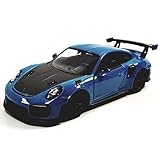
- Doors Open
- Pullback Action
- Die Cast Metal Body
- PULL BACK ACTION WITH FREE ROLLING WHEELS
This suggests a much higher degree of differentiation than is typical for a compact luxury SUV. It could help the Baby G deliver a more authentic driving and off-road experience, but it also creates difficult trade-offs. A bespoke architecture and many unique components generally increase engineering complexity, manufacturing cost, weight-management challenges, and the eventual price of the vehicle.
Some secondary reports have suggested that the compact G could combine this bespoke chassis with components or propulsion systems related to Mercedes’ newer electric and hybrid architectures. Those reports remain provisional. The official Kecskemét announcement confirms flexible manufacturing capability, not the compact G-Class’s precise platform, battery, motor, engine, or transmission family.
Powertrains: the EV-only expectation has changed
Earlier reporting presented the Little G as an electric-only vehicle. In November 2025, Autocar reported that it understood the compact G-Class would be sold exclusively as an EV, although Mercedes had not disclosed the electric powertrain’s technical details.
Do these 3 things before closing this tab:
1Clear out junk files and repair common Windows errors2Fix the driver behind crashes, sound loss and screen glitches3Repair Windows errors before they cause bigger problemsThat expectation was later superseded by 2026 reporting. Auto Motor und Sport reported that Mercedes CEO Ola Källenius confirmed the compact G-Class would be offered with both electric and combustion power, and a Mercedes spokesperson confirmed the information. The same report placed the vehicle’s market arrival in 2027.
The change fits Mercedes’ broader decision to keep more than one propulsion route available while demand for electric vehicles develops at different rates in different markets. It does not, however, establish the final specifications of either version.
| Powertrain detail | What is currently known |
|---|---|
| Electric version | Reported as part of the planned lineup, but battery capacity, motor count, output, range, charging rate, and drivetrain layout are unknown. |
| Combustion version | Reported as planned alongside the EV, but engine displacement, transmission, output, fuel economy, and market availability are unknown. |
| Hybrid details | Some reports discuss hybrid-related possibilities, but Mercedes has not published a complete production powertrain specification. |
| Battery and motor claims | Figures such as an 85-kWh battery, dual eATS motors, or a specific WLTP range are projections, not confirmed Mercedes specifications. |
The same caution applies to reports of a 1.5-liter hybrid engine. That figure should not be presented as fact unless Mercedes releases a later technical announcement. The compact G-Class could eventually use different powertrains in different regions, and the final lineup may not be identical worldwide.
When will the Baby G arrive?
The current reporting consensus places the compact G-Class in the 2027 model year or calendar year. Both the earlier Autocar reporting and the later Auto Motor und Sport report point to a 2027 arrival.
The Tool Desk
Outbyte Driver Updater FREEScan for outdated or missing drivers - takes under a minuteDriver Scan →Outbyte PC Repair FREERepair Windows errors before they cause bigger problemsFix Now →Earlier forecasts suggested production could begin in late 2026. Those should now be treated as earlier expectations rather than confirmation of customer deliveries. Mercedes has not announced the exact reveal date, order-opening date, first customer deliveries, or market-by-market sales schedule.
The production location is clearer. The compact G-Class will be built exclusively at Kecskemét in Hungary. That distinguishes it from the full-size G-Class production arrangement associated with Graz, Austria. Exclusive Kecskemét production also means that the compact model should not automatically be assumed to share the full-size G-Class’s manufacturing location, supply chain, or market-specific build process.
Design: recognizably G-Class, but not simply shrunk
Spy photographs and executive comments point to a compact vehicle that will retain the G-Class’s central visual cues. Prototypes show or suggest:
- an upright, boxy profile;
- a three-window side treatment;
- a squared-off body and upright glasshouse; and
- a rear-mounted spare-wheel form.
Mercedes design chief Gorden Wagener has described the styling as a tweaked, more modern interpretation of the G-Class. The vehicle is expected to use sharper and younger lighting graphics while retaining the circular-headlamp identity that makes the larger G-Class immediately recognizable.
Quick wins for a faster PC:
Clear out junk files and repair common Windows errorsFree Scan →Fix the driver behind crashes, sound loss and screen glitchesFind Drivers →Repair Windows errors before they cause bigger problemsFix Now →Prototype proportions are not production dimensions. Autocar reported that the test vehicle appeared substantially smaller than the full-size G-Class and shorter than the 1,718-millimeter-tall EQS SUV in prototype comparisons. For context, the standard full-size G-Class is approximately 1,969 mm tall. Those comparisons help establish the compact model’s intended scale, but they should not be used as final measurements.
Where the compact G-Class will fit
The compact model is expected to sit below the full-size G 550, electric G 580, and AMG G 63 in Mercedes’ range. Its strategic role would be to open the G-Class brand to buyers who want the design and off-road identity without the size, price, and footprint of the full-size vehicle.
Rank #3

- Product size: 6.69*2.36*1.97 inches Weight: 0.7 pounds Outer packaging: exquisite color translucent packaging box
- Material: Die-cast car model, made of zinc alloy, with plastic parts, rubber tires, detailed interior and exterior decoration.
- Function: Press the two wheels of the front car to trigger the sound of the engine and the lights, with upright car logos,the angel logo is stored in the hood. The details of the body interior are realistic. Place the car on a flat ground, press the body and pull it back, the car will drive forward. (With pull back function)
- This Rolls-Royce Phantom 1/32 car model pull back car is very suitable for children to play with. The paint is exquisite and feels good, and it is heavy to hold. It is also very suitable for car model enthusiasts as a decoration.
- Accessories and collections: This product is very suitable for static accessories and can be used as an accessory next to a computer. For those who are passionate about collecting model car models, this is a great art collection.
Press reports have compared that role with smaller premium off-road models, including the expected Defender Sport. That is a market-positioning interpretation rather than an official Mercedes segmentation statement. The compact G’s success will depend on whether it can offer more than styling while avoiding the compromises that come with making a heavy-duty off-roader smaller and less expensive.
A genuinely differentiated chassis would help. So would meaningful clearance, durable suspension hardware, effective traction control, and usable recovery points. But none of those features should be assumed simply because the vehicle looks like a G-Class. They must be confirmed in the production specification.
Crashes, No Sound, or Screen Glitches?
Random freezes, missing sound and display glitches usually trace back to one bad driver. Find and replace yours safely.Free scan · under a minutePC Slower Than It Used to Be?
A free scan shows the junk files, broken settings and background clutter dragging Windows down - then fixes them in one click.Free scan · Windows 10 & 11What Mercedes has not revealed
There is still enough missing information that early reports should be read as a program outline rather than a buyer’s guide. Mercedes has not confirmed:
- the official production name;
- final exterior dimensions, wheelbase, curb weight, or cargo capacity;
- the exact meaning and construction of the miniature ladder-frame architecture;
- the suspension layout;
- axle design or differential configuration;
- the availability or type of differential locks;
- ground clearance and approach, departure, or breakover angles;
- wading depth;
- towing capacity and payload;
- engine displacement, transmission, or system output;
- battery capacity, motor count, charging rate, or electric range;
- pricing and trim levels;
- the exact reveal and sales dates; or
- official United States availability and specifications.
In particular, a U.S. launch should not be treated as confirmed until Mercedes-Benz USA lists the model in its future-vehicle or product information. A 2027 European or global arrival would not automatically guarantee U.S. sales.
What the evidence supports
The strongest conclusion is that Mercedes is taking the compact G-Class’s off-road identity seriously. This is not currently described as a standard Mercedes compact crossover with a G-inspired body. The company says it is a new development, an executive has described a miniature ladder-frame chassis, and the vehicle is being assigned to a dedicated production program at Kecskemét.
At the same time, the evidence does not justify saying that Mercedes has confirmed the exact same body-on-frame chassis as the full-size G-Class. Nor does the available information confirm solid axles, three locking differentials, a particular electric motor arrangement, or any specific recovery and water-crossing capability.
Free tools Windows power users keep installed
One-click scans. No signup required.
The most accurate reading is therefore this: the Baby G is planned as a smaller, bespoke, ladder-frame-derived G-Class with real off-road ambitions, but its final hardware has not yet been disclosed.
Source context: Mercedes-Benz Group’s July 13, 2026 production announcement establishes the compact G-Class program and Kecskemét production site. The miniature ladder-frame description comes from Markus Schäfer’s interview with Autocar. The later electric-and-combustion powertrain update was reported by Auto Motor und Sport. Precise technical figures remain unconfirmed unless Mercedes publishes them in a subsequent release.
Frequently Asked Questions
Will the Mercedes Baby G definitely be body-on-frame?
Mercedes has confirmed the compact G-Class program and its exclusive production at the Kecskemét plant in Hungary. An executive has described its architecture as a “miniature ladder-frame chassis,” but Mercedes has not formally published every detail needed to confirm a conventional separate body-on-frame construction identical to the full-size G-Class.
When will the compact Mercedes G-Class be released?
The compact G-Class is expected in 2027 based on current reporting. Mercedes has not announced the exact reveal date, customer-delivery schedule, or sales timing for individual markets.
Will the Baby G-Class be electric or gas-powered?
Both powertrain types are now reported to be planned. Earlier reporting described the model as EV-only, but later 2026 reporting said Mercedes would offer electric and combustion versions. Battery size, motor layout, engine displacement, output, range, and charging performance remain unknown.
Will the compact G-Class come to the United States?
Mercedes has confirmed Kecskemét, Hungary, as the compact G-Class’s exclusive production site. A U.S. launch has not been confirmed, so American buyers should wait for Mercedes-Benz USA product information before assuming the vehicle will be sold there.
The Bottom Line
Mercedes’ compact G-Class is more than a styling exercise: the company describes a bespoke miniature ladder-frame architecture and has committed the vehicle to production in Kecskemét for an expected 2027 arrival. But “body-on-frame” should be used with care until Mercedes confirms whether the production model uses a conventional separate frame and publishes its suspension, axle, powertrain, and off-road specifications.
What’s actually slowing this PC down?
Pick the symptom - the matching free tool is one click away.
Quick Recap
Product prices and availability are accurate as of the date/time indicated and are subject to change. Any price and availability information displayed on Amazon at the time of purchase will apply.




