Choose an electric bike when your commute is short, your route has lawful and comfortable bicycle facilities, you can store and charge it securely, and you usually travel alone with modest cargo. Choose a low-speed electric vehicle (often called a neighborhood electric vehicle) when weather protection, a more enclosed cabin, passengers, or substantial cargo matter more—and when that vehicle is allowed on every relevant road.
There is no universal winner. Your jurisdiction, route speed, exposure to traffic, parking, charging, passenger needs, and tolerance for rain or cold can reverse the decision. The legal labels also differ by country, so verify the exact vehicle class and access rules before buying.
As an Amazon Associate I earn from qualifying purchases.
What the two choices actually mean
“Electric bike” usually means a pedal cycle assisted by a battery-powered motor, but the legal definition controls where and how it may be used. “Low-speed electric car” is everyday language for several small four-wheeled vehicles. In the United States, the relevant federal category is a low-speed vehicle (LSV), not a conventional passenger car. A small enclosed electric vehicle can also fall outside the LSV category if its specifications or equipment do not match the applicable rules.
Do these 3 things before closing this tab:
1Scan for outdated or missing drivers - takes under a minute2Clear out junk files and repair common Windows errors3Fix the driver behind crashes, sound loss and screen glitchesUnited States: low-speed electric bicycle
Federal law defines a low-speed electric bicycle as a two- or three-wheeled vehicle with fully operable pedals and an electric motor of less than 750 watts (1 horsepower). On a paved, level surface, with a 170-pound rider and power supplied solely by the motor, it must have a maximum speed of less than 20 mph. The statute treats this class as a consumer product. Read the definition in 15 U.S.C. § 2085.
#1 Best Overall

- 1000 W Motor & Upgraded Display: The EB5 electric bike equipped with a 1000 W peak motor, boosted a top speed of 20 MPH. The display panel has adjustable backlight brightness from 1-5 levels. In addition, the upgraded LCD Display provides riding data support, such as ODO/MAX/AVG SPEED, PAS mode can be customized up to 3 modes
- Removable Large Battery: The EB5 e-bike is equipped with a 360Wh battery, which covers a range of up to 25-40 miles per charge for 5-6 hours so that it can meet travel or daily commute needs. Removable battery makes charging more convenient whether you are at home or in the office
- 4 Working Modes: PAS mode will assist you with a moderate amount of power as you pedal the bike, kick in 1-3 levels of pedal assist to suit your needs. In pure electric mode, you can twist the throttle in any increments of power you desire. Pedal mode allows the rider to pedal as an ordinary bike. Booster mode will help you push your EB5 at 4.5-7.5 km/h when uphill, which will save you a lot of efforts
- Riding Comfortably and Handily: The 26" puncture resistant tires are for greater durability. A high-strength front fork suspension, 7-speed gears, dual lights, LCD display, front and rear mechanical disc brakes can bring your riding more comforts, make your e-bike adapted to complex terrains and keep you safe
- Minimalist Appearance & Lightweight Frame: A highly efficient, city style affordable electric bicycle offering minimalist and sleek appearance and only weighs 49.6 lbs. The triangular high-carbon steel frame provides more stability
United States: low-speed vehicle
An American LSV is a four-wheeled motor vehicle with an attainable speed above 20 mph and no more than 25 mph under the federal category described by the National Highway Traffic Safety Administration. NHTSA lists equipment such as lamps, mirrors, a parking brake, and a conforming windshield in its Neighborhood Electric Vehicles document. Those requirements are limited compared with the standards for a conventional passenger car; an LSV should not be assumed to provide equivalent crash protection, airbags, or highway capability. The document is from 2012, so confirm current federal, state, county, and city requirements for the vehicle you are considering.
Great Britain: electrically assisted pedal cycle
Great Britain uses a different threshold. GOV.UK says an electrically assisted pedal cycle (EAPC) must have a maximum continuous rated power of 250 watts and must stop providing motor assistance at 15.5 mph. A bicycle that does not meet those EAPC rules is classed as a motorcycle or moped under the applicable rules. See Riding an electric bike: the rules.
The Department for Transport information sheet says a qualifying EAPC is treated like a conventional pedal cycle for riders aged 14 or over. A non-compliant machine is treated as a motor vehicle under the relevant road-traffic legislation. The details are in EAPC standards and legal requirements.
Windows Errors? Fix Them Before They Spread
Repair common Windows errors and clear accumulated junk for a smoother, more stable PC - no reinstall needed.Free scan · no reinstallOutdated Drivers Are Slowing You Down
One free scan finds every outdated or missing driver and matches the right update for your exact hardware.Free scan · exact hardware matchElsewhere
These are not worldwide definitions. Countries, states, provinces, and municipalities can set different power, speed, equipment, age, licensing, registration, insurance, helmet, and road-access rules. Before comparing comfort or range, identify the legal class of the exact model and check every jurisdiction on your route.
| Category | Key threshold in the cited source | What it means for a commute |
|---|---|---|
| U.S. low-speed electric bicycle | Two or three wheels, operable pedals, motor under 750 W, motor-only speed under 20 mph in the specified test | May fit bicycle facilities where local law permits; the federal definition does not answer every state or path-access question. |
| U.S. low-speed vehicle | Four wheels; attainable speed above 20 mph and no more than 25 mph | Motor-vehicle rules and local road restrictions apply; limited LSV equipment is not the same as passenger-car crash protection. |
| Great Britain EAPC | 250 W maximum continuous rated power; assistance cuts off at 15.5 mph | Treated as a pedal cycle for riders 14 and over when compliant; a non-compliant bike is treated as a motorcycle or moped. |
Match the vehicle to the commute, not the brochure
Use the following comparison as a screening tool. It describes tendencies, not guaranteed speed, cost, safety, or range advantages. The cited legal sources do not provide a like-for-like commute-time, injury-risk, emissions, or total-cost comparison for the two classes.
Rank #2

- 1000W Motor & Upgraded Display: The EB5 electric bike equipped with a 1000 W peak motor, boosted a top speed of 20 MPH. The display panel has adjustable backlight brightness from 1-5 levels. In addition, the upgraded LCD Display provides riding data support, such as ODO/MAX/AVG SPEED, PAS mode can be customized up to 3 modes
- Removable Large Battery: The EB5 e-bike is equipped with a 360 Wh battery, which covers a range of up to 25-40 miles per charge for 5-6 hours so that it can meet travel or daily commute needs. Removable battery makes charging more convenient whether you are at home or in the office
- 4 Working Modes: PAS mode will assist you with a moderate amount of power as you pedal the bike, kick in 1-3 levels of pedal assist to suit your needs. In pure electric mode, you can twist the throttle in any increments of power you desire. Pedal mode allows the rider to pedal as an ordinary bike. Booster mode will help you push your EB5 at 4.5-7.5 km/h when uphill, which will save you a lot of efforts
- Riding Comfortably and Handily: The 26" puncture resistant tires are for greater durability. A high-strength front fork suspension, 7-speed gears, dual lights, LCD display, front and rear mechanical disc brakes can bring your riding more comforts, make your e-bike adapted to complex terrains and keep you safe
- Minimalist Appearance & Lightweight Frame: A highly efficient, city style affordable electric bicycle offering minimalist and sleek appearance and only weighs 49.6 lbs. The triangular high-carbon steel frame provides more stability
| Commute factor | An electric bike tends to fit when… | A low-speed electric vehicle tends to fit when… |
|---|---|---|
| Route and speed | Your route has practical, lawful bicycle lanes or low-traffic streets and the lower assisted speed is workable. | The route permits that specific vehicle and its low maximum speed will not create an unsafe or impractical mismatch with surrounding traffic. |
| Weather | You accept exposure and have clothing, lights, and a plan for changing or drying out. | An enclosed cabin, roof, windshield, or doors is a priority for rain, wind, heat, or cold. |
| Passengers and cargo | You normally carry one rider and a manageable load in a rack, pannier, basket, or backpack. | You regularly carry passengers, bulky equipment, groceries, or work gear, subject to the model’s rated capacity and restraints. |
| Parking and charging | You have secure bicycle storage near home and work, plus a safe charging location. | You have a permitted vehicle space, enough room to maneuver, and charging access suitable for a larger battery and vehicle. |
| Legal and safety class | The bike’s power, speed, equipment, and use comply with local definitions and facility rules. | You understand the LSV’s limited safety requirements and have verified road access, registration, insurance, and licensing obligations. |
| Ownership budget | The specific bike’s purchase price, battery replacement exposure, maintenance, security, and insurance fit your budget. | The specific vehicle’s purchase price, parking, charging, maintenance, tires, registration, and insurance fit your budget. |
Route and door-to-door practicality
Map the legal route before estimating time
Do not compare the vehicles by their headline top speeds alone. A bike may take a slower-looking route but avoid congestion, queues, and car-parking searches. An LSV may be faster on a permitted local road yet unusable on a motorway, expressway, restricted bridge, or road with a minimum-speed or access rule. A route that appears short on a map can become unsuitable if it requires a segment where your vehicle class is prohibited.
- List every segment. Separate residential streets, arterial roads, cycle tracks, shared paths, bridges, tunnels, private roads, and the final approach to work.
- Check access for the exact class. Confirm whether bicycles, EAPCs, LSVs, or neighborhood electric vehicles are allowed on each segment; do not infer access from the vehicle’s marketing name.
- Measure the full door-to-door trip. Include unlocking, loading, dressing for weather, finding a legal parking space, walking from parking, and charging setup.
- Test the worst normal day. Consider darkness, rain, headwinds, school traffic, construction, and seasonal road conditions rather than relying on a quiet weekend trip.
When an electric bike gains time
An electric bike can leave directly from a secure storage point, use a bicycle route where lawful, and park close to the destination. Those advantages disappear if you must detour around unsafe roads, carry the bike up stairs, change clothes at work, or spend time finding a secure place to lock it. A short route with a steep hill can still be practical if the bike’s assistance and gearing are appropriate; verify the model’s actual specifications rather than assuming every motor handles hills equally.
What’s actually slowing this PC down?
Pick the symptom - the matching free tool is one click away.
When an LSV gains time
An LSV can make a longer or more exposed trip easier when its permitted road network is continuous and parking is available at the destination. Its low maximum speed can be a disadvantage on roads where traffic routinely moves much faster and there is no safe alternative. Because LSV rules vary, ask the local road authority or vehicle-registration agency about prohibited roads before treating the vehicle as a car substitute.
Weather, comfort, and daily effort
Exposure is a planning issue, not just a comfort issue
An electric bike leaves the rider exposed to precipitation, wind, temperature swings, road spray, and poor visibility. That can be manageable with a waterproof outer layer, gloves, lights, reflective elements, and a place to dry clothing, but the routine takes planning. Hot weather can make arriving presentable difficult even when the motor reduces pedaling effort.
Enclosure changes the trade-off
An enclosed or semi-enclosed low-speed vehicle can protect occupants from rain and wind and make carrying work clothes easier. It still may have limited ventilation, heating, defrosting, storage, or winter traction compared with a full-size car. Check the cabin dimensions, visibility, wiper and defrost equipment, door operation, and the manufacturer’s weather limitations. A roof alone is not the same as a sealed, heated passenger compartment.
Rank #3

- 【Excellent Motor Performance】This electric bike is equipped with a high-performance 749W motor(2000W peak) with 2 to 3 speed settings, capable of meeting your daily commuting and off-road riding needs—so you never have to worry about speed
- 【Upgraded Removable Battery】 Powered by a 48V 15Ah removable battery, the ebike can be fully charged in just 6-7 hours and can ride up to 60 miles on a full charge (PAS mode). Depending on weight, the electric dirt bike can ride up to 40 miles in throttle mode and 50-60 miles in PAS mode, making long rides less of a challenge with its impressive range. The removable battery is safe and anti-theft, so you can charge it at home or outdoors without worry
- 【Comfortable Riding Experience】 This fat tire electric bike is equipped with front and rear suspension system, which absorbs most of the bumps and vibrations during riding, providing a more comfortable riding experience and reducing body fatigue.20"x 4" puncture-proof snow tires for electric motorcycle provide a stronger grip, ensuring the vehicle's stability and easily handle any adventure
- 【Safety First】 The electric bike for adults high-brightness front light greatly improves driving visibility, allowing you to see the road clearly even at night. The front and rear mechanical disc brakes are designed to provide controlled braking under normal operating conditions. Riders must inspect and adjust the brakes before the first ride and before each subsequent ride
- 【Personalized Riding】 This ebikes for adults is equipped with professional 7-speed gears and 3 working modes, which can be changed according to different terrains, and can easily pass through city streets, rugged mountains and beaches. The LCD display allows you to easily keep track of your ride data, such as current speed, distance and battery level, so you can customize a ride based on this information
Passengers, cargo, and the shape of your day
One rider and light cargo
For a laptop, lunch, change of clothes, and small groceries, an electric bike with a rack, panniers, or a basket can be simpler than a vehicle. Secure the load so it cannot shift into the wheels or controls, and confirm the rack’s rated capacity. A backpack may be convenient for a short trip but can become uncomfortable in heat or rain.
Children, colleagues, and bulky equipment
A low-speed vehicle is more likely to fit when the commute routinely includes another person, tools, instruments, samples, or a large shopping load. Do not infer passenger capacity from the number of seats shown in a photograph. Check the model’s rated occupants, payload, seat belts, child-seat compatibility, cargo dimensions, and how those limits change with battery load or accessories.
Irregular days matter
If you bike most days but occasionally need to transport a passenger or large load, compare the cost and inconvenience of an alternative for those exceptions. A second mode, delivery service, car-share, or occasional rental may be less expensive than choosing a larger vehicle for every commute. Conversely, if those exceptions occur weekly, treating them as rare can make the bike frustrating in practice.
Parking, security, and charging
Electric-bike requirements
- A lockable indoor or monitored parking point prevents theft and protects the bike from weather.
- There must be a safe charging location with a suitable outlet; do not run a charging cable where it creates a trip hazard or is exposed to unauthorized access.
- Measure lifts, doorways, stairwells, and storage racks before buying. Weight matters if you must carry the bike.
- Budget for a quality lock, lights, and weather protection only if your route and local rules make them necessary; the right equipment depends on your circumstances.
Low-speed-vehicle requirements
- Confirm that home and workplace parking permits the vehicle’s dimensions and charging arrangement.
- Check turning space, bay width, overnight security, and whether a charging outlet is dedicated, weather-protected, and approved for the vehicle.
- Ask who pays for electricity, installation, parking, registration, and insurance. These recurring obligations can outweigh a lower purchase price.
- Plan for storage of charging equipment, seasonal items, and any required safety equipment.
Safety and legal access deserve separate checks
Do not treat an LSV as a small conventional car
Federal LSV equipment requirements described by NHTSA are limited. They do not establish the crash protection of a full-size passenger vehicle. If your route includes high-speed traffic, frequent intersections, poor sight lines, or heavy trucks, evaluate the separation from traffic and the vehicle’s protection honestly. A windshield, lamps, mirrors, and parking brake are useful equipment; they are not proof of equivalent crash performance.
Confirm bicycle-facility rules
A bike’s federal or national definition does not automatically grant access to every cycle track, shared path, trail, or sidewalk. Local authorities can restrict speed, throttle use, width, or vehicle class. Check the posted signs and the rules for the specific facility, especially where an assisted cycle is faster or heavier than an ordinary bicycle.
Free tools Windows power users keep installed
One-click scans. No signup required.
Rank #4

- 1000W PEAK BRUSHLESS MOTOR: Funhang electric bike is powered by a robust 500W (1000W peak) high-speed brushless motor. Its impressive power and performance allow you to conquer steep inclines and long-distance adventures with ease. Whether you're commuting to work, enjoying a workout or exploring new routes, this electric bike for adults offers you a smooth and enjoyable experience.
- 48V BUILT-IN REMOVABLE BATTERY: Funhang commuter electric bicycle adopts a 48V 374.4WH IPX5 waterproof lithium-ion battery, this allows you to confidently travel 40-50miles in PSA mode and 20-30 miles in throttle mode on a single charge, without worrying about running out of power. Riding range varies depending on the battery, riding style, rider weight and road conditions. The integrated removable battery with BMS system ensures safe and easy charging at home or in the office.
- UNMATCHED COMFORT & CONVENIENCE: Funhang city cruiser ebikes' step-thru frame designed for comfort, allow riders to easily get on and off the e bike. The adjustable handlebar stem and seat can be tailored to ideal position, ensuring a relaxing and ergonomic ride for riders of different heights. Full-coverage fenders protect you from mud and water. Solid rear rack adds versatility to carry groceries or other essentials, making it perfect for everyday commutes, grocery runs and leisurely rides.
- SAFE EBIKE CONFIGURATION: 26 inch adult electric bicycle utilizes 7-speed system, promising you precise gear shifting for a smooth and efficient ride. The front suspension fork helps smooth out the bumps on rough surfaces, while the dual disc brakes deliver reliable stopping power. The LCD screen keeps you updated on battery life, speed, distance, PAS level and more. Thoughtful e bike accessories like headlight, electric horn and reflectors make you safe and secure during nighttime rides.
- 5 VERSATILE WORKING MODES: Funhang ebikes for adults feature 5 working modes and 5 pedal assist levels to suit all your cycling needs. Pure Electric Mode, Assisted Bicycle Mode, Normal Bike Mode, Cruise Mode and Booster Mode. Kicking in 1-5 PAS levels or twisting the throttle will make your ride a breeze. Booster Mode helps you push your e-bike effortlessly. Combining 5 riding modes, it is fun to zip around neighborhoods, parks, towns, campuses and beaches.
Verify paperwork for the low-speed vehicle
Before paying a deposit, obtain written answers from the seller and the relevant authority about registration, title, insurance, driver licensing, inspection, helmet use, minimum age, and prohibited roads. Ask for the vehicle’s certified speed, dimensions, lighting, mirrors, windshield, seat-belt equipment, and VIN or equivalent identification. If the seller cannot identify the legal class, pause the purchase.
Ownership cost: build a complete budget
A generic statement that one class is cheaper is not supported by the available evidence. Compare the exact models and your route using a 12-month budget.
| Cost item | Electric bike questions | Low-speed electric vehicle questions |
|---|---|---|
| Up-front purchase | What is included: battery, charger, rack, lights, warranty, and assembly? | What is included: battery, charger, doors or windows, safety equipment, delivery, and registration preparation? |
| Energy | Where will you charge, and what does a full charge add to your electricity bill? | What charging circuit, installation, and parking electricity are required? |
| Maintenance | Budget for tires, brake wear, drivetrain service, lights, and eventual battery replacement. | Budget for tires, brakes, suspension, body and glass parts, battery replacement, and specialist labor. |
| Security | Locks, indoor storage, tracking, and theft insurance may be necessary. | Secure parking, alarms, cameras, and vehicle insurance may be necessary. |
| Legal costs | Check local registration, helmet, and insurance rules for the exact class. | Check registration, title, plates, licensing, inspection, insurance, and road-use charges. |
| Time cost | Include changing, drying gear, charging, and carrying the bike indoors. | Include parking searches, charging, cleaning, and any detour caused by access restrictions. |
Use real quotes from local providers and the manufacturer’s warranty terms. Do not substitute the legal power or speed thresholds for a fuel-saving, emissions, or total-cost claim; those outcomes depend on the vehicle, electricity source, route, maintenance, and how often it replaces another trip.
Independent reader supportYour contribution helps us test, update, and keep practical guides available for everyone.How to choose an electric commuter bike
If the bicycle side fits your route, search for an electric commuter bike and evaluate the machine as transportation equipment rather than as a recreational gadget.
- Legal specification: Confirm motor power, assisted-speed cutoff, throttle operation, and required equipment for your jurisdiction.
- Fit and control: Test frame size, saddle height, reach, brake feel, step-through access, and stability with your intended load.
- Practical range: Compare the manufacturer’s stated battery capacity with your distance, hills, rider weight, temperature, assist setting, and charging opportunities. Do not treat a headline range as a guaranteed commute distance.
- Weather readiness: Check fenders, lights, rack mounts, chain or belt protection, and the manufacturer’s guidance for wet conditions.
- Serviceability: Identify local service support, replacement-battery availability, warranty length, and the cost of common wear parts.
- Security: Confirm that the frame accepts your lock and that the battery can be secured or removed without carrying an unsafe loose battery.
How to evaluate a low-speed electric vehicle
- Identify the legal class from the VIN, compliance label, and title documents. Do not rely on “golf cart,” “microcar,” or “neighborhood car” as legal categories.
- Check the complete route with the authority that controls it. Get confirmation about speed limits, restricted roads, bridges, tunnels, and private-road permissions.
- Inspect safety equipment and visibility. Confirm lamps, mirrors, windshield, parking brake, belts, wipers, defrosting, and any required reflectors or signals.
- Verify capacity. Match seats, belts, payload, cargo volume, and battery placement to your real passengers and load.
- Plan charging and parking. Confirm electrical requirements, installation permission, weather protection, and overnight security.
- Price the legal package. Add registration, insurance, licensing, inspections, taxes, delivery, and any road-use fees before comparing with a bike.
- Drive the actual route at likely commute times. Note how the vehicle behaves near faster traffic, at intersections, on grades, and in poor weather.
Battery modifications and charging pitfalls
Do not modify an electric bicycle to exceed its legal power or speed limits. UK government guidance warns that modifying an e-cycle beyond the rules can make it an unregistered motorbike in law. Follow the manufacturer’s battery, charger, inspection, storage, and disposal instructions, and use the safety advice in Battery safety for e-cycle users.
Best Value
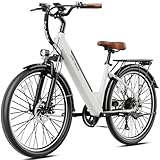
- 500W High Torque Motor-Equipped with a 500W brushless motor (peak 1200W), Heybike Cityscape 2.0 boasts such powerful power that riders can effortlessly maneuver through traffic and tackle steep hills or challenging terrains.
- Unmatched Lasting Power-The UL-certified 468WH IPX6 waterproof lithium-ion battery not only possesses outstanding waterproof performance but is also exceptionally safe and reliable. With a single charge, it achieves a range of up to 50 miles, and the removable battery design ensures convenient charging whether you are at home or in the office.
- 3 WORKING MODES - Effortlessly switch between throttle and pedal assistance to match your diverse riding moods. In throttle mode, the range can reach 30-35 miles, while in assisted mode, it extends to 35-50 miles. Moreover, in pedal-assist mode, it cleverly strengthens the muscles around the knees, ultimately contributing to maintaining your physical health
- Premium Features-Cityscape 2.0, with its state-of-the-art 7-speed and effective suspension, elevates your riding comfort to new heights, providing unprecedented control over your electric bike. The outstanding dual-disc brakes and lighting system comprehensively safeguard your safety.
- 26" x 1.95“ puncture-resistant tire achieves a clever balance between performance and versatility. It not only effectively reduces the risk of being punctured by sharp objects but also enhances the friction between the tire and the ground through its raised tread design, promptly coming into play during braking.
- Use the supplied or manufacturer-approved charger and inspect cables, connectors, and the battery case for damage.
- Charge where smoke or heat can be detected quickly, away from blocked exits and combustible materials.
- Stop using a battery that is swollen, leaking, unusually hot, or damaged, and follow local guidance for professional assessment and disposal.
- Never trade away legal compliance for a claimed increase in speed or range.
A decision process you can finish in one afternoon
- Write the non-negotiables. Include maximum one-way distance, hills, passengers, cargo, weather tolerance, arrival standards, and budget.
- Classify the vehicles. Record the exact motor, speed, wheel count, seats, and compliance label for each candidate.
- Validate the route. Mark every segment where the class might be prohibited or unsafe, then find a lawful alternative.
- Audit storage and charging. Photograph or measure the home and workplace spaces, outlets, doors, lifts, and parking bays.
- Calculate the annual cost. Include purchase financing, electricity, maintenance, security, insurance, registration, parking, and battery replacement assumptions.
- Test the worst normal day. Ride or drive in representative traffic and weather, carrying the load you actually use.
- Choose the option that still works when one assumption fails. If a single rainy day, a passenger, or a closed cycle route makes the plan impossible, price a backup mode before committing.
Typical commute scenarios
Short urban trip, one rider, secure bike room
An electric bike is usually the more flexible starting point when the route has lawful bicycle facilities, the rider can manage exposure, and the destination offers secure parking and charging. The deciding checks are fit, practical range, theft protection, and whether the final streets or paths permit the selected bike.
Suburban route with heavy rain and no bike storage
A low-speed vehicle may be more comfortable if it is legal on the route and a secure parking-and-charging space exists. If the only available road carries fast traffic or prohibits LSVs, enclosure does not solve the access problem; reconsider the route or the mode.
Commute with a child or regular bulky equipment
Compare rated seats, belts, payload, and loading time rather than assuming a bicycle accessory will solve the problem. A vehicle can fit better, but registration, insurance, parking, and crash-protection limitations must be part of the decision.
Mixed commute with occasional exceptional days
If most days are simple but a few require a passenger or large load, calculate the cost of an occasional alternative. Selecting a vehicle for the rare case can add daily parking and ownership burdens; selecting a bike without a realistic backup can make the commute unreliable.
Bottom line
Pick the electric bike when it is legally allowed on a practical route, you can secure and charge it, and your normal trip is one rider with manageable cargo. Pick the low-speed electric vehicle when enclosure, passengers, or cargo are central and the vehicle has a lawful, safe route with suitable parking and charging. In either case, verify the exact local classification first: a legal threshold is not a promise of access, crash protection, range, commute time, or lower total cost.
Quick Recap
Product prices and availability are accurate as of the date/time indicated and are subject to change. Any price and availability information displayed on Amazon at the time of purchase will apply.




