Short answer: choose the Elise if minimum weight and maximum simplicity are the priority; choose the Evora if you want a V6 Lotus with a genuine 2+2 layout; choose the Emira if you want the newest mid-engine car, a more modern cabin and a choice of turbocharged four-cylinder or supercharged V6 power. Those conclusions describe each family’s role, not every individual car. Elise, Evora and Emira specifications change with generation, model year, trim, transmission, market and the way weight is measured.
At a glance: Elise, Evora or Emira?
These three cars span different eras and priorities rather than forming a simple old-to-new performance ladder. The Elise is the lightweight, focused two-seater. The Evora adds touring ability and two small rear seats to a V6 sports-car formula. The Emira carries the mid-engine line into a newer period with greater attention to cabin comfort, equipment and powertrain choice.

As an Amazon Associate I earn from qualifying purchases.
| Car | Primary role | Engine context | Seating and practicality | What must be checked |
|---|---|---|---|---|
| Elise | Lightweight, compact, focused sports car | Four-cylinder engines across several generations | Two seats; the most compact and spartan of the three | Generation, engine, trim, market and weight convention |
| Evora | More touring-oriented sports car | 3.5-litre V6, naturally aspirated or supercharged depending on version | Two-plus-two layout; rear-seat usefulness depends on passenger and trip | Variant, transmission, market and weight convention |
| Emira | Modern mid-engine sports car with added comfort and technology | Turbocharged 2.0-litre four-cylinder or supercharged 3.5-litre V6 in Lotus material | Two seats, with a more contemporary cabin and convenience focus than the Elise | Model year, Turbo or V6, SE trim, transmission and local specification |
The table is a guide to model positioning, not a claim that every car in a family has identical equipment or performance. A first-generation Elise and a late Elise, for example, should not be treated as the same specification. The same caution applies when comparing an early Evora with an Evora 400 or a launch-era Emira with a later Turbo SE or V6 SE.
Free tools Windows power users keep installed
One-click scans. No signup required.
Lotus Elise: the lightest and most focused choice
What the Elise is
Lotus publicly debuted the Elise at the Frankfurt Motor Show on 12 September 1995. The first Elise used a 1.8-litre engine rated at 118 bhp and a five-speed gearbox; Lotus listed 0–100 km/h in 5.9 seconds for early models. Its defining idea was low mass and direct response rather than extensive equipment or long-distance refinement.
#1 Best Overall

- Officially Licensed Lotus Exige Cup 430 (2021) This CaDA model is officially licensed by Lotus and faithfully recreates the exterior design and key details of the Lotus Exige Cup 430 (2021) at an accurate 1:24 scale.
- Premium Fully Printed Body Details All exterior graphics and details are created using high-quality printed parts rather than stickers, delivering a cleaner look, enhanced durability, and a more realistic appearance.
- Easy Build with Streamlined Design With fewer parts and a simplified structure, this set offers an easy and enjoyable building experience suitable for teens, beginners, and adult collectors alike.
- Manual Push-and-Roll Function The completed car can be manually pushed forward and backward, providing a realistic rolling action for interactive play or positioning during display.
- Display-Ready with Licensed Nameplate Includes an official licensed commemorative nameplate, making it ideal for desk, shelf, or showcase display while adding collectible value.
Lotus’ heritage information divides Elise production into three broad periods: 1996–2003, 2004–2009 and 2010–2021. Engine outputs, transmissions and weights changed between those periods, so “the Elise” has no single all-years specification.
How much does an Elise weigh?
For the earliest period listed by Lotus, published weights range from 690 to 770 kg. The 2004–2009 and 2010–2021 groupings are listed at 860–931 kg. These are manufacturer-published period ranges, not directly comparable test measurements. Before comparing one Elise with another car, confirm whether the figure is dry, kerb or another convention, and identify the exact version and market.
| Elise production grouping | Lotus-published weight range | How to interpret it |
|---|---|---|
| 1996–2003 | 690–770 kg | Early-period range; exact engine and specification matter |
| 2004–2009 | 860–931 kg | Later-period range; do not compare with early figures without matching conventions |
| 2010–2021 | 860–931 kg | Manufacturer grouping; individual trim and equipment still affect the figure |
Who should choose an Elise?
- Choose it when low mass, small dimensions and an unfiltered driving feel matter more than cabin technology.
- Expect the least practicality and the most spartan experience of these three model families.
- Use the generation and exact engine as the starting point for any purchase comparison; a single headline weight or power figure is misleading across the full production run.
The Elise is therefore the natural recommendation for a driver who values compact size and a focused sports-car experience above rear seats, modern convenience equipment or touring emphasis. That is a conclusion from its published history and positioning, not an independent road-test claim.
The Tool Desk
Outbyte Driver Updater FREEScan for outdated or missing drivers - takes under a minuteDriver Scan →Outbyte PC Repair FREEClear out junk files and repair common Windows errorsFree Scan →Lotus Evora: the V6 2+2 compromise
What “2+2” means in the Evora
Lotus describes the Evora as a two-plus-two sports car with a 3.5-litre, 24-valve V6. It launched in 2008 and went on sale in 2009. The rear seats give the Evora a type of occasional extra-seat utility that the Elise does not have, but the 2+2 label does not establish that those seats will suit every adult, child seat or journey. Check the actual seating position and luggage needs of the people who will use the car.
Rank #2
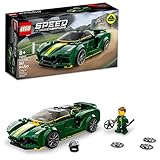
- Recreate Britain’s first all-electric hypercar with this Lotus Evija replica car model and admire the toy sports car's innovative design
- Explore it piece by piece as you recreate one of the world's most unprecedented aerodynamic shapes
- This car toy model for kids has plenty of room for a 2-seat cockpit and lots of authentic detailing
- It comes with a LEGO racing driver minifigure with a Lotus racing suit, crash helmet, wig and a wrench
- As you build with the LEGO Building Instructions app available for smartphones and tablets, zoom, rotate and view models from all angles
Evora power levels and variants
Published heritage figures vary by version. Early Evora examples are listed at 276 bhp, Evora S models at 345 bhp, and the Evora 400 family at 406–430 bhp. Keep the variant name beside each number: these are not one continuous output range for every Evora.
| Evora version or family | Published power | Relevant context |
|---|---|---|
| Early Evora | 276 bhp | Early production specification |
| Evora S | 345 bhp | Higher-output variant |
| Evora 400 family | 406–430 bhp | Range covers the listed family; exact car and market must be identified |
| Evora 400 | 400 bhp at 7,000 rpm | Supercharged and charge-cooled V6 specification introduced with the 2015 update |
The 2015 Evora 400 change
In 2015, the Evora 400 brought a supercharged and charge-cooled V6 rated at 400 bhp, along with revised ergonomics. Lotus specifically highlighted easier entry and exit. That matters if the car will be used for touring rather than only short, focused drives: the later update addressed access as well as output.
Who should choose an Evora?
- Choose it if V6 character and a more touring-oriented brief matter more than the Elise’s minimal mass.
- Choose the Evora when occasional rear-seat carrying is valuable, while accepting that a 2+2 is not the same as a full four-seat car.
- Compare the exact variant, transmission and market before drawing conclusions about power, weight, equipment or running requirements.
Lotus Emira: the modern successor in two engine forms
Chassis and layout
Early Emira material describes a bonded-aluminium chassis, double-wishbone suspension and electrohydraulic steering. The car continues the mid-engine sports-car formula but adds a newer cabin and more convenience-oriented equipment than the Elise. Exact features depend on model year, trim and market.
PC Slower Than It Used to Be?
A free scan shows the junk files, broken settings and background clutter dragging Windows down - then fixes them in one click.Free scan · Windows 10 & 11Crashes, No Sound, or Screen Glitches?
Random freezes, missing sound and display glitches usually trace back to one bad driver. Find and replace yours safely.Free scan · under a minuteFour-cylinder Turbo or V6?
Lotus’ Emira material describes two powertrain routes: a turbocharged 2.0-litre four-cylinder supplied by AMG and a supercharged 3.5-litre V6. Launch-era press data listed 400 bhp for the V6 and 360 bhp for the early Turbo. Those are historical launch figures, not automatically the current specification for every Emira.
Rank #3
| Emira configuration in the cited material | Engine and transmission information | Published figure or qualification |
|---|---|---|
| Launch-era V6 | Supercharged 3.5-litre V6 | 400 bhp in launch-era press data |
| Launch-era Turbo | Turbocharged 2.0-litre four-cylinder | 360 bhp in launch-era press data |
| 2026 V6 SE | Supercharged V6; six-speed manual or automatic listed | 400 bhp in the 5 June 2025 announcement |
| 2026 Turbo/Turbo SE | Turbocharged four-cylinder; eight-speed dual-clutch gearbox listed | The announcement lists Turbo SE at 400 bhp and 0–62 mph in 4.0 seconds |
What changed in the 2026 announcement?
A 5 June 2025 Lotus announcement introduced 2026 Emira V6 SE and Turbo variants. It listed the V6 SE at 400 bhp with a six-speed manual or automatic, and Turbo/Turbo SE cars with an eight-speed dual-clutch gearbox. The US specifications page uses market- and trim-specific figures and warns that promotional images or features may not match every specification. Treat the announcement as a dated guide, then verify the local car’s build sheet.
Roof and option availability
Lotus’ current Emira product information describes a removable roof option for Turbo SE, V6 SE and 420 Sport. Availability is not universal: confirm the market and model year before presenting it as standard or available on every Emira.
Who should choose an Emira?
- Choose it if you want the newest design and a cabin intended to be easier to live with than an Elise.
- Choose the Turbo route when the later dual-clutch transmission and four-cylinder format fit your priorities.
- Choose the V6 route when the supercharged six-cylinder character and the availability of a manual are more important.
- Verify the exact trim and market because launch figures, later SE naming and local equipment can differ.
Which car is fastest, lightest or most practical?
Lightest
The Elise is the lightest family in this comparison when its early published 690–770 kg range is considered. That statement needs a generation qualifier: later Elise groupings are listed at 860–931 kg, and the weight convention may not match figures quoted for an Evora or Emira.
Most practical
The Evora has the clearest extra-seat advantage because it is the only one described by Lotus as a 2+2. The Emira offers a more modern cabin and convenience emphasis than the Elise, but it remains a two-seat sports car. Do not infer luggage capacity, child-seat compatibility or adult rear-seat comfort from the body style alone.
Rank #4
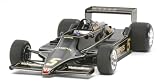
- 1: 20 Scale
- Length Model 220 mm
- Model number: 300020060
- The package dimension of the product is: 29"L x19"W x7"H
Most powertrain choice
The Emira has the clearest current choice between a turbocharged four-cylinder and a supercharged V6, while the Evora’s defining engine is its 3.5-litre V6 and the Elise spans four-cylinder engines across generations. Comparing horsepower without matching year, trim and transmission can produce a false ranking.
Fastest on paper
The cited Emira Turbo SE announcement gives 0–62 mph in 4.0 seconds, while early Elise material gives 0–100 km/h in 5.9 seconds. These are different speed standards, versions and eras, so they are not a controlled comparison test. Manufacturer figures should not be presented as independent measurements.
Independent reader supportYour contribution helps us test, update, and keep practical guides available for everyone.Emira tyres and the Drivers Pack: check the car, not just the model name
Documented Emira Drivers Pack technical material lists Michelin Pilot Sport Cup 2 as a tyre option, with 245/35 R20 front and 295/30 R20 rear sizes. The fitment is tied to the specified wheels, trim and market; it is not proof that every Emira accepts those tyres.
Recommended Free Tools
- Read the sidewall and the vehicle placard on the individual car.
- Confirm wheel diameter, width and trim before ordering.
- Check the local specification and whether the car actually has the Drivers Pack.
- Do not assume marketplace stock or a model-year listing proves fitment.
How to compare two actual cars without mixing specifications
- Record the identity: write down model, production year, market, trim, engine and transmission.
- Normalize the numbers: compare power in the same unit and weight using the same published measurement convention.
- Separate factory claims from tests: label acceleration and power as manufacturer figures unless an independent test is available.
- Check seating and use: establish whether you need two seats, occasional 2+2 capacity, luggage space or easier entry.
- Verify equipment: confirm suspension, wheels, tyres, roof options, transmission and convenience features on the individual build.
- Check local documentation: use the Lotus page and specification for your market rather than importing a figure from another country.
This process prevents the common mistake of comparing an early, very light Elise with a later, highly equipped Elise, or treating launch-era Emira numbers as a universal current specification.
Best Value

- AUTHENTIC REPLICA: Die-cast metal 2012 Lotus Exige S model car in its pristine color, perfectly crafted at 1:32 scale with impressive detail
- INTERACTIVE FEATURES: Functioning doors that open and close, plus exciting pull-back action mechanism for dynamic play
- QUALITY CONSTRUCTION: Built with durable die-cast metal body, rubber tires, and detailed plastic components for lasting performance
- PRECISE DETAILS: Authentic racing design elements including the number 3 decal, aerodynamic body styling, and detailed wheel rims
- SPECIFICATIONS: Compact 5-inch size perfect for collectors and play, suitable for ages 3 and up, no batteries required
Which Lotus should you buy?
Pick the Elise for purity
The Elise is the answer for a driver who wants the smallest, lightest and most focused experience and can accept a spartan two-seat car. Shop by generation, because its long production history covers materially different engines, outputs and weights.
Pick the Evora for V6 touring ability
The Evora suits a driver who wants a V6 sports car with occasional extra-seat utility and a more touring-oriented compromise. Decide whether an early car, Evora S or Evora 400-family variant meets the brief before comparing power.
Pick the Emira for modern usability
The Emira is the strongest fit for someone who wants a current-era Lotus with more contemporary comfort and technology, plus a choice of four-cylinder Turbo or V6 power. Specify the model year, local market and SE status first; those details determine which engine, gearbox, output and options actually apply.
Quick Recap
Product prices and availability are accurate as of the date/time indicated and are subject to change. Any price and availability information displayed on Amazon at the time of purchase will apply.




