Neither leasing nor financing is the best choice for every new-car shopper in 2026. Financing is usually the better fit if you want to own the car, drive without a lease mileage cap, and keep, sell, or trade it after payoff. Leasing can suit you if you prefer changing cars regularly and are comfortable with mileage, condition, and return terms. To decide, compare complete written offers for the same car over the same period—not just the monthly payment.
This is general U.S. guidance. The right choice depends on the vehicle, your location and credit, the specific loan or lease offer, your mileage, and how long you expect to keep the car. Rates, incentives, residual values, taxes, and fees vary; there is no universal 2026 cost winner.


What leasing and financing payments actually pay for
With an auto loan, payments go toward the vehicle’s purchase price and the cost of borrowing. As you pay down the loan, you build toward ownership. Once the loan is paid off, you own the car.
A lease is an agreement to use a vehicle for a set term and mileage allowance. Its payments generally cover the car’s expected depreciation during that term, plus a rent charge, taxes, and fees. You do not automatically own the car at the end.
The Consumer Financial Protection Bureau (CFPB) describes a lease as “an agreement to use a vehicle, new or used, for a certain number of months and miles.” Its consumer guidance, last reviewed September 12, 2023, gives typical auto-loan terms as three to seven years and typical leases as two to four years. It also says most leases restrict mileage to 10,000–15,000 miles per year. These are general figures, not guaranteed terms for a 2026 offer; your contract controls. CFPB: What should I know about leasing versus buying a car?
Lease vs. finance: the practical differences
| Decision | Finance with an auto loan | Lease |
|---|---|---|
| What payments do | Pay the purchase price over time, plus the cost of credit; payments build toward ownership. | Generally cover expected depreciation during the term, plus rent charges, taxes, and fees. |
| At the end | You own the vehicle after paying off the loan. | You return the vehicle unless your agreement gives you a purchase option that you exercise. |
| Mileage | No lease mileage cap, though mileage can affect resale or trade-in value. | The contract typically sets an allowance; excess mileage may result in charges. |
| Condition | Wear and condition can affect resale value and maintenance costs. | Excess wear, damage, or missing equipment can lead to charges under the agreement. |
| Flexibility | You can keep, sell, or trade the vehicle, subject to any remaining loan balance. | Return, purchase, or extension options depend on the agreement and lessor; ending a lease early can be costly. |
| Monthly payment | May be higher than a lease payment for the same car, but contributes to paying off the purchase. | May be lower, but does not by itself lead to ownership. |
For more on mileage, wear, and total cost, see the FTC guide to financing or leasing a car.
When financing is likely to fit better
- You want to own the car and may keep it after the payments end.
- You drive more than a lease’s stated mileage allowance or do not want to manage a mileage cap.
- You value the option to sell or trade the car, while recognizing that its value depends in part on mileage and condition.
- You want to avoid lease return conditions, though ownership still leaves you responsible for maintenance and the vehicle’s resale value.
Compare the APR, loan term, amount financed, down payment or trade-in, and total amount paid. The FTC recommends shopping loan offers from banks, credit unions, and finance companies, as well as considering dealer or manufacturer incentives. Eligibility and terms vary by offer. FTC: Financing or Leasing a Car
When leasing may suit you better
- You prefer a shorter vehicle cycle and expect to return or replace the car at the end of the term.
- Your expected mileage fits the allowance in the specific contract.
- You are comfortable following the agreement’s standards for wear, use, and return.
- You have checked the cost and consequences of early termination in case your plans change.
A lower lease payment does not prove that leasing costs less overall. You pay for use during the lease and may face return charges; financing payments contribute toward owning an asset, whose eventual value is uncertain. Compare both paths over the same period and account for what you will have—or owe—at the end.
What’s actually slowing this PC down?
Pick the symptom - the matching free tool is one click away.
Rank #3
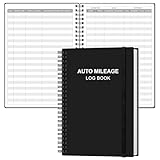
- KEEP DETAILED RECORDS OF THE CAR'S MILEAGE - This mileage log book for car, whether you are a professional driver who needs accurate mileage reimbursement records, or you just want to track your personal vehicle usage, our mileage log book is the perfect choice for you
- UNIQUE DESIGN - The vehicle mileage log book with spiral binding for truck drivers has 1732 entries to meet your needs. Each entry has space to log date, depart time, odometer readings, business & personal miles, purpose, vehicle info, start location & destination and expenses.
- MORE FUNCTIONS - Auto mileage log book help you keep track of mileage, expenses, gas consumption, lubrication, repairs & accessories, annual summary, contacts, important dates and notes.
- HIGH QUALITY - This mileage log book for business or personal, mileage logbook size of 5.8" x 8.5", just the perfectly size to fit in your backpack, purse or laptop case. Is used to high quality 100gsm pure white paper, elastic band and a back pocket for extra space.
- THE PERFECT GIFT - This driving log book can effectively organize and track your work or life, give it to your children, friends, family as a gift for Birthday| Easter|Children's Day|Halloween|Thanksgiving|Christmas|Back to school and New Year's Day.
How to compare actual loan and lease offers
- Get the same vehicle and its written out-the-door purchase price. Ask for the price before discussing financing. Compare dealer quotes and review add-ons and charges. The FTC explains how to use the out-the-door price when comparing offers: FTC: Financing or Leasing a Car.
- Choose a shared time horizon. Use the period you realistically expect to have the car. For financing, account for payments, any remaining loan balance, and the vehicle’s value at that point. For leasing, include payments and applicable return costs, or the purchase cost if you plan to use an available buyout option.
- Inspect the lease terms. Check the negotiated vehicle cost, residual value, rent charge or money factor, term, mileage allowance, amount due at signing, taxes, fees, wear standards, purchase option and price, return or disposition charges, and early-termination terms. These details can change the economics of the offer. The CFPB identifies vehicle cost, residual, down payment, trade-in value, rental charge, mileage limit, and purchase option as relevant lease factors: CFPB lease-versus-buying guidance.
- Inspect the loan terms. Compare APR, term, amount financed, total amount paid, and any down payment or trade-in. A smaller monthly payment can result from a longer repayment period, so compare the total borrowing cost as well.
- Use your real driving and ownership plans. Estimate annual mileage, decide how long you expect to keep the car, and consider whether you may want to sell or trade it. A lease can bring mileage charges; with a loan, mileage can reduce resale value.
- Verify the specific offer and your eligibility. Rates, incentives, residual values, tax treatment, and fees vary by vehicle, buyer, contract, and location. Ask for the complete written terms rather than relying on an advertised payment.
If you might buy the leased car
Check whether the lease includes a purchase option, when it can be exercised, and the stated purchase price and applicable fees. A residual value is used in calculating lease payments and can also affect the purchase amount when an option exists. Do not assume you can buy the car unless the agreement provides for it. The CFPB’s leasing guidance explains the role of residual value and purchase options: CFPB: What should I know about leasing versus buying a car?
Independent reader supportYour contribution helps us test, update, and keep practical guides available for everyone.Read the contract before signing
Lease disclosures address key obligations such as the payment schedule, early termination, wear and use, maintenance responsibilities, and purchase options. The CFPB’s Regulation M resource, covering 12 CFR Part 1013 and § 1013.4, says it was most recently amended January 1, 2026. The CFPB cautions that its online resource is not a substitute for the official legal edition. Read the agreement and disclosures for the terms that apply to your transaction. CFPB Regulation M, 12 CFR Part 1013
Quick Recap
Best Value

- Official Record Book: This hardcover log book is designed to record the purchase, sale, or exchange of new and used motor vehicles.
- Comprehensive Tracking: With 975 vehicle record entries, it allows for meticulous documentation of automotive transactions.
- Durable Construction: The sturdy hardcover binding ensures long-lasting use and protection of important records.
- Convenient Size: Measuring 11.5 x 9.5 inches, this book offers ample space for detailed vehicle information.
- Essential Tool: An indispensable resource for car dealers, ensuring proper documentation and compliance with regulations.
Rank #4

- Comprehensive Package for Long Term Use: this package comes with 6 auto mileage and expense notebooks; Each mileage log book for car contains 32 pages; This sufficient quantity enables you to keep track of your expenses for a longer period
- Ideally Sized for Convenience: with dimensions of 6.3 x 3.3 inches, the vehicle mileage log book is the ideal size to carry around; Its compact nature ensures you can easily tuck it into your glove compartment or bag, ready to jot down important information whenever the need arises
- Quality Material for Ease of Use: the vehicle log book is made from quality paper, providing a smooth writing surface for all your record keeping needs; This ensures clear documentation of all your auto mileage and expenses for easy reference
- Organized Layout for Detailed Record Keeping: each car mileage log book boasts an organized layout with appropriate categories; You can track different types of expenses like mileage, gas, oil changes, parking charges, and even cleaning and repair costs; The 2 page layout allows you to track expenses by day over a 12 months period, with monthly and annual summary pages on the back for easy accurate recording; This gives you a clear and broad view of your vehicle's running costs
- Ideal for Divers: the mileage tracking book constitutes the ideal tool for divers with features specifically designed for auto mileage and expense logging; They provide a systematic way of recording mileage, gas usage, oil changes, and other vehicle related expenses incurred
Product prices and availability are accurate as of the date/time indicated and are subject to change. Any price and availability information displayed on Amazon at the time of purchase will apply.




