What’s actually slowing this PC down?
Pick the symptom - the matching free tool is one click away.
Bottom line: The Koenigsegg Agera RS is a road-legal, road-and-track-focused hypercar built in just 25 examples between 2015 and 2018. It became famous for a 2017 Nevada top-speed record, while its carbon construction, active aerodynamics and unusual luggage space make it more than a straight-line special. Period reporting put its unofficial new-car base price near $2 million; a responsible current resale value depends on each car’s provenance and specification and cannot be reduced to one verified figure.
What the Agera RS is
Koenigsegg unveiled the Agera RS at the Geneva Motor Show in March 2015. The company describes it as a fully road-legal model using technology developed through the One:1 program, with a balance of road usability and track capability. Production ended in 2018, and Koenigsegg’s 2016 program announcement said every example had sold within 10 months of the debut.


As an Amazon Associate I earn from qualifying purchases.
The RS is not simply an Agera with more power. Its specification combines a carbon-fiber structure and body, active aerodynamic devices, electronically adjustable ride height, carbon-ceramic brakes and hollow carbon-fiber Aircore wheels. A detachable hardtop can be stored inside the car, and the luggage compartment is genuinely usable by hypercar standards.
Do these 3 things before closing this tab:
1Scan for outdated or missing drivers - takes under a minute2Clear out junk files and repair common Windows errors3Fix the driver behind crashes, sound loss and screen glitchesHow fast is the Koenigsegg Agera RS?
Koenigsegg records a 446.97 km/h (277.87 mph) average from two opposite-direction runs on a Nevada public road on 4 November 2017. The two-way format reduces the effect of wind and is the most meaningful number when discussing the car’s headline production-car record.
#1 Best Overall

- Brand new box, Limited edition.
- True-to-scale detail. Detailed interior, exterior.
- Real rubber tires
- Made of diecast metal with some plastic parts. Dimensions
- Officially licensed product.
A separate Koenigsegg history entry for that day lists five production-vehicle records:
- 447.19 km/h average top speed
- 33.29 seconds for 0–400–0 km/h
- 445.63 km/h average flying-kilometer speed
- 444.76 km/h flying-mile speed
- 457.94 km/h in a single direction
The 446.97 and 447.19 km/h averages come from separate official Koenigsegg pages and should not be silently merged into one number. The single-direction figure is higher because it is not corrected by a run in the opposite direction.
Koenigsegg’s technical specification lists 0–100 km/h in 3.0 seconds, 0–200 km/h in 8.0 seconds and 0–200–0 km/h in 13.5 seconds. It also quotes a 30.5-metre stop from 100 km/h and 1.5 g of lateral acceleration. These are manufacturer figures rather than results from an independently instrumented road test.
Rank #2

- Resin Replica: This car is meticulously crafted from resin
- No Moving Parts: No doors, hood, or other moving components
Engine, transmission and published power figures
The Agera RS uses Koenigsegg’s twin-turbocharged, all-aluminum 5.0-liter V8 with dry-sump lubrication and a seven-speed paddle-shift transmission. Published output varies by Koenigsegg page and specification:
| Item | Published figure | Qualification |
|---|---|---|
| Power on gasoline | 865 kW (1,160 hp) | Figure listed in Koenigsegg technical and program materials |
| Petrol output on model summary | 1,150 bhp | Model-page summary; different page wording from the 1,160-hp figure |
| Optional Megawatt package | 1,360 bhp | Optional upgrade identified on the model page |
| Torque band | 1,000 Nm from 2,700 to 6,170 rpm | Technical specification |
| Maximum torque | 1,280 Nm | Technical specification |
Because the pages describe different configurations and have been revised over time, the safest way to quote an individual car is to identify its exact build and the source specification. The power numbers should not be treated as one universal output for every Agera RS.
Chassis, aerodynamics and braking hardware
- Structure and body: carbon-fiber construction keeps mass low while providing the platform for the active systems.
- Active aero: a dynamically active rear wing works with front flaps, a front splitter and winglets to manage high-speed stability and downforce.
- Suspension control: electronically adjustable ride height allows the car to be configured for road clearance or more performance-oriented use.
- Wheels: hollow carbon-fiber Aircore wheels reduce unsprung mass; wheel specifications can be individual to a build.
- Brakes: carbon-ceramic hardware is fitted for repeated high-speed deceleration.
Those systems explain why the RS is better understood as a road-and-track car than as a top-speed engine wrapped in a body. They also mean that a buyer evaluating a used example should verify the condition and service history of the active aero, ride-height system, carbon wheels and ceramic brakes, not just the engine output.
Rank #3
Agera RS dimensions and practical equipment
| Specification | Koenigsegg figure |
|---|---|
| Length | 4,293 mm |
| Width | 2,050 mm |
| Height | 1,120 mm |
| Wheelbase | 2,662 mm |
| Dry weight | 1,295 kg |
| Curb weight | 1,395 kg |
| Fuel-tank capacity | 82 liters |
| Luggage capacity | 150 liters |
The 150-liter luggage area and stowable hardtop are unusual advantages in this class. The roof can be removed for open-air driving and stored internally, so owners do not need a separate support vehicle merely to carry the roof.
The Tool Desk
Outbyte PC Repair FREEClear out junk files and repair common Windows errorsFree Scan →Outbyte Driver Updater FREEFix the driver behind crashes, sound loss and screen glitchesFind Drivers →What it is like as a road-legal hypercar
The manufacturer’s own description emphasizes road feel, responsiveness and technical sophistication. Founder Christian von Koenigsegg called the performance and road feel “truly amazing” and said the car represented the brand’s core values. That is a useful statement of intent, but it is not an independent driving evaluation.
In practical terms, the RS pairs extreme acceleration and aero hardware with features that make ordinary use less burdensome than its numbers suggest: a removable roof, internal roof storage, adjustable ride height and dedicated luggage space. The trade-offs are those expected of a low-volume carbon hypercar: complex active systems, expensive carbon and ceramic components, and a market in which every car may have a highly individualized specification.
Rank #4
What did a new Agera RS cost?
ANSA reported on 19 January 2016 that all 25 cars had sold and described an unofficial base price of about $2 million, approximately €1.83 million at the exchange rate cited at the time. This is historical launch-era reporting, not a current asking price or a guaranteed final invoice.
No authoritative September 2026 transaction dataset establishes one current open-market value. A sale can move substantially with mileage, provenance, tax jurisdiction, options, location, maintenance records and whether the car is a special Final Edition or another individualized build. Any advertisement or auction result should therefore be read as a price for that specific chassis, not a universal Agera RS valuation.
Free tools Windows power users keep installed
One-click scans. No signup required.
How many Agera RS cars were made?
Koenigsegg built 25 examples worldwide from 2015 through 2018. The complete allocation sold within 10 months of the 2015 debut, making it the company’s fastest-selling model at that point. The small production run, documented record and bespoke specifications are central to the car’s collectibility, but scarcity alone does not establish a particular resale price.
Best Value
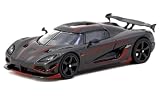
- 1:64 Scale
- Adult Collectible 14 years and up
- Includes display base and acrylic cover, often in a paper sleeve or blister pack
- Rolling rubber tires
- Licensed product
Is the Agera RS still the fastest production car?
It remains the Koenigsegg model associated with the company’s verified 2017 two-way Nevada production-car record. Whether it is “still the fastest” in 2026 depends on the definition used—two-way average, one-way speed, acceleration record or another production-car standard—and on later attempts by other manufacturers. The figures above establish what the Agera RS achieved; they do not prove a current all-category ranking.
Photos: what to look for in the official gallery
Koenigsegg’s official Agera RS model page is the appropriate source for factory exterior and cockpit imagery. Captions and inspection notes should identify the hardware rather than treating every image as a generic beauty shot:
- Roof: show the detachable hardtop and, where possible, its internal storage arrangement.
- Aero: point out the active rear wing, front splitter, front flaps and winglets.
- Bodywork: note the exposed or painted carbon-fiber surfaces and the side outlets.
- Wheels and brakes: identify the Aircore carbon wheels and carbon-ceramic brake assemblies.
- Cockpit: include a driver’s-eye view to show the paddle-shift layout and road-car controls.
- Practicality: include the luggage compartment, an important differentiator for a car with this performance.
How to compare an Agera RS with another hypercar
A meaningful comparison should keep like-for-like evidence separate. Use the following checklist before treating another car as faster, rarer or more usable:
- Compare verified two-way speed runs with other two-way runs, not a one-way claim with a wind-corrected average.
- Separate manufacturer acceleration figures from independently timed tests.
- Check whether quoted horsepower is gasoline-only, an optional fuel package or a particular page revision.
- Compare power-to-weight ratio using the same weight convention—dry or curb.
- Examine aero strategy and downforce, not just peak horsepower.
- Confirm road-legal status in the relevant market.
- Account for roof storage, luggage capacity and ride-height adjustment if the car will be driven on public roads.
- Keep historical launch pricing separate from present-day auction or private-sale values.
Verdict
The Agera RS is significant because it combines a documented 2017 production-car speed achievement with genuine road equipment and a production run of only 25 cars. Its official specifications show a 5.0-liter twin-turbo V8, active aero, carbon construction and performance figures that remain exceptional. For buyers and collectors, the decisive question is not a generic “Agera RS price,” but the history, configuration and condition of the particular example.
Quick Recap
Product prices and availability are accurate as of the date/time indicated and are subject to change. Any price and availability information displayed on Amazon at the time of purchase will apply.




