The Kia EV3 Long Range has the higher published European range: Kia lists up to 375 miles WLTP on a specified 17-inch-wheel configuration, while Hyundai lists up to 514 km (about 319 miles) WLTP for the Kona Electric Long Range. The Kona has slightly more published rear cargo capacity, and Kia’s quoted EV3 DC charging times are shorter—but the charging figures use different power supplies, so they are not a direct test comparison.
The figures below focus on UK and European manufacturer specifications, with the market, battery and stated conditions identified wherever relevant. They are useful for narrowing down versions, not a substitute for checking a specific car: range and charging figures vary by battery, trim, wheels and charging supply, and manufacturer test-cycle estimates are not guarantees for everyday driving.
As an Amazon Associate I earn from qualifying purchases.
Which has more range?
On the manufacturer-published European figures, the Kia EV3 Long Range leads the Hyundai Kona Electric Long Range. Kia UK lists 375 miles of combined WLTP range for an EV3 Long Range in a specified 17-inch-wheel configuration. Hyundai Motor Europe lists up to 514 km WLTP for a Kona Electric Long Range with a 65.4 kWh battery, which is about 319 miles after unit conversion.
Do these 3 things before closing this tab:
1Clear out junk files and repair common Windows errors2Fix the driver behind crashes, sound loss and screen glitches3Repair Windows errors before they cause bigger problemsThese are official estimates, not results from a matched road test. WLTP is a standardised test cycle, and neither figure promises that a particular driver will cover that distance in ordinary use. Driving conditions and vehicle configuration matter; the published figures are best used to compare the specified versions, not as a forecast for every trip. The two maximum figures also describe cars with different battery capacities and configurations, so they are not a controlled comparison of efficiency.
#1 Best Overall

- Single Model Matching: 3D scanned interior, only suitable for 2026 2027 Kia EV3 (12.3-inch screen only)
- Safe & Stable: Once installed, it remains stable and does not shake during vehicle operation, providing a safe perspective
- Non Destructive Installation: The installation will not damage the vehicle and can be removed at any time, can be installed in seconds
- Powerful Magnetic Car Mount Design for MagSafe:Car Mount for MagSafe are specially made of black aluminum alloy.Car Phone Holder comes with 20 wider N55 magnets that provide super-strong suction. The powerful magnetism keeps your phone stable,giving you a safe driving experience even on bumpy roads
- Attention! Attention: The mount is designed for a single year model. Before purchasing, please carefully read the pictures and instructions to confirm that your vehicle is correct. If you are unsure, please take a photo and send it to the seller for confirmation
| Model and market | Battery and configuration | Published combined range | Source |
|---|---|---|---|
| Kia EV3, UK | Standard Range, 58.3 kWh; specified 17-inch-wheel configuration | 270 miles WLTP | Kia UK specification, accessed 2026 |
| Kia EV3, UK | Long Range, 81.4 kWh; specified 17-inch-wheel configuration | 375 miles WLTP | Kia UK specification, accessed 2026 |
| Kia EV3, UK | Long Range, 19-inch wheels; GT-Line | 367 miles WLTP | Kia UK specification, accessed 2026 |
| Kia EV3, UK | Long Range, 19-inch wheels; GT-Line S | 362 miles WLTP | Kia UK specification, accessed 2026 |
| Kia EV3, UK | Long Range, 19-inch wheels; GT-Line S with heat pump | 361 miles WLTP | Kia UK specification, accessed 2026 |
| Hyundai Kona Electric, Europe | Long Range, 65.4 kWh | Up to 514 km WLTP, about 319 miles by unit conversion | Hyundai Motor Europe performance page, accessed 2026 |
The EV3’s 375-mile figure does not apply to every trim or wheel setup. Kia’s listed 19-inch Long Range versions are lower, from 361 to 367 miles depending on the specified trim. A buyer comparing particular cars should use the figure for the exact wheel and trim combination, rather than treating the highest figure as universal. In particular, the GT-Line S with heat pump has a listed 361-mile figure; the presence of a heat pump does not make the 375-mile figure apply to that version.
The battery choices help explain why it matters to compare like with like. Kia lists 58.3 kWh for the EV3 Standard Range and 81.4 kWh for the Long Range. Hyundai’s European Kona figures cover a 48.4 kWh Standard Range and a 65.4 kWh Long Range. In this set of published European specifications, the EV3 Long Range pairs the largest listed battery with the highest cited maximum range. That observation is not an efficiency ranking: battery capacity, vehicle configuration and test results differ, and no matched independent road test is available here.
When considering a version, ask whether you need the higher headline test-cycle range or whether a lower-range battery suits your regular journeys. Compare the exact trim and wheel setup on the order sheet, and check the specification for the market where the car will be registered. The manufacturer figures help distinguish configurations, but they cannot predict the range on an individual journey.
Free tools Windows power users keep installed
One-click scans. No signup required.
What about the US Kona?
Hyundai USA’s specifications for the 2025 Kona Electric use EPA estimated range, a different test cycle from European WLTP. They list 200 miles for SE, 261 miles for SEL and Limited, and 230 miles for N Line. Those US figures should not be ranked directly against the European EV3 and Kona WLTP estimates. A corresponding US-market EV3 specification is not established by the cited material, so this comparison cannot supply a matched US-market result.
When shopping, first match market and model year, then battery, trim and wheels. A number from a US EPA specification and one from a European WLTP page can both be valid in their own markets without being interchangeable. The 2025 EPA figures also show that Kona range varies between US trims; the 261-mile figure is not the figure for every 2025 Kona Electric.
Which has more boot space?
The Kona Electric has the larger published rear cargo volume in both seat positions: Hyundai lists 466 litres with the rear seats up and 1,300 litres with them folded. Kia lists 460 litres and 1,251 litres respectively for the EV3. The Kona’s stated advantage is 6 litres with the seats up and 49 litres with them folded.
Rank #2
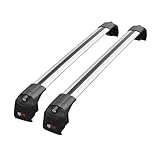
- VEHICLE-SPECIFIC PRODUCTION The ACE-2 Model Cross Bars are manufactured in vehicle-specific dimensions based on brand–model–year for vehicles with notched roof rails. Not a universal product.
- ADAPTIVE MOVING MOUNTING BRACKET The mounting structure is designed to adapt to the angle of the roof rail, providing balanced installation support with approximately 5° horizontal and 3° vertical movement tolerance.
- 75 KG DRIVING / 150 KG PARKED LOAD SUPPORT Suitable for loads up to 75 kg (165 lbs) while driving within manufacturer and legal limits, and provides appropriate infrastructure for up to 150 kg (330 lbs) when the vehicle is parked.
- WIDE ACCESSORY COMPATIBILITY Compatible with accessories using T-Bolt systems or U-Type mounting bolts with a minimum width of 75 mm.
- LOCKABLE & EASY INSTALLATION Equipped with a deterrent locking mechanism against unauthorized removal. Installation can be completed within 15–25 minutes without professional assistance using vehicle-specific mounting kits.
| Vehicle and source | Rear cargo, seats up | Rear cargo, rear seats folded | Front storage |
|---|---|---|---|
| Kia EV3, Kia UK/Ireland specifications and brochure, accessed 2026 | 460 L | 1,251 L | 25 L front luggage compartment, listed in UK specification |
| Hyundai Kona Electric, Hyundai Motor Europe design page, accessed 2026 | 466 L VDA | 1,300 L | 27 L front storage compartment |
Hyundai identifies its rear cargo figures as VDA measurements. The Kia material lists litres but does not establish the same measurement method in the cited figures, so the comparison is between published capacities rather than a confirmed like-for-like measurement. Even two cars with similar quoted litres can differ in the shape of the load area, access opening, floor height and obstructions. The figures alone cannot tell you whether a particular suitcase, stroller or other bulky object will fit.
Outdated Drivers Are Slowing You Down
One free scan finds every outdated or missing driver and matches the right update for your exact hardware.Free scan · exact hardware matchWindows Errors? Fix Them Before They Spread
Repair common Windows errors and clear accumulated junk for a smoother, more stable PC - no reinstall needed.Free scan · no reinstallThe front compartments are modest additional storage areas rather than a replacement for the main boot: Kia lists 25 L for the EV3 and Hyundai lists 27 L for the Kona Electric. Those manufacturer-published capacities are close, and the same practical caution applies—litres do not show the shape of the space or whether a particular object will fit. Check the actual compartment and confirm how it can be used on the exact vehicle.
Check the items you actually carry
If cargo capacity is a deciding factor, take the objects you routinely transport—or their measured dimensions—to a dealer visit. Check whether the load opening is wide and tall enough, whether the floor is usable at the needed height, and whether the rear seats fold in a configuration that suits your cargo. For a child seat, verify the intended seating position and installation physically rather than inferring fit from the vehicle’s overall dimensions.
For luggage, measure the longest, widest and tallest items, and consider how they need to be loaded. A quoted boot volume will not tell you whether a hard-sided suitcase can pass through the opening, whether a stroller can sit beside another item, or whether the remaining seats can stay in use. If the normal load includes several objects, test them together rather than relying on a single-item demonstration.
The EV3 measures 4,300 mm long, or 4,310 mm for a specified Long Range GT-Line version, 1,850 mm wide and has a 2,680 mm wheelbase, according to the Kia Ireland brochure. Those exterior dimensions do not establish passenger room by themselves. The material available for this comparison does not provide sufficiently matched passenger-space measurements for both models to say which has more rear-seat room. Try the actual seating position, especially if adults regularly ride in the back or you need to fit child seats.
That fit check is worth doing with the people and equipment that will use the vehicle. Sit behind the driver’s usual position, check access and headroom, and install any child seat in the intended place. The published cargo capacities and EV3’s overall dimensions cannot settle whether rear passengers will be comfortable or whether a particular seat will install as needed; matched passenger-space measurements for both vehicles are not available here.
Rank #3

- VEHICLE-SPECIFIC PRODUCTION The ACE-2 Model Cross Bars are manufactured in vehicle-specific dimensions based on brand–model–year for vehicles with notched roof rails. Not a universal product.
- ADAPTIVE MOVING MOUNTING BRACKET The mounting structure is designed to adapt to the angle of the roof rail, providing balanced installation support with approximately 5° horizontal and 3° vertical movement tolerance.
- 75 KG DRIVING / 150 KG PARKED LOAD SUPPORT Suitable for loads up to 75 kg (165 lbs) while driving within manufacturer and legal limits, and provides appropriate infrastructure for up to 150 kg (330 lbs) when the vehicle is parked.
- WIDE ACCESSORY COMPATIBILITY Compatible with accessories using T-Bolt systems or U-Type mounting bolts with a minimum width of 75 mm.
- LOCKABLE & EASY INSTALLATION Equipped with a deterrent locking mechanism against unauthorized removal. Installation can be completed within 15–25 minutes without professional assistance using vehicle-specific mounting kits.
How long does each take to charge?
For a quoted DC fast-charge session from 10% to 80%, Kia lists shorter EV3 times than Hyundai lists for the Kona Electric Long Range, but the manufacturer figures use different stated supply power. Kia’s EV3 times are based on a 150 kW supply; Hyundai’s Kona Long Range time is based on a 101 kW DC station. These are specifications under different conditions, not a controlled head-to-head charging test.
| Vehicle and battery | Charge window | Stated DC supply | Manufacturer-listed time | Source |
|---|---|---|---|---|
| Kia EV3 Standard Range, 58.3 kWh | 10–80% | 150 kW | 29 minutes | Kia UK specification, accessed 2026 |
| Kia EV3 Long Range, 81.4 kWh | 10–80% | 150 kW | 31 minutes | Kia UK specification, accessed 2026 |
| Kia EV3 Standard Range, 58.3 kWh | 10–80% | 50 kW | 55 minutes | Kia UK specification, accessed 2026 |
| Kia EV3 Long Range, 81.4 kWh | 10–80% | 50 kW | 79 minutes | Kia UK specification, accessed 2026 |
| Hyundai Kona Electric Long Range, 65.4 kWh | 10–80% | 101 kW | 41 minutes | Hyundai Motor Europe performance page, accessed 2026 |
| Hyundai Kona Electric Standard Range, 48.4 kWh | 10–80% | 74 kW | 41 minutes | Hyundai Motor Europe performance page, accessed 2026 |
The power rating shown is the supply used for the quoted time; it should not be read as a promise that every charger with that rating will deliver the same session. The EV3’s 150 kW Long Range figure and Kona’s 101 kW Long Range figure do not establish how either car would compare on one shared charger in a matched test. The 50 kW EV3 figures also show why the available charger matters: Kia lists 79 minutes for the Long Range at 50 kW, rather than 31 minutes on a 150 kW supply.
Look at the entire charging line, not just the number of minutes. The quoted figures cover 10–80%, not 0–100%, and Kia’s figures change substantially between the listed 150 kW and 50 kW supplies. The Hyundai page’s 41-minute figures also pair each battery with its stated station power: 101 kW for the Long Range and 74 kW for the Standard Range. These published times answer how long the specified charging window takes under those stated conditions; they do not predict every public charging stop.
For a useful comparison, note the battery version, starting and ending charge percentages, and the supply rating beside each quoted time. A shorter stated time on a higher-power supply is not proof of a faster charge under identical conditions. The cited pages do not provide a matched-session test on one charger, so claims about which car is quicker in the same real-world charging conditions would go beyond the available figures.
Home AC charging figures
Home charging times are also conditional on the electrical supply and charging setup. Kia UK lists 10–100% times for the EV3 on a 230 V, 16 A supply. Hyundai Motor Europe states that the Kona Electric has a 10.5 kW onboard charger and gives times for charging on an 11 kW, three-phase, 230 V wallbox.
| Vehicle and battery | Charge window and stated setup | Manufacturer-listed time | Source |
|---|---|---|---|
| Kia EV3 Standard Range, 58.3 kWh | 10–100%, 230 V, 16 A | 5 hours 20 minutes | Kia UK specification, accessed 2026 |
| Kia EV3 Long Range, 81.4 kWh | 10–100%, 230 V, 16 A | 7 hours 15 minutes | Kia UK specification, accessed 2026 |
| Hyundai Kona Electric Standard Range, 48.4 kWh | 10–100%, 11 kW three-phase, 230 V wallbox | 4 hours 55 minutes | Hyundai Motor Europe performance page, accessed 2026 |
| Hyundai Kona Electric Long Range, 65.4 kWh | 10–100%, 11 kW three-phase, 230 V wallbox | 6 hours 25 minutes | Hyundai Motor Europe performance page, accessed 2026 |
These AC times should not be treated as directly comparable: the battery capacities differ, and the stated electrical setups are not the same. Hyundai’s 10.5 kW onboard-charger specification describes the Kona’s equipment, while its quoted times specify an 11 kW wallbox. For an actual home installation, confirm the property’s electrical supply, local connector requirements and installation needs with a qualified installer. The cited vehicle pages do not establish that a separate home wallbox is included with either car or that a particular charger is suitable for every home.
Rank #4

- High-Quality Materials:The Porsche 911 GT3 die-cast car is made of zinc alloy,plastic parts and rubber tires,making it safe for children to play with.It features detailed interior and exterior trim, and is very sturdy.
- Function:No batteries are required, but the vehicle has a powerful pull back feature. Simply pull it back, then release your hand, and the car will go for a long distance. The doors may be opened to view the whole inside of the vehicle. So appealing to children and collectors alike.
- Size:1/36 scale vehicle model with beautiful English packaging,ideal for toddlers to play with and carry. Car collectors will appreciate the perfect small size, which allows them to collect a complete set of cars without taking up too much space.
- Grow From Play:Help children learn more about car ,expand their knowledge ,increase the hand-eye coordination and the reaction speed of the children in the play.
- Ideal Christmas Festival Gift:All of TOKAXI die-cast model cars are attractively packaged in English, making them the perfect Christmas, Birthday, Children's Day, New Year gift for kids, party favors, home decorations, or travel toys for boys and girls.gifts for boys girls.
A wallbox is a practical product category to investigate for either vehicle, but the charging times above do not mean one is supplied with the car. Before choosing or installing one, establish what electrical supply the home has, what local connector requirements apply and what installation is needed. A qualified installer can assess the property. Neither manufacturer figure alone confirms that an aftermarket charger will work in every home or that a quoted time will apply to a different setup.
Quick wins for a faster PC:
Fix the driver behind crashes, sound loss and screen glitchesFind Drivers →Repair Windows errors before they cause bigger problemsFix Now →Scan for outdated or missing drivers - takes under a minuteDriver Scan →What do the figures mean for a buying decision?
- Choose by the exact range configuration. If the EV3’s maximum published distance matters, check that the car is the 81.4 kWh Long Range with the specified 17-inch wheels; listed 19-inch versions have lower WLTP figures.
- Use the correct regional test cycle. Compare European WLTP specifications with other European WLTP specifications, and US EPA specifications with US EPA specifications. Do not mix the two as though they were one test.
- Prioritise the load you need to carry. The Kona’s published rear volumes are marginally larger, but a physical fit check is more useful than relying on a small difference in quoted litres.
- Match charge time to the charger you can use. A DC time is meaningful only alongside its charge window and stated supply power. At home, verify the supply and wallbox setup rather than choosing from an isolated time.
- Check local specifications before ordering. Manufacturer specifications can change by market and model year; the cited figures are from Kia UK/Ireland and Hyundai Motor Europe material accessed in 2026, with the separate US Kona figures for model year 2025.
A practical comparison checklist
Before comparing two listings or visiting a dealer, write down the exact market and model year, battery, trim and wheel size for each vehicle. Then record the relevant published range with its test cycle, and the charging time with its charge window and supply rating. This simple check avoids comparing an EV3’s maximum 17-inch-wheel WLTP estimate with a lower-range trim or an EPA value from a different market.
For cargo, compare the stated seat position and measurement method, then test the things you carry. For charging, consider both the public DC supply likely to be available to you and the AC setup at home; the official time tables describe particular conditions rather than every charger. Ask the dealer to confirm that the exact local-market version has the specification you are comparing, since manufacturer specifications can change by market and model year.
Prices, local inventory, rebates and dealer offers are not established by the specifications cited here, so they cannot settle which is the better-value purchase. Those details need checking for the buyer’s location and at the time of purchase. The same applies to local connector compatibility: confirm it for the market and vehicle rather than assuming a European or US specification transfers to another region.
What the published comparison does—and does not—settle
For European specifications, the EV3 Long Range has the higher cited maximum WLTP range, while the Kona Electric has the greater stated rear cargo volume. The EV3’s stated fast-charge time is shorter in the cited Long Range specifications, but its quoted supply is more powerful, so that does not settle which vehicle charges faster under identical conditions. Those are useful specification differences, not a complete verdict on ownership.
Kia describes the EV3’s range as “Best-in-class all-electric range.” That is Kia’s promotional wording, not an independently verified conclusion from a matched comparison of these two vehicles. No named individual or role-holder quotation accompanies the manufacturer specifications discussed here.
Best Value

- 【Suitable Model】for EV3 2026 2027 Confirm year and model before purchasing. *NOTE: If the product arrives with a crease, please use hot water to heat it up and then use a heavy object to press it for a period of time, and the creased part will be restored to its original condition
- 【TPE Material 】 Floor mats & cargo liner are crafted from top-notch TPE materials, granting them a soft yet enduring touch. They remain tough under any severe conditions, ensuring the surface stays in prime condition even after extensive use. The 3D design incorporates raised edges that keep water and dirt out, offering dirt-repelling properties and shielding against moisture ingress. Furthermore, they boast flexibility and are tough enough to withstand cracking
- 【All Weather Car Mats】 All-weather floor liner features a three-dimensional design, ensuring that you're not troubled by car interior dirt during persistent rain and snow. The elevated rims effectively contain dirt and dust, hindering their spread. Additionally, they reduce vehicle vibrations while driving, thereby boosting the stability of your drive
- 【Easy To Install And Clean】 The clasp's underside is treated to minimize sliding and keep the mat stable, enhancing driving stability. No tools needed for quick installation. Mats are stain-resistant, water-resistant, long-lasting, and easy to clean. Easily remove stains with a damp cloth or rinse and air dry
- 【After-sales service】Products will undergo strict inspections before they are dispatched. If you have any questions about the product, please feel free to reach out our after-sales service
The cited manufacturer pages do not establish current prices, dealer stock, incentives, precise real-world range, comparative comfort, safety outcomes or how a specific load fits. They also do not provide a matched passenger-space measurement set. There is no independent head-to-head range or charging test in the figures presented here. A final decision on those points requires current local information and, where fit or comfort matters, trying the specific vehicles in person.
Frequently Asked Questions
Which has more range, the Kia EV3 or Hyundai Kona Electric?
For the cited European Long Range versions, Kia lists up to 375 miles WLTP for the EV3 on a specified 17-inch-wheel configuration. Hyundai lists up to 514 km WLTP—about 319 miles by unit conversion—for the Kona Electric Long Range with a 65.4 kWh battery. These manufacturer estimates use the WLTP cycle and are not a matched road test.
Which has more boot space?
Hyundai lists 466 L VDA with the Kona Electric’s rear seats up and 1,300 L folded. Kia lists 460 L and 1,251 L for the EV3. The Kia figures do not establish the same measurement method, so treat this as a comparison of published capacities and check the actual load area with the objects you need to carry.
What’s actually slowing this PC down?
Pick the symptom - the matching free tool is one click away.
How long does each take to charge from 10% to 80%?
Kia lists 29 minutes for the EV3 Standard Range and 31 minutes for the Long Range using a 150 kW supply; at 50 kW it lists 55 and 79 minutes respectively. Hyundai lists 41 minutes for the Kona Electric Long Range on a 101 kW DC station and 41 minutes for the Standard Range on a 74 kW station. The supply conditions differ, so these are not like-for-like test results.
Are the Kia EV3 and Kona Electric range figures directly comparable in the US?
Not using the figures here. Hyundai USA’s 2025 Kona Electric EPA estimates are 200 miles for SE, 261 miles for SEL and Limited, and 230 miles for N Line. Those are US EPA figures, not European WLTP ratings, and a corresponding US-market EV3 specification is not established by the cited material.
Do the quoted home-charging times mean a wallbox is included?
No. Kia lists EV3 10–100% times on a 230 V, 16 A supply. Hyundai gives Kona times using an 11 kW, three-phase, 230 V wallbox and specifies a 10.5 kW onboard charger. The cited pages do not say that a separate home wallbox is included or that a particular charger suits every home. Confirm the property supply, local connector requirements and installation needs with a qualified installer.
The Bottom Line
Bottom line: On the cited European manufacturer figures, the Kia EV3 Long Range has the higher maximum WLTP range, while the Hyundai Kona Electric has slightly more published rear cargo volume. Kia’s listed EV3 DC times are shorter under the stated 150 kW supply, but Hyundai’s Kona times use different station power, so the figures do not establish a like-for-like charging winner. Compare the exact battery, trim, wheels and local specification, then check cargo fit and home-charging requirements in person.
The Tool Desk
Outbyte Driver Updater FREEScan for outdated or missing drivers - takes under a minuteDriver Scan →Outbyte PC Repair FREEClear out junk files and repair common Windows errorsFree Scan →Quick Recap
Product prices and availability are accurate as of the date/time indicated and are subject to change. Any price and availability information displayed on Amazon at the time of purchase will apply.




