Short answer: A turbine-powered motorcycle can deliver extraordinary peak power and speed, but it does not automatically accelerate, stop, or corner better than a conventional piston-engine motorcycle. The biggest difference is the way power arrives. A turbine takes time to spool, can continue producing power briefly after the throttle is closed, and demands more anticipation from the rider. The available evidence supports a clear contrast in power delivery and published performance claims, but not a controlled, model-to-model verdict on braking, cornering, lap times, or safety.
In this comparison, “jet motorcycle” means a motorcycle such as Marine Turbine Technologies’ Y2K or 420RR: a gas turbine drives a normal motorcycle drivetrain. The exhaust is not being used as direct jet thrust. “Conventional motorcycle” means the broad piston-engine category, from a small single-cylinder commuter to a high-performance four-cylinder sport bike; that range matters because there is no single conventional baseline.
As an Amazon Associate I earn from qualifying purchases.
What counts as a jet motorcycle?
A turbine motorcycle replaces the reciprocating piston engine with a gas turbine. Air is compressed, mixed with fuel, burned, and expanded through turbine stages. The rotating shaft then sends power through a transmission and final drive to the rear wheel. That architecture is fundamentally different from a piston engine, but the rider still controls a driven rear tire through a motorcycle gearbox or automatic transmission.
Outdated Drivers Are Slowing You Down
One free scan finds every outdated or missing driver and matches the right update for your exact hardware.Free scan · exact hardware matchPC Slower Than It Used to Be?
A free scan shows the junk files, broken settings and background clutter dragging Windows down - then fixes them in one click.Free scan · Windows 10 & 11Marine Turbine Technologies (MTT) describes its 420RR as using a Rolls-Royce M250-C20B turbine and a two-speed automatic transmission. That is why calling it a “jet bike” can mislead: the motorcycle is turbine-powered, not propelled by exhaust thrust. The older Y2K uses the same basic idea of a turbine coupled to a drivetrain.
#1 Best Overall

- 2 Visors Included: Clear + Smoked and 1 Neck Scarf for Winter Use
- Streamlined Aerodynamic Design Reduces Wind Noise and Drag
- Advanced and Lightweight Durable ABS Shell
- Quick Release Clasp and Strap and Removable Inner Lining Pads
- Meets or Exceeds FMVSS-218 and DOT Safety Standards
Published figures: what is actually documented?
The following figures come from the named manufacturer, rider account, or record authority. They are not a single controlled test and should not be read as interchangeable measurements.
| Item | Documented figure | What it establishes |
|---|---|---|
| MTT 420RR engine output | 420 hp and 500 ft-lb | MTT’s stated peak output for its 25th-anniversary model; a manufacturer claim. |
| MTT 420RR maximum speed | 273 mph, described as gearing-limited | MTT’s claim that gearing, rather than an independently measured road test, sets the published limit. |
| MTT 420RR price and production | $275,000; five anniversary motorcycles | MTT’s 2025 announcement for a hand-built limited production run. |
| Earlier MTT Y2K output | Above 320 hp and 425 ft-lb | Figures reported on MTT’s older product page, retrieved in 2026. |
| Y2K speed | 227 mph | MTT’s reported figure for the earlier model, not a timed comparison with a conventional motorcycle. |
| Y2K fuel use | 8.5 gallons per hour | Jay Leno’s statement about his motorcycle in a February 2004 Motorcyclist profile, not an official 420RR economy rating. |
| Y2K wheelbase | 71 inches | Dimension quoted in the same 2004 profile for Leno’s bike. |
| Independent turbine-bike speed record | 363.32 km/h (225.75 mph) | Guinness World Records’ 17 May 2015 record for Zef Eisenberg’s MADMAX motorcycle, a separate machine and event. |
How the turbine changes the riding experience
Power builds as the turbine accelerates
A piston engine can produce a predictable response as revs rise because each combustion cycle is directly tied to crankshaft speed. A turbine has rotating compressor and turbine sections that must accelerate before they deliver their strongest output. The result can feel soft at first and increasingly forceful as the rotor reaches operating speed.
Leno described his Y2K this way in the Motorcyclist profile: “That’s the fun thing about it. It’s sort of the opposite of a normal bike because you leave the line with like, 50 horsepower, then go 10 yards, you’ve got 70, then 100, then 150… that’s the way the turbine goes as it spools up—the faster you go, the more power you make.” His comment is an anecdotal description of one motorcycle, not a measured power curve for every turbine design.
The Tool Desk
Outbyte Driver Updater FREEFix the driver behind crashes, sound loss and screen glitchesFind Drivers →Outbyte PC Repair FREERepair Windows errors before they cause bigger problemsFix Now →Throttle closure may not mean instant torque reduction
Leno also reported that his Y2K continued making power for 1.5 to 2 seconds after he shut the throttle, explaining that this was “just the nature of the turbine.” That lag changes how a rider approaches a corner, a stopped vehicle, or a traction-limited surface. Closing the throttle earlier becomes part of the control technique; waiting until the last moment can leave the motorcycle driving forward longer than expected.
Rank #2

- 【DOT Certified & High-Impact Protection】 This full face motorcycle helmet meets or exceeds DOT FMVSS-218 standards, ensuring professional-grade safety. Built with a rugged ABS shell and energy-absorbing EPS, these motorcycle helmets dot approved provide ultimate defense for street bikes, cruisers, and sport bikes
- 【Optimized Airflow for All-Weather Riding】 Experience superior ventilation with 4 strategically placed air intakes and exhaust vents. This full face helmet design minimizes wind resistance and fogging, keeping you cool during summer rides and providing a reliable full face helmet adult option for rainy or cold weather
- 【Quick-Release Dual Visor System】 Adapt to any light condition with ease. Our full face helmet motorcycle features a tool-free quick-release system. Each order includes a pre-installed tinted shield plus a bonus clear visor, making these full face motorcycle helmets for men and women versatile for both bright days and night riding
- 【Washable Lining & Comfort Fit】 Maintain freshness on every journey with our fully removable and machine-washable interior. The moisture-wicking sponge padding makes these motorcycle helmets for adults incredibly comfortable for long-distance trips, ensuring a snug fit for these full face motorcycle helmets dot certified
- 【Complete Bundle & Perfect Sizing】 We include a premium carrying bag for easy storage and scratch protection. Whether you are searching for motorcycle helmets for women or men, TRIANGLE offers 4 sizes (S-XL) to ensure a secure fit. Please measure your head circumference to find the perfect full face motorcycle helmet for women or men
This behavior should not be generalized to every turbine motorcycle. Control software, fuel systems, transmission calibration, and turbine design can change the response. The cited account demonstrates the issue that a rider must consider, not a universal delay value.
Is a turbine motorcycle faster than a regular motorcycle?
Peak power and top speed are different questions
MTT’s published 420RR output and gearing-limited speed place it in an extreme performance category on paper. Horsepower describes the rate at which the engine can do work; it does not by itself reveal launch traction, gear selection, aerodynamic stability, rider position, or the time needed to reach a given speed. A gearing-limited top speed means the selected overall ratio sets the theoretical ceiling under the manufacturer’s stated configuration. It is not the same as an independently timed run on a public road or test track.
The earlier Y2K figures show that turbine motorcycles have been marketed as very high-speed machines for years. They still do not provide a fair acceleration comparison with a conventional motorcycle unless both are tested with the same rider, surface, weather, fuel load, tires, gearing, and timing method.
Quick wins for a faster PC:
Scan for outdated or missing drivers - takes under a minuteDriver Scan →Clear out junk files and repair common Windows errorsFree Scan →Fix the driver behind crashes, sound loss and screen glitchesFind Drivers →The 225.75-mph record is not a 420RR result
Guinness World Records lists 225.75 mph for Zef Eisenberg’s MADMAX turbine motorcycle on 17 May 2015. That is independently recorded evidence for that specific bike and event. It neither confirms nor contradicts MTT’s claimed 420RR limit, because the motorcycles, setup, and test conditions are different. Treating the record as proof of the 420RR’s speed would mix two unrelated data points.
Rank #3
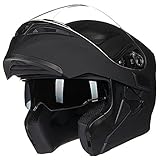
- High Resistance ABS Shell With Micrometrically Adjustable Strap
- Meets or Exceeds FMVSS-218 and DOT Safety Standards
- Helmet Liner / Cheek Pads are Lightweight, Soft and Easily Removable and Washable
- Sleek and Lightweight Design Reduces Wind Noise
- Modular Flip-Up Function Anti-Scratch, Anti-Fog and Wide View Clear Visor
What acceleration evidence is missing?
The available material does not provide controlled 0–60 mph, quarter-mile, rolling-acceleration, braking-distance, or lap-time tests comparing an MTT turbine motorcycle with a conventional model. Therefore, it is accurate to say the turbine offers exceptional claimed output and a distinctive response, but not to claim that it wins every acceleration contest.
How does a jet motorcycle handle?
Wheelbase and high-speed composure
The 2004 profile gives Leno’s Y2K a 71-inch wheelbase and characterizes it as smooth at speed. A long wheelbase generally favors straight-line stability, while a shorter one can make direction changes easier, but wheelbase alone cannot predict a motorcycle’s cornering ability. Steering-head angle, trail, tire profile, suspension rates, weight distribution, wheel mass, and aerodynamic load all matter.
“Smooth at speed” is an observation about one rider’s experience, not a measured comparison. It says nothing definitive about how the motorcycle behaves in a hairpin, during rapid left-right transitions, or on a rough surface.
Free tools Windows power users keep installed
One-click scans. No signup required.
Low-speed maneuvering is a separate test
A motorcycle that feels calm at high speed may still be demanding in a parking lot. Low-speed balance depends on steering lock, clutch or transmission control, engine braking, total mass, center of gravity, and how precisely the powertrain responds near idle. The cited sources do not give a controlled low-speed test of the Y2K or 420RR, so neither turbine motorcycles nor conventional motorcycles can be declared categorically easier to maneuver.
Rank #4

- Unmatched Protection & Durability:Built Tough for Extreme Adventures, Our Helmet Exceeds Expectations by Meeting FMVSS-218 and DOT Safety Standards. Its Robust Construction Safeguards Ensuring Ultimate Security as You Conquer the Toughest Terrains
- Convenient Flip-Flop Mechanism: Easy Switching Between Full-Coverage Helmet and Open Mode, This Modular Motorcycle Helmet Is Perfect for City Riding and Long-Distance Touring
- Stay Cool and Comfortable with Strategically Placed Vents That Ensure Maximum Airflow and Reduce Heat and Moisture Buildup During the Ride
- Comfortable Interior Lining: Enjoy the Cozy Plush Lining That Provides Long-Lasting Comfort Even on Long Rides
- The Modular Design Makes It Suitable for Snowmobiles, Dirt Bikes, Scooters, Bike Riding and More. With Its Innovative Features, It Is Sure to Be an Ideal Choice for Riders Looking for a Stylish, Comfortable and Safe Helmet!
Cornering and braking cannot be inferred from horsepower
Cornering performance is limited by tires, suspension setup, chassis rigidity, geometry, surface grip, and rider technique. Braking depends on brake hardware, tire contact, weight transfer, anti-lock calibration where fitted, and the rider’s timing. None of the supplied sources reports instrumented stopping distances, maximum cornering speeds, lean-angle data, or lap times for a turbine-versus-piston comparison. A higher output figure therefore does not establish better handling.
Rider workload changes even when the chassis is excellent
The turbine’s spool-up and possible after-power mean the rider must plan throttle changes earlier. On a conventional motorcycle, rolling off usually produces a more immediate reduction in drive torque, although response still varies by engine, fueling, clutch, and electronics. On a turbine, the rider may need a longer mental and physical margin before turn-in, an overtaking maneuver, or a slippery section. That is a control characteristic, not evidence that the motorcycle is inherently unstable.
Turbine versus piston drivetrain: a practical comparison
| Riding factor | Turbine-powered motorcycle | Conventional piston motorcycle |
|---|---|---|
| Engine process | Continuous combustion and rotating turbine stages drive the transmission. | Individual combustion cycles move pistons and turn a crankshaft. |
| Initial throttle response | Can feel progressive as the turbine spools; the documented Y2K account describes power building with speed. | Usually more directly tied to engine rpm, gear, throttle opening, and fueling, though response varies widely by model. |
| Throttle-off behavior | Leno reported 1.5–2 seconds of continued power on his Y2K. | Typically reduces drive torque more promptly, but exact behavior depends on engine braking and electronics. |
| Peak output | 420 hp and 500 ft-lb are claimed for the 420RR. | Not a single value: conventional motorcycles range from modest commuter output to superbike levels. |
| Transmission | The 420RR is listed with a two-speed automatic transmission. | Most examples use a manual multi-speed gearbox, while some use automatic or semi-automatic systems. |
| Top-speed evidence | MTT publishes a 273-mph gearing-limited claim; no independent 420RR test is supplied. | Must be evaluated model by model with a measured test under stated conditions. |
| Cornering and braking | No controlled comparative measurements are supplied. | No meaningful category-wide conclusion is possible because chassis and equipment differ. |
| Fuel-use evidence | The only cited figure is Leno’s 8.5-gallons-per-hour statement about his Y2K. | No directly comparable conventional-bike figure is supplied for this article. |
| Best-supported conclusion | Extreme claimed performance with distinctive, anticipation-heavy power delivery. | Broader range of engines and controls, with behavior determined by the individual motorcycle. |
Fuel use, cost, and everyday practicality
Fuel consumption is not a current 420RR specification
Leno said his Y2K “burns eight and a half gallons of jet fuel an hour, whether you’re running it at speed or not.” The statement appears in a February 2004 profile and describes his motorcycle. It is not a current official fuel-economy rating for the 420RR, and it does not translate directly into miles per gallon because the distance covered during that hour changes with speed and use.
That distinction matters when comparing ownership. A conventional motorcycle’s economy is normally discussed in distance per unit of fuel, while Leno’s turbine figure is a flow rate. Without a measured route, speed, and fuel load, the two formats cannot be compared honestly.
Best Value
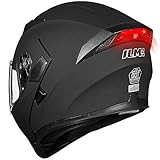
- High Resistance ABS Shell With Micrometrically Adjustable Strap
- Meets or Exceeds FMVSS-218 and DOT Safety Standards
- Helmet Liner / Cheek Pads are Lightweight, Soft and Easily Removable and Washable
- Sleek and Lightweight Design Reduces Wind Noise
- Modular Flip-Up Function Anti-Scratch, Anti-Fog and Wide View Clear Visor
Price and availability are part of the comparison
MTT’s 2025 420RR announcement lists a $275,000 price and says the 25th-anniversary production is limited to five hand-built motorcycles. Those are manufacturer-stated commercial terms for a very small run, not a typical cost for turbine motorcycles as a category. The limited quantity also means a prospective buyer should confirm ordering, service, registration, parts support, and local operating requirements directly with the manufacturer before treating the motorcycle as usable transportation.
Use case matters more than headline speed
A turbine motorcycle is best understood as a specialized engineering and collector machine whose appeal includes its unusual power source and riding character. A conventional motorcycle offers a much wider choice of commuting, touring, off-road, and sport configurations. The sources do not establish that the turbine is more reliable, safer, cheaper to operate, or more comfortable; those would require model-specific service records and controlled testing.
How to compare one fairly with a conventional motorcycle
If you are evaluating a turbine motorcycle against a specific piston-engine bike, use the same test plan rather than relying on published headlines.
- Define the models and conditions. Record exact model year, software or transmission version, tire specification, fuel load, rider weight, ambient temperature, wind, and surface.
- Measure response separately from peak output. Log launch acceleration, rolling acceleration from a fixed speed, and throttle response after a controlled roll-on. Note whether the turbine has reached operating speed before each run.
- Measure throttle-off behavior. At a safe, closed course, close the throttle at the same speed and record how quickly drive torque falls. Do not assume the Y2K anecdote applies to another turbine.
- Test braking independently. Use repeated stops from identical speeds, allow appropriate cooling, and record stopping distance and consistency. Do not substitute horsepower or top speed for braking data.
- Evaluate handling in two environments. Use a low-speed course for balance and steering control, then a closed, known road or track for corner entry, mid-corner stability, transitions, and exit drive.
- Report measured and claimed values separately. Label manufacturer specifications, rider impressions, independent records, and your own instrumented results so readers can see which evidence supports each conclusion.
Which motorcycle makes sense for a particular rider?
Choose the turbine concept when the experience is the point
The turbine is compelling if you value unusual engineering, a rare hand-built machine, and a power delivery that changes as the engine spools. You must also be comfortable with limited production, specialized support, and a learning curve around throttle anticipation. The 420RR’s stated price and five-bike run place it far outside normal new-motorcycle shopping.
Choose a conventional motorcycle when control predictability and choice matter
A piston motorcycle is the practical choice when you need a broad selection of sizes, transmissions, riding positions, service providers, and intended uses. That does not make every conventional motorcycle better handling; it simply gives you more models whose behavior can be compared through established tests and local support.
Do not choose on top speed alone
For public-road riding, the useful questions are controllability, braking margin, visibility, ergonomics, training, and legal operating conditions. A published maximum speed—whether a manufacturer claim or a record from another bike—does not answer those questions.
Bottom line
A turbine-powered motorcycle differs from a conventional motorcycle primarily in how it delivers power, not because it uses exhaust thrust or automatically handles better. MTT claims extreme output and a 273-mph gearing-limited speed for the 420RR, while a 2004 account of the Y2K describes progressive spool-up and brief continued power after throttle closure. Those details explain why the turbine can feel unlike a piston bike. They do not prove superior acceleration, braking, cornering, or safety. Until equivalent instrumented tests exist, the defensible verdict is narrow: the turbine offers a rare, high-output riding experience, while handling advantages over a conventional motorcycle remain unestablished.
What’s actually slowing this PC down?
Pick the symptom - the matching free tool is one click away.
Quick Recap
Product prices and availability are accurate as of the date/time indicated and are subject to change. Any price and availability information displayed on Amazon at the time of purchase will apply.




