Do these 3 things before closing this tab:
1Clear out junk files and repair common Windows errors2Scan for outdated or missing drivers - takes under a minute3Repair Windows errors before they cause bigger problemsChoose the exact configuration, not just the badge. The 2026 Jeep Wrangler is the better fit when removable-top simplicity, a broad trail-focused ecosystem, and a lower-priced entry point matter most. The 2026 Ford Bronco deserves the nod when you need more available towing capacity, want a two- or four-door layout with removable doors on every version, or prefer to tailor the vehicle around specific Bronco packages. Neither nameplate is a universal winner: trail hardware, body style, open-air use, road manners, fuel consumption, towing, cargo needs, and budget can change the answer.
The comparisons below apply to U.S. 2026 model-year vehicles. Prices and equipment vary by trim, body style, options, destination charge, dealer incentives, and location. Treat every figure as configuration-specific and verify the current window sticker before signing.
As an Amazon Associate I earn from qualifying purchases.
The short answer: match the SUV to your use case
Start with your real week, not the most dramatic trail video. A two-door vehicle used for weekend trails and occasional commuting has different priorities from a four-door SUV carrying people, camping gear, or a trailer. A buyer who removes the roof every sunny weekend may value storage and removal effort more than a small difference in fuel economy. Someone towing regularly should begin with the selected vehicle’s tow rating, payload, hitch equipment, and trailer-weight math.
Recommended Free Tools
- Choose a Wrangler configuration if open-air driving and Jeep’s established trail-oriented format are your first priorities and the chosen trim provides the tires, axles, lockers, gearing, and clearance your trails require.
- Choose a Bronco configuration if the Bronco’s two- or four-door choice, removable-door standard, or higher available tow rating better fits your passengers, gear, or trailer.
- Cross-shop only matched vehicles. Compare two-door with two-door, four-door with four-door, similar tire and axle packages, and equivalent tow equipment. A base two-door against a heavily optioned off-road trim is not a meaningful nameplate comparison.
2026 Wrangler and Bronco at a glance
The table separates published figures from broad impressions. The price ranges shown by Consumer Reports are displayed ranges, not guaranteed transaction prices or matched-trim quotes.
#1 Best Overall

- AUTHENTIC DESIGN: Highly detailed 1:34 scale die-cast model of the Jeep Wrangler Rubicon, featuring the iconic front grille and off-road styling
- DIMENSIONS: 5-inch length makes this model perfect for collectors and display purposes while maintaining impressive detail
- QUALITY CONSTRUCTION: Die-cast metal body with plastic components, featuring opening doors and realistic black off-road wheels
- REALISTIC FEATURES: Detailed interior, textured off-road tires, and accurate Rubicon badging make this a true-to-life replica
- DISPLAY READY: Vibrant exterior finish with contrasting black trim design captures the essence of the real Jeep Wrangler
| Item | 2026 Jeep Wrangler | 2026 Ford Bronco | How to use the information |
|---|---|---|---|
| U.S. price information available in the cited comparison | $36,035–$69,995, as displayed by Consumer Reports for 2026 Wrangler versions | $40,795–$79,995, as displayed by Consumer Reports for 2026 Bronco versions | These are model-line ranges; local pricing, destination, options, incentives, and dealer charges can differ. |
| Specific published example | 2026 Wrangler Sport 2-door starts at $36,035 MSRP on Jeep’s specifications page | No directly matched Bronco starting price is established in the cited material | Do not place the Wrangler Sport example beside a higher Bronco trim and call it an apples-to-apples comparison. |
| Fuel-economy example | Wrangler Sport 2-door: 17 mpg city, 23 highway, 19 combined | No comparable Bronco value is established in the cited material | The Wrangler figures apply only to that listed configuration; engines, tires, body styles, and options affect results. |
| Published towing information | Wrangler Sport 2-door example: 2,000 lb | Ford says most 2026 Bronco models can tow up to 3,500 lb; Bronco Raptor can tow up to 4,500 lb | Bronco figures depend on equipment and configuration; some trims require tow-prep or other hitch-enabling equipment. |
| Open-air design | Compare the selected Wrangler’s removable roof and door configuration and confirm storage needs with the dealer | Ford describes the Bronco as a two- or four-door 4×4 with removable tops; Ford says all versions have removable doors | Top type, panel count, latching, and onboard storage vary. Confirm the actual vehicle rather than relying on a trim name. |
| Evidence on comfort, safety, reliability, and real-world economy | Consumer Reports says its comparison considers road tests, real-world fuel efficiency, braking, handling, cabin noise, and crash ratings, but the cited excerpt does not provide the results | Same limitation | No winner in these categories can be supported from the available figures alone. Drive both and consult the current independent results. |
Why trim and body style matter more than the badge
Wrangler and Bronco families contain multiple body styles, engines, tires, axle choices, gearing, lockers, suspension settings, roof systems, and factory packages. Those parts determine how a vehicle behaves on rocks, sand, mud, snow, pavement, and a trailer ramp. A nameplate-level verdict hides the variables that matter.
Build a like-for-like pair
- Choose the body style first. If you need rear-seat access or cargo length, compare four-door vehicles. If tight trails, a shorter wheelbase, or a smaller purchase price matter more, compare two-door vehicles.
- Identify the engine and transmission on each window sticker. Do not infer performance or economy from a trim name alone.
- Record tire size and type, wheel design, ground-clearance equipment, axle gearing, and available front or rear lockers. These are more relevant to a difficult trail than a cosmetic package.
- Confirm whether the vehicle includes the off-road package you need or merely offers it as an option. A dealer’s stock number and online photograph do not prove the equipment is installed.
- Match tow hardware, roof type, doors, and safety equipment before comparing prices.
Use the manufacturer configurators as the final authority
Jeep and Ford can change equipment, destination charges, packages, and incentives during a model year. Configure both vehicles for the same body style and intended use, save the build sheets, and compare the actual window stickers. The Consumer Reports ranges are useful for orientation, but they are not a quote for your ZIP code.
Off-road capability: compare hardware to the trail
There is no evidence here to declare every Wrangler superior to every Bronco, or the reverse. The useful question is whether the specific vehicle has the control and clearance your route demands.
What’s actually slowing this PC down?
Pick the symptom - the matching free tool is one click away.
Ground clearance, approach, breakover, and departure
Clearance protects the underside when a tire drops into a rut or a rock passes beneath the center of the vehicle. Approach and departure angles determine whether the front or rear bumper contacts a ledge; breakover angle matters when the vehicle crests a ridge. Ask the salesperson for the figures for the exact wheel-and-tire configuration, because a different tire, bumper, or skid-plate package can change practical clearance.
Traction equipment and gearing
Look for the axle ratio, low-range gearing, available locking differentials, and the traction-control modes on the actual build sheet. A locker can keep torque moving to a wheel when a conventional open differential would spin, while low gearing gives the driver slower, more controlled movement over obstacles. Those features are valuable only when they are fitted to the vehicle you are buying and used within the manufacturer’s limits.
Rank #2

- AUTHENTIC DESIGN: Highly detailed 1:34 scale die-cast model of the Jeep Wrangler Rubicon, featuring the iconic front grille and off-road styling
- DIMENSIONS: 5-inch length makes this model perfect for collectors and display purposes while maintaining impressive detail
- QUALITY CONSTRUCTION: Die-cast metal body with plastic components, featuring opening doors and realistic black off-road wheels
- REALISTIC FEATURES: Detailed interior, textured off-road tires, and accurate Rubicon badging make this a true-to-life replica
- DISPLAY READY: Vibrant exterior finish with contrasting black trim design captures the essence of the real Jeep Wrangler
Tires and underbody protection
Factory all-terrain or mud-terrain tires can change grip, noise, wet-road behavior, and puncture resistance. Inspect the sidewall specification and spare-tire match. Check whether skid plates protect the engine, transmission, transfer case, and fuel system, and price replacement coverage before assuming a package is trail-ready.
Trail safety
Ford’s 2026 technical specifications include this instruction: “Always consult the Owner’s Manual before off-roading, know your terrain and trail difficulty, and use appropriate safety gear.” Read the manual for water depth, recovery points, tire-pressure guidance, winch restrictions, and rollover precautions. Carry recovery equipment appropriate to the vehicle and travel with a plan for communication and weather changes.
Crashes, No Sound, or Screen Glitches?
Random freezes, missing sound and display glitches usually trace back to one bad driver. Find and replace yours safely.Free scan · under a minuteWindows Errors? Fix Them Before They Spread
Repair common Windows errors and clear accumulated junk for a smoother, more stable PC - no reinstall needed.Free scan · no reinstallOpen-air driving: roofs, doors, and the storage problem
Ford explicitly describes the 2026 Bronco as a two- or four-door 4×4 with removable tops and says every version has removable doors. Wrangler buyers should verify the exact roof and door arrangement on the selected trim and body style. In either vehicle, “removable” does not mean effortless or storage-free.
Questions to answer before buying
- Can you remove the panels or complete top without help, and do you have a dry, secure place to store them?
- Does the roof system require tools, and are those tools supplied?
- Can removed panels ride inside the vehicle without blocking passengers or cargo?
- How long does door removal take for the configuration you are considering?
- Where will the doors go at a trailhead, campsite, or hotel?
Door-storage bags are an optional accessory category for either vehicle, not a required purchase. If you want them, confirm model-year and body-style fitment before ordering; the available information does not establish a particular brand or listing.
Towing and payload: start with the trailer, then the SUV
Ford lists up to 3,500 pounds for most 2026 Bronco models and up to 4,500 pounds for Bronco Raptor. Ford also notes that several trims need a tow-prep package or other hitch-enabling equipment. Jeep’s published Wrangler Sport 2-door example is rated at 2,000 pounds. These are manufacturer ratings for specified configurations, not permission to tow that weight with every vehicle wearing the same badge.
Rank #3
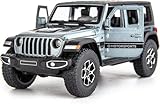
- Product size:6.41*2.63*2.76inch,package weight:0.71prounds,outer packing:exquisite color translucent packaging box.
- Materials: Zinc alloy die-cast metal body with ABS plastic details and rubber tires. Highly detailed chassis and interior
- Function:Car doors and trunks can open, accompanied with lights and sounds. Press the front wheel to have kinds of realistic sound ( engine start , horn & alarm sound)and light, the rear wheel got pull back power.
- Ideal gift:The car is not just a great toy for kids but it can also be part of your car model collection,Get this car model for your kid or as a lovely surprise for his friends.
- Good quality: Very sturdy. Suitble for children to play. It can also bring car knowledge to children.
Calculate the real load
- Write down the trailer’s actual loaded weight, not its empty brochure weight. Include water, batteries, propane, tools, and cargo.
- Check the SUV’s tow rating, maximum tongue weight, payload rating, axle rating, and gross combined weight rating on the door label and owner’s information.
- Subtract passengers, luggage, roof equipment, recovery gear, and accessories from payload before assigning tongue weight.
- Confirm that the hitch receiver, wiring, cooling equipment, and brake controller meet the trailer’s requirements.
- Leave a margin below the limits, especially for steep grades, high temperatures, long trips, and rough surfaces.
A vehicle that can pull a trailer on paper may still be the wrong choice if the trailer consumes most of its payload or the hitch equipment is absent. Have the dealer print the tow and payload information for the VIN you are considering.
Daily driving, fuel use, and safety: what is known and what is not
Both vehicles trade some everyday refinement for their removable-body and trail-oriented designs. The available Consumer Reports comparison says it evaluates road tests, real-world fuel efficiency, braking, handling, cabin noise, and crash ratings, but the retrieved material does not provide the individual results. It would be inaccurate to name a comfort, economy, reliability, or safety winner from those excerpts.
What to test in town
- Drive over patched pavement, speed bumps, and a rough driveway to check secondary ride movement and steering correction.
- Listen for wind and tire noise at the speed you actually use on the highway.
- Test parking visibility with the roof installed and removed if the dealer permits it.
- Measure the cargo opening with your largest cooler, stroller, toolbox, or dog crate.
- Sit in every seating position your household will use, including rear access in the chosen body style.
- Use the infotainment, climate controls, cameras, and driver-assistance settings before deciding whether the interface is practical.
Fuel economy is configuration-specific. The cited Wrangler Sport 2-door figures are a useful published reference, but they should not be transferred to another Wrangler trim or used as a Bronco estimate. Compare the EPA label on each exact vehicle and then budget for the effect of aggressive tires, roof panels, cargo, weather, and four-wheel-drive use.
Independent reader supportYour contribution helps us test, update, and keep practical guides available for everyone.Price, equipment, and ownership budget
Consumer Reports displays 2026 model-line ranges of $36,035–$69,995 for Wrangler and $40,795–$79,995 for Bronco. Jeep separately lists the 2026 Wrangler Sport 2-door at a $36,035 starting MSRP. The figures are U.S. references and may exclude destination charges, options, taxes, registration, dealer fees, or temporary incentives.
Compare the out-the-door total
| Cost line | What to verify |
|---|---|
| Vehicle price | Trim, body style, engine, transmission, destination charge, and dealer-installed accessories. |
| Trail equipment | Factory tires, lockers, skid plates, recovery points, spare wheel, and any package required to obtain them. |
| Towing equipment | Receiver, wiring, tow-prep package, brake controller, and tongue-weight limits for the VIN. |
| Open-air accessories | Storage bags, panel hardware, protective covers, and a secure place to keep removed parts. |
| Running costs | Fuel, tires, alignment, underbody damage, insurance, registration, and scheduled maintenance; obtain local quotes rather than assuming one model is cheaper. |
Do not let a low advertised payment conceal a higher transaction price or an option package you do not need. Ask for the buyer’s order and compare the same equipment line by line.
Free tools Windows power users keep installed
One-click scans. No signup required.
Rank #4

- AUTHENTIC DESIGN: Highly detailed 1:34 scale die-cast model of the Jeep Wrangler Rubicon, featuring the iconic front grille and off-road styling
- DIMENSIONS: 5-inch length makes this model perfect for collectors and display purposes while maintaining impressive detail
- QUALITY CONSTRUCTION: Die-cast metal body with plastic components, featuring opening doors and realistic black off-road wheels
- REALISTIC FEATURES: Detailed interior, textured off-road tires, and accurate Rubicon badging make this a true-to-life replica
- DISPLAY READY: Vibrant exterior finish with contrasting black trim design captures the essence of the real Jeep Wrangler
Which one fits common buyer profiles?
Weekend trail driver with occasional commuting
Prioritize the shortest practical body style, trail tires, clearance, gearing, and a roof system you can remove and store. Test road noise and cargo compromises before accepting a highly specialized setup as a daily vehicle.
Family that carries people and gear
Begin with the four-door versions. Install child seats, load the usual luggage, and check rear-door access, cargo height, and the space occupied by removable roof or door components. A theoretical off-road advantage is less useful if the vehicle cannot carry your normal weekend load.
Owner who tows a small camper or utility trailer
Start with the trailer’s loaded weight and tongue weight, then select a vehicle with the required tow hardware and payload margin. The Bronco’s published maximums may make it the better starting point, but only if the exact trim is equipped for that rating. The Wrangler Sport example’s lower rating makes careful trailer matching especially important.
Buyer focused on open-air use
Compare removal time, panel weight, storage, weather sealing, and the process for reinstalling everything before a storm. Ford’s all-version removable-door statement is a clear Bronco characteristic; verify the Wrangler setup you want rather than assuming every roof and door arrangement works the same way.
Budget-first buyer
Use the Wrangler Sport 2-door MSRP as a reference point, then price both vehicles with the equipment you actually need. A cheaper base vehicle can become the more expensive choice after tires, tow hardware, protection, and dealer accessories are added.
A step-by-step buying process
- Define the job. Write down passenger count, cargo, trailer weight, trail types, annual mileage, and how often you will remove the roof or doors.
- Choose body style. Decide whether two-door maneuverability and price or four-door access and capacity matter more.
- Build both SUVs. Use the current Jeep and Ford configurators for the same intended equipment, then save each build.
- Verify capability. Read the window sticker and owner’s information for tow rating, payload, axle equipment, tires, ground clearance, and required packages.
- Inspect the physical vehicles. Remove or release the roof and doors if allowed, inspect storage, and check recovery points and underbody protection.
- Drive representative routes. Include city streets, highway speed, tight parking, and a rough surface.
- Request written pricing. Compare MSRP, destination, options, dealer fees, incentives, taxes, and trade-in treatment separately.
- Recheck before delivery. Match the VIN, equipment, tow hardware, tire specification, spare, manuals, and promised accessories to the signed order.
Pitfalls that produce a bad comparison
- Comparing a base two-door with a premium off-road trim: the price and hardware differences come from configuration, not simply from the badge.
- Using a maximum tow number as a universal rating: equipment, payload, tongue weight, and hitch preparation can lower the practical limit.
- Assuming removable means convenient: panels and doors need lifting space, protection, and storage.
- Transferring one MPG figure to an entire model line: the published Wrangler example applies only to the listed Sport 2-door.
- Relying on dealer photos: stock images may show a different roof, tire, bumper, or package than the VIN you are buying.
- Declaring a safety or reliability winner without results: consult current independent test data and inspect the exact model-year equipment.
- Ignoring payload after adding accessories: winches, roof racks, larger tires, passengers, and camping gear all consume capacity.
Verdict: select the configuration that solves your real problem
The Wrangler and Bronco are both legitimate off-road platforms, but the right purchase depends on the exact build. The Wrangler case is strongest when its open-air format, trail equipment, and entry price align with your use. The Bronco case is strongest when its removable-door standard, two- or four-door choice, or available towing capacity better matches your people, gear, or trailer. A disciplined comparison of matched builds, a test drive, and a final window-sticker and payload check will produce a better decision than a generic “which SUV wins?” ranking.
Quick Recap
Product prices and availability are accurate as of the date/time indicated and are subject to change. Any price and availability information displayed on Amazon at the time of purchase will apply.




