American cars have a real place in Japan’s automotive history, but the evidence does not establish a nationwide or contemporary Japanese “love affair” with American muscle cars. Toyota Automobile Museum documents American cars’ historical market presence and displays American-car models and collectibles today. A separate story belongs to Japanese American communities in Southern California, whose contributions to U.S. hot-rod and custom-car culture are documented by the Japanese American National Museum.
What does “Japan’s love affair” mean?
The phrase works as a curiosity-building headline, not as a measured description of Japanese public opinion. The available institutional evidence shows historical presence and present-day museum representation; it does not count American muscle-car owners in Japan or establish how popular they are. It also does not explain what contemporary Japanese enthusiasts think or why they might choose these cars.
It helps to keep three different claims apart:
- Historical presence: American cars had a significant place in Japan’s market in the 1930s, according to Toyota Automobile Museum.
- Institutional representation: The museum exhibits American-car models and related collectibles, and a scheduled exhibition lists a Chevrolet Nova.
- Community participation in the United States: Japanese Americans in Southern California have taken part in hot-rod, custom, lowrider, import, and drift scenes. That history is not evidence of Japanese residents’ preferences.
American cars in Japan before and after the war
1930s: American cars had a strong market presence
Toyota Automobile Museum’s account of early motoring describes steam, electric, and gasoline vehicles arriving in Japan around the turn of the twentieth century. After the 1923 Great Kanto Earthquake damaged Tokyo’s public transport, Ford Model T truck chassis were imported and converted into buses. Ford and Chevrolet later established local assembly plants.
The museum’s exhibit text says: “In the 1930s, when American cars dominated the Japanese market, mass production of Japanese-made automobiles starts through the combined efforts of the government and the private sector.” This is evidence about American cars broadly and the 1930s market—not specifically about muscle cars or a continuing enthusiast movement. Toyota Automobile Museum: From the Dawn of the Automobile to the Birth of Japanese Cars
The Tool Desk
Outbyte PC Repair FREERepair Windows errors before they cause bigger problemsFix Now →Outbyte Driver Updater FREEScan for outdated or missing drivers - takes under a minuteDriver Scan →#1 Best Overall
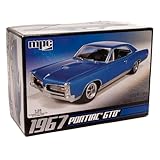
- V8 POWER: The model features a 400 cubic inch V8 engine, reflecting the muscle and power that defined the GTO's reputation.
- DETAILED SUSPENSION & EXHAUST: The kit incorporates separate rear suspension and exhaust detailing, adding to the realism of the model.
- BUCKET SEATS & CONSOLE: The model's interior features bucket seats and a floor shifter with a console, capturing the iconic look and feel of the GTO.
- OPTIONAL SUPERCHARGER: For those seeking more power, the kit offers an optional supercharger, allowing you to customize your model.
- CLEAR & COMPREHENSIVE INSTRUCTIONS: The included instructions are clear and user-friendly, making the kit accessible to modelers of different skill levels, from beginners to experienced hobbyists.
1950s and 1960s: domestic motorization took shape
In its account of the 1950s, Toyota Automobile Museum describes U.S. manufacturers’ cars growing larger as Japanese automakers worked to catch up with overseas technology and pursued original innovations. In the 1960s, passenger-car ownership became a realistic possibility for average Japanese citizens. As demand grew for more luxurious, higher-performing, and more stylish vehicles, Japanese makers developed sportier cars of their own. That sequence describes Japan’s expanding domestic motor industry; it does not demonstrate a sustained preference for American muscle cars. Toyota Automobile Museum: The Advancement and Diversification of Motorization
What Japanese museums show—and what they cannot prove
Toyota Automobile Museum’s Automobile Culture Showroom presents car history alongside objects connected to automobile culture. The museum says it has selected about 4,000 items from a collection of more than 200,000 automobile-related cultural items for display, including about 800 miniature cars. Its exhibits include automobile magazines and catalogs, as well as about 780 toy cars and games, including plastic model kits, slot cars, mini 4WDs, and car video games. The collection documents institutional preservation and display; its figures are not measures of ownership or popularity among the public. Toyota Automobile Museum: Automobile Culture Showroom
Rank #2

- Authentic Ford Design: Each model kit accurately captures the signature style and details of iconic Ford vehicles.
- Precision-Molded Parts: High-quality, finely molded components ensure a realistic and detailed build.
- Customizable Features: Includes decals and optional parts for a personalized, unique build.
- Ideal for Hobbyists: Perfect for model builders of all skill levels, from beginners to experienced collectors.
- Display-Ready Models: Create a stunning Ford model that’s ready to showcase in your collection or as a standout display piece.
The museum’s scheduled exhibition “Japan’s Motorization Journey: 60 Years Since the Dawn of Mass Car Ownership” runs from September 11, 2026, to February 28, 2027. Its listing includes a 1984 Chevrolet Nova among the vehicles shown. The museum notes that some vehicles will be replaced during the exhibition, so the listing is a dated snapshot rather than a guarantee that the Nova will remain on display throughout. Toyota Automobile Museum: Japan’s Motorization Journey
A past public event offers another limited kind of evidence. In a September 24, 2020 announcement, Toyota Automobile Museum said its 31st Classic Car Festival parade would feature Japanese, American, and European classic cars dating from 1990 or earlier, with about 50 privately owned classic cars participating. That figure describes the announced lineup for a one-day event during COVID-19 restrictions; it should not be read as a current attendance figure or an indicator of today’s American-car scene. Toyota Automobile Museum: 2020 Classic Car Festival announcement
Rank #3
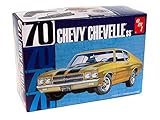
- A STRAIGHT-UP CLASSIC FOR EXPERIENCED MODELERS: AMT’s 1/25 scale 1970 Chevelle SS is the perfect project for muscle car builders. Add it to your collection today!
- FEATURE PACKED: The 1970 Chevelle SS is a classic car with plenty of attitude. Do it up stock or custom with optional engine builds, Rally wheels, pad printed tires, bucket seats and more. Fully paintable, it features authentically detailed water-slide decals with black or white stripe options—wrapped up nicely in retro-styled packaging!
- QUICK SPECS: 1/25 Scale, 75+ Parts, 7.25 inches long once assembled. Parts molded in white, clear and transparent red, with black vinyl tires. Some parts are chrome plated. Plastic model kit paint and cement required (Testors or Tamiya brands recommended). Paint guide included in kit. Skill Level 2. For ages 10+
- THE PERFECT PRESENT: Don't know what to get dad for his birthday? Or maybe you have an avid hobbyist or collector in your life. This model kit makes an ideal gift for any occasion!
A different story: Japanese American car culture in Southern California
The Japanese American National Museum and ArtCenter’s exhibition Cruising J-Town documents Japanese American participation in Southern California car culture. Its subject spans hot rods, lowriders, import tuning, and drift racing—not only American cars, and not Japan itself. The exhibition presents cars as vehicles of personal expression, community identity, and social mobility, while also showing their practical role in work and community life.
Examples include Brian Omatsu’s custom 1951 Mercury coupe, “Purple Reign”; Kirk Shimazu’s 1956 Ford F100; George Nakamura’s 1940s “Meteor” hot rod; Tod Kaneko’s 1973 Datsun 510; and a 1989 Nissan 240SX associated with professional drift racer Nadine Sachiko Toyoda-Hsu. The exhibition also addresses work vehicles such as gardeners’ trucks and fish-delivery trucks. These individual examples establish a substantial Japanese American history within U.S. car culture; they do not show what Japanese residents generally prefer. Japanese American National Museum: Cruising J-Town
Rank #4

- A PERENNIAL CLASSIC FOR EXPERIENCED MODELERS: AMT’s 1/25 scale 1967 Shelby GT-350 is the perfect project for muscle car builders. Add it to your collection today!
- FEATURE PACKED: The 1967 Shelby GT-350 is a historical muscle car that stands alone! Fully paintable, it features authentically detailed water-slide decals. Build it up right with a Ford 289 V8 engine and all the Shelby touches—custom rear lower pan, chrome wheels, custom taillights and front grille, bucket seats, and more. Wrapped up nicely in retro-styled packaging!
- QUICK SPECS: 1/25 Scale, 123 Parts, 7 inches long once assembled. Parts molded in white, clear and transparent red, with black vinyl tires. Some parts are chrome plated. Plastic model kit paint and cement required (Testors or Tamiya brands recommended). Paint guide included in kit. Skill Level 2. For ages 10+
- THE PERFECT PRESENT: Don't know what to get dad for his birthday? Or maybe you have an avid hobbyist or collector in your life. This model kit makes an ideal gift for any occasion!
What can—and cannot—be concluded
| Evidence | What it establishes | What it does not establish |
|---|---|---|
| Toyota Automobile Museum’s account of the 1930s | American cars dominated Japan’s market in that period, in the museum’s account. | A muscle-car-specific following or an enduring national preference. |
| Museum collections and exhibits | American-car models and related automobile-culture objects are preserved and displayed in Japan. | The number of Japanese owners, fans, imports, or event attendees. |
| “Cruising J-Town” | Japanese Americans have contributed to varied Southern California car scenes. | The attitudes or buying choices of people living in Japan. |
| Contemporary Japanese ownership, fanbase size, or preference share | Not established by the cited sources. | A reliable nationwide estimate or representative account of motivations. |
So the defensible version of the story is narrower but still compelling: American cars have deep historical roots in Japan, remain visible in museum collections and exhibitions, and have a distinct place in Japanese American car-culture history in the United States. Whether that adds up to a broad, present-day Japanese passion for American muscle cars remains unmeasured by the sources cited here.
Quick Recap
Best Value

- Scale 1:25
- Skill Level: 2
- Age Grade: 10+
- DIE-CAST AUTOMOBILES: Our die-cast models are next level – when it comes to detail we are the best in the collectible business
- SLOT CAR RACING: Racing is in our company DNA. Our slot car brands and themes keep creativity racing around this retro hobby.
Product prices and availability are accurate as of the date/time indicated and are subject to change. Any price and availability information displayed on Amazon at the time of purchase will apply.
Free tools Windows power users keep installed
One-click scans. No signup required.




