Quick wins for a faster PC:
Fix the driver behind crashes, sound loss and screen glitchesFind Drivers →Repair Windows errors before they cause bigger problemsFix Now →There is no universal winner. Choose a Mazda MX-5/Miata when you want the broader, more conventional lightweight-roadster experience, easier long-distance usability, and a larger pool of generation-specific information. Choose a Honda Beat when your priority is an unusually small, mid-engine, rear-drive car that rewards high revs and feels special at ordinary speeds. The Suzuki Cappuccino and Autozam AZ-1 offer still different layouts, but their import, condition, and support questions are at least as important as their specifications.
The right comparison is not simply horsepower versus horsepower. Match the exact Miata generation and market to the exact kei car, then evaluate engine response, seating fit, roof design, legal status, rust and mechanical condition, parts access, and the roads you actually drive.


As an Amazon Associate I earn from qualifying purchases.
What counts as a Japanese kei sports car?
Kei is a regulated Japanese vehicle class, not a promise that a car will have a particular handling style. The Japan Light Motor Vehicle Inspection Association’s page, updated December 1, 2024, states the current limits as up to 660 cc displacement, 3.4 metres in length, 1.48 metres in width, and 2.0 metres in height. That standard dates from 1998, so those figures should not be applied automatically to every earlier model year or every export-market registration.
The early-1990s sports-car group commonly called the ABC trio arrived as the kei displacement allowance was moving from 550 cc to 660 cc, according to Hagerty UK’s 2022 historical summary. The Honda Beat, Suzuki Cappuccino, and Autozam AZ-1 are therefore related by class and era, but not by layout or driving character. A kei badge tells you about regulatory dimensions and engine capacity; it does not tell you whether the engine is turbocharged, where it sits, or how practical the car will be outside Japan.
#1 Best Overall
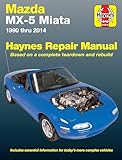
- Step-by-step procedures written from a complete teardown and rebuild, giving you the confidence to tackle repairs at any skill level.
- Over 700+ clear photos and diagrams that simplify complex systems, helping you complete jobs faster and with fewer mistakes.
- Comprehensive troubleshooting and fault-finding guides to quickly diagnose problems and reduce costly downtime.
Specifications at a glance
| Car | Factory or published configuration | What that suggests | Evidence qualification |
|---|---|---|---|
| Honda Beat (1991 specification) | 656 cc naturally aspirated inline three-cylinder; 64 PS at 8,100 rpm; 6.1 kg-m at 7,000 rpm; 760 kg; five-speed manual; mid-engine, rear-wheel drive; 2.280 m wheelbase; two-door convertible | High-revving response, very small footprint, and a rear-drive balance unlike a conventional front-engine roadster | Figures are from Honda Motor Co.’s May 1991 specification sheet. Its fuel-consumption numbers are period test-cycle results, not a promise of present-day economy. |
| Original Mazda MX-5/Miata (NA-era development) | Two-seat roadster; manually operated soft top; naturally aspirated 1.6-liter 16-valve DOHC inline four-cylinder; double-wishbone suspension at all four wheels | A conventional, communicative roadster recipe with a larger engine and a chassis designed around lightness and rigidity | Mazda’s history describes original development. Later generations, markets, engines, weights, and equipment differ. |
| Suzuki Cappuccino | Front-engine, rear-wheel drive, turbocharged; three removable roof panels | A front-engine feel with a flexible open-roof arrangement | These distinctions come from a 2026 secondary buying guide; verify the exact year and market against manufacturer records. |
| Autozam AZ-1 | Mid-engine, turbocharged; gullwing doors | A more dramatic, enclosed-feeling mid-engine experience than the Beat | Layout and door details are reported by the same secondary guide and should be confirmed for the individual car. |
The table makes the central point: the Beat is not simply a smaller Miata. It has a different engine strategy, seating package, and weight distribution. The Cappuccino and AZ-1 should not be treated as interchangeable alternatives either.
How the engines feel on the road
Honda Beat: revs instead of turbo shove
Honda’s 1991 sheet lists 64 PS at 8,100 rpm and peak torque of 6.1 kg-m at 7,000 rpm from 656 cc. Those figures explain why a healthy Beat asks to be worked through its five-speed manual. You build speed by keeping the three-cylinder in its upper rev range, selecting the right gear before a corner, and enjoying the sound and response rather than waiting for a large torque wave.
Honda’s heritage account emphasizes that the Beat was naturally aspirated while other kei sports cars used turbochargers. It also describes individual-throttle technology adapted from Honda’s Formula One work and identifies the car as the first production mid-engine, fully open monocoque body in Honda’s account. Those are historical descriptions from Honda, not independent performance measurements, but they explain the Beat’s unusual identity.
Recommended Free Tools
The 760 kg curb figure is remarkable on paper, yet it does not guarantee a particular acceleration time. A thirty-year-old example may have worn tires, a tired engine, blocked cooling passages, a dragging brake, or a poorly adjusted throttle system. Treat the specification as a design reference and inspect the car you are considering.
Original MX-5: larger displacement and a broader torque spread
Mazda says the original MX-5 team selected a naturally aspirated 1.6-liter 16-valve DOHC inline four-cylinder, explicitly rejecting turbocharging and supercharging for that design. Four cylinders and more than twice the Beat’s displacement give the original Miata a different rhythm: it can gather speed with fewer gear changes and feels less dependent on staying near the top of the tachometer.
That does not make the Miata automatically faster or more enjoyable. The Beat’s low mass, compact dimensions, and high-rev character can make modest speeds entertaining, especially on narrow roads. The Miata’s larger footprint and longer body can feel calmer and more planted, while also requiring more room to place and park. Compare the response you enjoy, not just the output number.
Cappuccino and AZ-1: turbocharged alternatives
The secondary ABC buying guide describes both the Cappuccino and AZ-1 as turbocharged, so their response depends on boost delivery, cooling condition, and the calibration of an older turbo system. A Cappuccino’s front-engine, rear-drive layout is conceptually closer to a conventional sports car than the Beat’s mid-engine arrangement. The AZ-1’s reported mid-engine layout and gullwing doors make access and bodywork considerations distinctive as well as visually dramatic.
Do these 3 things before closing this tab:
1Clear out junk files and repair common Windows errors2Scan for outdated or missing drivers - takes under a minute3Repair Windows errors before they cause bigger problemsBecause the available information for these two cars is not a manufacturer specification set, do not use the guide’s summary as a substitute for a chassis-number-specific inspection. Confirm engine, transmission, roof, and equipment details before buying.
Chassis, layout, and roof: the differences you will actually feel
Mid-engine Beat
The Beat puts its engine behind the seats and drives the rear wheels. That central mass can produce a responsive turn-in and a sense that the car rotates around you, but it also means heat, noise, and service access are arranged differently from a front-engine roadster. A test drive should include tight bends, a bumpy corner, reversing, and low-speed parking so you can judge visibility and steering effort in the exact car.
Original Miata roadster
Mazda’s original brief called for a two-seat roadster with a manually operated soft top and double-wishbone suspension at all four wheels. Mazda also says the developers used computer analysis to create a body that was light and rigid while meeting safety requirements. The result is a familiar front-engine roadster format: an engine bay ahead of the cabin, a simple manually operated roof, and suspension geometry intended to preserve predictable responses.
Mazda’s historical page notes that meeting safety performance while keeping weight down was a major challenge. That statement describes the original engineering problem; it is not evidence that every MX-5 generation has identical crash performance or equipment.
Cappuccino roof panels and AZ-1 doors
The Cappuccino is described in secondary material as having three removable roof panels. That can give it several open-air configurations, but it also means more seals, latches, storage decisions, and opportunities for water leaks than a simple fabric-top mechanism. The AZ-1’s reported gullwing doors need overhead clearance and careful inspection of hinges, struts, seals, and surrounding panels.
For all four cars, operate the roof or doors repeatedly during inspection. Check that panels latch evenly, seals are intact, drains are clear, and the hardware is present rather than relying on photographs of a complete-looking car.
Which car is easier to use as a weekend car?
Fit and comfort
Small exterior dimensions do not prove that a car will fit you. The source material does not provide comparable cabin measurements, so sit in and drive the exact example. Check steering-wheel clearance, pedal spacing, seat travel, shoulder room, helmet or hat clearance if relevant, and whether you can see the front corners and mirrors. A Miata may suit more drivers simply because its roadster package is less tightly constrained, but that is a test-drive question, not a universal measurement.
Roads and trip length
The Beat’s size is an advantage on narrow lanes, crowded parking areas, and short loops where high-rev entertainment matters more than effortless cruising. A Miata’s larger engine, conventional roadster proportions, and generally broader seating package are better suited to longer drives for many owners. Neither conclusion can be made from curb weight alone; gearing, noise, weather protection, seat condition, and your local roads matter.
What’s actually slowing this PC down?
Pick the symptom - the matching free tool is one click away.
Luggage and weather
Two-seat convertibles demand realistic luggage planning. Measure the actual trunk and cabin storage of the car you intend to buy, including the space consumed by a folded roof or removable panels. Inspect weather seals and carpets for dampness. A dry interior and a roof that can be operated reliably are more valuable than a brochure claim about body style.
Best Value
Safety, registration, and import legality
Do not infer equivalent safety from similar weights or from the fact that two cars have two seats. The available material does not establish a comparable standardized crash-test set for the Beat, Cappuccino, AZ-1, and every Miata generation. Seek model- and generation-specific crash information where it exists, then evaluate belts, seats, lights, tires, brakes, corrosion, and previous crash repairs on the actual vehicle.
Import and registration rules are jurisdiction-specific. Before paying a deposit on a kei car, confirm that your authority will register that year and specification, that right- or left-hand drive is acceptable where you live, and that the vehicle can meet lighting, emissions, inspection, and insurance requirements. The secondary ABC buying guide specifically warns buyers to check local import rules. A car that cannot be legally registered is not a usable weekend car, regardless of how appealing its layout is.
Also verify whether your insurer will cover an imported model, what valuation method it uses, and whether parts or specialist assessments are required. Do not assume that a classic-car policy, ordinary policy, or Japanese-market registration status transfers automatically to your country.
Condition matters more than the badge
These cars are old enough that condition can overwhelm paper specifications. The source set does not establish current prices, universal reliability rankings, repair-cost averages, or parts-availability scores. Compare the specific examples in front of you.
- Rust: inspect sills, floor sections, suspension mounting points, subframes, seams, and areas hidden by underseal. Fresh black coating can conceal repairs.
- Cooling: look for overheating history, damaged radiators, brittle hoses, coolant contamination, and fans that do not cycle correctly.
- Engine and transmission: demand a cold start, stable idle, clean engagement of every gear, and evidence of regular fluid and belt service. High-revving or turbocharged engines are especially unforgiving of neglected maintenance.
- Suspension and steering: listen for knocks, check for uneven tire wear, and inspect bushes, ball joints, dampers, and alignment.
- Brakes and tires: verify age as well as tread. A light car still needs sound hydraulic components and tires suited to its power and use.
- Structure and history: compare panel gaps, paint texture, VIN or chassis records, import documents, and photographs of prior repairs.
- Parts and expertise: identify a local shop willing to work on the exact model before buying. A rare trim or engine variant can turn a routine repair into a long search.
A decision framework that works
Choose the Beat if these priorities dominate
- You want a naturally aspirated engine that rewards high rpm and frequent gear changes.
- You value a genuinely tiny, mid-engine, rear-drive package more than effortless cruising.
- You are comfortable verifying import paperwork and finding model-specific mechanical help.
- You have inspected a structurally sound example and accept that condition, not the 760 kg specification, determines the ownership experience.
Choose an original Miata if these priorities dominate
- You want the conventional two-seat roadster layout Mazda developed around a manually operated soft top and four-wheel double-wishbone suspension.
- You expect to take longer weekend trips and prefer a larger naturally aspirated four-cylinder’s broader response.
- You want a car whose generation and market can be identified clearly, with less dependence on a specialist import ecosystem.
- You have selected the exact generation rather than treating every Miata as mechanically identical.
Consider a Cappuccino or AZ-1 only after confirming the details
- The Cappuccino’s reported front-engine, rear-drive layout and three-panel roof appeal to you, and you can verify seals, latches, turbo health, and documentation.
- The AZ-1’s reported mid-engine turbo layout and gullwing doors are worth the access, storage, and bodywork trade-offs for your use.
- You can obtain manufacturer or chassis-specific specifications rather than relying solely on a secondary buying guide.
How to inspect and buy one step by step
- Define the exact target. Write down the model, model year, engine, transmission, steering position, and destination country. For a Miata, specify the generation and market.
- Check legality before condition. Ask the registration authority and insurer about import age rules, inspections, emissions, lighting, steering position, and coverage. Get the answer in writing where possible.
- Collect records. Request chassis or VIN documents, import papers, title history, maintenance invoices, timing-belt or chain work where applicable, cooling-system repairs, and evidence of accident repair.
- Inspect cold. Arrange to see the car before it has been warmed. Watch the start-up, idle, smoke, warning lights, clutch engagement, and initial oil-pressure behavior.
- Raise the car safely. Examine structural rust, jacking points, floor seams, brake lines, fuel lines, suspension mounts, leaks, and underbody repairs.
- Drive a complete route. Include city speeds, an open stretch, a rough surface, tight corners, reversing, and a hot restart. Test every gear, the roof or panels, windows, lights, heater, fans, and gauges.
- Obtain an independent inspection. Use a technician familiar with the exact model, especially for a mid-engine or turbocharged kei car. A general visual check is not enough.
- Price the whole project. Add transport, registration, taxes, inspection, insurance, tires, fluids, seals, deferred maintenance, and specialist labor. Since current market and repair figures vary by country and car, calculate them from written local quotes.
- Walk away from unresolved fundamentals. Missing paperwork, concealed structural corrosion, overheating, or an insurer that will not cover the vehicle are reasons to stop, not bargaining opportunities.
Common comparison mistakes
- Using horsepower as the verdict: the Beat’s 64 PS arrives at 8,100 rpm, and its appeal is tied to revs, weight, and layout. Output alone cannot describe that experience.
- Applying current kei limits to every old car: the 660 cc, 3.4 m, 1.48 m, and 2.0 m limits are the current standard described by the Japanese inspection association, not a universal historical rule.
- Assuming all Miatas are the original 1.6-liter car: Mazda’s development account applies to the original MX-5. Later generations changed engines, dimensions, equipment, and safety systems.
- Calling a small car automatically practical: cabin fit, luggage space, roof storage, noise, and weather sealing must be tested in person.
- Assuming imported means impossible to support: support varies by country and model. Identify parts sources and a willing technician before deciding.
- Assuming a clean exterior means a safe car: inspect structure, corrosion, brakes, tires, and crash repairs independently.
Verdict: which is better?
For the broadest range of lightweight weekend use, an appropriate-generation Miata is the safer default recommendation: its original concept combines a two-seat manual-soft-top roadster, naturally aspirated four-cylinder, and four-wheel double-wishbone suspension in a package designed to be light and rigid. That is a description of Mazda’s original engineering brief, not a claim that every later Miata or every individual car is equal.
The Honda Beat is better when the point of the purchase is its specialization. Its Honda-documented 656 cc naturally aspirated three-cylinder, 64 PS at 8,100 rpm, 760 kg weight, mid-engine layout, and five-speed manual create an experience no Miata reproduces. You accept tighter fit, less effortless cruising, age-related service needs, and import or registration work in exchange for that character.
The Cappuccino and AZ-1 can be the right answer for a buyer who specifically wants their turbocharged layouts, roof systems, or doors, but verify those details and the local ownership path car by car. In every case, buy the healthiest legal example you can inspect, not the most impressive specification sheet.
The Tool Desk
Outbyte PC Repair FREEClear out junk files and repair common Windows errorsFree Scan →Outbyte Driver Updater FREEFix the driver behind crashes, sound loss and screen glitchesFind Drivers →Quick Recap
Product prices and availability are accurate as of the date/time indicated and are subject to change. Any price and availability information displayed on Amazon at the time of purchase will apply.




