Sometimes—but solar panels alone do not make bidirectional charging a good investment. It can be worthwhile when a compatible electric vehicle can absorb surplus solar, replace expensive evening imports, or provide backup power that you value highly. The decision depends on your EV and charger compatibility, utility tariff, export compensation, installation requirements, how often the car is home, and the battery warranty. A current local quote and tariff comparison matter more than a generic payback claim.
What bidirectional charging actually means
Bidirectional charging allows electricity to move both into and out of an EV battery. The label covers several different functions, and they are not interchangeable:
As an Amazon Associate I earn from qualifying purchases.
- Vehicle-to-home (V2H): The car supplies household circuits, normally through a transfer or isolation system that prevents the home from energizing the utility grid during an outage.
- Vehicle-to-grid (V2G): The car exports power through an approved interconnection and may participate in utility or grid-service programs.
- Vehicle-to-load (V2L): The vehicle powers individual appliances or tools, usually through dedicated outlets or an adapter, rather than feeding a home’s fixed wiring.
The Australian Department of Climate Change, Energy, the Environment and Water cautions that “Not all EVs or charging systems support V2X.” Confirm the exact vehicle, charging equipment and operating mode before treating a car as an energy asset.
What’s actually slowing this PC down?
Pick the symptom - the matching free tool is one click away.
How solar and an EV can work together
In a typical arrangement, rooftop solar produces more electricity than the house is using around midday. Instead of exporting all of that surplus, an energy-management system can direct some of it into a compatible EV. Later, the car can discharge to household loads during a high-price period or keep selected circuits running during an outage. This can increase solar self-consumption and reduce peak-period imports.
#1 Best Overall
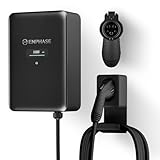
- 9× FASTER CHARGING: Get faster, smarter EV charging up to 11.5 kW (up to 46 miles/hour). Perfect for overnight charging or quick top-ups.
- REVENUE GRADE METER: Eligible for utility rebate programs with accurate, compliant energy monitoring.
- SOLAR CHARGING: Seamlessly connects with your home solar system so you can use more of your own clean energy.
- 5-YEAR WARRANTY: Backed by an industry-leading 5-year warranty for peace of mind.
- SECURE ACCESS: Prevent unauthorized use with app-based control or RFID card access for added safety.
The vehicle only provides storage when it is parked, connected and has charge available beyond the driver’s mobility needs. A car that leaves for work before the solar peak cannot reliably absorb that day’s surplus, and a car needed for a long trip cannot be treated as a permanently available home battery.
V2G adds another possible revenue stream by exporting from the vehicle to the grid. Whether that export is allowed, compensated or economically attractive depends on your utility’s tariff, interconnection rules and any aggregator program. V2H and V2G therefore require different equipment, approvals and operating assumptions.
When bidirectional charging is most likely to be worth considering
You have a genuine surplus-solar problem
Start with your interval data, not the size of the array. If your home regularly exports solar at a low credit and later buys electricity at a materially higher retail rate, charging during the surplus window and discharging during expensive hours may create value. If your utility already pays a strong export rate close to the retail price, shifting that energy may save little.
Recommended Free Tools
Backup power has substantial value to you
DOE’s Federal Energy Management Program says bidirectional EVs used as mobile battery storage can add resilience and demand-response capabilities to a building. That resilience can justify an installation even when bill savings alone would not. Consider the cost of outages, the circuits you need to keep operating, outage frequency and duration, and whether the vehicle is normally at home when an outage occurs.
Rank #2

- AI-POWERED SMART CHARGING & APP CONTROL – This ev charger level 2 uses Autel’s AI-integrated smart app to schedule charging around time-of-use utility rates, helping lower your monthly bill while boosting station utilization. Start or stop sessions remotely, adjust current from low to high amps, view real-time energy data, and get alerts if anything looks off.
- ULTRAFAST 80A PERFORMANCE FOR HOME – Delivering up to 19.2 kW / 80A, this charger adds about 70 miles of range per hour and powers your EV up to 14x faster than a standard Level 1 outlet, so you can fully recharge overnight or between customer visits. This 80 amp ev charger is a high-power level 2 ev charger that future-proofs your setup for larger-battery EVs and busy households.
- BUILT FOR 24/7 RELIABILITY & THEFT PROTECTION – Engineered for a 10-year lifespan with internal temperature monitoring and a flame-retardant enclosure. Dual-network Wi-Fi + Wi-SUN keep your charger online with >99.9% uptime, so drivers always find a live station. Custom tamper-resistant screws plus remote locking provide double theft protection for both residential and commercial installs.
- FAST INSTALL & FLEXIBLE STATION MANAGEMENT – Hardwired design for maximum power and reliability (100A circuit recommended for full 80A output; professional electrician install suggested). One-click configuration lets installers set up a charging station in about 10 minutes, then you can easily manage pricing, access, and usage in the app.
- CSA CERTIFIED, REBATE READY & UNIVERSAL J1772 – UL certified by CSA and eligible for many U.S. rebates, incentives, and tax credits to help reduce your installation cost. The 25 ft SAE J1772 cable works with all EVs and PHEVs in North America and with Tesla vehicles when used with a NACS adapter (not included). Backed by a 5-year warranty, 24/7 expert support, and Autel’s proven EV charger technology for long-term peace of mind.
Your vehicle and EVSE support the same mode
Compatibility is a system question. The EV, bidirectional EVSE, inverter or power-conversion equipment, control software and utility approval must all support the intended V2H or V2G function. A vehicle advertised as “bidirectional” may support V2L but not V2H, or may support V2H without being approved for grid export. Check the owner’s manual, manufacturer warranty terms, charger documentation and local electrical requirements.
Your tariff rewards time shifting or grid services
Compare the price you receive for a kilowatt-hour exported from solar with the retail price you avoid later. Time-of-use rates can widen that spread during evening peaks. A V2G program may add payments for capacity, demand response or energy-market participation, but availability and compensation are local rather than universal. Ask the utility or aggregator how it measures energy, limits state of charge, handles dispatch and pays participants.
The car is parked during useful hours
Availability is an operational constraint that stationary batteries do not have. Review a normal week’s schedule: arrival and departure times, minimum charge needed for the next trip, overnight parking location and whether the charging point is accessible. A vehicle that is away during solar production or frequently kept at a different location may deliver less value than its battery size suggests.
Quick wins for a faster PC:
Scan for outdated or missing drivers - takes under a minuteDriver Scan →Repair Windows errors before they cause bigger problemsFix Now →Costs, installation and the value of resilience
Published U.S. figures show that this is a major electrical project, not a simple software upgrade. National Grid reported $6,000–$10,000 for V2H/V2G equipment plus installation in 2024. Efficiency Vermont reported around $10,000 for commercially available bidirectional charger equipment and installation in late 2024, with possible additional site-specific electrical work. These are dated context figures, not current quotes or guaranteed totals.
Rank #3

- Charge with Confidence: ChargePoint builds reliable, flexible EV charging stations for home, business, and fleets. Get 24/7 support and access to hundreds of thousands of North American charging locations.
- Charge Smart: With the user-friendly ChargePoint Mobile App, you can control your electric car charger, manage reminders, connect to smart home devices, find stations, get data and charging info, and access the latest features. Note: WiFi is needed for certain functionalities and troubleshooting steps if connectivity issues arise.
- Vast Network: Wherever you go, ChargePoint’s network includes 274k+ stations across North America and Europe and 565k+ roaming partner stations.
- Safe & Durable: Rely on this UL-certified EV charger for safe home charging. It can be installed indoors or outdoors by an electrician and includes a cold-resistant cable.
- Fast & Powerful: This EV charger charges 9× faster than a 120V outlet, delivering up to 45 mi/hr., dependent upon your vehicle. It features a J1772 connector for all non-Tesla EVs and requires a 20A or 80A circuit. For Tesla EVs, this will require an adapter.
| Cost or requirement | What the published information establishes | What you still need to verify |
|---|---|---|
| Bidirectional equipment and installation | $6,000–$10,000 including installation, National Grid USA, 2024 | Current local price, labor, permitting, taxes and equipment availability |
| Commercially available charger installation | About $10,000 in late 2024, Efficiency Vermont; extra electrical work may apply | Service-panel capacity, wiring, protection, controls and any solar-inverter changes |
| V2H outage operation | Requires safe isolation from the grid and an approved backup arrangement | Which circuits are backed up, transfer equipment, required permits and inspection |
| V2G export | Requires grid interconnection arrangements and utility approval | Program eligibility, export limits, metering and compensation |
Existing solar equipment can help, but its presence does not prove compatibility. An installer must assess the inverter, service panel, transfer equipment, controls, grounding and utility interconnection. Additional work can raise the project cost substantially.
Bidirectional EV charging versus other ways to use solar
| Option | Main benefit | Key limitation | Best fit |
|---|---|---|---|
| Ordinary solar-aware EV charging | Uses surplus solar to charge the car without discharge hardware | Cannot supply the home or grid later | Drivers who mainly want to reduce solar exports and fuel purchases |
| Stationary home battery | Always located at the property and designed for daily solar shifting and backup | Requires a separate battery purchase and installation | Homes needing dependable storage regardless of vehicle schedule |
| V2H | Uses an existing EV battery for household shifting and outage backup | Vehicle must be home; compatibility and isolation equipment are essential | Owners with a supported EV who value resilience and can schedule charging |
| V2G | May earn grid-service or export payments in addition to household savings | Interconnection, market access and dispatch rules vary by utility | Participants in an established local program with clear compensation |
No option is universally superior. A stationary battery may be more predictable, while V2H can avoid buying a second battery if you already own a suitable EV. Ordinary managed charging is usually the simpler, lower-cost first step when your goal is only to consume more of your own solar.
Battery cycling and warranty questions
Using an EV for home or grid support adds charging and discharging events beyond driving. The effect on degradation, permitted operating range and warranty coverage is vehicle-specific. Some manufacturers define supported bidirectional operation; others may limit it or exclude unapproved equipment. Before signing a contract, obtain the warranty language in writing and ask:
Do these 3 things before closing this tab:
1Clear out junk files and repair common Windows errors2Scan for outdated or missing drivers - takes under a minute3Repair Windows errors before they cause bigger problems- Is V2H or V2G operation explicitly supported for your exact model and model year?
- Does energy cycled for home or grid service count toward a throughput, cycle or capacity limit?
- Are there required software versions, charge limits or approved EVSE models?
- Who is responsible if a utility dispatch, firmware update or third-party control causes a fault?
A practical way to calculate your household case
Do not use the EV’s full battery capacity as assumed daily storage. Estimate the energy that can actually be shifted after reserving the charge needed for driving and allowing for the system’s operating limits.
Rank #4
- 7× FASTER CHARGING: Get fast, reliable EV charging up to 9.6 kW (38 miles/hour) in a compact, flexible design that’s easy to use anywhere.
- REVENUE GRADE METER: Eligible for utility rebate programs with accurate, compliant energy monitoring.
- SOLAR CHARGING: Seamlessly connects with your home solar system so you can use more of your own clean energy.
- 5-YEAR WARRANTY: Backed by an industry-leading 5-year warranty for peace of mind.
- SECURE ACCESS: Prevent unauthorized use with app-based control or RFID card access for added safety.
- Collect interval data. Obtain at least several weeks of solar production, household consumption and grid-import/export data at the utility’s available time resolution.
- Identify the usable surplus. Mark hours when solar exports occur and the amount that could be diverted without interfering with normal charging or the next trip.
- Identify expensive imports. Apply your time-of-use or standard retail rates to the hours when the home would otherwise buy electricity.
- Check export credits. Compare the credit for exporting solar with the retail price avoided by using stored energy later. Include any fixed charges that do not change with energy use.
- Model vehicle availability. Remove days and hours when the EV is away, unplugged or reserved for driving.
- Add program payments only when documented. Include V2G compensation only if your utility or aggregator states the rate, dispatch rules and eligibility in a current agreement.
- Subtract all project costs. Include equipment, installation, electrical upgrades, permits, inspection, maintenance and any required communications service.
A simple annual value estimate is: (retail price avoided minus export credit forgone) × usable energy shifted, plus verified program payments, minus operating costs. Divide the installed cost by that annual value only after accounting for vehicle availability and warranty limits. The available sources do not establish a universal payback period or annual savings figure.
Independent reader supportYour contribution helps us test, update, and keep practical guides available for everyone.What an outage setup can and cannot do
V2H is not the same as plugging an extension cord into the car. A compliant installation must isolate the home from the utility during an outage, control power flow and define which circuits are energized. Ask the installer whether the system backs up the whole panel or only selected loads such as refrigeration, lighting, communications and heating controls.
V2L can run individual appliances when the vehicle and adapter support it, but it does not automatically provide automatic whole-home backup. V2G equipment is designed for grid-connected operation and may shut down when the grid is unavailable unless a separate V2H-capable backup arrangement is installed.
A real-world example—and why it is not a forecast
Australia’s National Roadmap for Bidirectional EV Charging, published in 2025, describes an early-adopter household with a 13 kW rooftop solar array, a Nissan LEAF, a home battery and a dynamic tariff. During a wholesale-price event on May 8, 2024, the household earned $564 over two and a half hours. The event also involved a special grid-code exemption. It demonstrates that a flexible tariff and coordinated equipment can create significant event value, but it is an unusual case, not a typical household savings estimate or a guaranteed return for a U.S. homeowner.
Best Value

- Dual Charging on a Single Circuit: Charge two EVs simultaneously with the HCS-D40’s dual-port design, delivering 32 Amps to one vehicle or 16 Amps to two vehicles, minimizing the need for costly electrical upgrades.
- Commercial-Grade Durability with Rugged Connector: Designed for heavy-duty use, the HCS-D40 features a rugged connector that withstands drops, rollovers, and harsh environments, perfect for high-traffic or commercial settings.
- Reliable Performance in All Weather Conditions: The HCS-D40 includes a NEMA 4-rated enclosure and a flexible cable that remains operational even in extreme cold, ensuring reliable charging in any climate.
- Fast and Efficient Charging for Two EVs: Charge one vehicle at 32 Amps or two vehicles at 16 Amps each, providing up to 31 miles of range per hour, ideal for EVs with up to 7.7kW acceptance rates.
- Safe, Long-Lasting Installation for High-Traffic Use: The HCS-D40 hardwired station offers a robust installation for homes and businesses, with safety certification to UL 2594 standards and a 5-year limited warranty for long-term reliability.
Common failure points and how to avoid them
Buying a charger before confirming the EV
Fix this by matching the exact model year, connector, software and approved operating mode before requesting an installation quote.
Assuming solar hardware is automatically compatible
Have a qualified installer inspect the inverter, panel, transfer equipment, controls and service capacity. Request a written single-line design and a list of required upgrades.
Counting the same energy twice
Do not count both a solar-export credit and the full retail value of later discharge for the same kilowatt-hour. Use the actual export compensation you would have received.
Ignoring the driving mission
Set a minimum state of charge for the next trip and test the schedule over a typical week. If backup dispatch could leave you short of mobility, the system is not meeting its primary purpose.
Assuming V2G is available everywhere
Ask the utility about interconnection, metering, export limits, aggregator participation and current enrollment. A technically capable EV may still be unable to export under local rules.
Relying on a general warranty statement
Obtain manufacturer-specific confirmation for bidirectional operation and battery throughput before planning frequent discharge.
Decision checklist
- Documented support for V2H, V2G or only V2L on your exact EV.
- A bidirectional EVSE and control system approved for that vehicle and mode.
- A current installer quote that includes permits, inspection and potential panel or inverter work.
- Utility confirmation of interconnection and any V2G program payment.
- Interval-data estimate of surplus solar, expensive imports and realistic vehicle availability.
- Written battery-warranty terms covering the intended cycling.
- A clear backup plan identifying circuits, outage duration expectations and minimum driving charge.
If several of these items are unknown, start with managed solar charging and gather the missing information before purchasing bidirectional equipment. If they are all favorable—and backup or grid-service value matters to you—the project may be worthwhile even without a short bill-savings payback.
Quick Recap
Product prices and availability are accurate as of the date/time indicated and are subject to change. Any price and availability information displayed on Amazon at the time of purchase will apply.




