Sometimes, yes—but there is no universal horsepower number that makes a side-by-side unsuitable for every beginner. The deciding factors are the exact vehicle, the operator’s training and experience, and the terrain and conditions. Yamaha specifically recommends its 2025 YXZ1000R SS for experienced operators, while its safety guidance recommends approved training for every side-by-side rider.
A first-time driver should therefore treat a high-performance side-by-side as an advanced machine, not simply a larger recreational vehicle. Read the exact owner’s manual, take an approved course, learn the controls in a low-risk area, and keep speed below the level your visibility, terrain and skills can support.
As an Amazon Associate I earn from qualifying purchases.
There is no universal beginner horsepower cutoff
The available manufacturer guidance does not establish a single engine size, horsepower figure or top speed that separates a beginner-appropriate side-by-side from an inappropriate one. Two vehicles with similar output can behave differently because of gearing, throttle calibration, drive modes, wheelbase, suspension, tires, seating position and electronic aids. A vehicle that feels manageable on a flat, open trail can become difficult on a slope, in loose soil or around obstacles.
That means “high-power” should be treated as a combination of strong acceleration, high potential speed and demanding vehicle behavior—not as one specification alone. A beginner’s decision should start with the model’s own manual and manufacturer warnings, then account for the person who will drive it and the environment where it will be used.
#1 Best Overall

- FMVSS-218 & DOT Certified – Ensuring Top-Tier Safety with Rigorous Quality Control on Every Helmet Batch.
- Available in S, M, L, XL – Fits Head Circumference 21.3" - 24" (54-61 cm), Ensuring Comfort and a Secure Fit.
- Durable Construction & Comfort – Reinforced ABS Shell, Adjustable Chin Strap, Removable Liner for Easy Cleaning.
- Aerodynamic Shape – Reduces Wind Drag and Noise, Adjustable Sun Visor for Superior Sun Protection and Visibility in Any Condition.
- Versatile Use – Ideal for Adults & Teens in Motorcycle, Biking, ATV, Karting, Skiing & More. Perfect Gift for Family & Friends.
Why a high-performance side-by-side can overwhelm a new driver
Throttle response leaves less room for mistakes
Powerful UTVs can build speed quickly. A small throttle movement that would produce a mild response in a lower-performance machine may cause a sudden surge in a high-performance one. New drivers are still learning to coordinate throttle, steering and braking while watching the trail. If the vehicle accelerates faster than the driver expects, the correction may arrive late.
Speed changes how quickly hazards arrive
At higher speed, a bend, rut, rock, soft shoulder or stopped vehicle reaches the driver sooner. Braking distance also depends on surface, slope, tire condition, load and reaction time. Polaris safety guidance says operators should avoid speeds that are too fast for their skills or the conditions. That is a practical rule for any side-by-side, but it becomes especially important when the vehicle has performance well beyond the driver’s current ability.
Weight and momentum do not disappear when you lift off the throttle
A side-by-side carries substantial mass. Steering inputs, braking and a change in surface can shift that mass abruptly. On a side slope or during a turn, a high center of gravity, uneven load or sudden correction can contribute to a tipover or rollover. Speed UTV’s owner manual, version 2.2 dated June 16, 2024, describes its vehicle as a high-performance off-road vehicle that may exceed the performance of other vehicles an owner has driven or ridden, and warns about rollovers, tipovers, collisions and loss of control.
What’s actually slowing this PC down?
Pick the symptom - the matching free tool is one click away.
Off-road terrain multiplies small errors
Trails are not uniform roads. Ruts can pull the steering, loose gravel can reduce grip, mud can hide holes, and a crest can conceal what is beyond it. Rocks and abrupt drop-offs can unload a wheel or change the vehicle’s direction. A driver who is comfortable on pavement may still be a novice in these conditions because the visual cues, grip and vehicle reactions are different.
Rank #2

- Meets or Exceeds US Federal Motor Vehicle Safety Standard, DOT FMVSS No. 218 Certified.
- Lightweight ABS shell with a thick, high density and fully vented EPS liner, brings you a better protection as well as comfortable wearing.
- Quick release buckle allows motorists to quickly take helmet on and off, and also makes it easy to adjust the tightness of the helmet even with gloves.
- Classic matte black and distinctive design always attract attention on the road.
- Ideal for motorcycle riding, cycling and other outdoor sports.
Controls and systems vary by model
Selectable drive modes, four-wheel drive, differential settings, engine braking, hill-descent functions and electronic aids do not operate identically across brands or models. Do not assume that experience in a car, ATV or another UTV transfers perfectly. The correct control sequence and the conditions for using each function are in the vehicle’s manual.
What the manufacturer guidance says
| Vehicle or source | Published guidance | How to apply it |
|---|---|---|
| Yamaha 2025 YXZ1000R SS | Recommended for operators aged 16 or older with a valid driver’s license; Yamaha specifically recommends the YXZ1000R for experienced operators. Yamaha also advises avoiding excessive speeds, taking particular care on difficult terrain and completing an approved training course. | This is model-specific guidance, not a universal rule for every high-power side-by-side. A beginner should treat the experience recommendation as a serious warning. |
| Yamaha side-by-side safety guidance | “Yamaha recommends that all Side-by-Side riders take an approved training course.” The guidance also calls for a seat belt, helmet, eye protection and protective clothing. | Training and protective equipment apply even when a driver feels confident. Check the exact manual and local riding-area rules for details. |
| Speed UTV owner manual, version 2.2, June 16, 2024 | Describes the vehicle as high performance and potentially beyond the performance of vehicles the owner has previously driven or ridden. It warns of rollover, tipover, collision and loss-of-control risks and directs owners to read the manual and become familiar with the vehicle. | Prior experience should not be assumed to transfer directly. Familiarization must happen on the actual vehicle. |
| Polaris 2025 Sportsman XP 1000 S owner’s manual | Provides supplementary safety guidance for an ATV, not a side-by-side: complete recommended training, avoid speeds beyond your skills or conditions, and recognize that modifications increasing speed or power can affect stability. | Use this only as general manufacturer safety context. It is not a side-by-side-specific operating rule. |
| Polaris RANGER 150 EFI and RZR 200 EFI | Youth side-by-sides for children aged 10 and up, with parent-adjustable speed limiters and maximum speed adjustable up to 29 mph. Polaris states that adult side-by-side drivers must be at least 16 and have a valid driver’s license. | These are youth vehicles, not automatic beginner choices for adults. Fit, intended rider, supervision and local law must be verified. |
A practical decision test before you buy or ride
1. Check the exact model’s experience recommendation
Look for wording such as “experienced operators,” minimum age, licensing conditions and warnings about speed or difficult terrain on the manufacturer’s model page and in the owner’s manual. If the manufacturer recommends experienced operators, do not treat that as marketing language to ignore; it is a direct signal that the machine demands more skill.
2. Evaluate your actual experience, not your confidence
Relevant experience includes controlling an off-road vehicle on changing surfaces, judging slopes, managing traction and recovering from a slide without panic. Driving a car on paved roads is useful but does not by itself demonstrate those skills. A passenger ride in a UTV also does not equal driver experience.
3. Describe where you will ride
List the terrain you realistically expect: flat gravel roads, wooded trails, steep hills, sand, mud, rocks, snow or open desert. Include visibility, trail width, water crossings, traffic, weather and whether passengers or cargo will be carried. A vehicle that is manageable on broad, flat trails may be a poor first choice for steep, narrow or technical routes.
Rank #3
- DOT Approved & FMVSS-218 Certified – Exceeding Safety Standards for Superior Protection and Consistent Quality.
- Size & Fit – Choose from S, M, L, XL; Designed for Head Circumference 21.3" - 24" (54-61 cm) for Optimal Comfort.
- Durable & Comfortable Design – ABS Shell for Maximum Protection, Adjustable Chin Strap, Washable Liner for Added Comfort.
- Sleek & Aerodynamic Design – Reduces Wind Drag & Noise, Adjustable Sun Visor for Optimal Visibility and Comfort.
- Multi-Activity Use – Suitable for Adults & Teens in Motorcycle, ATV, Skiing, Karting, Biking & More. A Great Gift for Loved Ones.
4. Confirm age, licensing and local requirements
Age and licensing rules vary by jurisdiction and by where the vehicle is operated. Manufacturer guidance is not a substitute for local law, trail permits or riding-area rules. Verify requirements before purchase, especially if more than one person will drive.
5. Decide whether you can create a low-risk learning environment
You need a legal, open area with firm ground, good visibility and no bystanders or obstacles that cannot be seen. If your only available riding area is steep, crowded or technically difficult, postpone use of a high-performance machine until you have more training.
How to prepare for a first ride
- Read the complete owner’s manual. Identify the starting procedure, transmission range selection, drive modes, four-wheel-drive controls, differential settings, parking brake, seat-belt interlocks, warning lights and recovery points. Note any break-in instructions and maintenance checks.
- Take an approved side-by-side safety course. Yamaha recommends approved training for all side-by-side riders and directs owners to dealers or the Recreational Off-Highway Vehicle Association for safety and training information. Choose instruction that covers the vehicle type and terrain you will actually use.
- Inspect the vehicle before every outing. Check tire condition and pressure, wheel fasteners, steering, brakes, fluids, battery, lights, mirrors, seat belts and protective doors or nets. Confirm that cargo is secured and within the manual’s limits.
- Practice controls with the engine off. Sit in the normal driving position and locate every control without looking away from the trail. Adjust the seat, steering wheel and mirrors so you can operate them without stretching.
- Start on level ground at walking speed. Practice smooth starts, stops, straight-line braking, gentle turns and reversing. Keep the seat belt fastened and use the correct drive mode for the surface described in the manual.
- Add one variable at a time. After basic control is consistent, practice on mild inclines, descents and turns. Do not combine a new speed, a new surface and a passenger on the same first attempt.
- Stop before fatigue changes your decisions. Off-road driving demands continuous visual scanning and physical control. Take breaks and end the ride if concentration, visibility or weather deteriorates.
Managing speed, terrain and passengers
Use a speed that preserves options
The correct speed is the one that leaves enough time to identify a hazard, choose a line, brake and stop or turn within the visible path. “The vehicle can do it” is not evidence that the driver can safely do it. Slow before blind crests, corners, crossings, side slopes and surfaces with uncertain grip.
Recommended Free Tools
Approach slopes conservatively
Read the manual’s instructions for climbing, descending and traversing hills. Keep weight distribution and passenger behavior in mind; a moving passenger can change balance. Avoid sudden steering or throttle changes on a side slope, and do not attempt a line whose exit you cannot see.
Rank #4
- Meets or Exceeds US Federal Motor Vehicle Safety Standard, DOT FMVSS No. 218 Certified.
- Lightweight ABS shell with a thick, high density and fully vented EPS liner, brings you a better protection as well as comfortable wearing.
- Quick release buckle allows motorists to quickly take helmet on and off, and also makes it easy to adjust the tightness of the helmet even with gloves.
- Classic matte black and distinctive design always attract attention on the road.
- Ideal for motorcycle riding, cycling and other outdoor sports.
Do not use passengers as ballast
Passengers should sit only in designated seats with their belts secured and follow the manual’s instructions. Never carry more people than the vehicle is designed for. Their weight and movement affect handling, especially on uneven ground.
Reconsider modifications
Polaris’s ATV manual warns that modifications that increase speed or power can affect stability. The same principle is a reason to avoid treating aftermarket power upgrades, tire changes or suspension alterations as beginner improvements. Any modification should be evaluated against the exact vehicle’s manual and by a qualified professional.
Protective equipment and legal checks
Yamaha’s safety guidance advises a seat belt, helmet, eye protection and protective clothing. The cited guidance does not specify a particular helmet model or certification, so select equipment that meets the requirements of your jurisdiction and riding area and follow the vehicle manual. Consider weather-appropriate layers, gloves and sturdy footwear that will not interfere with the controls.
- Confirm the vehicle’s seating capacity and belt or net requirements.
- Check whether the riding area requires a helmet, registration, insurance, spark arrestor or other equipment.
- Carry communication, water, basic tools and recovery equipment appropriate to the area.
- Tell someone your route and expected return time when riding outside a managed facility.
Why a youth speed limiter is not an adult beginner solution
The RANGER 150 EFI and RZR 200 EFI are identified by Polaris as youth side-by-sides for children aged 10 and up. Their speed limiters are adjustable by a parent, with maximum speed adjustable up to 29 mph. Those features are designed around a youth vehicle and supervised use; they do not prove that an adult can safely learn in any speed-limited machine.
Best Value
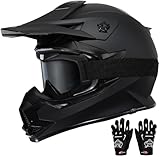
- DOT Safety Certification - The adult dirt bike helmet features a high-strength ABS shell and high-density EPS impact absorbing liner, certified by the DOT safety standards, delivering professional-grade safety for riding
- Efficient Ventilation System - The motocross helmet have multiple vents, chin, side, top and back vents, making fresh air keep entering the helmet. This creates an efficient internal air circulation system, significantly enhancing riding comfort
- Complete Riding Kit - This motorcycle helmet include the goggles and gloves which you need to in driving. The goggles offer clear vision with wind and UV protection, effectively blocking sunlight interference. The gloves provide a snug and non-slip fit, delivering comprehensive protection from head to hands
- Removable Liner - The off-road helmet features a removable, washable liner that is breathable and comfortable. It effectively wicks away sweat and maintains ventilation, ensuring a fresh wearing experience
- Multiple Size - Our full face helmets for adult are available in S (55-56 cm / 21.65"-22.04") / M (57-58 cm / 22.44"-22.83") / L (59-60 cm / 23.22"-23.62") / XL (61-62 cm / 24"-24.40") sizes to accommodate different head circumferences, guaranteeing a secure fit and comfortable wear
An adult considering one of these models must first verify rider fit, seating position, payload, intended use, supervision requirements and local law. A smaller youth vehicle may lack the size, ergonomics or capacity an adult needs. Conversely, an adult beginner should not bypass an experience recommendation simply because another model has a limiter.
When a lower-performance model is the better first step
Choose a less demanding vehicle or delay purchase when any of the following applies:
- The manufacturer recommends experienced operators and you have no off-road driving experience.
- Your planned trails are steep, narrow, crowded or technically difficult.
- You cannot access approved training or a safe practice area.
- You are buying primarily for passengers or cargo but have not learned how load placement affects handling.
- You expect to rely on electronic settings or a speed limiter instead of building basic control skills.
- You are unwilling to wear the required protective equipment or follow the manual.
A lower-performance starting point is not a permanent limit. It gives a new driver time to learn trail reading, braking, cornering, hill technique and recovery procedures before moving to a more powerful vehicle.
Free tools Windows power users keep installed
One-click scans. No signup required.
If you already own a high-power side-by-side
Do not make the first outing a long trip or a difficult trail. Schedule training, complete the pre-ride inspection and use a controlled practice area. Keep the vehicle in the least aggressive operating setting recommended by the manual, if such a setting exists, and increase difficulty only after repeated smooth starts, stops, turns and hill maneuvers.
Have an experienced instructor or qualified operator observe your technique rather than simply riding as a passenger. Ask for feedback on throttle smoothness, braking points, line choice, body position, scanning and recovery decisions. If the vehicle repeatedly surprises you, produces abrupt corrections or leaves you little margin around hazards, the appropriate response is to slow down, seek instruction and reconsider the terrain—not to normalize the behavior.
Questions to ask a dealer or course provider
- Does the course cover this exact vehicle type and its control layout?
- Can instruction be conducted on terrain similar to where I will ride?
- What minimum age, license, registration and protective equipment apply locally?
- Which operating modes are appropriate for a novice, and what does the manual say about selecting them?
- What payload, passenger and slope limitations should I understand before carrying anyone?
- Where can I practice legally without traffic, blind obstacles or unnecessary exposure?
Yamaha’s model-specific advice makes the central point clear: its 2025 YXZ1000R SS is recommended for experienced operators, and Yamaha recommends approved training for all side-by-side riders. A beginner should not infer that every powerful UTV is automatically unsafe, but should also not assume that confidence, a speed limiter or car-driving experience makes a high-performance machine easy. Match the vehicle to your skills and terrain, learn the exact controls, use the required protection and keep enough speed in reserve to respond to what you can see.
Quick Recap
Product prices and availability are accurate as of the date/time indicated and are subject to change. Any price and availability information displayed on Amazon at the time of purchase will apply.
Quick wins for a faster PC:
Repair Windows errors before they cause bigger problemsFix Now →Fix the driver behind crashes, sound loss and screen glitchesFind Drivers →



