Safe industrial robot operation starts with a documented, task-based risk assessment of the complete application—not the robot arm alone. The assessment must cover the robot, tooling, workpiece, conveyors and other equipment, every operating mode, and anyone who could enter the working envelope. Its findings determine guarding, control-system functions, procedures, training, and personal protective equipment. After implementation, the safeguards must be tested and the assessment reviewed.
In the United States, OSHA states, “There are currently no specific OSHA standards for the robotics industry.” That does not make robot cells unregulated: applicable OSHA rules for machine guarding, hazardous energy and safe work practices still apply. The current U.S. robot standard identified by the ANSI Webstore is ANSI/A3 R15.06-2025, which adopts ISO 10218-1:2025 and ISO 10218-2:2025 and replaces the 2012 edition. Confirm the edition and legal requirements that apply to your installation, contract and jurisdiction.
As an Amazon Associate I earn from qualifying purchases.
What industrial robot safety actually covers
A robot application is the unit of assessment. A six-axis arm may be predictable in isolation, yet become dangerous when combined with a sharp gripper, a heavy casting, an indexing table, stored pneumatic pressure or software that permits unexpected motion. Assess the integrated cell and the work people perform around it.
Free tools Windows power users keep installed
One-click scans. No signup required.
- Equipment: robot, controller, end-effector, workpiece, fixtures, conveyors, presses, sensors, utilities and nearby machinery.
- People: operators, programmers, maintenance technicians, integrators, supervisors, contractors, cleaners, warehouse staff and anyone who may pass the perimeter.
- Modes and conditions: automatic production, manual operation, teach mode, setup, testing, recovery from jams, inspection, cleaning, maintenance, servicing, power restoration and foreseeable faults.
- Hazards: crushing, shearing, impact, entanglement, unexpected restart, dropped loads, sharp edges, hot surfaces, welding radiation, noise, electrical energy, pneumatic or hydraulic pressure and ergonomic stress.
OSHA’s technical manual recommends a comprehensive hazard analysis and risk assessment for each application, ideally performed by the integrator with the employer and affected workers. A contract requirement or an integrator’s assurance is useful evidence, but it does not replace the employer’s verification at the installed cell.
#1 Best Overall
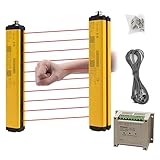
- ROBUST HOUSING- Thick aluminum alloy shell, stable performance, powerful output , and reliable safety.
- ACCURATE MONITORING- The detection is accurate and the response speed is as fast as 10ms. Meets International Electrotechnical Society IEC61496-1/2 standard, designed according to European standards, and has passed CE certification.
- SECURITY PROTECTION- This safety light curtain emits infrared light, resulting in a protective screens. When the light curtain is blocked, the device emits a blackout signal and control potentially dangerous machinery and equipment stops working, or an alarm signal, control and alarm devices to achieve the purpose of security.
- WIDE APPLICATIONS- Reliably protect people or objects in paper machinery, leather machinery, woodworking machinery, injection molding machine, forging machine, punching machine tools, security monitoring etc. Mainly used for the pipeline restricted area, bending machine, injection molding machine,stereo garage and and other dangerous equipment
- High Performance- Built-in amplifier, using modulated light source, programming synchronous scanning mode, strong resistance to external interference, easy to install
How do I conduct an industrial robot risk assessment?
Treat the assessment as a documented cycle that is updated when the process, software, tooling, people or safeguards change. Record the reasoning behind each decision so another qualified person can understand what was considered and what must be tested.
- Define the application and boundaries. Draw the cell, identify the robot reach and all attached equipment, and mark every normal and foreseeable access route. Include openings for material flow, doors, crawl spaces, adjacent cells and areas that can be reached over, under or around a barrier.
- List people and responsibilities. Identify who operates, teaches, programs, maintains, cleans, supervises and accepts the system. Include people who do not work on the robot but may cross the perimeter, such as housekeeping or warehouse staff.
- Inventory tasks and operating states. Write a separate entry for production, loading and unloading, setup, teaching, program changes, testing, jam recovery, inspection, cleaning, calibration, preventive maintenance, troubleshooting and emergency response. Include abnormal but foreseeable conditions such as a failed sensor, a misloaded part or a restarted controller.
- Identify hazards for each task. Examine motion, speed, force, reach, pinch points, tooling failure, workpiece ejection, gravity, stored energy and environmental hazards. Ask what happens if a person is inside the envelope, if a guard is opened, if a safety device fails or if power returns unexpectedly.
- Estimate and prioritize risk. Use the risk method required by your company, contract and applicable standard. Consider potential injury severity, frequency and duration of exposure, and the possibility of avoiding the hazard. Do not assign a risk level solely from the robot model or a generic cell drawing.
- Select risk-reduction measures. Apply engineering controls and safeguarding first, then administrative procedures, training, signs and PPE as appropriate. Match each measure to a specific hazard and task; explain why it is sufficient and what residual risk remains.
- Assign implementation and acceptance criteria. Name the person responsible for each change, the required drawing or software revision, the test method and the pass/fail condition. Include safety-function settings, interlock behavior, sensor coverage, emergency-stop performance and restart behavior.
- Verify, validate and review. Test the installed controls under normal and foreseeable fault conditions. Review the assessment after implementation and whenever the robot, tooling, program, layout, production rate or work practice changes.
Use a task matrix instead of a production-only checklist
| Task or state | Questions to answer | Evidence to retain |
|---|---|---|
| Automatic production | Can anyone reach the hazardous motion or be struck by a workpiece during a cycle? | Layout, safeguarding drawings, safety-function test results and operating procedure |
| Setup and teaching | Who can enter, what speed and enabling controls are permitted, and how is motion stopped? | Mode-selection logic, teach procedure, authorization list and practical demonstration |
| Jam recovery and inspection | Can the worker reach the envelope while energy or automatic restart remains possible? | Recovery procedure, isolation points, restart test and supervisor sign-off |
| Cleaning and maintenance | What electrical, pneumatic, hydraulic, thermal or gravitational energy must be isolated? | Energy-control procedure, isolation verification and maintenance training record |
| Abnormal conditions | What happens after a failed sensor, guard opening, communication loss or power restoration? | Fault-injection or equivalent functional tests and corrective-action log |
What guarding does an industrial robot need?
There is no universal fence height, sensor distance or safeguard model that is correct for every robot cell. OSHA guidance emphasizes that selection depends on the hazards of the particular robot and process. Compare measures by the injury mechanism they address, the tasks and modes they cover, how people gain access, what the control system does when access is detected, and how the measure will be validated.
| Safeguard or control | Where it can help | Critical limitations and checks |
|---|---|---|
| Fixed barrier or perimeter guard | Prevents routine entry into the robot envelope and separates people from moving equipment. | Check reach-through and climb-over access, material-transfer openings, strength, visibility, emergency egress and compatibility with maintenance tasks. A fence alone does not control energy during servicing. |
| Interlocked gate or door | Stops or prevents hazardous motion when an authorized access point opens. | Verify the interlock is correctly integrated, cannot be easily defeated, and prevents unexpected restart. Determine whether stored energy must also be isolated. |
| Presence-sensing device | Detects entry or presence at an opening or hazardous zone and commands a safe response. | Evaluate sensing coverage, response time, stopping distance, optical or environmental interference, bypass resistance and reset location. OSHA references presence-sensing devices as robot-safeguarding material, but the actual arrangement must fit the application. |
| Controls, enabling devices and emergency stops | Provide controlled motion during authorized setup and a means to stop hazardous movement. | Define who may use them, what stop category and safe state are required, and how reset and restart are controlled. An emergency stop is not a substitute for isolation before servicing. |
| Awareness barriers, signs and procedures | Warn and organize people where a physical safeguard is not the only necessary control. | Awareness measures must not replace specific safeguarding where serious injury is possible. Confirm that workers cannot be exposed merely by relying on attention or memory. |
| PPE | Reduces residual exposure to hazards such as sharp edges, heat, noise, welding radiation or chemicals. | PPE is the final layer for the hazards it covers; it cannot prevent crushing or unexpected robot motion. Specify selection, inspection, use and replacement. |
OSHA’s technical manual recommends combining controls, guards, protective devices, procedures, training, signs and PPE according to the assessed task. A safeguard named in a general guidance document is not automatically adequate for a particular machine.
Recommended Free Tools
Are collaborative robots automatically safe to work beside?
No. A collaborative robot application still requires a risk assessment of force, power, speed, ergonomics, tooling, workpieces and human contact scenarios. OSHA identifies ISO/TS 15066 and its U.S. adoption as RIA TR R15.606-2016, while its technical manual discusses contact thresholds and power-and-force-limited applications as specialized cases.
Rank #2

- ROBUST HOUSING- Thick aluminum alloy shell, stable performance, powerful output , and reliable safety.
- ACCURATE MONITORING- The detection is accurate and the response speed is as fast as 10ms. Built-in amplifier, using modulated light source, programming synchronous scanning mode, strong resistance to external interference, easy to install
- SECURITY PROTECTION- This safety light curtain emits infrared light, resulting in a protective screens. When the light curtain is blocked, the device emits a blackout signal and control potentially dangerous machinery and equipment stops working, or an alarm signal, control and alarm devices to achieve the purpose of security.
- Self-check function: When the safety screen protector fails, ensure that the wrong signal is not sent to the controlled electrical appliances.
- High Performance- Built-in amplifier, using modulated light source, programming synchronous scanning mode, strong resistance to external interference, easy to install
Determine which collaborative operating method is being used, what contacts are foreseeable, and whether the tool or part creates a hazard even when the robot’s motion is limited. Validate configured limits and protective functions rather than assuming that a collaborative label, reduced speed or built-in force sensing makes the cell safe. Where contact-event testing is required by the application, retain the results and investigate any failure.
How to verify that safeguards work
Validation is more than looking at a fence and confirming that a light is on. OSHA’s manual lists documentation and functional checks that can form a practical acceptance package:
- Current risk assessment with identified hazards, selected measures and residual risks.
- Electrical, mechanical, pneumatic and hydraulic drawings that match the installed cell.
- Robot, controller, tooling and safeguarding manuals, plus operating and maintenance procedures.
- Safety-related control-system review, including safety-function settings, mode selection, interlocks, emergency stops and safeguard integration.
- Sensor-operation tests at every access point and under foreseeable obstruction or fault conditions.
- Contact-event test results for power-and-force-limited collaborative applications when applicable.
- Training records showing that each role understood the hazards and procedures before authorization.
Test the complete sequence: access detection, stop, removal of the hazard or safe state, reset, restart authorization and recovery from a fault. Record the date, tester, equipment state, measured or observed result and corrective action. Repeat validation after a program change, new end-effector, layout change, altered production rate or safety-component replacement.
Windows Errors? Fix Them Before They Spread
Repair common Windows errors and clear accumulated junk for a smoother, more stable PC - no reinstall needed.Free scan · no reinstallOutdated Drivers Are Slowing You Down
One free scan finds every outdated or missing driver and matches the right update for your exact hardware.Free scan · exact hardware matchWhat training do robot operators need?
Training must match exposure and duties, not just job title. OSHA’s guidance describes hazard-recognition and control training for operators, with programming and maintenance performed only by people adequately trained in the relevant robot hazards and controls. The technical manual also expects workers to understand the risk-reduction measures and safe operation and maintenance procedures before they work on or with the system.
Rank #3

- Cutting-Edge Technology - Utilizing infrared scanning detection technology, this safety light curtain sensor system embodies the most recent innovations in automatic control products, ensuring exceptional performance.
- Fast Response & Anti-Interference: Experience quick response times and robust anti-interference capabilities with this light curtain sensor switch, ensuring reliable safety in diverse industrial environments.
- Robust Aluminum Alloy Construction: Built to last, this safety grating security device is crafted from high-quality aluminum alloy, offering longevity and dependable protection for forging machines, automation equipment, and more.
- Versatile Application: From shearing machines to industrial robots, this sensor is designed for a variety of machinery. It's ideal for use in production lines, packaging equipment, and solid garages, providing a versatile safety solution.
- Enhanced Efficiency: Featuring low energy consumption and fast response times, this sensor not only saves energy but also enhances operational efficiency, contributing to overall productivity in industrial settings.
| Role | Training topics to document | Authorization evidence |
|---|---|---|
| Operator | Normal controls, cycle start and stop, loading, alarm response, guard and interlock behavior, prohibited actions, emergency stop and reporting. | Observed demonstration on the actual cell and written or verbal knowledge check. |
| Programmer or teacher | Robot modes, enabling device, controlled motion, coordinate systems, reduced-speed operation, collision hazards, program backup and change control. | Practical demonstration of teaching, testing and recovery under the site procedure. |
| Maintenance technician | Mechanical, electrical, pneumatic and hydraulic hazards; lockout/tagout; stored energy; access controls; diagnostics and post-maintenance testing. | Task-specific qualification and documented authorization. |
| Supervisor or integrator | Risk assessment, safety-function verification, change management, incident response, acceptance criteria and contractor coordination. | Review of the safety file and sign-off on acceptance or change approval. |
| Nearby or crossing worker | Perimeter meaning, warning signs, prohibited entry, alarm response and how to report a damaged guard or unexpected behavior. | Awareness training before the worker is assigned to the area. |
For authorized entry into an energized envelope during setup or teaching, procedures should address slow or controlled operation where permitted, avoidance of hazardous locations, emergency stops, enabling controls and hazardous-energy sources. OSHA’s older instruction contains historical speed guidance; do not treat that old recommendation as a current universal limit. Use the current robot instructions, applicable standard, risk assessment and site procedure.
Lockout/tagout and non-routine work
Many serious incidents occur during programming, maintenance, testing, setup or adjustment, when a person is inside the working envelope. OSHA’s interpretation states that lockout/tagout applies when workers are exposed during servicing or maintenance and hazardous energy must be isolated.
- Identify every energy source, including electrical, pneumatic, hydraulic, gravity, thermal, chemical and stored mechanical energy.
- Shut down the cell using the normal procedure and notify affected workers.
- Isolate, lock and tag each energy-isolating device according to the site program.
- Release or restrain stored energy, block suspended components and account for robot and tooling gravity.
- Verify isolation with appropriate test instruments or other approved means, then attempt a start from the normal controls before beginning work.
- After work, inspect the cell, reinstall guards, clear personnel and tools, remove locks under the authorized procedure, notify affected workers and perform a controlled restart test.
An emergency stop, software stop or teach-mode selection may reduce motion but does not by itself prove that hazardous energy is isolated for servicing.
Quick wins for a faster PC:
Clear out junk files and repair common Windows errorsFree Scan →Scan for outdated or missing drivers - takes under a minuteDriver Scan →U.S. standards and regulatory framing
OSHA’s robotics overview uses the precise statement that there are currently no specific OSHA standards for the robotics industry. Employers must still comply with applicable OSHA requirements, including machine-guarding and hazardous-energy rules, and must address hazards presented by the integrated application.
Rank #4

- ROBUST HOUSING- Thick aluminum alloy shell, stable performance, powerful output , and reliable safety. Beam Pitch 40mm, Beams 26, Protection Height 1000mm, Total Height 1080mm
- ACCURATE MONITORING- The detection is accurate and the response speed is as fast as 10ms. Meets International Electrotechnical Society IEC61496-1/2 standard, designed according to European standards, and has passed CE certification.
- SECURITY PROTECTION- This safety light curtain emits infrared light, resulting in a protective screens. When the light curtain is blocked, the device emits a blackout signal and control potentially dangerous machinery and equipment stops working, or an alarm signal, control and alarm devices to achieve the purpose of security.
- WIDE APPLICATIONS- Reliably protect people or objects in paper machinery, leather machinery, woodworking machinery, injection molding machine, forging machine, punching machine tools, security monitoring etc. Mainly used for the pipeline restricted area, bending machine, injection molding machine,stereo garage and and other dangerous equipment
- High Performance- Built-in amplifier, using modulated light source, programming synchronous scanning mode, strong resistance to external interference, easy to install
The ANSI Webstore identifies ANSI/A3 R15.06-2025 as the national adoption of ISO 10218-1:2025 and ISO 10218-2:2025. The listing says this revision updates and replaces ANSI/RIA R15.06-2012, which will be withdrawn. OSHA topic and technical-manual pages still contain references to 2012-era editions and related technical reports, so distinguish those older references from the 2025 standards-store record. The cited ANSI listing does not state an effective date; verify the edition, contract language and jurisdiction before specifying compliance.
Supporting references identified by OSHA include ANSI/ISO 12100-2012 for machinery risk assessment and risk reduction; RIA TR R15.306 for task-based risk assessment; RIA TR R15.406 for safeguarding; RIA TR R15.606 and ISO/TS 15066 for collaborative robots; and RIA TR R15.806 for testing power-and-force-limited collaborative applications. Confirm current editions and applicability for the installation rather than treating a reference list as a substitute for the standards themselves.
Implementation checklist for a robot cell
- Define the cell boundary, robot envelope, access routes and all associated equipment.
- List every person who may operate, enter, maintain, clean, supervise or pass the area.
- Assess production and non-routine tasks, foreseeable faults and all operating modes.
- Document hazards, risk ratings, selected controls, residual risks and responsible owners.
- Integrate guards, interlocks, sensors, controls and emergency stops with the robot and other machinery.
- Write procedures for setup, teaching, jam recovery, cleaning, inspection, maintenance, testing and restart.
- Implement hazardous-energy control and verify isolation points.
- Test safeguard response, reset, restart and fault behavior; retain objective records.
- Train each role, including affected workers who may cross the perimeter, and verify practical competence.
- Review the assessment after changes, incidents, near misses, software updates or new tooling.
Common safety failures and how to correct them
Assessing only automatic production
Failure: The file describes the production cycle but not teaching, setup or jam recovery. Correction: Create a separate task entry for every non-routine activity and define access, stop, isolation and authorization requirements.
Assuming a fence solves the problem
Failure: A perimeter guard is installed without checking reach-through, transfer openings, interlock behavior or maintenance access. Correction: Test the complete safeguarding system against the actual hazards and foreseeable access routes.
Best Value
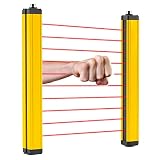
- [Fast Reaction] - The light curtain sensor responds as fast as 0.01 seconds. And the detection distance between transmitter and receiver can be up to 5m. NOTICE: the beam pitch of all types of the safety light curtains is 40mm, which is suitable for wrist or body detection.
- [Security Guard] - This safety grating is mainly used to protect personal safety and reduce work-related injuries. According to research, 90% of work-related injuries are due to lack of safety protection.
- [Stable Output] - It does not need a synchronization line since the power supply can be supplied separately. And it can resist electromagnetic interference and has stable output.
- [Wide Application] - It is applicable to machine tool operation area, production line, automatic welding line, automatic equipment, cutting and pressing equipment, etc. In addition, it has a high protection grade (IP65) and can be suitable for various working environments.
- [Good Quality] - The safety light curtain has a high-brightness indicator light, which makes its working state easy to identify. And the surface is treated with high-quality baking varnish, which makes it waterproof, oil-proof and well sealed.
Using awareness as the primary safeguard
Failure: Signs or floor markings are expected to prevent entry where serious injury is possible. Correction: Use engineered guarding or presence detection appropriate to the hazard, with awareness measures as a supplement.
Calling a collaborative robot inherently safe
Failure: Reduced speed or force sensing is accepted without evaluating tooling, parts, contact locations or configured limits. Correction: Perform the specialized collaborative assessment and complete required functional or contact testing.
Accepting visual inspection as validation
Failure: The cell looks correct, but no one tests sensors, safety logic or restart behavior. Correction: Execute documented functional tests and retain drawings, settings, results and corrective actions.
Training operators but not affected workers
Failure: Housekeeping, warehouse or contractor personnel can enter the perimeter without understanding the hazards. Correction: Provide awareness training for anyone whose duties bring them near or across the cell boundary.
Quick Recap
Product prices and availability are accurate as of the date/time indicated and are subject to change. Any price and availability information displayed on Amazon at the time of purchase will apply.




